Wildlife in Japan: Where to See Wild Animals by Region
Introduction
Japan’s wildlife changes dramatically from north to south. Brown bears and sea eagles inhabit Hokkaido, Japanese macaques and serow live in the mountain forests of Honshu, while Amami and Okinawa are home to rare endemic species found nowhere else in Japan.
If you want to see wildlife in Japan, the best region depends on the animals you hope to find, the season, and the type of trip you are planning. This guide breaks down the best places to see wild animals in Japan by region, what wildlife you may encounter, and when to visit.
What Wildlife Can You See in Japan?
Japan is home to a wide variety of wildlife, including brown bears, Japanese macaques, sika deer, serow, cranes, sea eagles, giant salamanders, and many endemic island species.
What you can see depends heavily on the region and season. Hokkaido is especially strong for large mammals and northern birds, while Honshu offers mountain wildlife, and Amami and Okinawa are known for rare endemic species.
For a broader guide to the animals that live in Japan, see:
▶Animals in Japan: Native, Endemic, and Iconic Species
Hokkaido – Japan’s Last Great Wilderness
Hokkaido is one of the best regions in Japan for wildlife watching. Its vast forests, wetlands, mountains, and northern coast support large mammals and birds that are difficult or impossible to see elsewhere in the country.
Where to See Wildlife
For a wildlife-focused trip, eastern Hokkaido is especially rewarding.
- Shiretoko Peninsula – brown bears, Ezo sika deer, red foxes, sea eagles, and coastal wildlife
- Kushiro Marsh and Tsurui – especially famous for red-crowned cranes
- Rausu and the Nemuro area – Steller’s sea eagles, white-tailed eagles, and other coastal wildlife
- Daisetsuzan – Ezo pikas and wildlife of Hokkaido’s alpine environments
Best Season for Wildlife Watching
Winter is one of the most spectacular seasons, especially in eastern Hokkaido, when red-crowned cranes and large sea eagles become major highlights.
From spring through autumn, mammals and mountain wildlife become the main focus. The best season therefore depends heavily on what you want to see.
Representative Wildlife
- Brown Bear
- Ezo Sika Deer
- Ezo Red Fox
- Red-crowned Crane
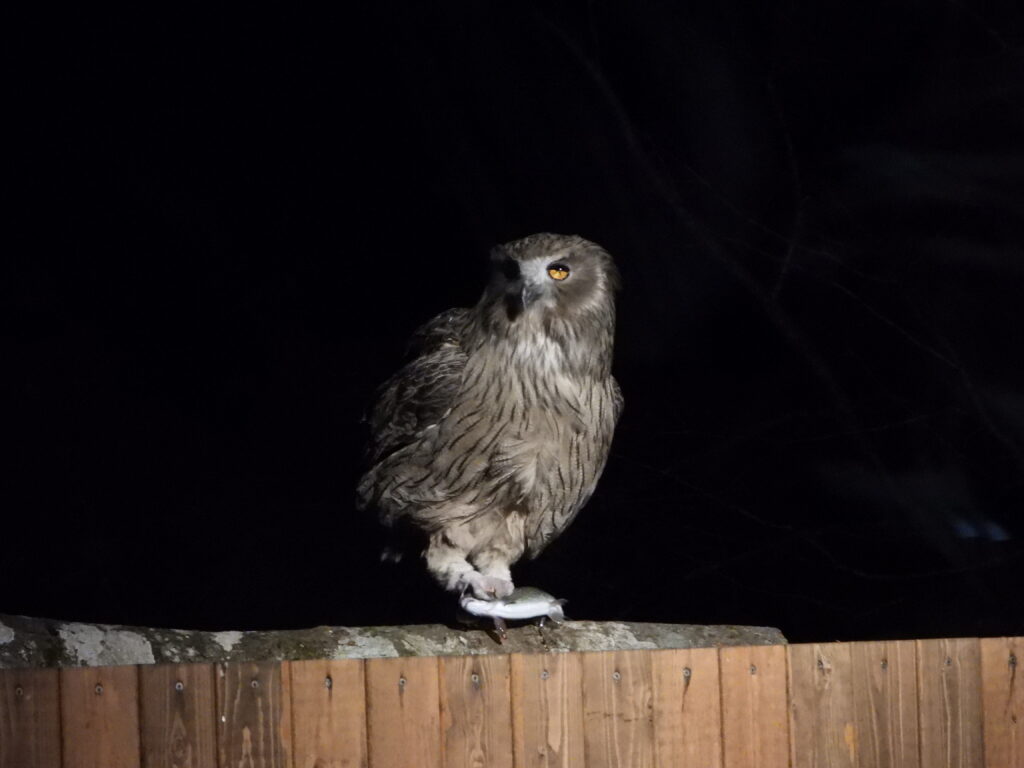
- Blakiston’s Fish Owl
- Steller’s Sea Eagle
- White-tailed Eagle
- Ezo Pika
- Hokkaido Squirrel
How Easy Is It to See Wildlife?
Ezo sika deer and red foxes are among the more realistic mammals to encounter in Hokkaido. Other species, such as brown bears, Ezo pikas, and Blakiston’s fish owls, require the right habitat, timing, patience, and often some luck.
Wildlife sightings are never guaranteed, especially when looking for rare or elusive species.
From My Experience
I have traveled through Hokkaido to observe wildlife, particularly in eastern Hokkaido. I have personally seen red-crowned cranes, Steller’s sea eagles, white-tailed eagles, sea otters, Ezo squirrels, Ezo pikas, and other northern wildlife.
One thing that stands out in Hokkaido is the distance between wildlife areas. Trying to cover too many places in a single day can make a trip rushed, so it is usually better to choose a few target species and plan around the right region and season.
▶Wildlife in Hokkaido – 15 Amazing Animals You Can See
Tohoku – Mountain Forests and Quiet Lakes
Tohoku is a quieter wildlife-watching region dominated by deep mountain forests, volcanic highlands, lakes, and some of the heaviest snowfall in Japan. It is particularly interesting for mountain mammals, forest birds, Japanese macaques, and large numbers of wintering waterbirds.
Where to See Wildlife
Some of the best areas for wildlife watching in Tohoku include:
- Shimokita Peninsula – Japanese macaques at the northern edge of their natural range
- Hakkoda Mountains and Oirase Valley – mountain forests with serows, birds, and other forest wildlife
- Hachimantai – highland forests, wetlands, and mountain birdlife
- Izunuma–Uchinuma – one of Tohoku’s major wintering areas for swans and other waterbirds
- Bandai–Azuma – extensive mountain and forest habitats in southern Tohoku
Best Season for Wildlife Watching
Spring to early summer is a good time for forest birds and mountain wildlife, although dense vegetation can make mammals harder to spot later in the season.
Winter offers a very different experience. Snowy landscapes can make tracks and animal movement easier to notice, while lakes and wetlands attract large numbers of swans, ducks, and other migratory waterbirds.
Representative Wildlife
- Japanese Serow
- Japanese Macaque
- Japanese Black Bear
- Spotted Nutcracker
- Mandarin Duck
- Whooper Swan
- Japanese Red Fox
How Easy Is It to See Wildlife?
Wintering swans and other waterbirds can be relatively easy to observe at well-known wetlands, while mountain mammals are much less predictable.
Japanese serows, black bears, foxes, and fully wild macaques may be present without ever appearing during a visit. Quiet observation, the right habitat, and some luck are especially important in Tohoku.
From My Experience
I have observed wild Japanese macaques on the Shimokita Peninsula during summer. Unlike famous monkey-viewing destinations, encounters here are much less predictable, which made seeing them living naturally in the forests of northern Honshu especially memorable.
The Shimokita Peninsula is at the northern edge of the Japanese macaque’s natural range, making it one of the most distinctive wildlife areas in Tohoku.
▶ The World’s Northernmost Monkeys Explained
Kanto – Wildlife Near Tokyo
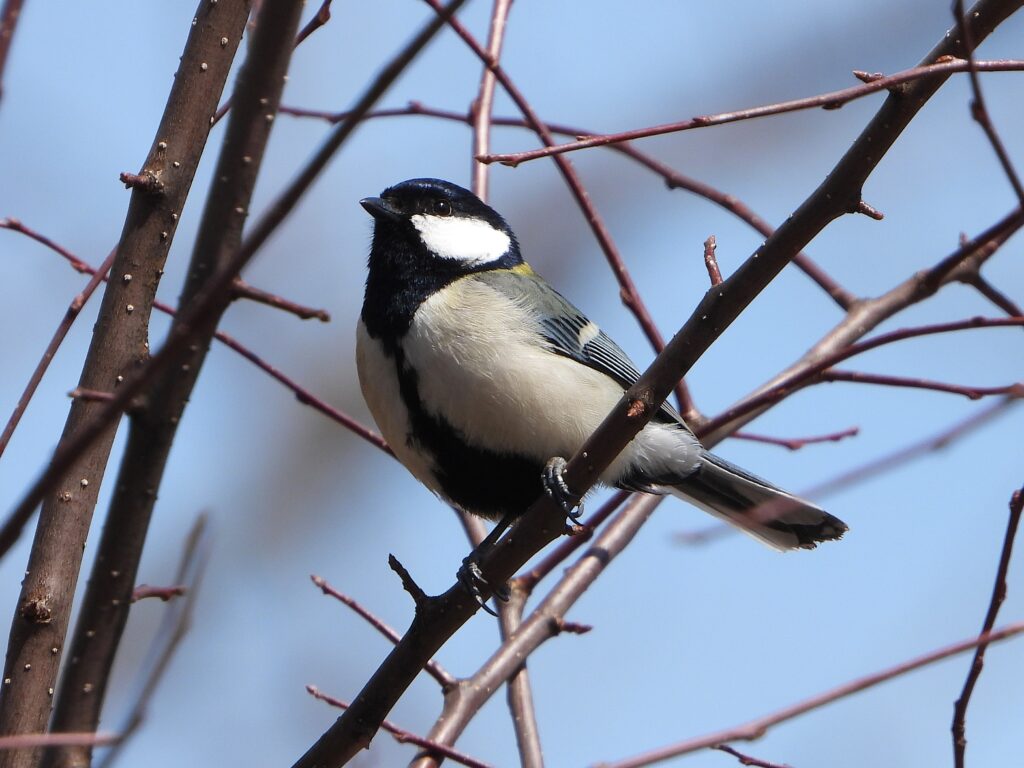
Kanto is one of the most accessible regions in Japan for wildlife watching. Even around Tokyo, parks, rivers, shrine forests, and nearby mountains support a surprising variety of animals.
For a more natural mountain experience, areas such as Nikko, Okutama, and Hakone offer forests where larger mammals and forest birds can be found.
Where to See Wildlife
- Nikko National Park – sika deer, Japanese serows, Japanese macaques, and a wide variety of forest birds
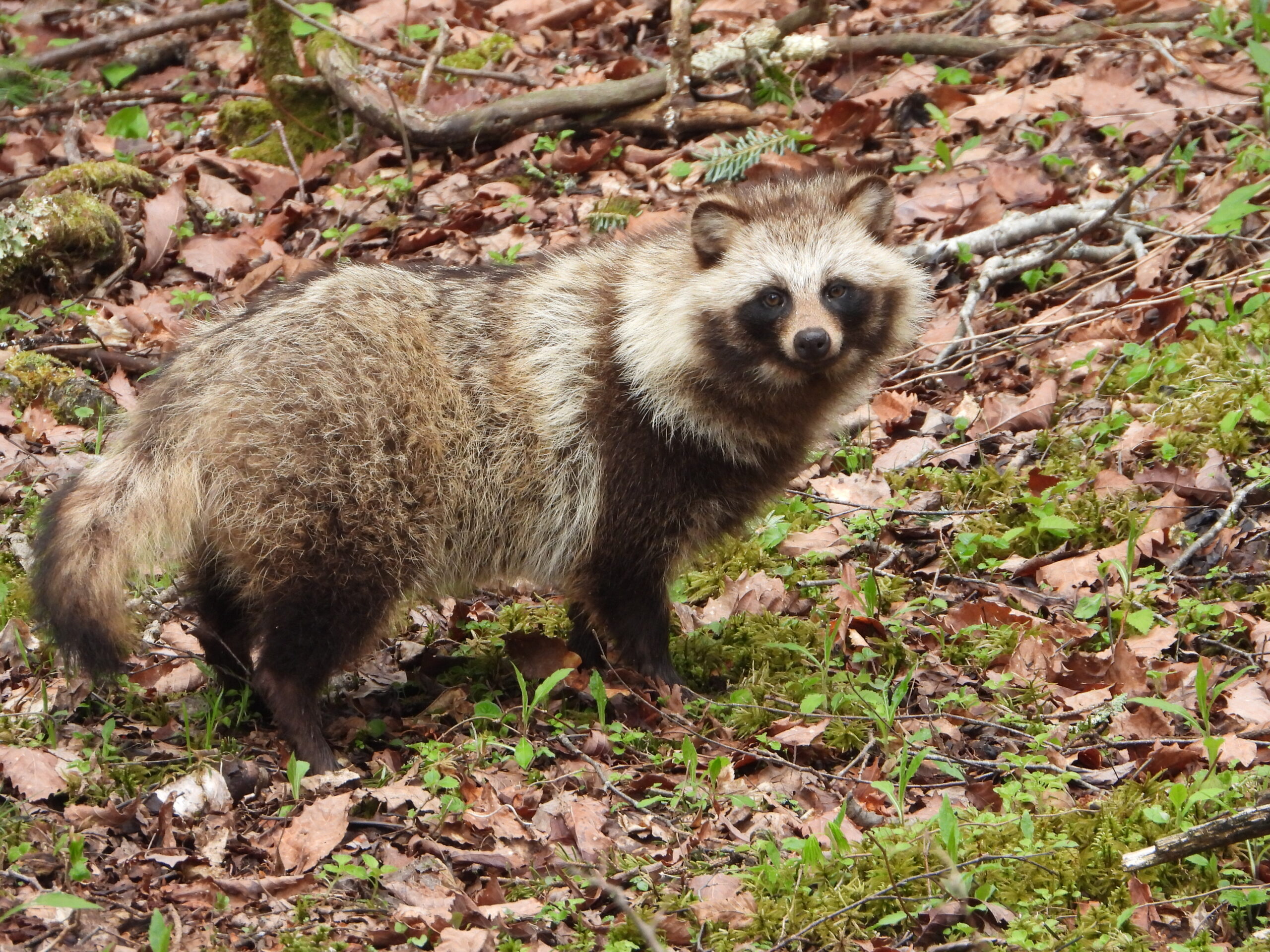
- Mount Takao and Okutama – Japanese giant flying squirrels, tanuki, forest birds, and other mountain wildlife
- Tokyo parks and rivers – common birds, waterbirds, tanuki, and other urban wildlife
- Kasai Rinkai Park – especially good for waterbirds and seasonal migrants
- Hakone – forest birds and elusive mammals such as sika deer, Japanese macaques, and tanuki
Best Season for Wildlife Watching
Spring to early summer is especially good for birdwatching as forests become active with breeding and migratory birds.
Winter is another excellent season, particularly around wetlands, rivers, and city parks where waterbirds gather and the thinner vegetation can make wildlife easier to notice.
Mammals can be encountered throughout the year, but sightings are much less predictable.
Representative Wildlife
- Japanese Serow
- Sika Deer
- Japanese Macaque
- Japanese Giant Flying Squirrel
- Japanese Raccoon Dog (Tanuki)
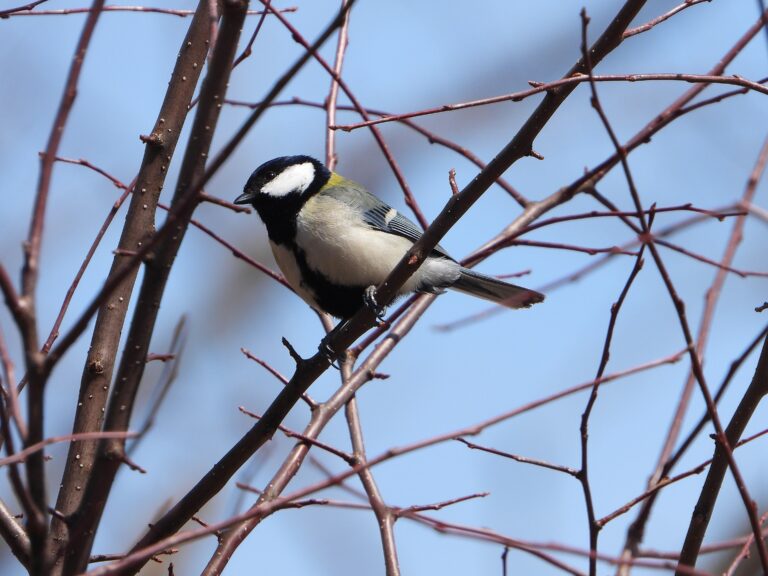
- Japanese Tit
- Varied Tit
How Easy Is It to See Wildlife?
Kanto offers some of the easiest wildlife watching in Japan if birds are your main interest. Common woodland and waterbirds can be found even in parks and green spaces around Tokyo.
Large mammals are different. In mountain areas such as Nikko and Okutama, animals may be nearby without ever appearing during your visit.
Japanese giant flying squirrels are also nocturnal, so seeing one requires the right location and timing around dusk or after dark.
From My Experience
I regularly observe wildlife in the mountains of Tochigi, particularly around Nikko and the surrounding areas.
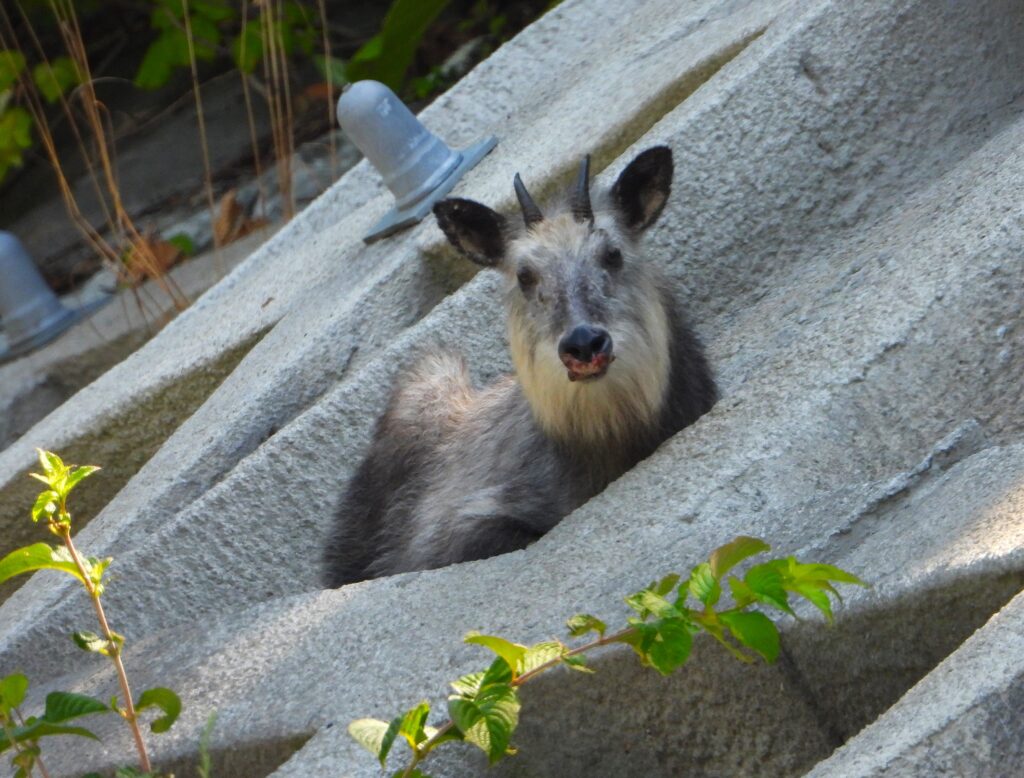
I have encountered Japanese serows on steep mountain slopes and sika deer in forested areas many times. What I like about this region is that the animals are genuinely wild—sometimes you find several species in one trip, while on other days the forest can seem almost empty.
That unpredictability is part of wildlife watching in Kanto, especially once you leave the easier urban birdwatching spots and enter the mountains.
▶ Wildlife Watching in Nikko National Park
▶ Wildlife in Tokyo – Best Animals & Where to See Them
Chubu – Alpine Wildlife of the Japanese Alps
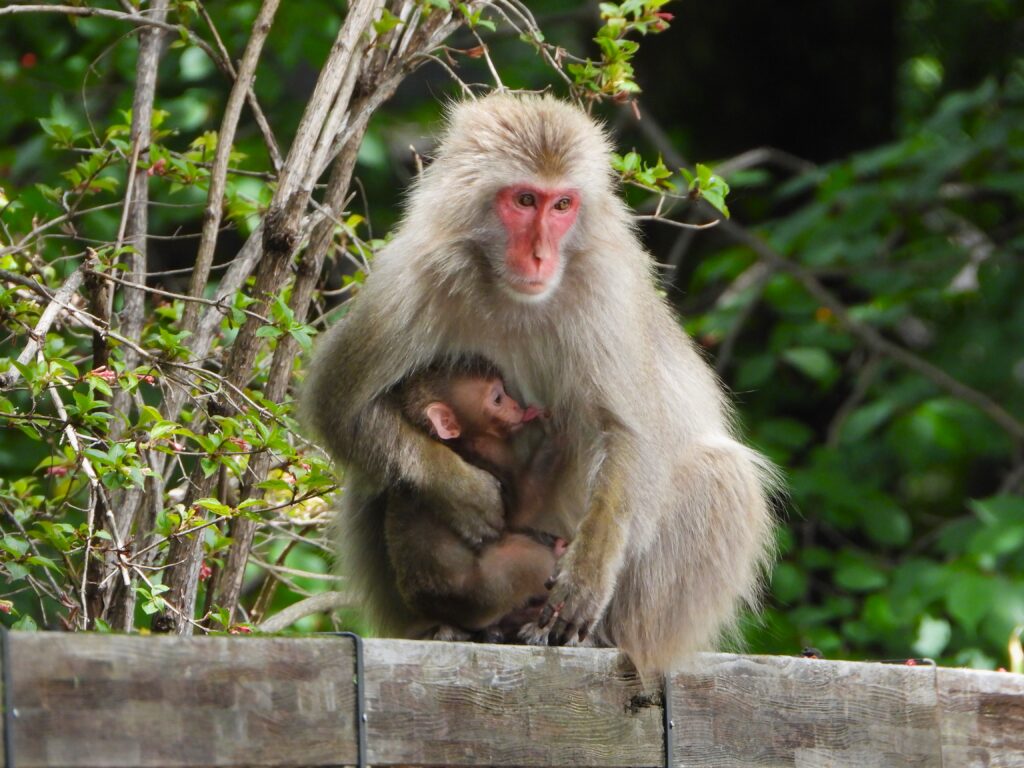
Chubu is one of Japan’s best regions for mountain wildlife. The Japanese Alps, Mount Fuji, deep forests, clear rivers, and high-elevation habitats support everything from Japanese macaques and serows to black bears and alpine birds.
The region also offers very different wildlife experiences, from accessible forest walks around Mount Fuji and Kamikochi to high-altitude wildlife watching in the Japanese Alps.
Where to See Wildlife
- Kamikochi – Japanese macaques, forest birds, serows, and other mountain wildlife
- Mount Fuji and the Fuji Five Lakes – sika deer, Japanese macaques, forest birds, and wildlife around lakes and woodland
- Aokigahara Forest – especially rewarding for forest birds and quieter nature observation
- Japanese Alps and Norikura – alpine birds and high-elevation wildlife
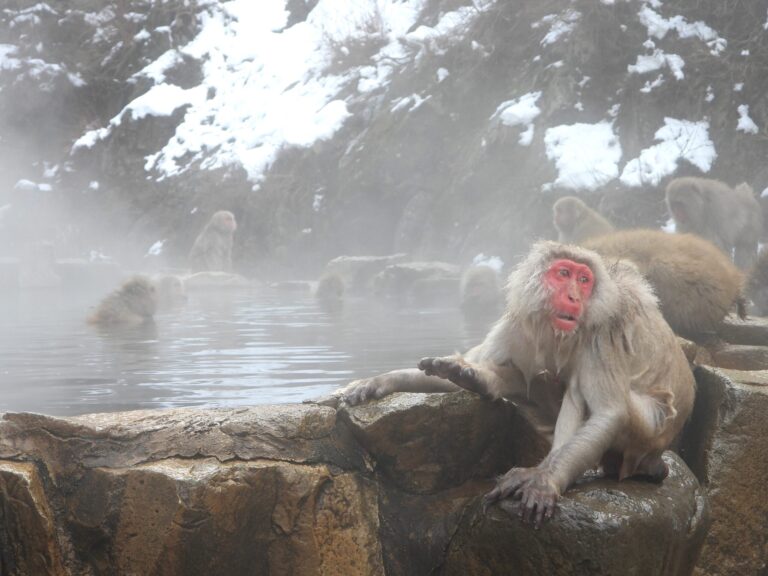
- Jigokudani, Nagano – one of Japan’s most famous places to observe Japanese macaques
Best Season for Wildlife Watching
Spring to early summer is especially good for forest birds and wildlife at lower and middle elevations.
Summer opens access to higher mountain areas, making it the main season for alpine wildlife in the Japanese Alps.
Autumn can also be rewarding around forests and mountain valleys, while winter is particularly famous for Japanese macaques in snowy areas such as Jigokudani.
Representative Wildlife
- Japanese Macaque
- Japanese Serow
- Japanese Black Bear
- Sika Deer
- Japanese Giant Flying Squirrel
- Rock Ptarmigan
How Easy Is It to See Wildlife?
The difficulty varies greatly depending on where you go.
Japanese macaques can be relatively easy to observe at well-known locations such as Jigokudani, while they are much less predictable in fully natural mountain forests.
Kamikochi is one of the more accessible places to look for mountain wildlife and birds. Japanese serows and black bears are far less predictable, and sightings should never be expected.
Alpine wildlife requires suitable mountain conditions, the right elevation, and often more hiking than wildlife watching in lower forest areas.
From My Experience
I often visit the Mount Fuji area for camping and wildlife observation. The forests, lakes, and quieter roads around the mountain can be especially interesting in the early morning and evening, when wildlife activity is easier to notice.
I have found that the Mount Fuji area works particularly well as a wildlife destination because you do not need to focus on a single famous animal. Even when mammals do not appear, there are forests, lakes, and birds to explore, so the wildlife experience does not depend on one sighting.
▶ Wildlife in Kamikochi: Animals You Can See in Japan’s Mountain Paradise
▶ Wildlife Around the Fuji Five Lakes
Kansai – Wildlife Around Kyoto, Nara and Osaka

Kansai is one of the easiest regions in Japan to combine wildlife watching with a typical sightseeing trip. Historic cities such as Kyoto and Nara are surrounded by forests, rivers, parks, and mountains where wild animals live surprisingly close to major tourist areas.
For first-time visitors, Kansai offers some of the most reliable wildlife encounters in Japan, especially sika deer in Nara and Japanese macaques in Arashiyama.
Where to See Wildlife
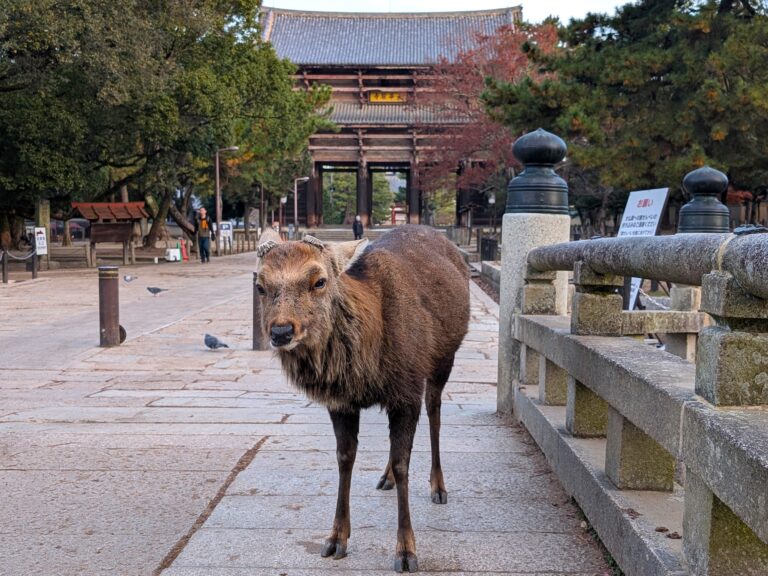
- Nara Park – one of the easiest places in Japan to see wild sika deer
- Arashiyama, Kyoto – Japanese macaques, riverside birds, and forest wildlife
- Kamogawa River, Kyoto – herons, ducks, kingfishers, and other urban waterbirds
- Fushimi Inari, Kyoto – forest birds, tanuki, and other mammals in the wooded slopes of Mount Inari
- Minoo Park, Osaka – forest birds and woodland wildlife close to the city
Best Season for Wildlife Watching
Wildlife can be seen in Kansai throughout the year.
Sika deer in Nara and Japanese macaques in Arashiyama can be observed year-round, making them especially useful for travelers who cannot choose their season.
Spring is excellent for forest birds, while winter often makes birds easier to spot because the vegetation is thinner and more waterbirds arrive along rivers, ponds, and wetlands.
Early morning is usually the best time for quieter wildlife watching around popular tourist destinations.
Representative Wildlife
How Easy Is It to See Wildlife?
Kansai includes some of the most beginner-friendly wildlife experiences in Japan.
Sika deer are extremely easy to find around Nara Park, while Japanese macaques can be observed reliably at Arashiyama Monkey Park.
Birds are also relatively easy to notice along rivers, in temple forests, and in large parks.
Other mammals are much more difficult. Tanuki and other nocturnal or forest-dwelling animals may live surprisingly close to cities but are rarely seen during a normal daytime visit.
From My Experience
I have visited Arashiyama and found it surprisingly easy to combine sightseeing with wildlife watching.
Along the Katsura River, I saw several Little Egrets, and bird activity became more noticeable as I moved away from the busiest areas. Japanese macaques are the main wildlife attraction around the monkey park, but the surrounding river and forest make Arashiyama more than just a place to see monkeys.
▶ Wildlife in Kyoto – Animals You Can See
▶ Wildlife You Can See in Nara
▶ Wildlife in Osaka – Nature Within Japan’s Second-Largest City
Chugoku – Miyajima, Rabbit Island and Wetlands
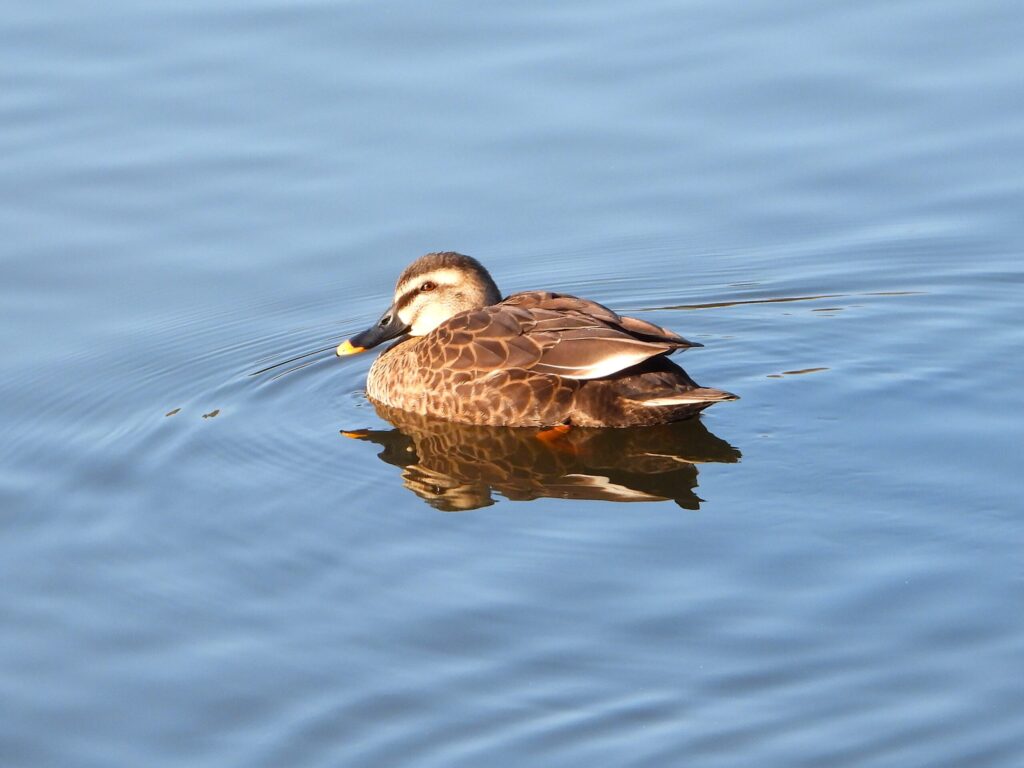
Chugoku offers a mix of easy wildlife encounters and quieter natural areas. Hiroshima is home to two particularly accessible animal destinations—Miyajima, known for its free-roaming sika deer, and Okunoshima, famous for its rabbits.
Away from these islands, the region also has mountain streams, forests, lakes, and wetlands that support native amphibians, mammals, and large numbers of waterbirds.
Where to See Wildlife
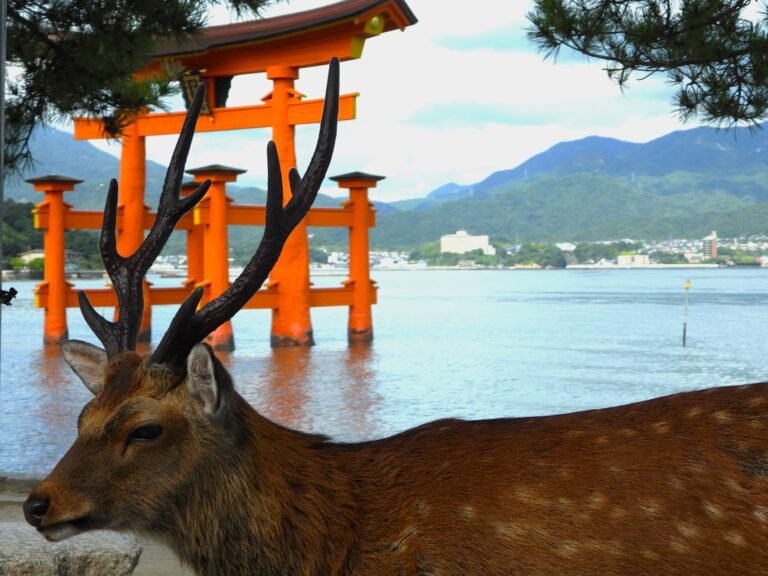
- Miyajima, Hiroshima – sika deer around the shrine area, shoreline, and forested slopes
- Okunoshima, Hiroshima – large numbers of free-roaming rabbits along walking paths and open areas
- Lake Shinji and Lake Nakaumi – wetlands and open water used by ducks and other waterbirds, especially in winter
- Daisen–Oki National Park – mountain forests, coastal habitats, and birdlife
- Mountain streams of the Chugoku region – habitat for the Japanese giant salamander
Best Season for Wildlife Watching
Miyajima’s deer and the rabbits of Okunoshima can be seen throughout the year, making both places easy to include in a normal sightseeing trip.
Winter is particularly good around lakes and wetlands, when migratory ducks and other waterbirds increase in number.
Spring through autumn is better for exploring forests and mountain areas, although many forest animals remain difficult to find even when they are present.
Representative Wildlife
- Sika Deer
- Eastern Spot-billed Duck
- Japanese Giant Salamander
- Japanese Marten
- Copper Pheasant
The rabbits on Okunoshima are free-roaming animals rather than native Japanese wildlife, but the island is still one of the region’s most distinctive animal-viewing destinations.
How Easy Is It to See Wildlife?
Miyajima is one of the easiest places in western Japan to see sika deer. They regularly appear around the ferry terminal, shrine paths, shoreline, and nearby wooded areas.
Rabbits are also easy to find on Okunoshima, although their numbers and activity can vary depending on the time of day and weather.
Native forest mammals are much less predictable. Japanese giant salamanders also live in parts of western Japan, but they are protected wildlife and should never be disturbed or handled simply to get a closer look.
From My Experience
I have visited both Miyajima and Okunoshima.
On Miyajima, I saw deer not only around the busy shrine area but also along the coast and quieter parts of the island. Early morning was especially memorable because the island was calmer and the deer moved around more naturally.
Okunoshima felt very different. Rabbits could be seen along the paths and in open areas across the island, but I found that staying quiet and letting them approach was much better than chasing after them for photos.
These two islands make Chugoku particularly useful for travelers who want to combine wildlife encounters with a normal Japan itinerary.
▶ Miyajima Deer: Where to See Them and Visitor Tips
▶ Rabbit Island Japan (Okunoshima): Access, Rabbits & Travel Tips
Shikoku – Clear Rivers and Deep Forests
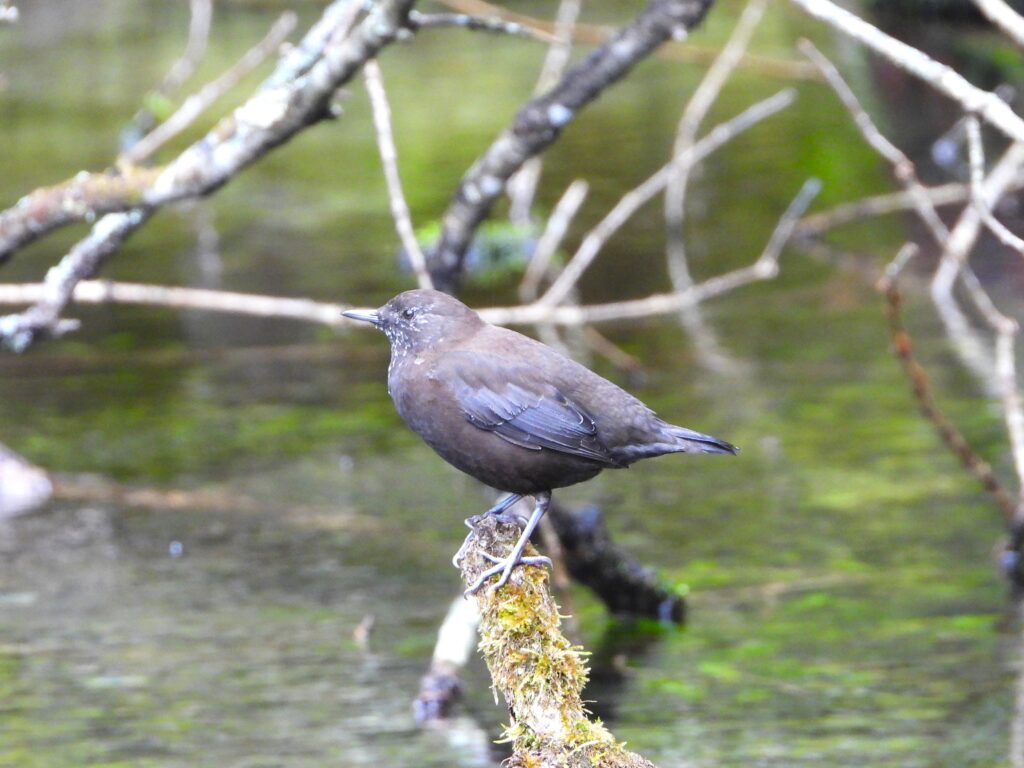
Shikoku is a mountainous island with deep forests, steep valleys, and some of Japan’s clearest rivers. Compared with major tourist regions such as Kanto and Kansai, wildlife watching here often feels quieter and more closely connected to rivers and mountain forests.
Japanese macaques, sika deer, wild boars, river birds, raptors, and butterflies can all be found across the island, although most sightings outside well-known areas are unpredictable.
Where to See Wildlife
- Iya Valley – mountain forests inhabited by Japanese macaques, sika deer, wild boars, and forest birds
- Shimanto River – a long, relatively undeveloped river system with birds, frogs, fish, insects, and other freshwater wildlife
- Mt. Tsurugi – high mountain forests and ridges suitable for birdwatching and mountain wildlife
- Oboke and Koboke – steep gorges and clear rivers where river birds may be seen
- Ashizuri–Uwakai National Park – forests, rocky coastline, and marine habitats in southern Shikoku
Best Season for Wildlife Watching
Spring to early summer is one of the best periods for exploring Shikoku’s forests and rivers. Birds are active, butterflies become more noticeable, and mountain areas are easier to explore once the weather warms.
Autumn is another good season for mountain wildlife and birdwatching, with cooler temperatures and changing forest conditions.
Summer can be productive along rivers, but the heat and dense vegetation can make mammals difficult to spot.
Representative Wildlife
- Japanese Macaque
- Sika Deer
- Japanese Wild Boar
- Crested Kingfisher
- Brown Dipper
- Mountain Hawk-Eagle
- Chestnut Tiger
How Easy Is It to See Wildlife?
Wildlife watching in Shikoku is generally less predictable than visiting places such as Nara Park or Arashiyama.
Japanese macaques, deer, and wild boars live in mountain areas, but simply entering the forest does not guarantee a sighting.
Rivers can be more approachable for wildlife watching. Birds such as Brown Dippers and Crested Kingfishers are associated with clear, rocky streams, although the Crested Kingfisher is wary and can still be difficult to find.
For mountain areas such as Mt. Tsurugi and the Iya Valley, having a car can also make it much easier to reach quieter wildlife habitats.
▶ Where to See Japanese Macaques in Japan
Kyushu – Volcanoes, Cranes and Warm Forests
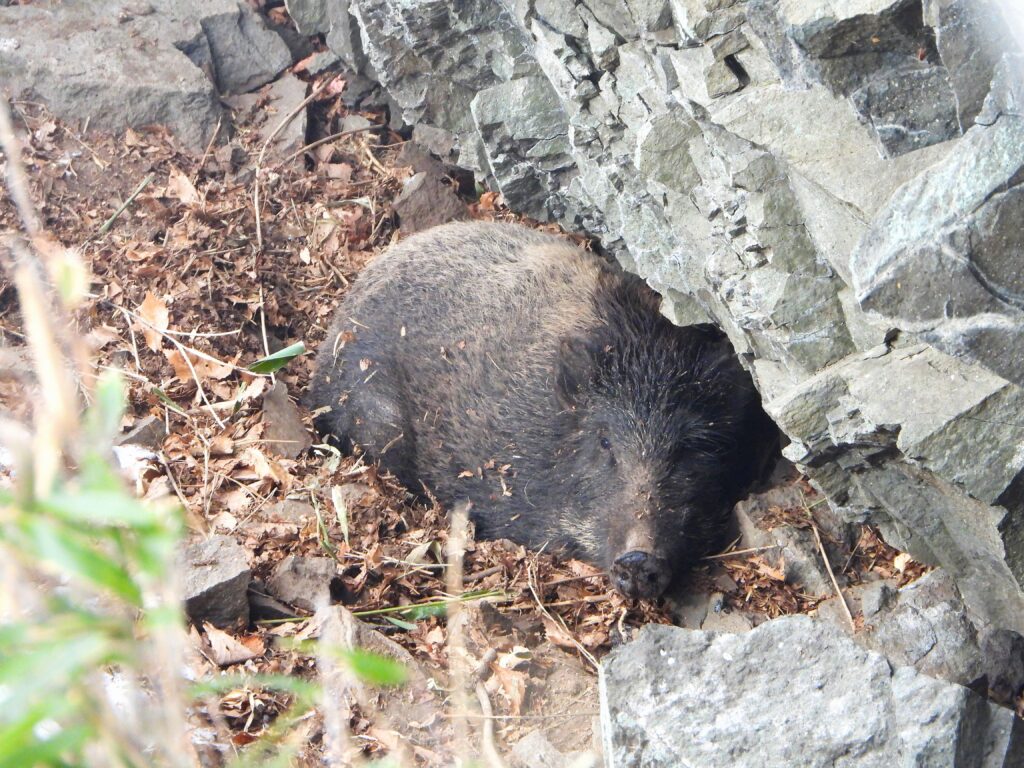
Kyushu combines volcanic mountains, open grasslands, warm-temperate forests, clear rivers, and important wetlands. Its wildlife is noticeably different from northern Japan, with wintering cranes, forest mammals, mountain birds, and species adapted to a warmer climate.
For wildlife travelers, the region offers very different experiences—from watching thousands of cranes on the Izumi Plain to exploring the forests of Kirishima and Yakushima.
Where to See Wildlife
- Izumi, Kagoshima – one of Japan’s most important wintering areas for Hooded and White-naped Cranes
- Aso–Kuju National Park – extensive grasslands, wetlands, mountain forests, birds, and insects
- Kirishima–Kinkowan National Park – volcanic mountains and forest habitats in southern Kyushu
- Yakushima, Kagoshima – wild sika deer, Japanese macaques, forest birds, and ancient cedar forests
- Mountain rivers across Kyushu – good habitat for Brown Dippers and other river wildlife
Best Season for Wildlife Watching
Winter is the standout season if cranes are your main target. Hooded and White-naped Cranes arrive at Izumi in large numbers, with the main wintering period running from roughly October to March.
Spring to early summer is better for forest birds, insects, and exploring mountain habitats in areas such as Aso and Kirishima.
Yakushima can be rewarding throughout the year, although heavy rain is part of the island’s climate and wildlife sightings remain unpredictable.
Representative Wildlife
- Hooded Crane
- White-naped Crane
- Japanese Macaque
- Sika Deer
- Japanese Wild Boar
- Brown Dipper
- Mountain Hawk-Eagle
How Easy Is It to See Wildlife?
For a first wildlife trip to Kyushu, the cranes of Izumi are among the most reliable targets during winter. Their concentration in one well-known wintering area makes them very different from elusive forest mammals.
Mammals such as wild boars are much less predictable and are often active around dawn, dusk, or at night.
Yakushima offers realistic opportunities to encounter wild deer and macaques, but they should still be treated as genuinely wild animals rather than guaranteed attractions.
In places such as Aso and Kirishima, wildlife watching is often about exploring the habitat itself—grasslands, forests, wetlands, and mountain streams—rather than arriving for one guaranteed species.
▶ Where to See Japanese Macaques in Japan
▶ Japanese Wild Boar – Identification & Facts
Okinawa & Amami – Japan’s Subtropical Wildlife
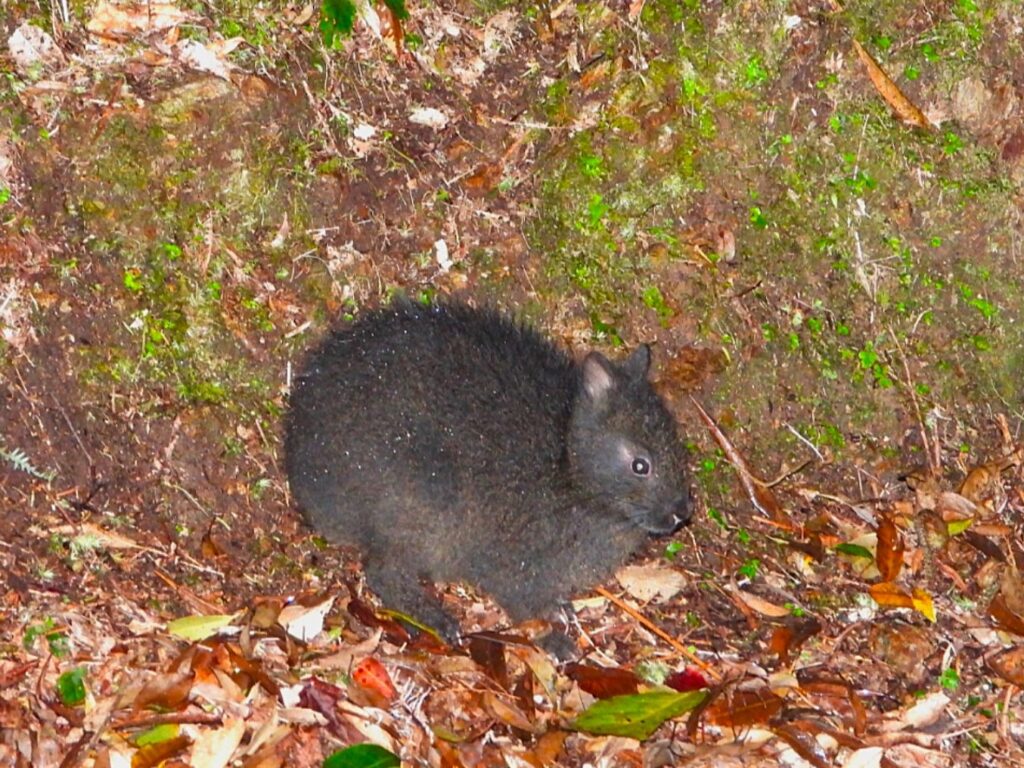
Okinawa and the Amami Islands offer a completely different wildlife experience from mainland Japan. Subtropical evergreen forests, mangroves, warm nights, and long-isolated islands support an exceptional number of endemic species.
For travelers interested in rare wildlife found nowhere else in Japan, Amami Oshima, Yambaru in northern Okinawa, and the Yaeyama Islands are among the most distinctive destinations in the country.
Where to See Wildlife
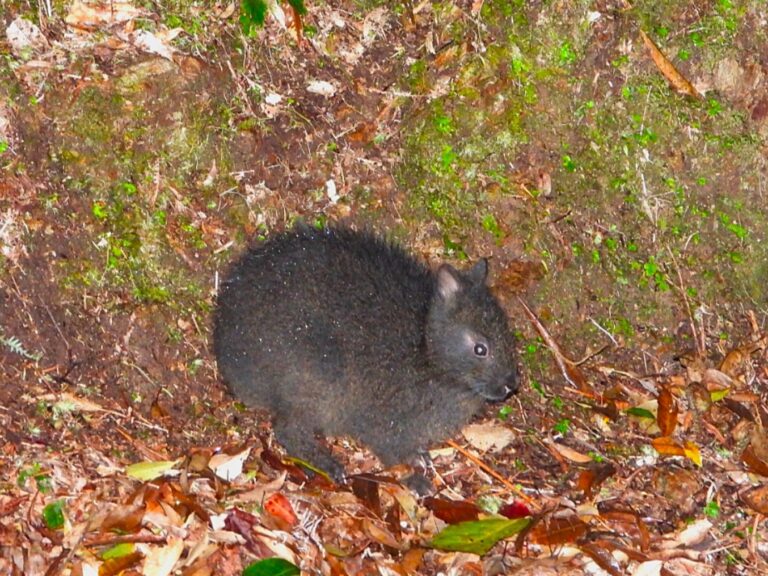
- Amami Oshima – Amami rabbits, Ryukyu long-haired rats, endemic birds, frogs, and habu
- Yambaru, northern Okinawa – Okinawa rails, endemic forest birds, reptiles, amphibians, and other subtropical wildlife
- Iriomote Island – dense forests and mangroves, including the extremely rare Iriomote cat
- Ishigaki and the Yaeyama Islands – subtropical forests, mangroves, birds, reptiles, frogs, and insects
Best Season for Wildlife Watching
Wildlife can be found throughout the year, but spring through early summer is especially active for frogs, reptiles, insects, and forest wildlife.
Nighttime is particularly important in this region. Many of the most distinctive animals, including Amami rabbits, Ryukyu long-haired rats, habu, and several frogs and owls, are nocturnal.
Warm and humid nights can be productive, especially after rain, but conditions vary greatly by species and island.
Representative Wildlife
- Amami Rabbit
- Ryukyu Long-haired Rat
- Okinawa Rail
- Iriomote Cat
- Ryukyu Scops Owl
- Ryukyu Robin
- Habu
- Sakishima Habu
How Easy Is It to See Wildlife?
The difficulty varies enormously between species.
Amami Oshima is one of the better places in Japan for nocturnal wildlife watching, but even there, rare animals are never guaranteed.
Endemic birds may be easier to detect by their calls than by sight, while animals such as the Ryukyu long-haired rat are much more difficult to encounter.
The Iriomote cat is exceptionally rare and should never be treated as a wildlife sighting that visitors can expect.
Night driving also requires particular care on these islands. Rare native animals may cross forest roads after dark, so driving slowly is important both for finding wildlife and avoiding roadkill.
From My Experience
Amami Oshima has been one of the most memorable wildlife destinations I have visited in Japan.
I have observed Amami rabbits at night in the island’s forests, and I was also fortunate enough to encounter a Ryukyu long-haired rat moving through the trees. Seeing such unusual endemic animals in their natural habitat made Amami feel completely different from wildlife watching on mainland Japan.
The southern islands are also places where you need to stay alert. Venomous habu are part of these ecosystems, especially at night, so wildlife watching here requires more care than simply walking through a daytime park or forest.
▶ Amami Island Wildlife – Japan’s Hidden Paradise of Rare Animals
▶ Amami Endemic Wildlife – Where to See Rare Animals in Japan
Best Time to See Wildlife in Japan
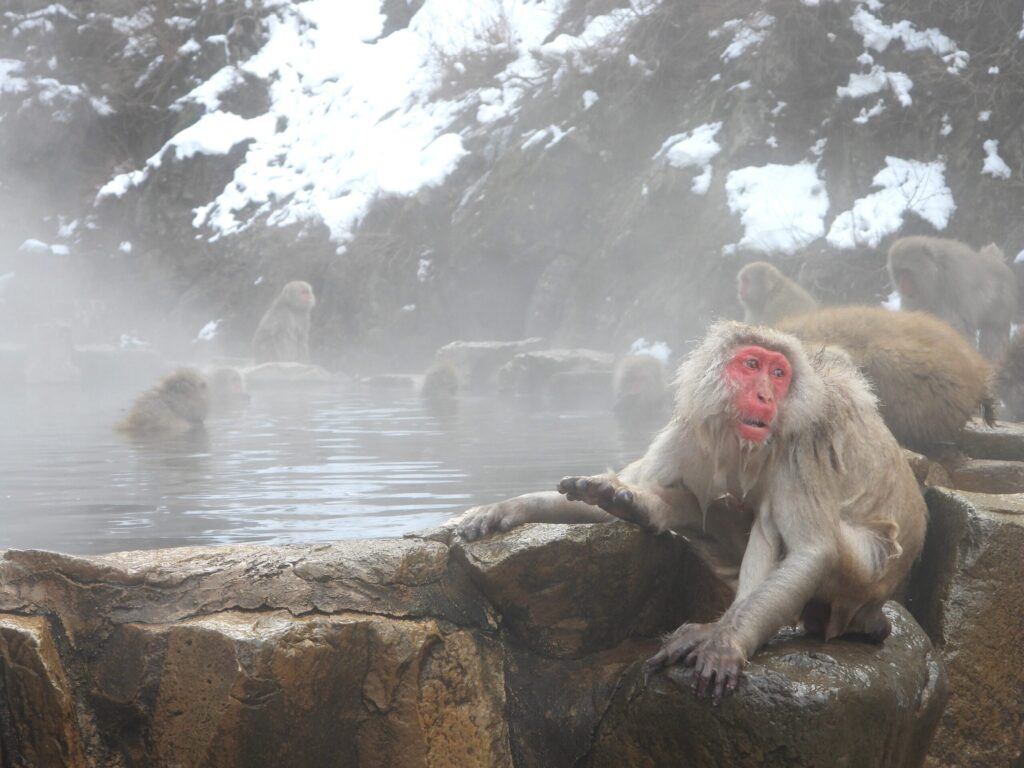
There is no single best season for wildlife watching in Japan. The ideal time depends on the region and the animals you want to see.
Spring is excellent for birds and amphibians, summer for alpine and subtropical wildlife, autumn for migration and mountain wildlife, and winter for cranes, sea eagles, waterbirds, and snowy wildlife.
For a first wildlife trip, spring and autumn offer a good balance of comfortable weather and variety. If you have a particular species in mind, choose the region and season around that animal rather than trying to see everything in one trip.
▶ Best Time to See Wildlife in Japan
Wildlife Watching Tips in Japan
Wildlife sightings in Japan are never guaranteed, but a few simple habits can improve your chances while keeping both you and the animals safe.
- Go early in the morning or later in the day when many animals are more active.
- Move slowly and quietly, especially around forests, rivers, wetlands, and mountain trails.
- Keep a safe distance and never approach wildlife just for a closer photo.
- Do not feed wild animals.
- Choose the right habitat and season for the species you hope to see.
- Follow local warnings and rules, especially in areas with bears, wild boars, macaques, or venomous snakes.
The goal is to observe natural behavior without changing it. If an animal reacts to your presence, give it more space.
▶ Wildlife Watching in Japan: Rules, Etiquette, and Safety Tips
Author’s Impression
What I find most fascinating about wildlife watching in Japan is how completely the experience changes from one region to another.
In Hokkaido, I have watched northern wildlife such as cranes, sea eagles, pikas, and sea otters. In the mountains of Honshu, I often look for deer, Japanese serows, macaques, birds, and other forest wildlife. On Amami Oshima, nighttime wildlife watching introduced me to endemic animals that feel completely different from anything on the main islands.
But even in places I know well, wildlife is never predictable. Some days several animals appear one after another, while on other days I can spend hours searching and see very little.
That uncertainty is one of the things I enjoy most. Japan has famous wildlife destinations, but some of my most memorable encounters have happened simply by spending time in the right habitat and paying attention to what is around me.
Conclusion
There is no single best place to see wildlife in Japan—it depends on what you want to find.
Hokkaido is especially strong for northern mammals and birds, while Kanto and Kansai are easy to combine with a typical Japan trip. Chubu is ideal for mountain wildlife, and Amami and Okinawa stand out for rare endemic species.
Choose your destination around a few target animals and the right season rather than trying to see everything in one trip. The regional guides below can help you narrow down where to go next.
Related Wildlife Guides
Wildlife Categories
▶ Animals in Japan: Native, Endemic, and Iconic Species
▶ Mammals in Japan: 7 Animals You Can See & Where to Find Them
▶ Birds in Japan: Common, Native & Iconic Species
▶ Reptiles in Japan: Snakes, Lizards and Venomous Species
▶ Amphibians in Japan: Frogs, Newts and Giant Salamanders
▶ Insects in Japan: Common, Seasonal & Dangerous Species Guide
Regional Wildlife Guides
▶ Wildlife in Hokkaido – 15 Amazing Animals You Can See
▶ Wildlife in Tokyo – Best Animals & Where to See Them
▶ Wildlife Watching in Nikko National Park
▶ Wildlife Around Mount Fuji: Animals You Can See
▶ Wildlife in Kyoto – Animals You Can See
▶ Amami Endemic Wildlife – Where to See Rare Animals in Japan