Amphibians in Japan: Frogs, Newts and Giant Salamanders
Introduction
Japan is home to a surprisingly rich variety of amphibians.
From tiny tree frogs calling beside rice fields to giant salamanders hiding in mountain rivers, amphibians can be found across much of the country. In rural Japan, frog calls are one of the most familiar sounds of spring and summer nights.
Japan is especially famous for its salamanders, including the Japanese giant salamander, one of the largest amphibians in the world. The country is also home to many unique island species that cannot be found anywhere else.
This guide introduces some of the most representative amphibians in Japan, where they live, and how to observe them in the wild.
▶ Browse more amphibian species from Japan
Are There Amphibians in Japan?
Yes, Japan has many native amphibians.
Frogs are the most familiar group, but Japan is also home to numerous salamanders and newts. Because the country stretches from snowy northern regions to subtropical southern islands, the species found in each area can vary greatly.
Wet forests, rice fields, ponds, marshes, and mountain streams all provide important habitats for amphibians in Japan.
What Amphibians Live in Japan?
Frogs
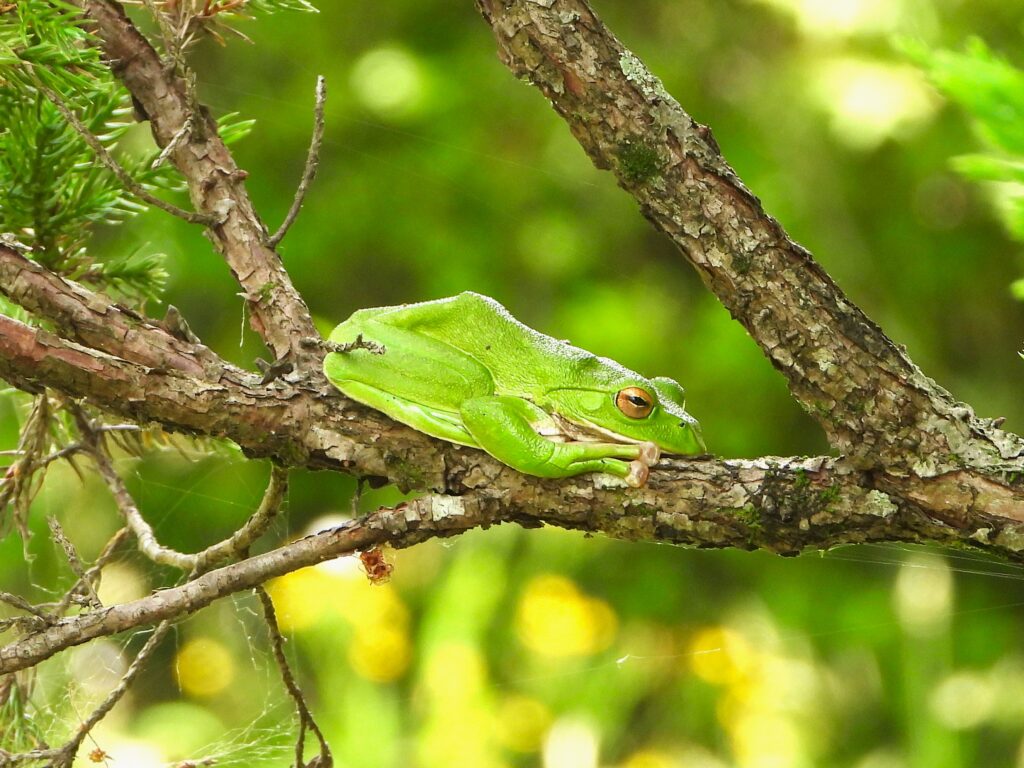
Frogs are the most commonly seen amphibians in Japan.
They can be found in rice fields, ponds, wetlands, forests, and even near homes in rural areas. During spring and summer, their calls are a familiar sound throughout the countryside.
Salamanders
Japan is famous for its large number of salamander species.
Many live in cool mountain streams or moist forests, and several species are found nowhere else in the world. Some are small and secretive, while others, like the Japanese giant salamander, can grow to enormous sizes.
Newts
Newts are commonly found in calm freshwater habitats such as ponds, marshes, and slow-moving waterways.
The Japanese fire-bellied newt is especially well known for its dark body and bright red underside.
Common Amphibians in Japan
Eastern Japanese Tree Frog
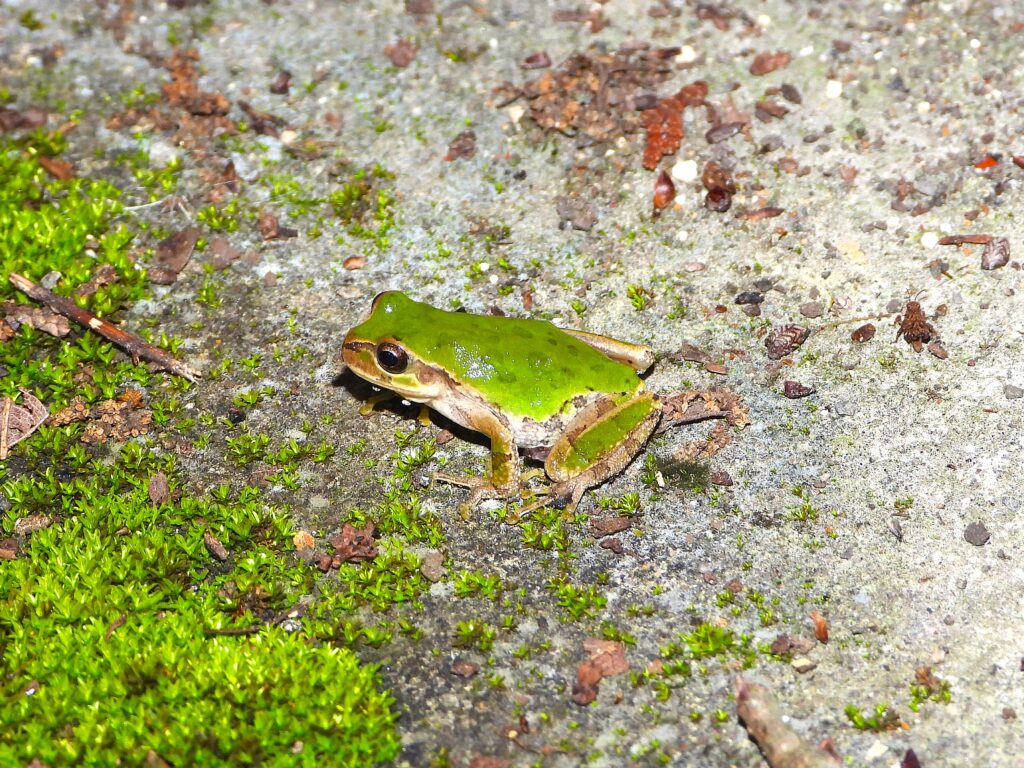
The Eastern Japanese tree frog is one of the most familiar frogs in Japan.
It is commonly found around rice fields, wetlands, gardens, and waterways. On rainy nights, their calls can become surprisingly loud in the countryside.
▶ Eastern Japanese Tree Frog — Species guide
Azuma Toad
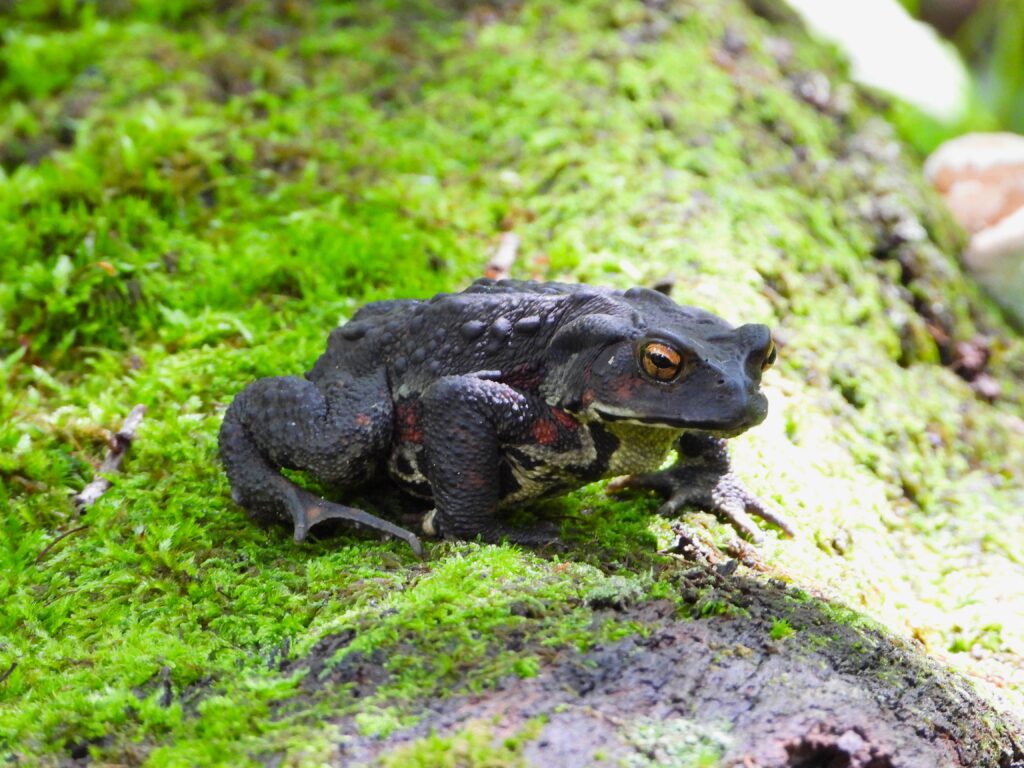
The Eastern Japanese toad is a large terrestrial toad found mainly in eastern Japan.
It often appears in forests, parks, and near water during the breeding season. Because of its size, it is one of the most recognizable toads in Japan.
▶ Eastern Japanese Toad — Species guide
Japanese Fire-bellied Newt

The Japanese fire-bellied newt is well known for its dark body and vivid red underside.
It lives in ponds, marshes, and slow-moving waterways, where it spends much of its time in the water.
▶ Japanese Fire-bellied Newt — Species guide
Unique Amphibians in Japan
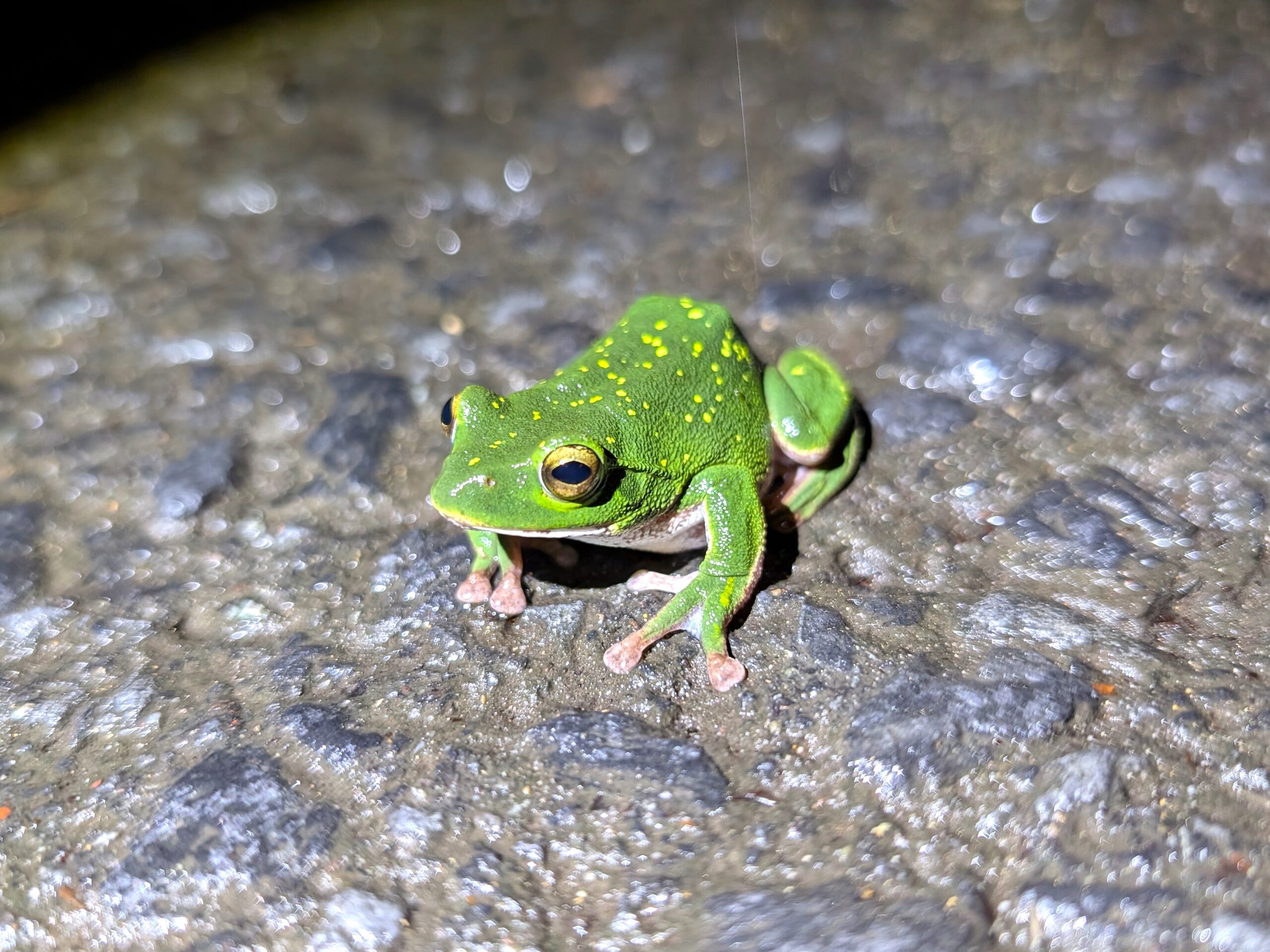
Amami Ishikawa’s Frog
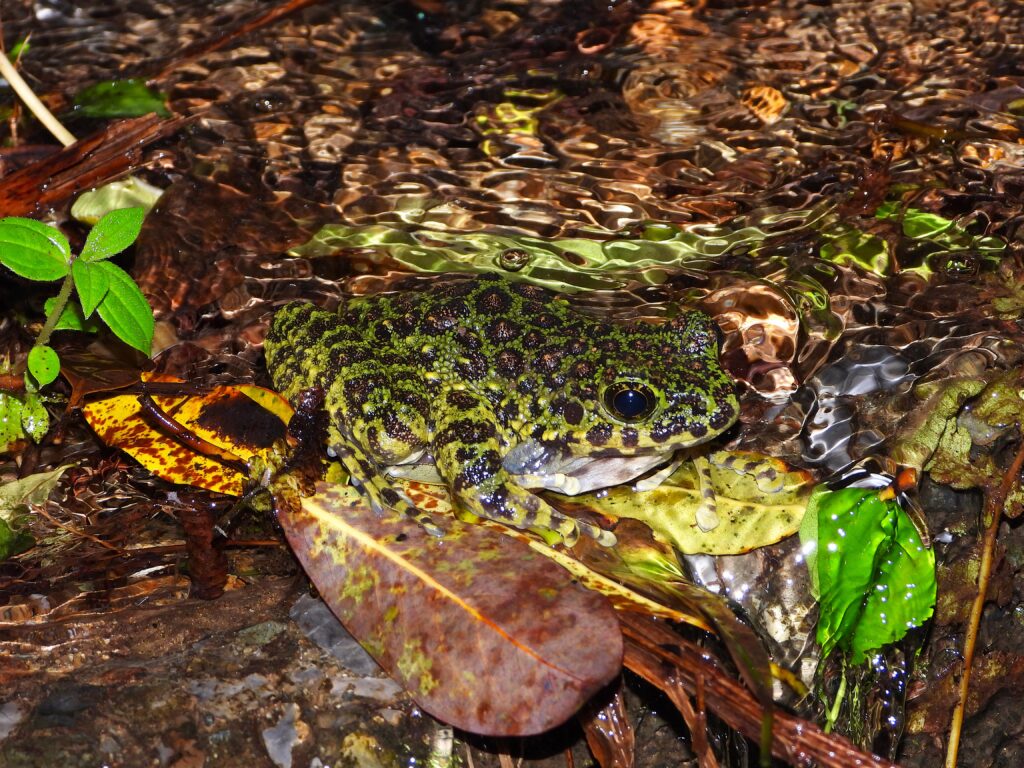
This beautiful frog is native to the Amami Islands and is considered one of Japan’s most striking amphibians.
Its colorful pattern and limited range make it especially famous among wildlife enthusiasts.
▶ Amami Ishikawa’s Frog — Species guide
Japanese Giant Salamander
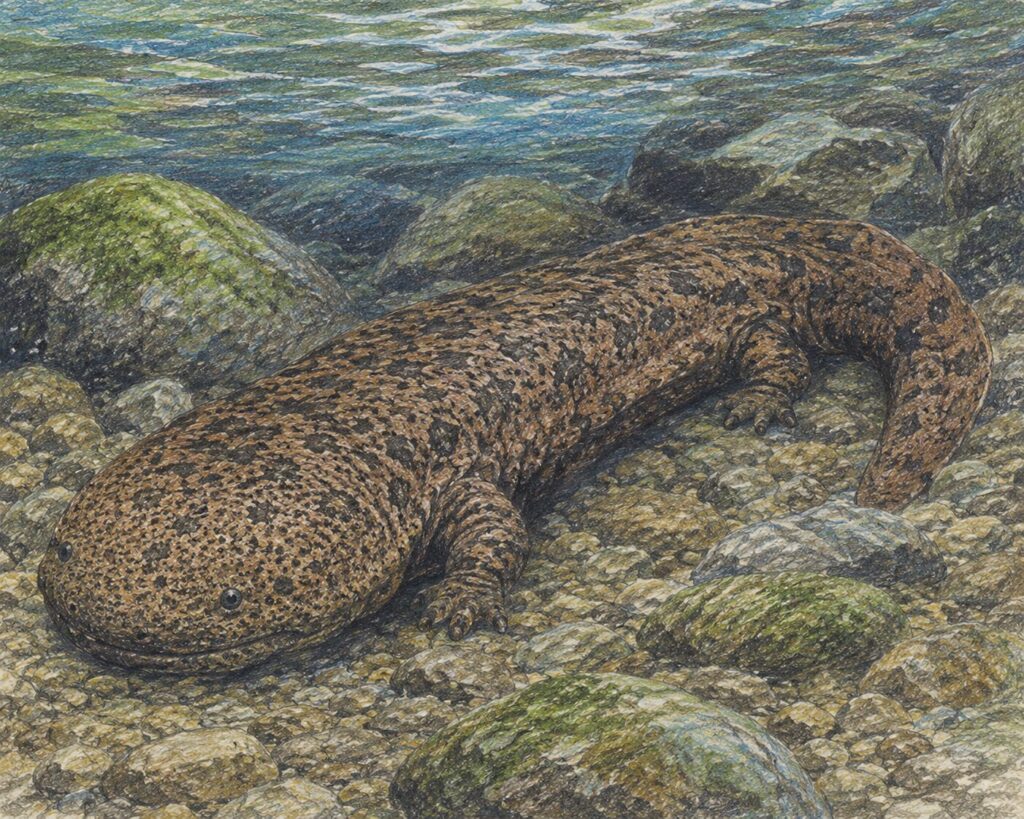
The Japanese giant salamander is one of the largest amphibians in the world.
It inhabits clean mountain rivers and is one of the most iconic amphibians in Japan.
Hakone Salamander

The Japanese clawed salamander is a small endemic salamander found in moist mountain forests and stream environments.
Because it is secretive and difficult to find, seeing one in the wild can be very memorable.
▶ Japanese Clawed Salamander — Species guide
Where Can You See Amphibians in Japan?
Rice Fields and Wetlands
Rice fields are among the best places to observe frogs in Japan, especially during spring and early summer.
Forest Streams
Cool mountain streams are important habitats for salamanders and many other amphibians.
Ponds and Waterways
Quiet ponds, marshes, and small waterways often support frogs and newts.
Mountain Forests
Moist mountain forests provide shelter for many secretive amphibian species.
Best Season to See Amphibians in Japan
Spring and early summer are generally the best seasons for amphibian watching in Japan.
Rainy nights are especially productive, as many frogs become active and begin calling during wet weather.
Salamanders are often easier to find around cool streams and damp forests during humid conditions.
Are Amphibians in Japan Dangerous?
Most amphibians in Japan are harmless to humans.
However, they should not be handled unnecessarily. Some species produce mild skin secretions as a defense mechanism, and amphibians are generally sensitive to human contact.
Several species are also protected by law or considered vulnerable due to habitat loss.
Tips for Finding Amphibians in Japan
- Search around water at night
- Visit rice fields or wetlands after rain
- Listen carefully for frog calls
- Check moist forest areas and stream edges
- Avoid disturbing stones, logs, or fragile habitats
Patience is often important, especially when searching for salamanders.
Rare and Protected Amphibians in Japan
Japan has many endemic amphibians, particularly among salamanders.
Some species have very limited ranges and are threatened by habitat destruction, pollution, invasive species, and changes to waterways.
Conservation efforts are especially important in mountain stream ecosystems and on the southwestern islands of Japan.
Field Notes (Author’s Impression)
I have heard frog calls since childhood, and even now they still feel like one of the sounds that represent the Japanese countryside.
On rainy nights, the voices from rice fields and small waterways can become incredibly loud, creating an atmosphere unique to rural Japan.
When visiting the southwestern islands, I was surprised by how many different amphibians could be found in such a small area.
Each island seemed to have its own distinct species, making amphibian watching there especially exciting.
Salamanders have always been the most difficult group for me to find.
Unlike frogs, many stay hidden under stones or around mountain streams, and some species can be extremely difficult to locate. Because of that, actually finding one in the wild always feels special and memorable.
Related Articles
▶ Common Frogs in Japan: Where and When to Find Them
A guide to some of the most common frogs found across Japan.
▶ Animals in Rice Fields in Japan: What Wildlife You Can Actually See
Discover the wildlife that lives around Japanese rice fields and wetlands.
▶ Animals in Japan: Native, Endemic & Iconic Species
Explore the major animal groups found across Japan, including mammals, birds, reptiles, amphibians, insects, and marine life.