
Snakes in Japan: Native Species, Regions & Safety
Quick Answer
Yes. Japan is home to many native snake species, but the snakes found in each region are different.
Honshu has eight native species, including the Japanese Rat Snake, Tiger Keelback, and Japanese Mamushi. The southern islands of Amami, Okinawa, and Yaeyama are also home to snakes not found on Honshu, including Habu and Sakishima Habu.
Most snakes in Japan are harmless and avoid people. However, several venomous species occur in the country, so unidentified snakes should never be touched or handled.
Introduction
Japan stretches from the cool north of Hokkaido to the subtropical islands of Okinawa, and its snake species vary greatly by region.
This guide first looks at the regional differences across Japan, then introduces the eight native snakes found on Honshu in more detail. It also covers when snakes are active, which species are venomous, and how to stay safe during an encounter.
Snakes in Japan by Region
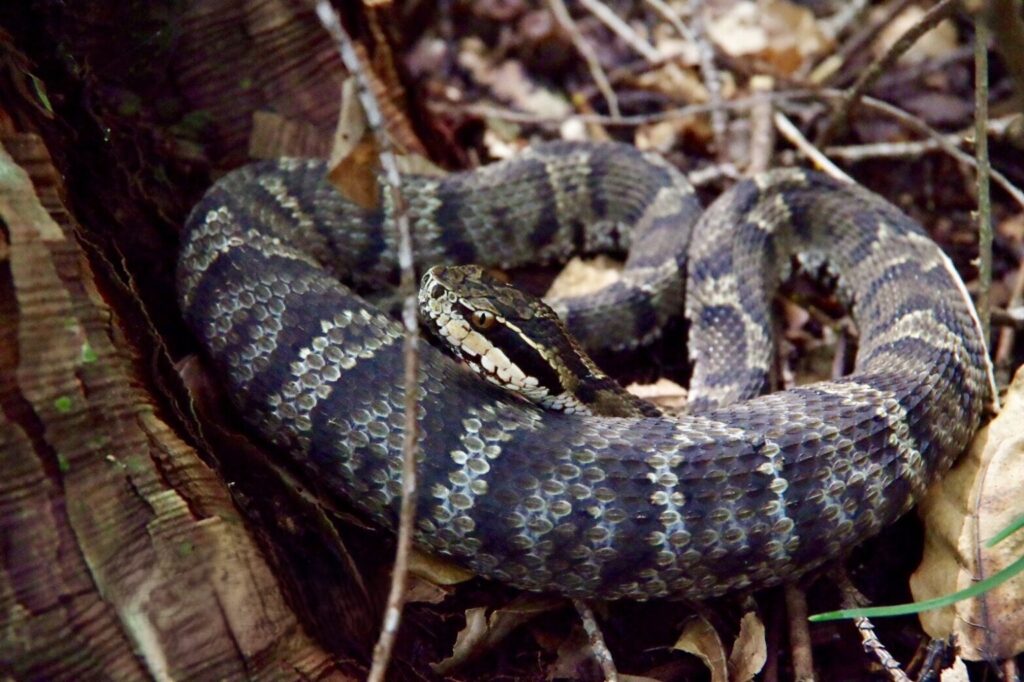
Japan’s long chain of islands stretches across several climate zones, so the snakes found in one region may be very different from those found in another.
Hokkaido has fewer snake species than the warmer parts of Japan, while Honshu, Shikoku, and Kyushu share many of the same mainland species. Amami, Okinawa, and the Yaeyama Islands are home to numerous island species that do not occur on Japan’s main islands.
Snake distribution can differ even between neighboring islands, making location especially important when identifying a snake in southern Japan.
Hokkaido
Hokkaido has fewer snake species than the warmer regions of Japan. Species found there include the Japanese Rat Snake, Japanese Striped Snake, and Japanese Mamushi.
The Japanese Mamushi is venomous and may occur around forests, fields, wetlands, and riverbanks. Most snakes are active during the warmer months and are rarely seen during Hokkaido’s long winter.
Honshu, Shikoku and Kyushu
Honshu, Shikoku, and Kyushu share many of the same snake species. Common examples include the Japanese Rat Snake, Japanese Striped Snake, Tiger Keelback, and Japanese Mamushi.
Honshu is home to eight native snake species, which are introduced in detail later in this guide. The Japanese Mamushi and Tiger Keelback are the main venomous species to be aware of across much of mainland Japan.
Amami, Okinawa and the Yaeyama Islands
The southern islands of Japan are home to many snake species that do not occur on Honshu.
Habu and Okinawa Pit Vipers live on parts of the Amami and Okinawa island groups, while Sakishima Habu are native to islands including Ishigaki and Iriomote. Non-venomous species such as the Ryukyu Green Snake also occur in this region.
Snake distribution differs greatly between islands, so the species found on one island may be absent from a nearby island.
When and Where Snakes Are Active in Japan
Most snakes in Japan are active from spring through autumn, although the exact season varies by region and species.
They are often found around forests, grasslands, rice fields, wetlands, riverbanks, and roadsides. In warmer southern regions, some species may remain active for longer periods and are frequently encountered at night.
Snakes usually avoid people, but they can be difficult to notice among grass, rocks, and fallen leaves. Watch where you step and avoid placing your hands into places you cannot see clearly.
The 8 Native Snakes of Honshu
Honshu is home to eight native snake species, ranging from familiar snakes found near homes and farmland to secretive forest species that are rarely seen.
The following section introduces each species, including its appearance, habitat, behavior, and whether it is venomous.
1) Japanese Rat Snake (Elaphe climacophora)
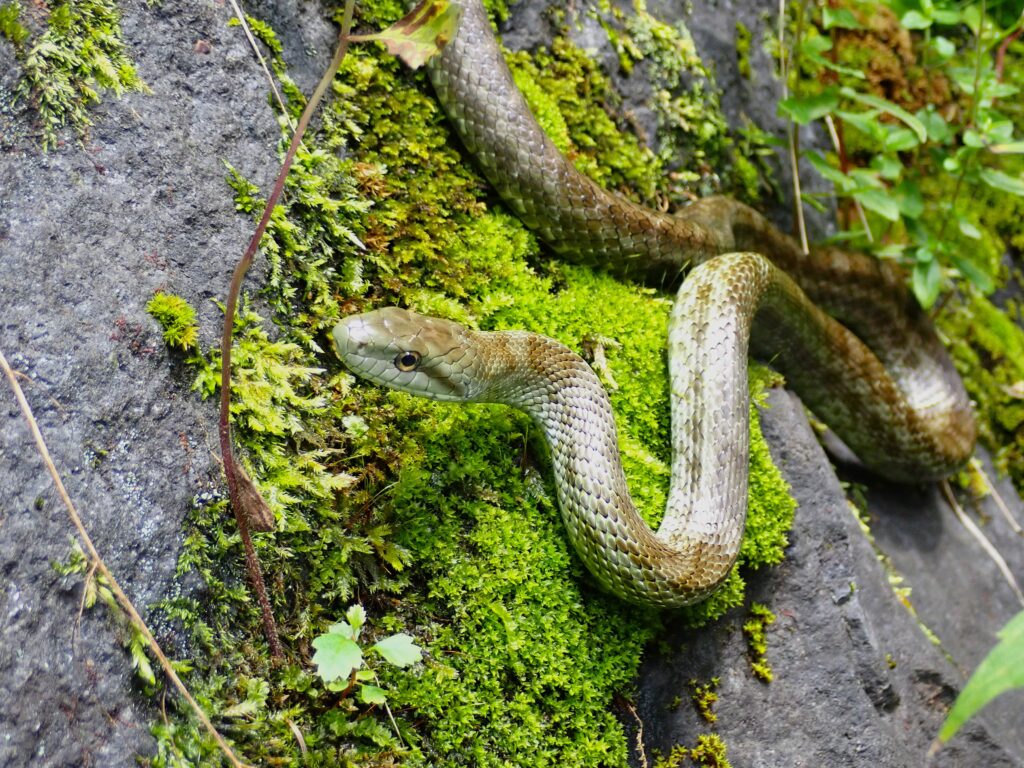
The Japanese Rat Snake is one of the largest snakes in Japan, sometimes reaching 1.5–2 meters in length. This non-venomous species is commonly found around forests, farmland, villages, and buildings, where it hunts rodents, birds, and frogs.
Adults are usually olive, greenish, or brown, while juveniles often have darker blotched patterns.
→ Read the full Japanese Rat Snake guide
2) Japanese Striped Snake (Elaphe quadrivirgata)
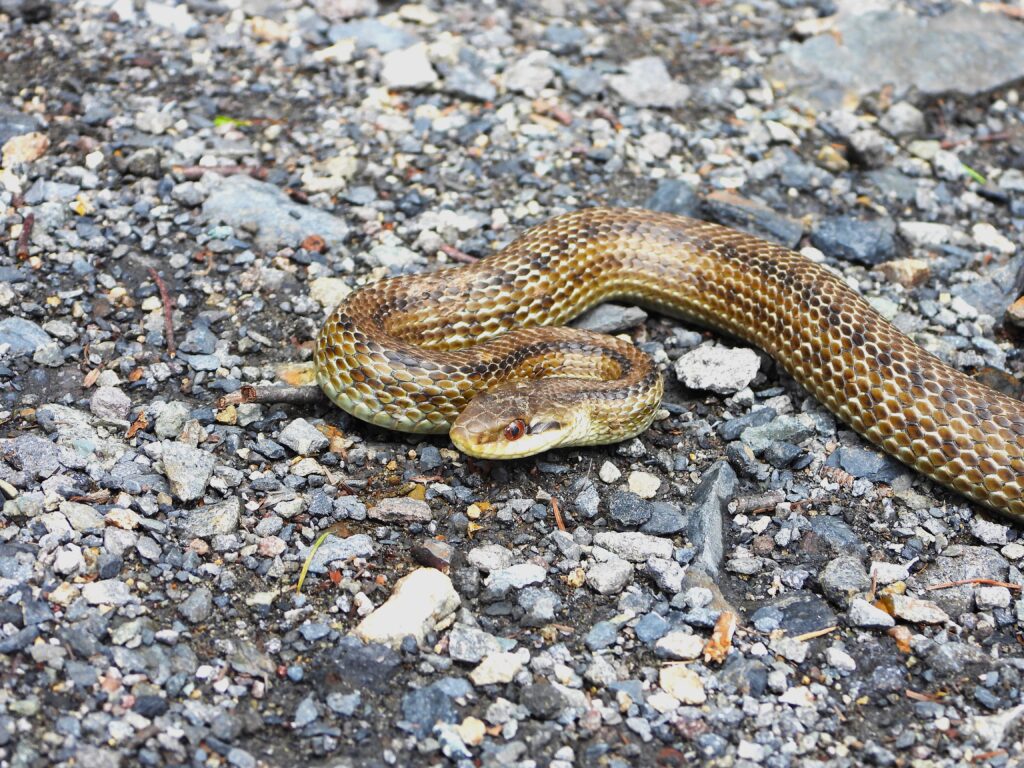
The Japanese Striped Snake is a slender, non-venomous snake commonly found around farmland, rice fields, grasslands, and riverbanks.
Many individuals have four dark stripes running along a yellowish or brown body, although completely black individuals also occur. It is active mainly during the day and may quickly flee into vegetation when approached.
→ Read the full Japanese Striped Snake guide
3) Japanese Woodsnake / Jimuguri (Euprepiophis conspicillata)
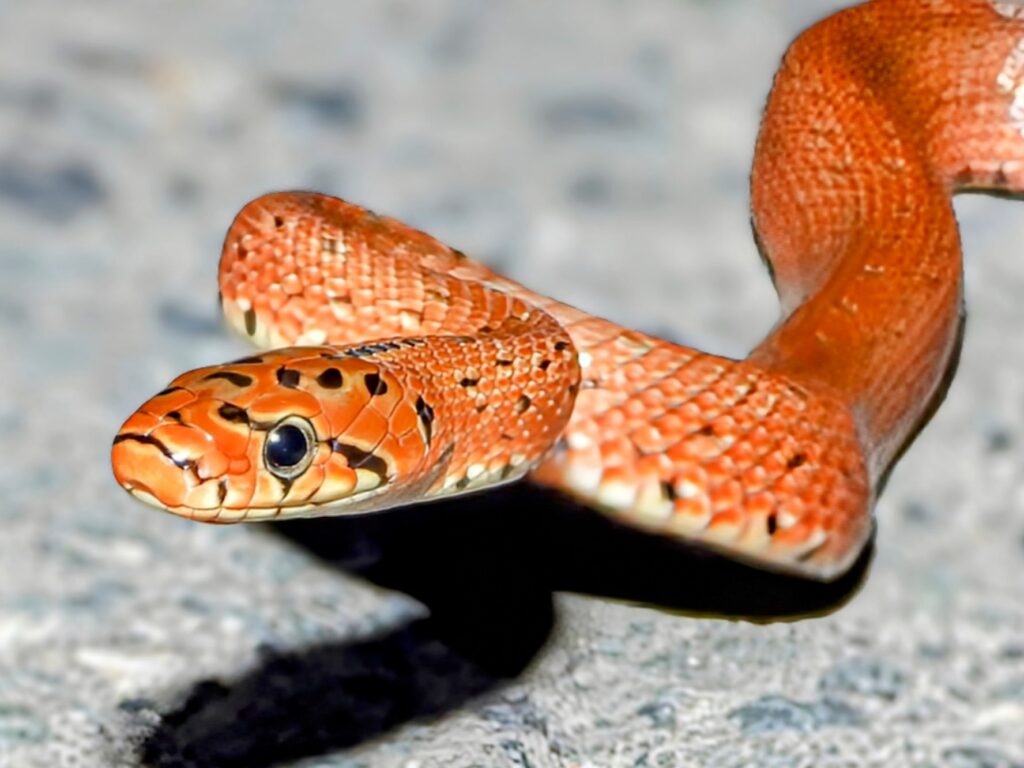
The Japanese Woodsnake, known in Japan as Jimuguri, is a secretive, non-venomous snake that spends much of its time beneath leaf litter, soil, stones, or other cover.
Adults are usually reddish-brown with fine dark markings, while juveniles can have striking red-and-black patterns. Because of its hidden lifestyle, it is encountered less often than many other snakes.
→ Read the full Japanese Woodsnake guide
4) Oriental Odd-tooth Snake (Lycodon orientalis)
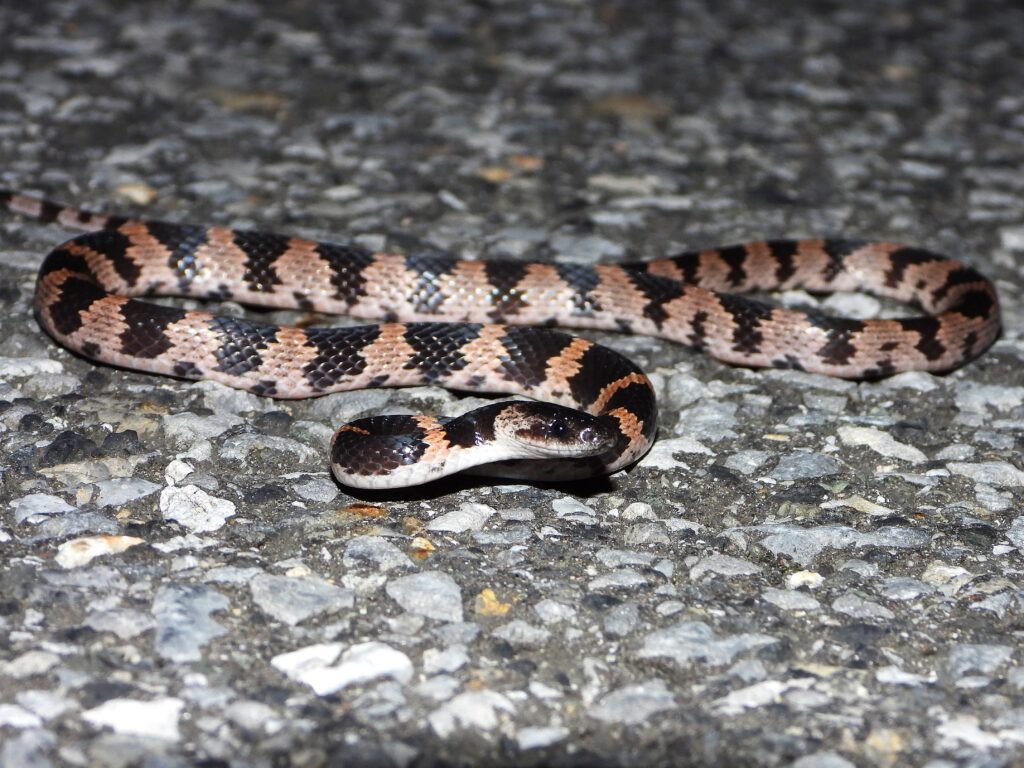
The Oriental Odd-tooth Snake is a small, nocturnal, non-venomous snake with a dark body and narrow white or cream-colored bands.
It lives around forests, rocky slopes, stone walls, and woodland edges. Sightings are uncommon because it remains hidden during the day and is most active on warm, humid nights.
→ Read the full Oriental Odd-tooth Snake guide
5) Tiger Keelback (Rhabdophis tigrinus)
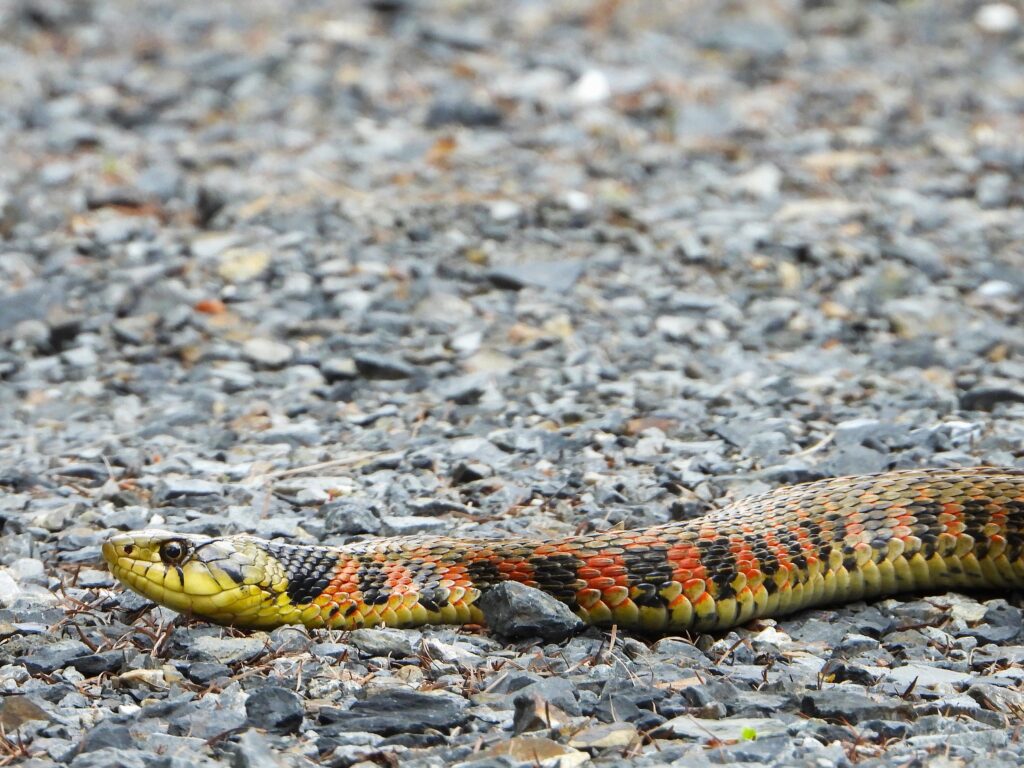
The Tiger Keelback, known in Japan as Yamakagashi, is commonly associated with rice fields, wetlands, ponds, and streams where frogs are abundant.
It is a rear-fanged venomous snake, and a deep bite can cause serious problems with blood clotting. It also stores defensive toxins obtained from toads in glands behind its neck. Never handle this species.
→ Read the full Tiger Keelback guide
6) Japanese Mamushi (Gloydius blomhoffii)
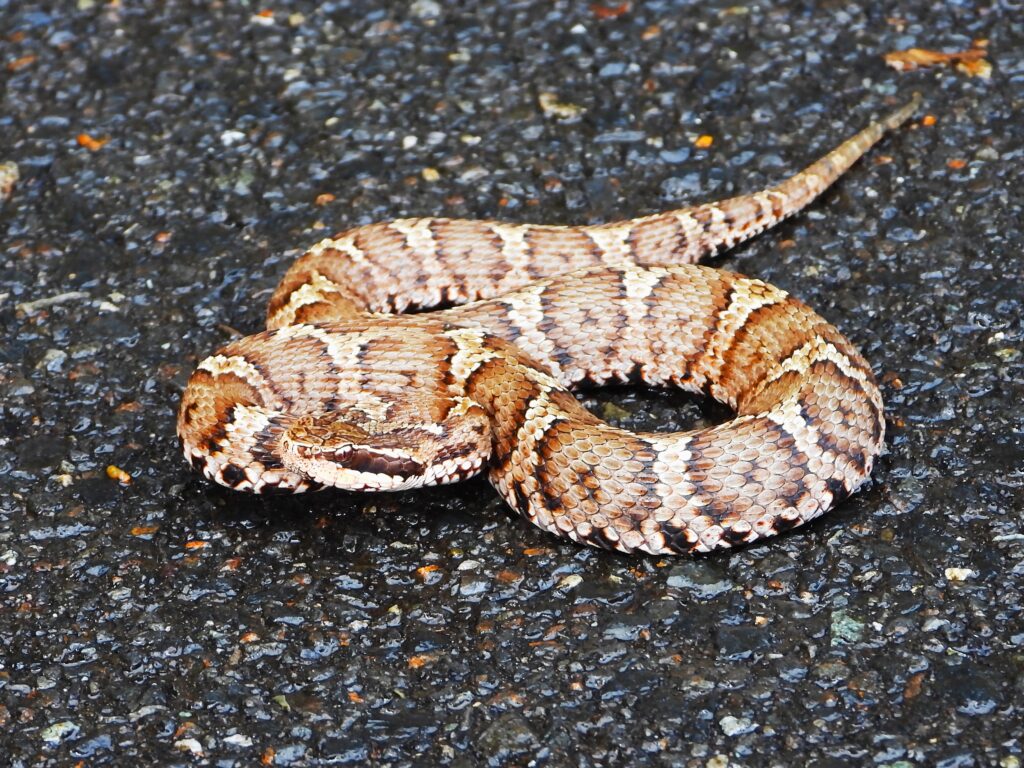
The Japanese Mamushi is a small, thick-bodied venomous pit viper. Its gray-brown or reddish-brown body usually has a series of dark hourglass-shaped markings that blend easily with fallen leaves and vegetation.
It is found around rice fields, grassy banks, streams, forest edges, and stone walls. Mamushi usually remain still rather than approaching people, but may bite if stepped on or disturbed at close range.
→ Read the full Japanese Mamushi guide
7) Japanese Odd-scaled Snake (Achalinus spinalis)
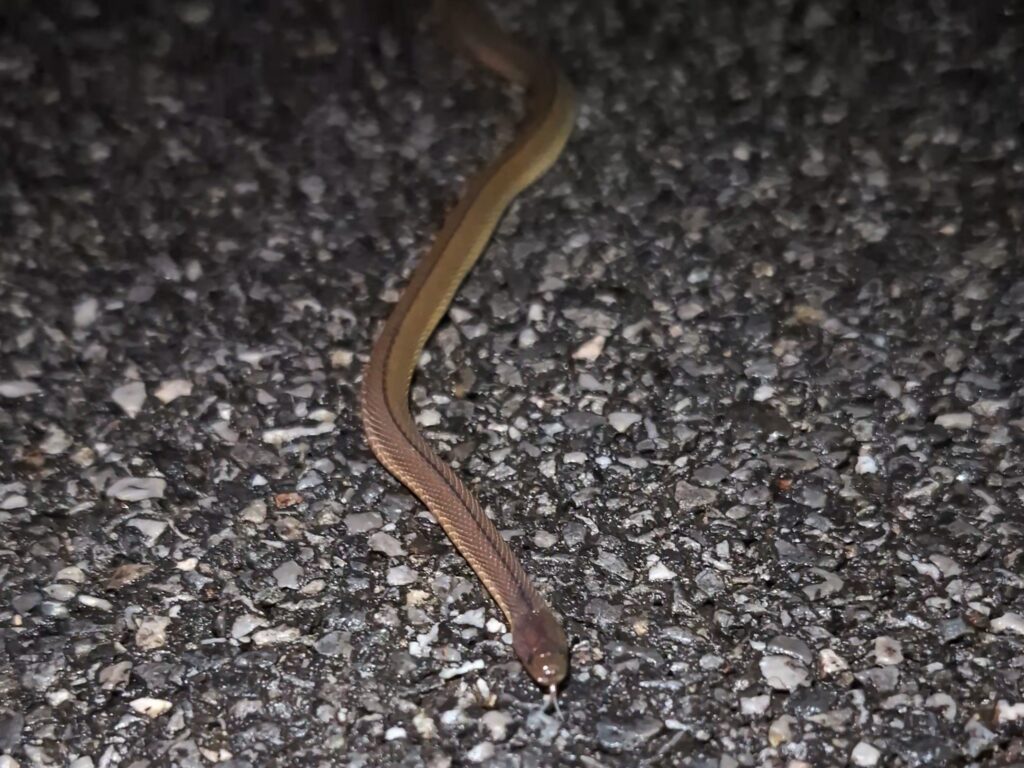
The Japanese Odd-scaled Snake, also called the Takachiho Snake, is a small, non-venomous forest snake with dark, iridescent scales.
It is mainly active at night and hides beneath fallen leaves, stones, and logs in moist forests. It may appear rare because of its secretive behavior, but it is more widespread than sightings suggest.
→ Read the full Japanese Odd-scaled Snake guide
8) Japanese Keelback (Hebius vibakari)
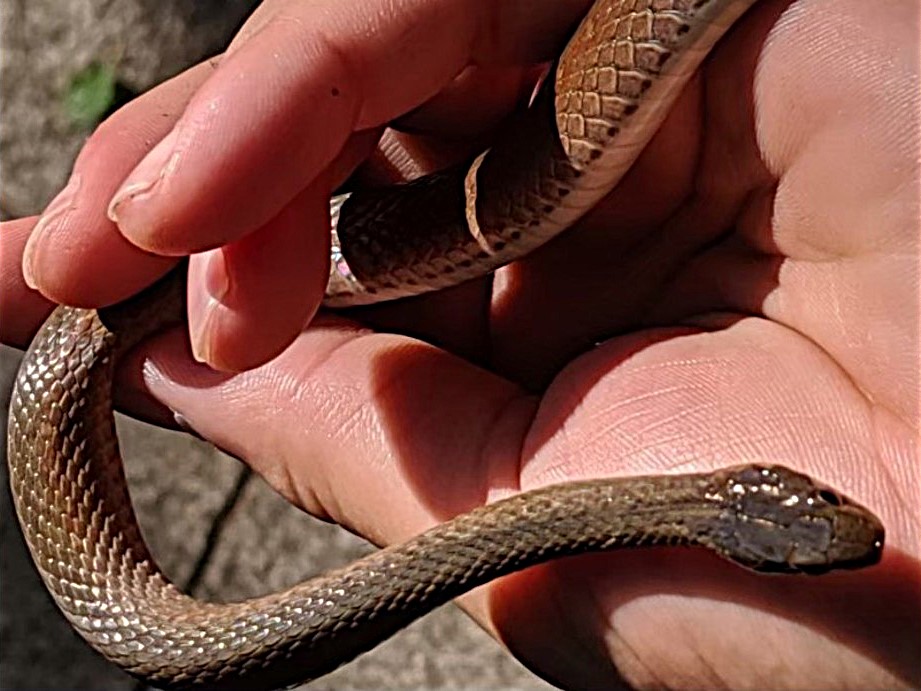
The Japanese Keelback, known in Japan as Hibakari, is a small, slender, non-venomous snake found around rice fields, ponds, wetlands, and irrigation channels.
Its body is usually brown, with a pale marking extending from the mouth toward the neck. It feeds mainly on frogs, tadpoles, small fish, and other animals found near water.
→ Read the full Japanese Keelback guide
What to Do If You Encounter a Snake in Japan
Most snakes in Japan avoid people and will move away if left alone. If you find one, stay calm and keep a safe distance.
- Do not touch, catch, or try to move the snake.
- Slowly move away and give it space to escape.
- Watch where you step around tall grass, rocks, water, and fallen leaves.
- Wear closed shoes and long pants when walking through areas where snakes may be hidden.
- Use a flashlight when walking outdoors at night, especially in southern Japan.
- If a snake appears near a public facility or residential area, contact the property manager or local authorities rather than handling it yourself.
If you are bitten by a snake that may be venomous, seek emergency medical care immediately.
For information about Japan’s dangerous species, see the Venomous Snakes in Japan guide.
Author’s Impression
The Japanese Rat Snake is often one of the first snakes I notice in spring, moving quietly around farmland and buildings.
I have also found Japanese Mamushi almost perfectly hidden among fallen leaves. Encounters like this remind me to watch every step when walking through forests and grassy areas.
Seeing a Japanese Woodsnake, or Jimuguri, was especially memorable. Because it spends so much time hidden beneath leaves and soil, finding one feels very different from encountering a more familiar snake.
Frequently Asked Questions
Are There Snakes in Japan?
Yes. Snakes live throughout Japan, from Hokkaido to the subtropical islands of Okinawa. The species found in each area differ greatly by region.
Are Snakes Common in Japan?
Snakes are widespread, but many people rarely see them because they remain hidden and avoid humans. Encounters are more likely during the warmer months around forests, rice fields, wetlands, riverbanks, and farmland.
Are There Snakes in Tokyo?
Yes. Tokyo is home to several snake species, including the Japanese Rat Snake, Japanese Striped Snake, Tiger Keelback, and Japanese Mamushi. Encounters are more likely in wooded, mountainous, and riverside areas than in central urban districts. Tokyo’s environmental authority confirms that Mamushi and Tiger Keelbacks occur within the metropolitan area.
Are There Snakes in Hokkaido?
Yes. Hokkaido has fewer snake species than warmer parts of Japan, but Japanese Rat Snakes, Japanese Striped Snakes, and Japanese Mamushi occur there. The Hokkaido Government specifically warns visitors that Mamushi inhabit the island.
Which Snakes in Japan Are Venomous?
The main venomous snakes of mainland Japan are the Japanese Mamushi and Tiger Keelback. Habu, Sakishima Habu, Okinawa Pit Vipers, and several other venomous species occur on Japan’s southern islands.
For regional distributions and bite safety, see the Venomous Snakes in Japan guide.
Related Japanese Snake Guides
Explore more guides to Japan’s native snakes, venomous species, and identification:
▶Reptiles in Japan: Native Species Guide
▶ Animals in Japan: Native, Endemic & Iconic Species
▶Venomous Snakes in Japan: Species, Regions & Safety
▶Japanese Mamushi: Identification, Habitat and Behavior
▶Tiger Keelback: Identification, Habitat and Behavior
▶Japanese Woodsnake: Identification and Habitat