Wild Animals You Can See in Winter in Japan
Winter in Japan is often considered a quiet season for wildlife, but that impression can be misleading.
Some animals become less active or harder to find, while others remain active throughout the colder months. Winter visitors also arrive from northern regions, making this an especially interesting season for watching birds.
This guide focuses on wild animals that visitors can realistically see in Japan during winter, especially mammals and birds that can be observed without specialized surveys or equipment.
For birds, I also separate winter visitors that migrate to Japan for the colder months from resident species that can be seen throughout the year.
If you are planning a winter wildlife trip and want to know where to go, when to visit, and what the overall experience is like, see:
▶ Winter Wildlife in Japan: Animals You Can See in Winter
Quick Answer: Wild Animals You Can See in Winter in Japan
If you want a simple answer, some of the wild animals you can realistically see in Japan during winter include:
Mammals
- Japanese Macaque — active throughout winter in many mountain and forest areas
- Sika Deer — widespread and active throughout the colder months
Birds That Visit Japan in Winter
- Dusky Thrush — parks, fields, and riverbanks
- Daurian Redstart — parks, gardens, and forest edges
- Eurasian Wigeon — ponds, lakes, and rivers
- Northern Pintail — lakes, wetlands, and wide rivers
- Tufted Duck — deeper ponds, lakes, and reservoirs
- Whooper Swan — lakes and wetlands, especially in northern Japan
Resident Birds You Can Still See in Winter
- Japanese Tit — wooded parks, forests, and gardens
- Brown-eared Bulbul — parks, gardens, and forest edges
These are not the only animals active in winter, but they are among the species visitors have a realistic chance of encountering without specialized wildlife surveys.
Mammals You Can See in Winter in Japan
Mammals can be harder to find than birds during winter, but some species remain active and can still be encountered without specialized surveys.
Two of the most realistic mammals for visitors to see are Japanese Macaques and Sika Deer.
Japanese Macaque
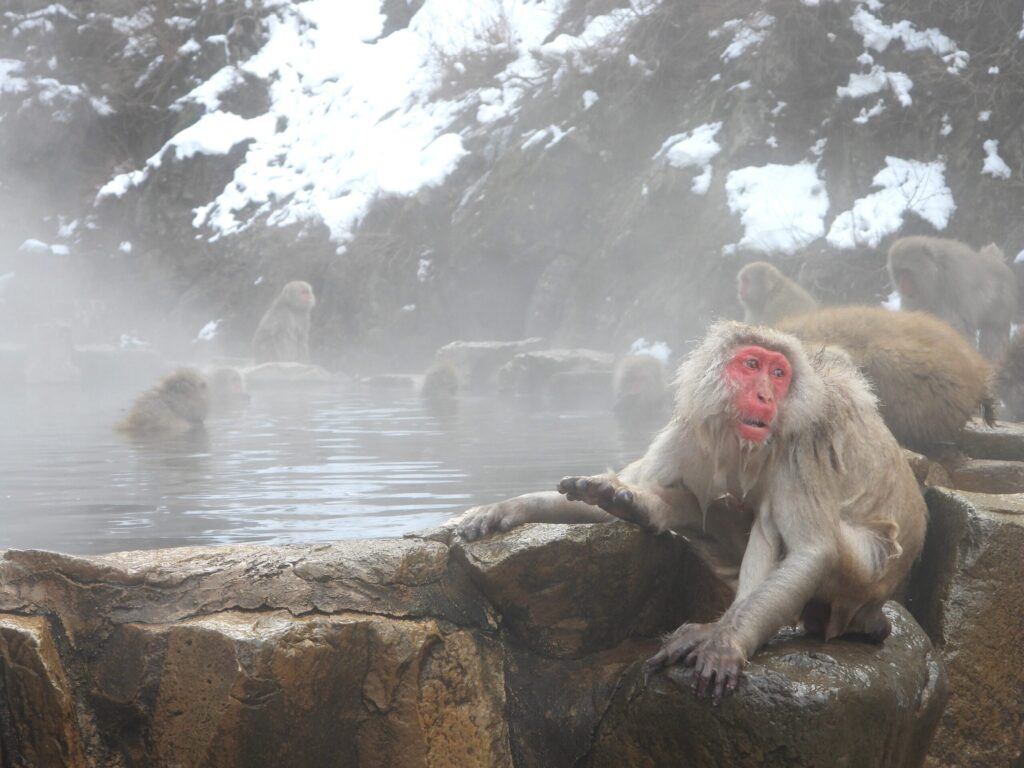
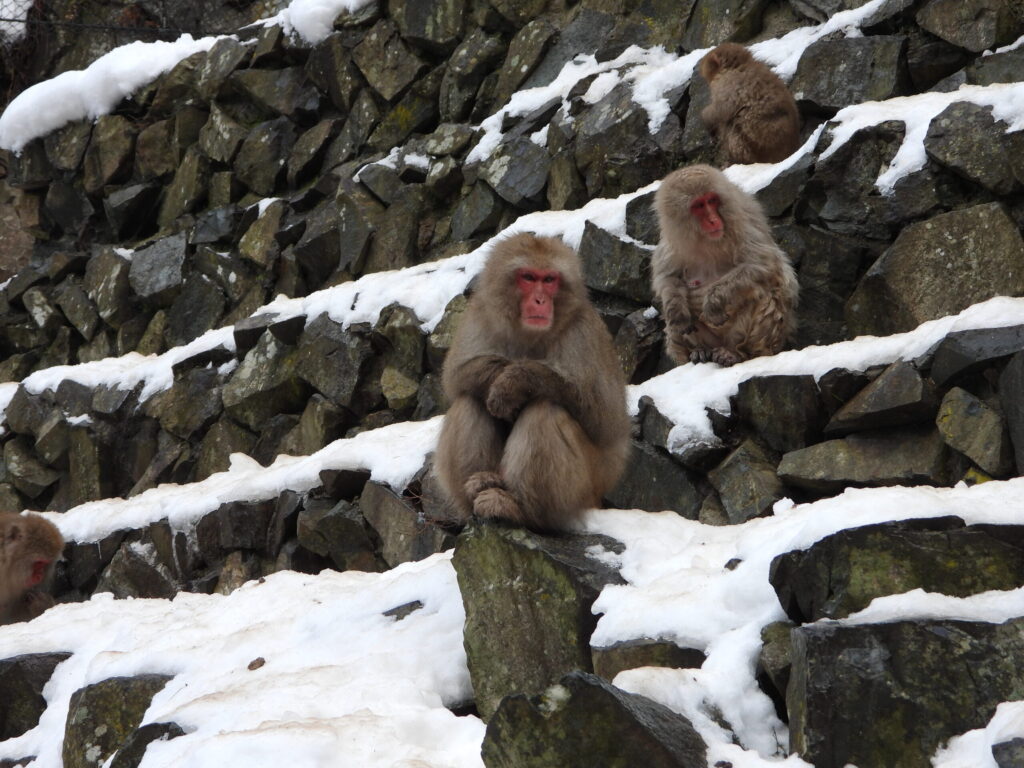
Japanese Macaques remain active throughout winter, including in snowy regions.
With fewer leaves on the trees, their movements can sometimes be easier to notice than during summer. Tracks in snow may also reveal where macaques have recently passed.
They are widely known as “snow monkeys,” but hot-spring bathing is limited to certain populations and is not typical behavior for all Japanese Macaques.
Sightings still depend heavily on location, weather, and human activity.
▶ Where to See Japanese Macaques in Japan
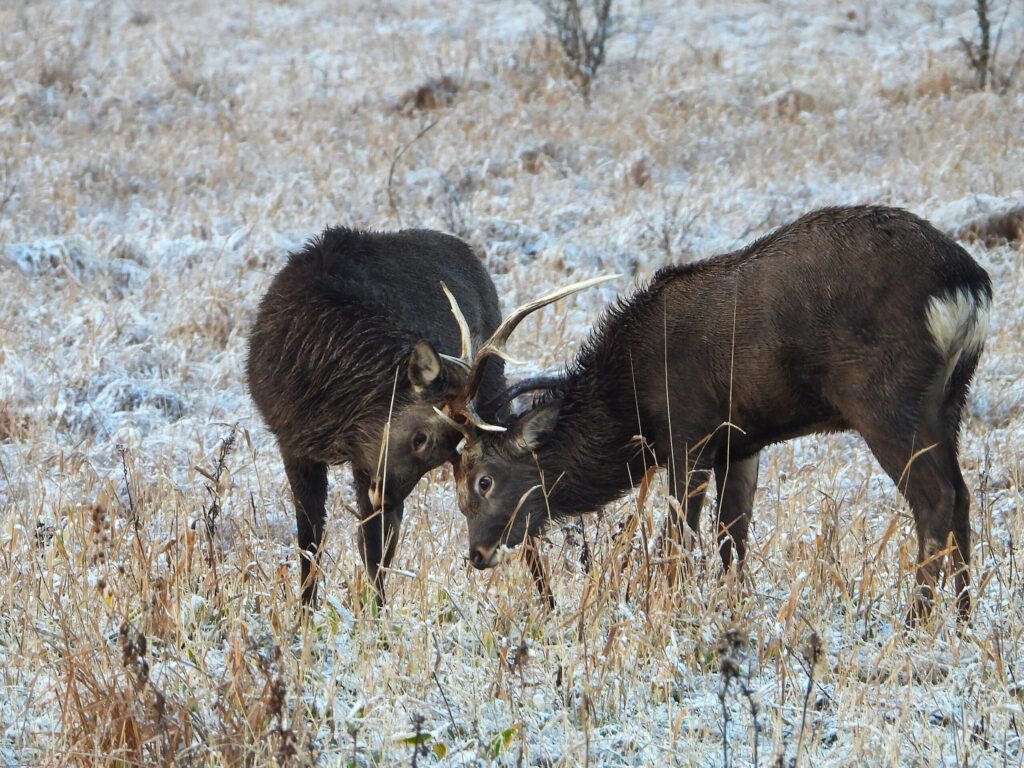
Sika Deer
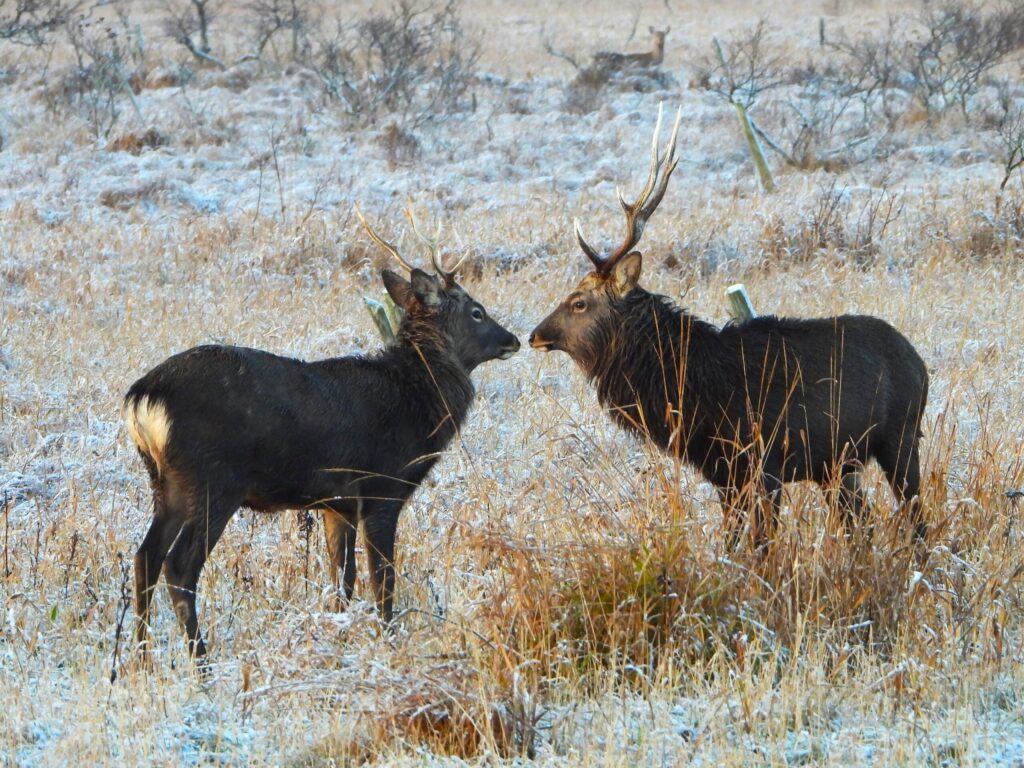
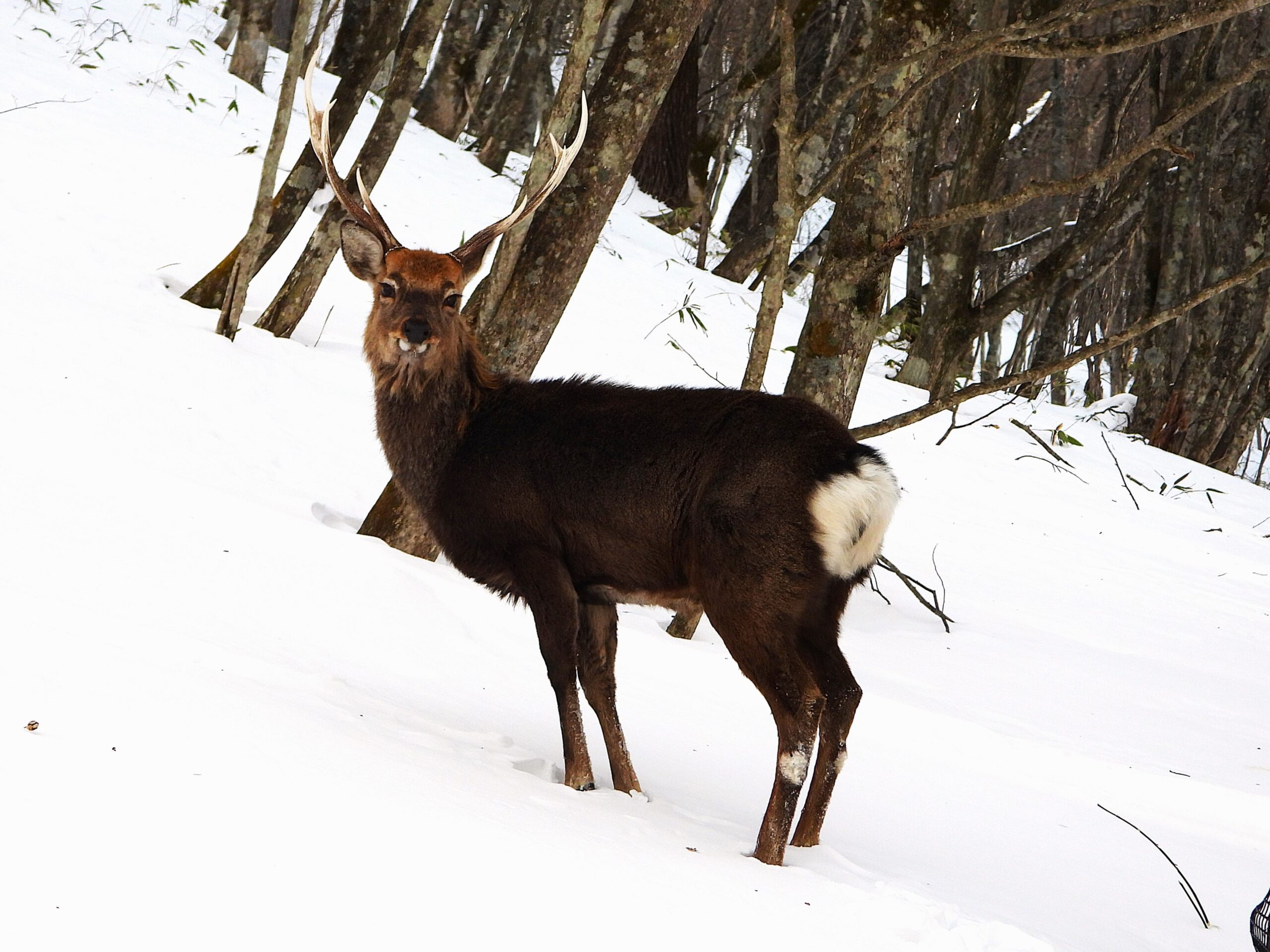
Sika Deer remain active throughout winter and are one of the large mammals visitors have a realistic chance of seeing in Japan.
They live across much of the country and use forests, grasslands, farmland, and other open habitats.
In deciduous forests, reduced vegetation can sometimes make deer easier to notice during winter than in the greener months.
I have seen Sika Deer many times in Japan, including during winter, and they are one of the mammals I would consider a realistic target for visitors.
▶ Best Places to See Sika Deer in Japan
Birds That Arrive in Japan in Winter
Many birds seen in Japan during winter are seasonal visitors that migrate south from colder regions.
They can be found in a wide range of habitats, including parks, farmland, rivers, lakes, and wetlands. For visitors, these birds are often among the easiest examples of Japan’s seasonal wildlife to encounter.
The species below are common or relatively realistic targets during winter.
Dusky Thrush
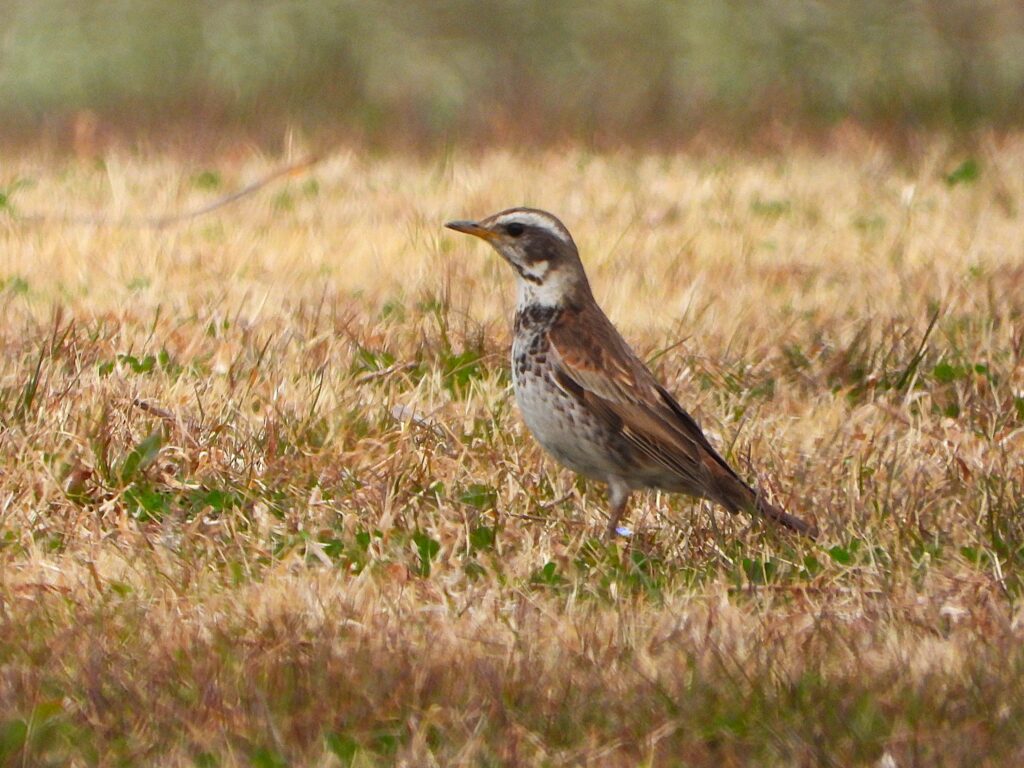
The Dusky Thrush is one of the most familiar winter birds in Japan.
It is often seen in parks, farmland, riverbanks, and other open areas, where it frequently feeds on the ground.
Because it uses open habitats and spends a lot of time on the ground, it is one of the winter birds visitors have a realistic chance of noticing.
Daurian Redstart
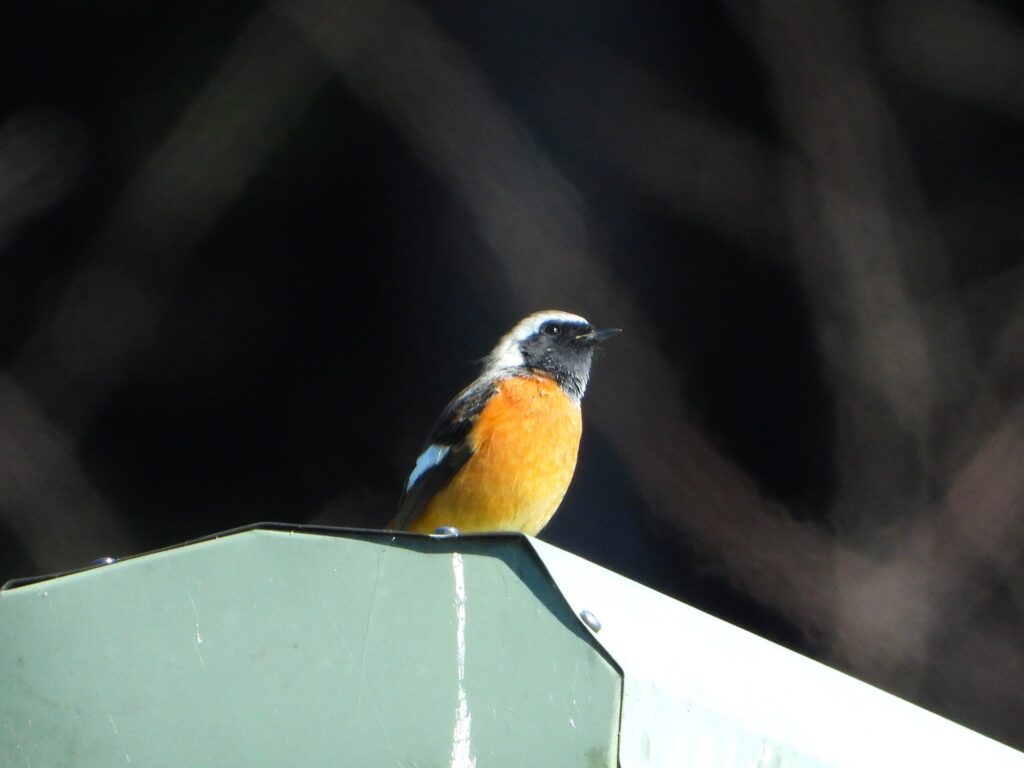
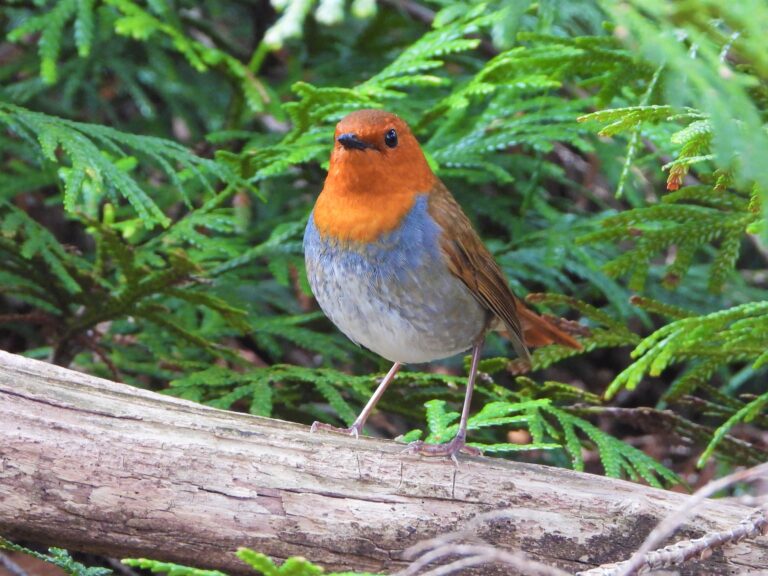
The Daurian Redstart is a familiar winter visitor in Japan.
It is often seen around parks, gardens, riverbanks, forest edges, and residential areas, where it frequently perches in open, easy-to-see places.
Because it often uses exposed branches, fences, and posts, it is one of the winter birds that visitors can notice even without specialist birdwatching experience.
Eurasian Wigeon
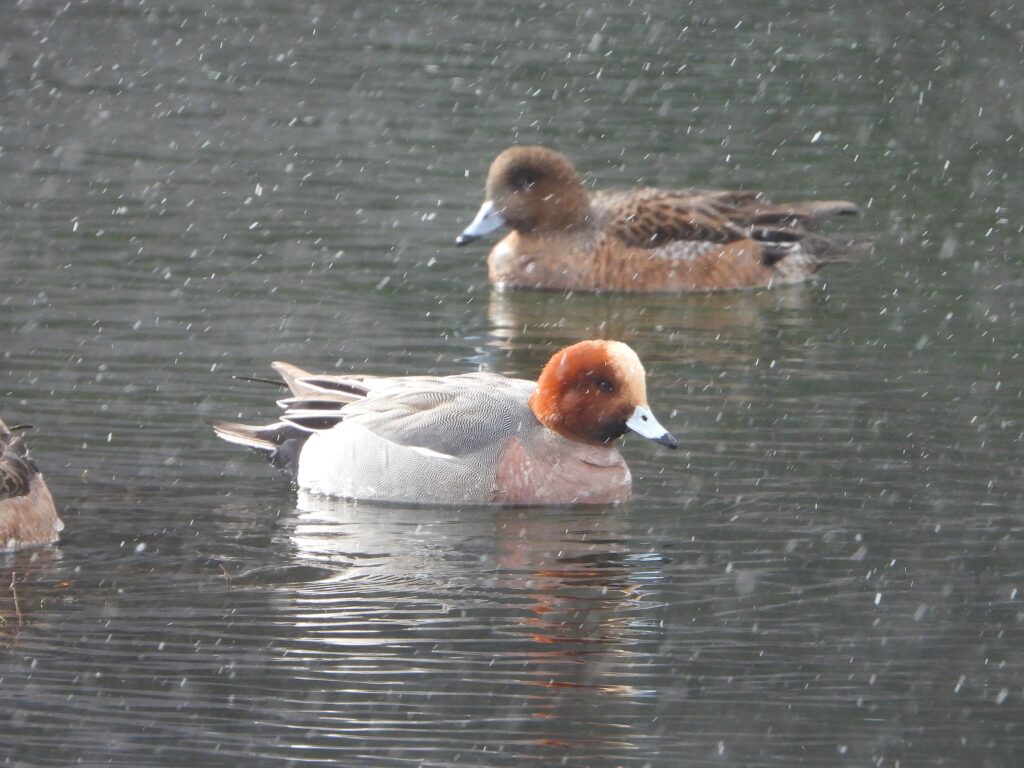
Eurasian Wigeons are common winter visitors to Japan.
They are often seen on ponds, lakes, rivers, and wetlands, usually in small groups or larger flocks.
Because they gather on open water and are active during the day, they are among the easier winter ducks for visitors to find.
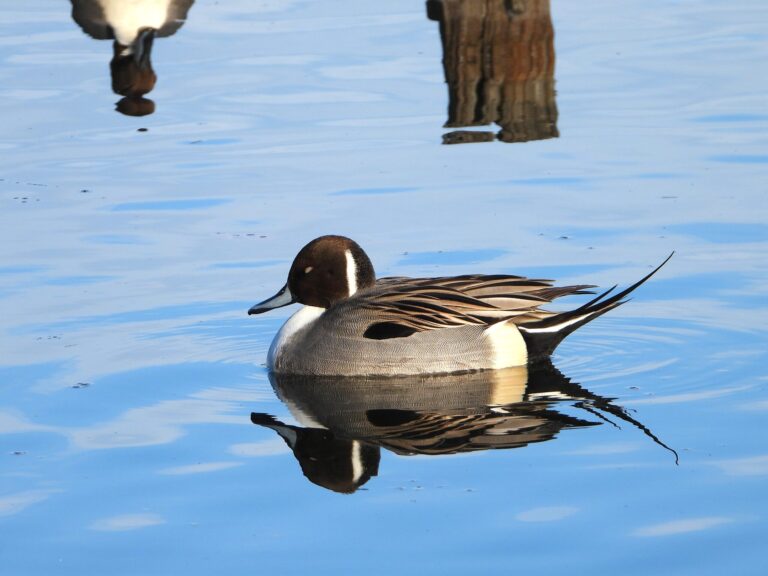
Northern Pintail
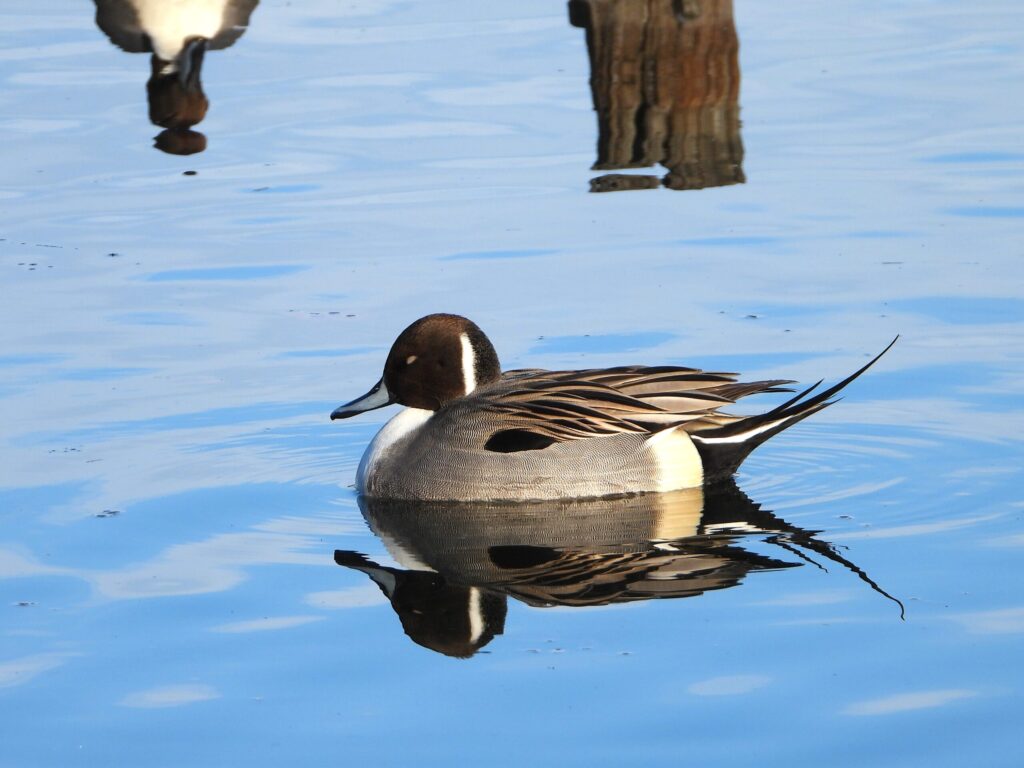
Northern Pintails are common winter visitors to Japan.
They can often be seen on lakes, wetlands, ponds, and wide rivers, sometimes together with other winter ducks.
Their long necks and slender shape make them relatively easy to recognize once you become familiar with common Japanese waterfowl.
Tufted Duck
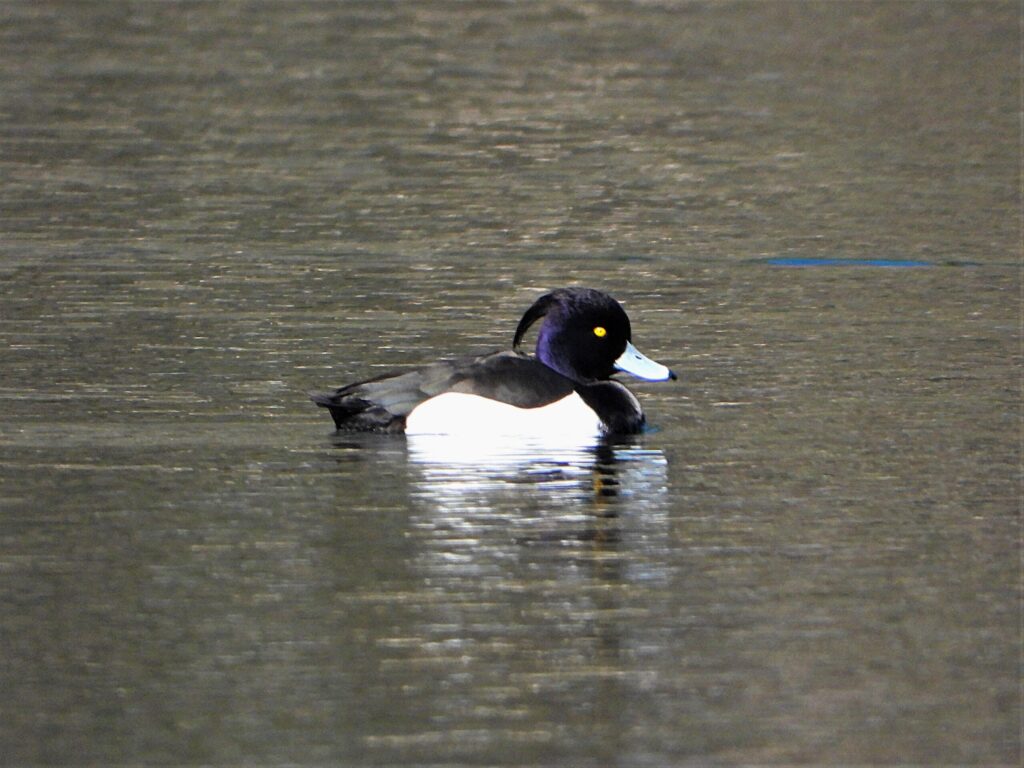
Tufted Ducks are common winter visitors to Japan.
They are often seen on deeper ponds, lakes, reservoirs, and slow-moving rivers, where they regularly dive underwater to feed.
Because they often gather in groups on open water, they are another winter duck that visitors have a good chance of seeing.
Whooper Swan
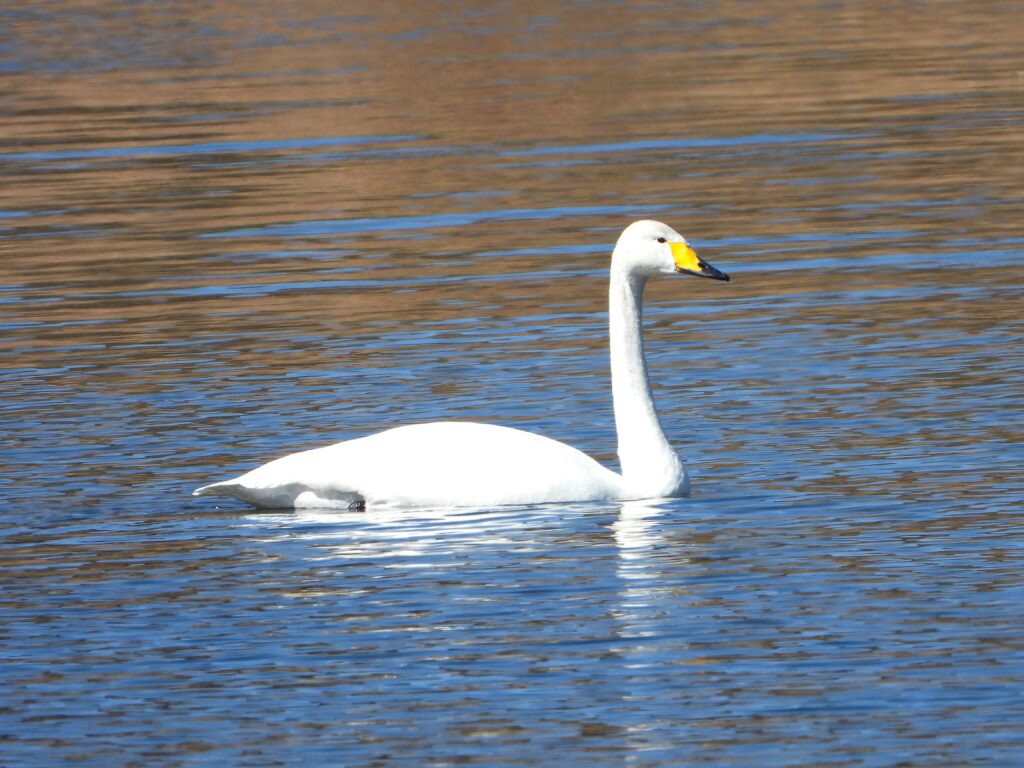
Whooper Swans are large winter visitors to Japan.
They can be seen on lakes, rivers, wetlands, and sheltered coastal waters, especially in Hokkaido and northern Honshu.
Because of their large size and white plumage, they are often easy to notice even from a distance, and some areas attract large flocks during winter.
Birds You Can Still See in Winter (Resident Species)
Not every bird seen in winter is a winter visitor.
Many resident species remain in Japan throughout the year and can still be found in parks, gardens, forests, and residential areas during the colder months.
Because deciduous trees lose their leaves, some resident birds can actually become easier to notice in winter.
Japanese Tit
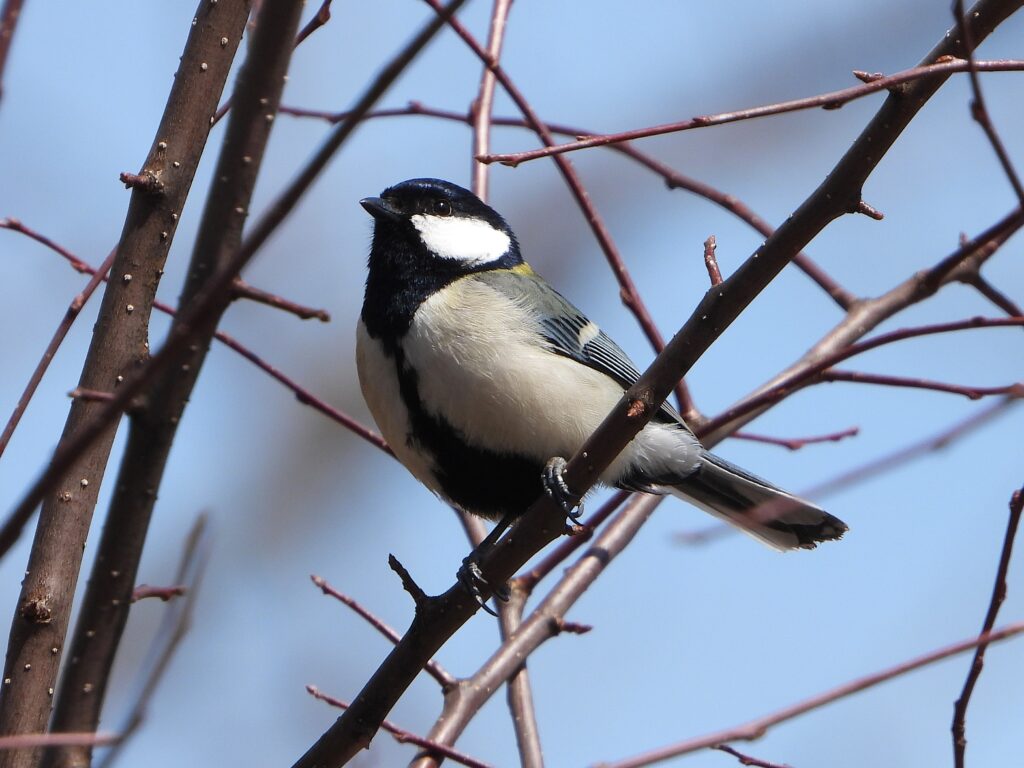
Japanese Tits are common resident birds that can be seen throughout the year in Japan.
During winter, they are often found in parks, gardens, forests, and wooded residential areas, sometimes moving in mixed flocks with other small birds.
Their bold black-and-white head pattern makes them relatively easy to recognize once you know what to look for.
Brown-eared Bulbul
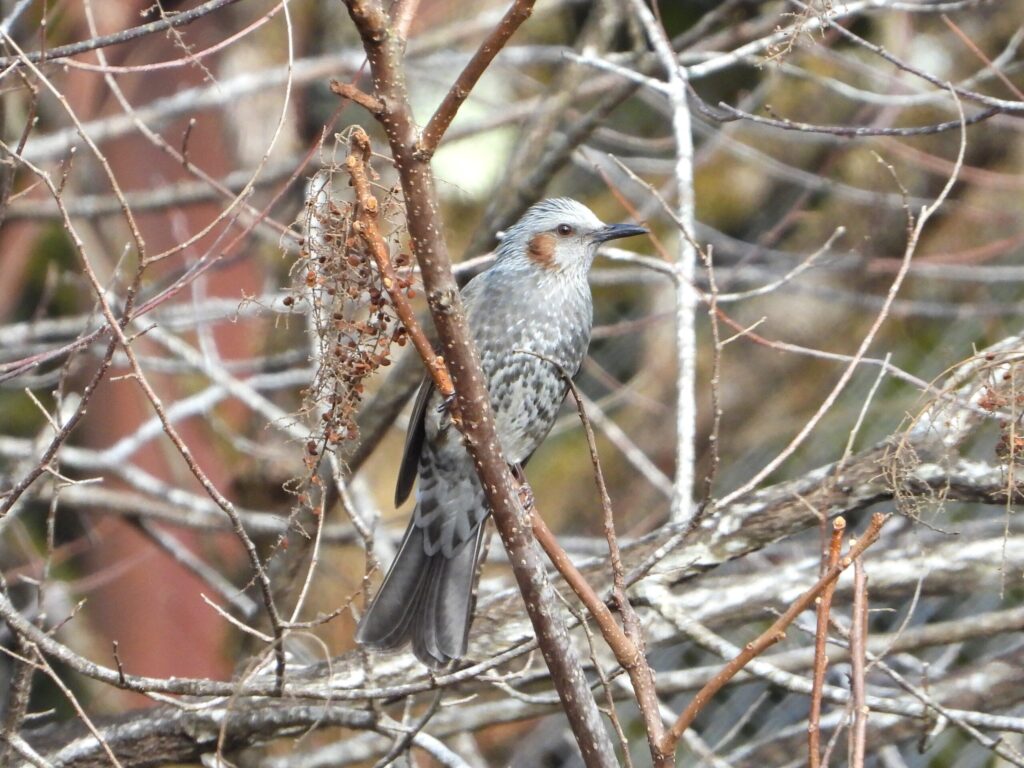
Brown-eared Bulbuls are common resident birds that remain active throughout winter in Japan.
They can often be seen in parks, gardens, forest edges, and residential areas, where they feed on fruit, berries, and other available food.
Their loud calls and active behavior often make them easier to notice than many smaller birds.
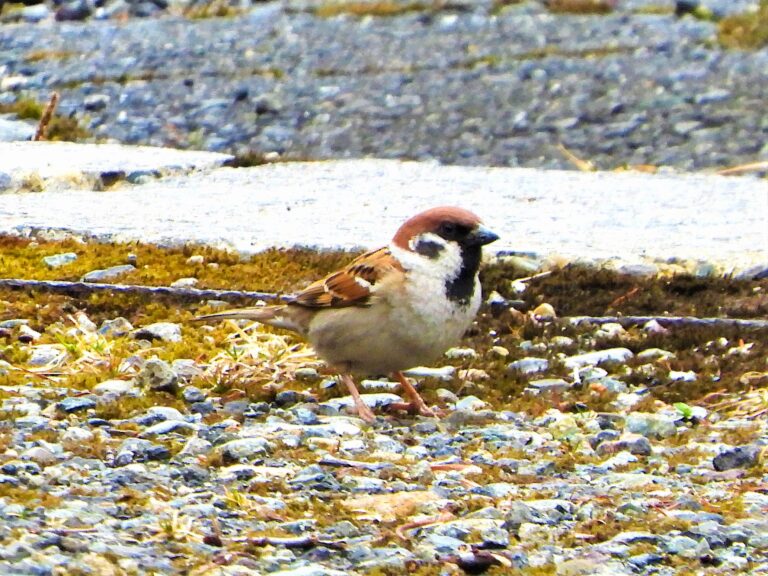
Eurasian Tree Sparrow
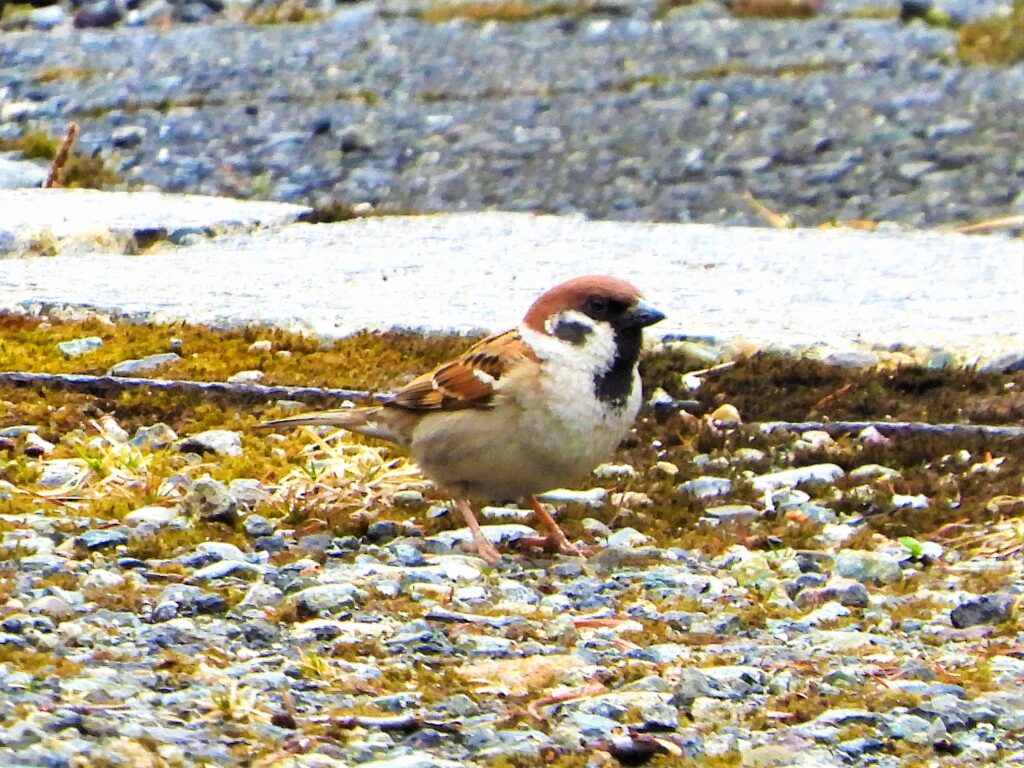
Eurasian Tree Sparrows are among the most familiar resident birds in Japan.
They remain active throughout winter and can be seen in cities, parks, shrine and temple grounds, farmland, and residential areas across the country.
Because they live so close to people and are active during the day, they are one of the easiest wild birds for visitors to notice in winter.
Japanese White-eye
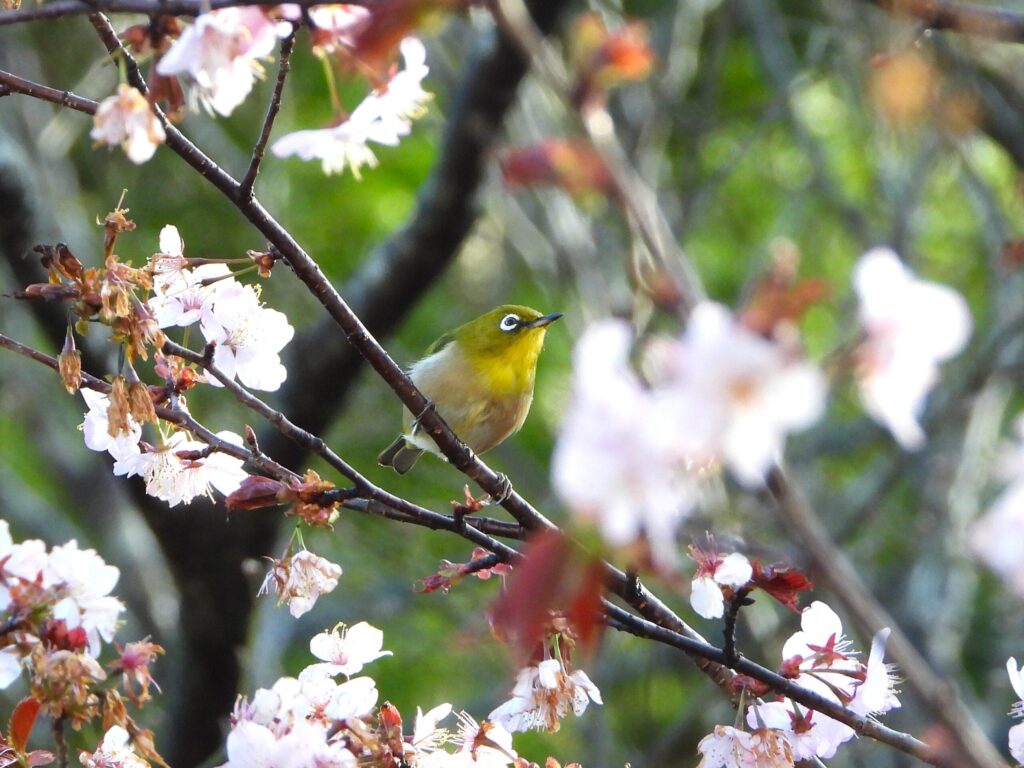
Japanese White-eyes are common resident birds in much of Japan.
They remain active during winter and can be found in parks, gardens, forest edges, shrine grounds, and other wooded areas.
Their bright green plumage and distinctive white eye-ring make them relatively easy to recognize once spotted.
Where to See Winter Wildlife in Japan
The best place to look depends on the species.
Parks, gardens, rivers, lakes, wetlands, farmland, and forest edges can all offer winter wildlife encounters. Birds are often easiest to find around open water and green spaces, while mammals are more likely in quieter forest and rural areas.
If you want a destination-based guide covering where to go and when to visit, see:
▶ Winter Wildlife in Japan: Animals You Can See in Winter
Best Conditions for Winter Wildlife Observation
Wildlife is not equally easy to find every day.
Early morning and late afternoon are often productive times, especially for mammals and birds moving between feeding and resting areas.
After snowfall, tracks can make it easier to notice where mammals have been active, even when the animals themselves remain hidden.
Open water, forest edges, farmland, and areas with fewer leaves can also make wildlife easier to spot during winter.
Wildlife Watching Ethics in Winter
Winter can be a difficult season for wild animals, so it is especially important to avoid unnecessary disturbance.
Keep a respectful distance, never feed wildlife, and do not chase animals for photographs.
If you are watching animals at night or around dusk, avoid repeatedly shining strong lights directly at them.
Good wildlife watching should allow the animal to continue its normal behavior without reacting to your presence.
Author’s Impression
What I like about winter wildlife watching in Japan is that you do not always need to visit a famous wildlife destination.
Parks, rivers, ponds, farmland, and forest edges can all become interesting places once winter birds arrive and vegetation becomes thinner.
I have watched Daurian Redstarts in ordinary urban parks, and when I stayed still, they sometimes came surprisingly close. Experiences like this are a good reminder that winter wildlife can be found in everyday places, not only at famous nature reserves.
For beginners, winter can actually be one of the easiest seasons to start noticing wild animals in Japan.
Related Articles
▶ Winter Wildlife in Japan: Animals You Can See in Winter