Venomous Snakes in Japan: Species, Regions & Safety
Japan is home to several venomous snakes, but the species you may encounter depend greatly on the region.
Mamushi and Tiger Keelbacks occur across much of mainland Japan, while Habu and related pit vipers are mainly found on Okinawa, Amami, and other southern islands.
Quick Answer: Does Japan Have Venomous Snakes?
Yes. Japan has several venomous snake species, including the Japanese Mamushi, Tiger Keelback, Habu, Sakishima Habu, and Okinawa Pit Viper.
The snakes most often associated with medically serious bites are the Japanese Mamushi, Habu, and Tiger Keelback, known in Japan as Yamakagashi.
These snakes do not normally seek out people. Bites are more likely when a snake is stepped on, handled, or disturbed at close range. If you see a snake you cannot identify, keep your distance and do not try to catch it.
The Main Venomous Snakes in Japan
Venomous snakes are not distributed evenly across Japan.
In much of mainland Japan, the main species to be aware of are the Japanese Mamushi and Tiger Keelback. In Amami, Okinawa, and the Yaeyama Islands, Habu and related pit vipers are also found.
The species below are the venomous snakes most relevant to people living in or traveling through Japan. Rarer coral snakes and venomous sea snakes are covered separately later in this guide.
Japanese Mamushi
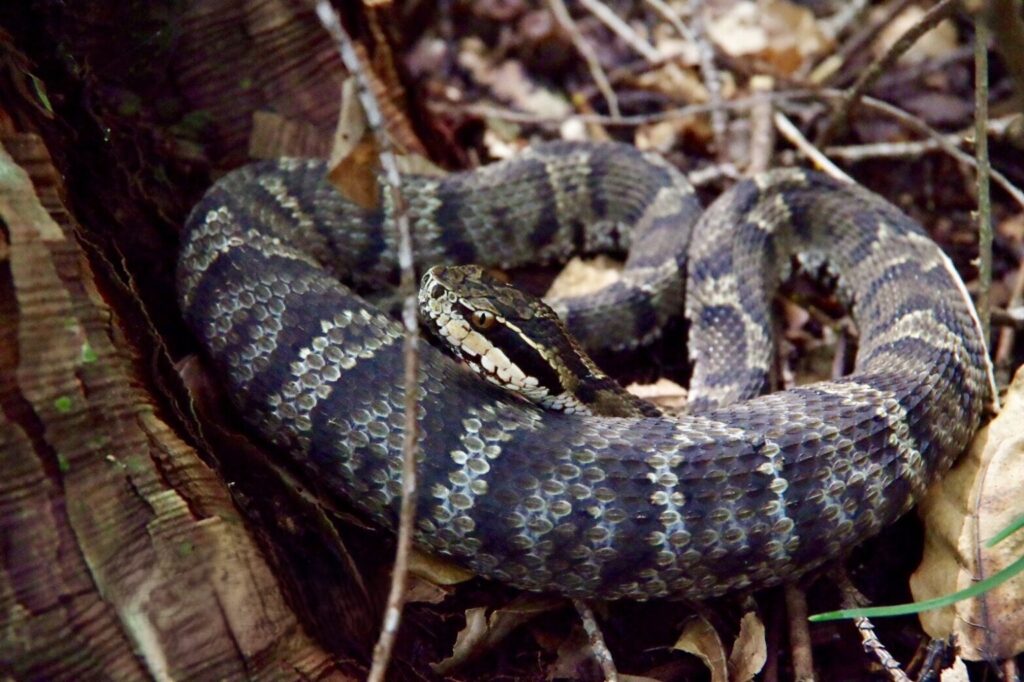
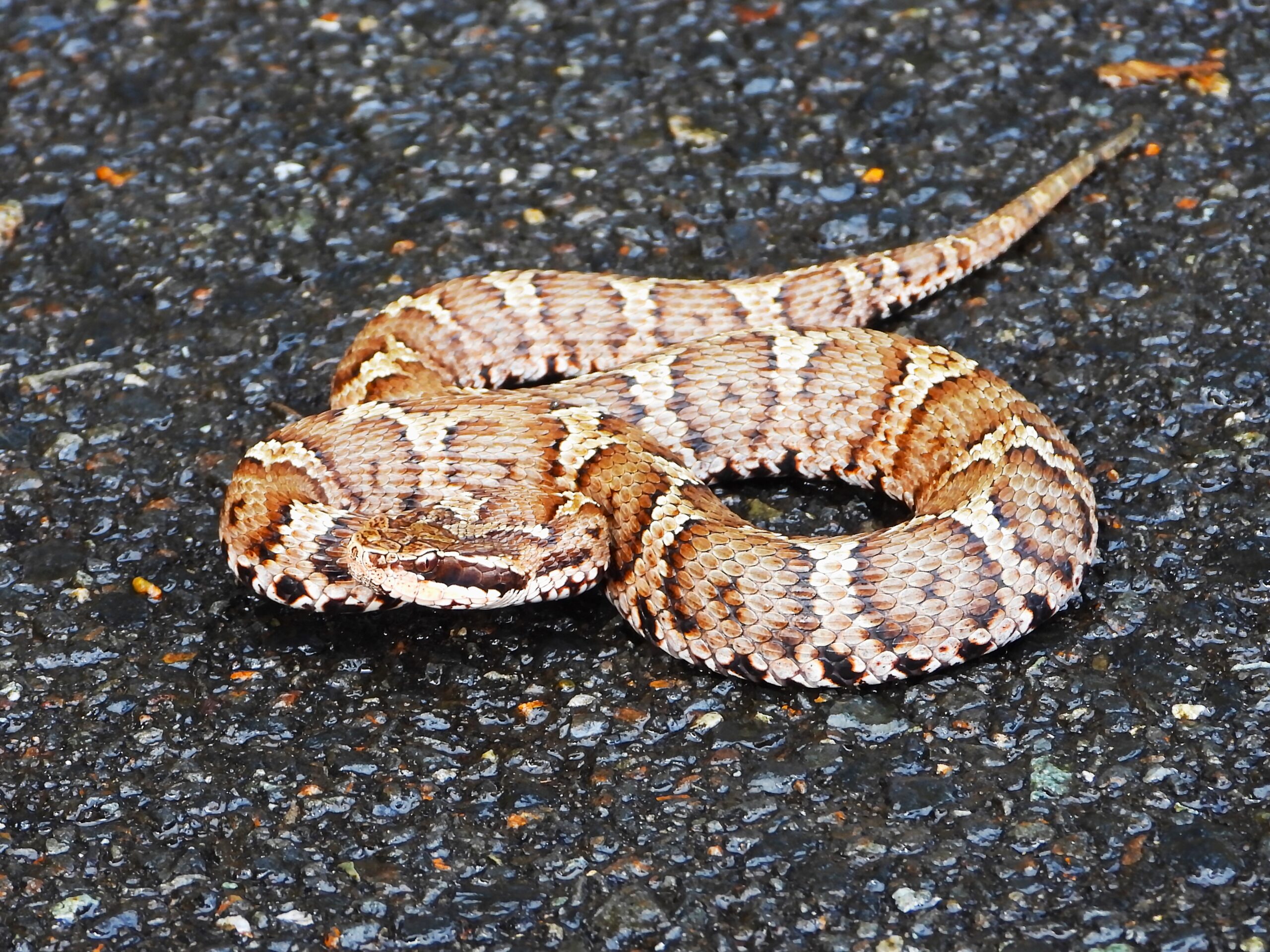
The Japanese Mamushi (Gloydius blomhoffii) is a small pit viper found widely from Hokkaido to Kyushu. It is one of the main venomous snakes to be aware of across mainland Japan.
Mamushi usually have a short, thick body with dark blotches along the back. Their brown or gray coloring can blend easily with fallen leaves and vegetation, making them difficult to notice on the ground.
They generally avoid people, but may bite if they are stepped on, touched, or handled. For a closer look at its appearance, habitat, and behavior, see the full Japanese Mamushi guide. Information about symptoms and emergency action is covered separately in the Mamushi bite guide.
➡️ Read more about this species here.
Tiger Keelback
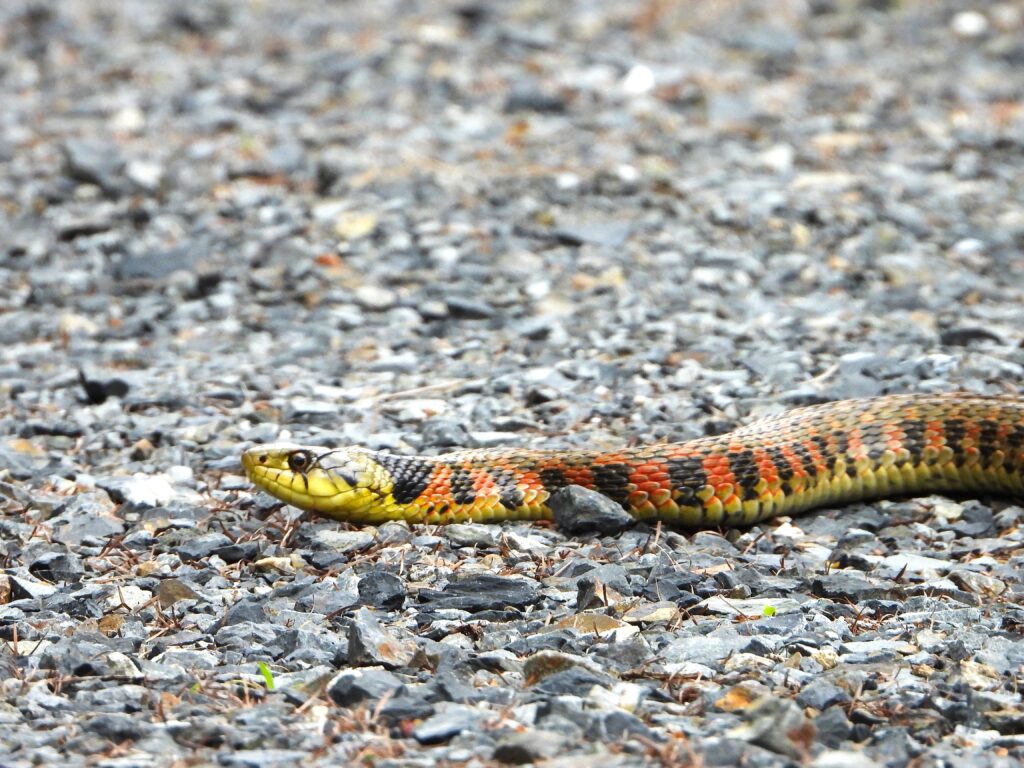
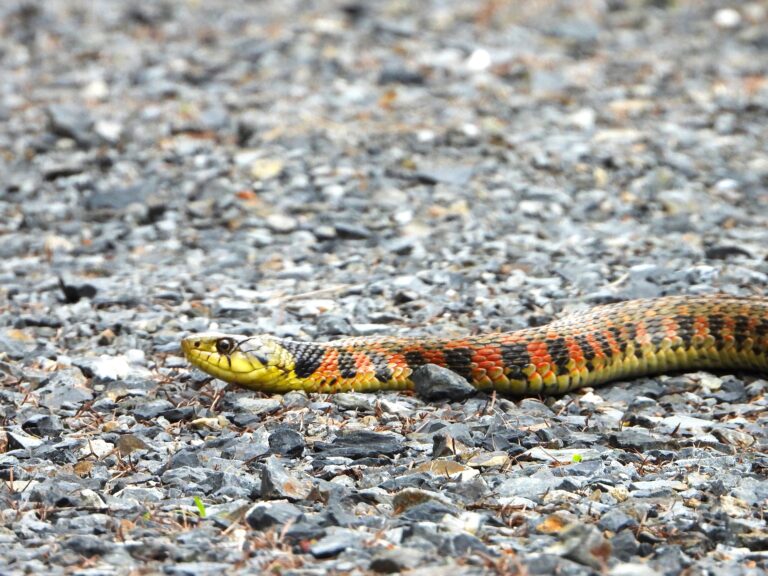
The Tiger Keelback (Rhabdophis tigrinus), known in Japan as Yamakagashi, is widely found across Honshu, Shikoku, and Kyushu. It is often seen around rice fields, wetlands, riverbanks, and other places where frogs are common.
Its color and pattern vary greatly between individuals and regions. Some have noticeable red and black markings around the neck, while others are mostly brown or olive, so appearance alone is not always enough for identification.
The Tiger Keelback is a rear-fanged venomous snake. Most encounters do not lead to a bite, but a deep bite can cause serious problems with blood clotting. It should never be handled, even if it appears calm.
Learn more about its appearance, habitat, and behavior in the full Tiger Keelback guide. For more information about its venom and bite risk, see the Tiger Keelback safety guide.
➡️ Read more about this species here.
Habu
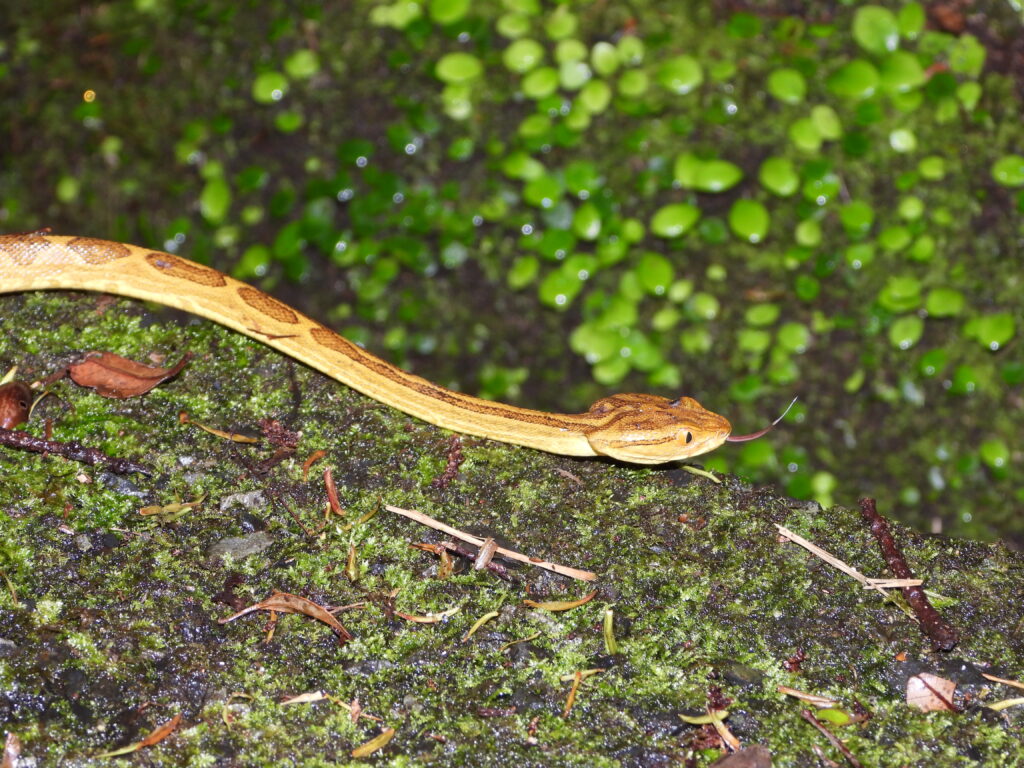
The Habu (Protobothrops flavoviridis) is a venomous pit viper found on parts of the Amami and Okinawa island groups. It does not live on every island, and it is not the native Habu species of Ishigaki or Iriomote, where the Sakishima Habu occurs instead.
Habu are mainly active at night and often remain hidden during the day. They can occur in forests, fields, parks, gardens, and other places with thick vegetation or suitable shelter.
The Habu usually does not approach people deliberately, but bites can occur when someone steps near one or reaches into a place where it is hiding. A suspected Habu bite requires urgent medical attention.
Learn more about its appearance, habitat, and behavior in the full Habu guide.
➡️ Read more about this species here.
Sakishima Habu

The Sakishima Habu (Protobothrops elegans) is a venomous pit viper native to the Yaeyama Islands, including Ishigaki and Iriomote.
It lives in a wide range of environments, from forests and farmland to areas near villages. Although mainly nocturnal, it is seen during the day more often than the Habu, so encounters are not limited to nighttime.
Its brown pattern blends easily with soil, fallen leaves, and roadside vegetation. Keep your distance if you find one, and never try to move or catch it.
Learn more about its appearance, habitat, and behavior in the full Sakishima Habu guide.
➡️ Read more about this species here.
Okinawa Pit Viper
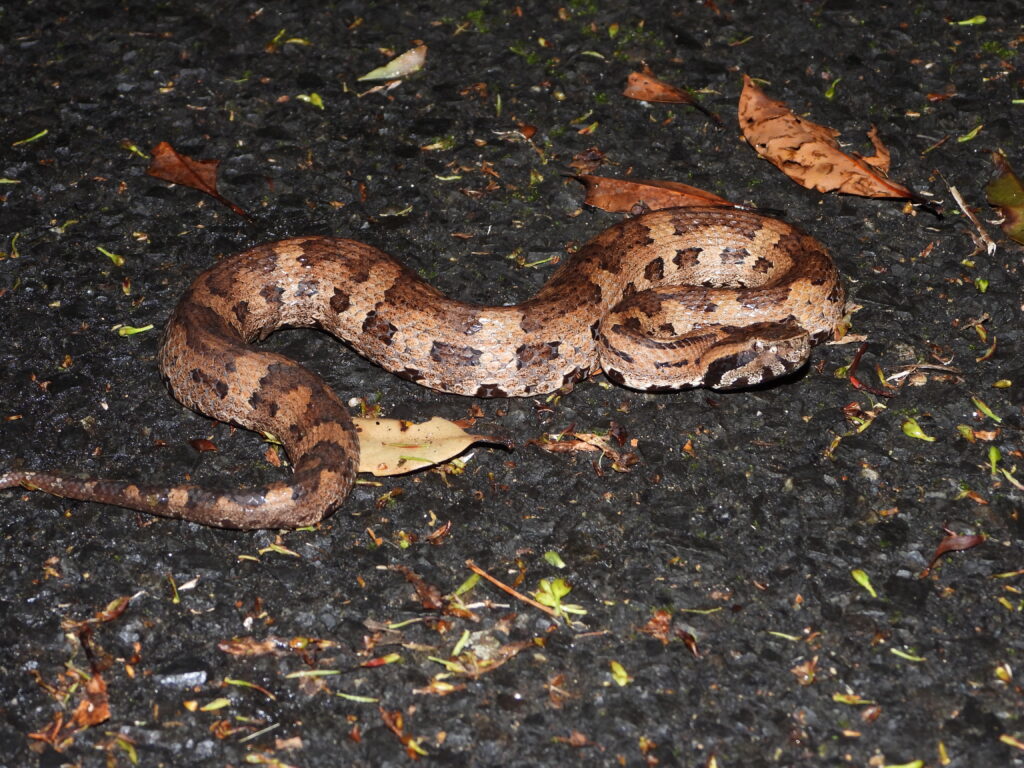
The Okinawa Pit Viper (Ovophis okinavensis), known in Japan as Hime Habu, is a small, thick-bodied pit viper found on parts of the Amami and Okinawa island groups.
It is mainly active at night and prefers damp environments, especially forests near streams, wetlands, and rice fields. Its brown body and dark markings blend easily with wet leaves and the forest floor.
The Okinawa Pit Viper is generally slow-moving and less likely to bite than the larger Habu. However, bites can occur if someone accidentally steps on one hidden in grass or fallen leaves. Keep your distance and do not attempt to touch or move it.
Learn more about its appearance, habitat, and behavior in the full Okinawa Pit Viper guide.
➡️ Read more about this species here.
Other Venomous and Mildly Venomous Snakes in Japan
Japan also has several venomous snakes with very limited distributions:
- Tokara Habu (Protobothrops tokarensis) — found only on Takarajima and Kotakarajima in the Tokara Islands.
- Tsushima Mamushi (Gloydius tsushimaensis) — found only on Tsushima Island.
- Taiwan Habu (Protobothrops mucrosquamatus) — a non-native pit viper established in parts of Okinawa Island.
- Japanese coral snakes (Sinomicrurus japonicus, S. boettgeri, and S. iwasakii) — rare venomous snakes found on parts of the Ryukyu Islands.
- Venomous sea snakes — several species occur in the waters around southern Japan, especially the Ryukyu Islands.
Because their ranges are limited to particular islands or marine areas, most people visiting mainland Japan are unlikely to encounter them.
Where Venomous Snakes Are Found in Japan
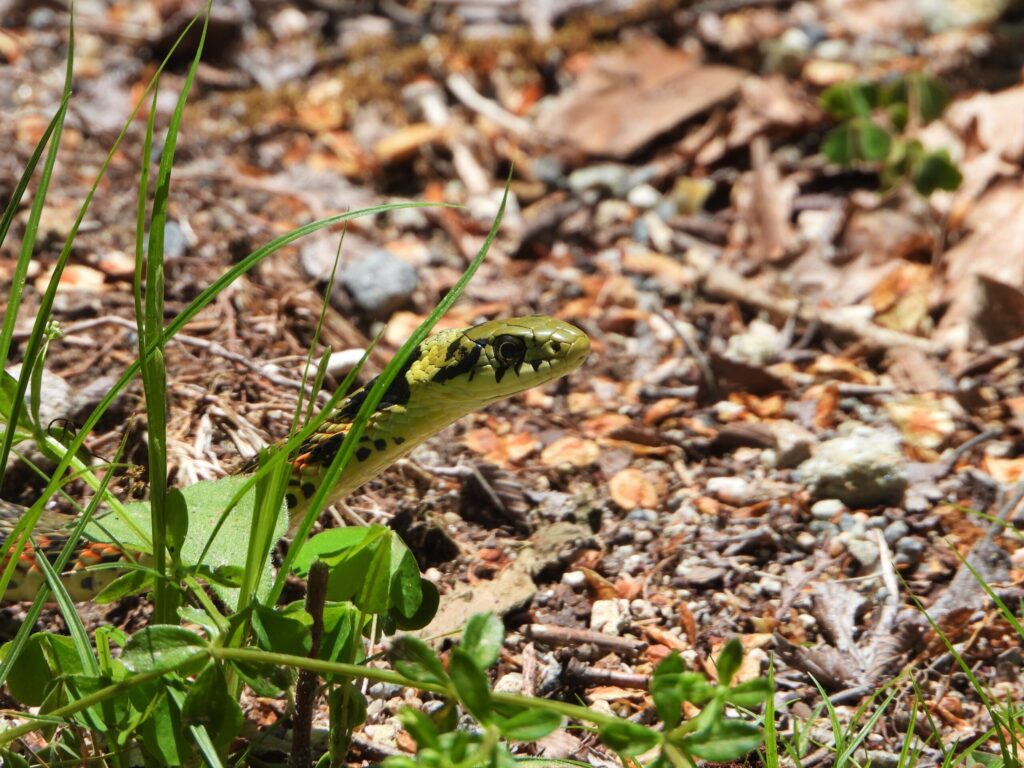
The venomous snakes found in Japan vary greatly by region.
The Japanese Mamushi occurs from Hokkaido to Kyushu, while the Tiger Keelback is widely found across Honshu, Shikoku, and Kyushu, especially around rice fields, wetlands, and riverbanks.
In southern Japan, the species differ from island to island. Habu live on parts of the Amami and Okinawa island groups, while Sakishima Habu are native to islands including Ishigaki and Iriomote. Okinawa Pit Vipers are also found on parts of the Amami and Okinawa island groups.
Venomous snakes may occur in forests, farmland, along roads, and sometimes near residential areas. Their distribution can differ even between neighboring islands, so check local information before exploring unfamiliar areas.
Which Is the Most Dangerous Venomous Snake in Japan?
There is no single answer because the danger depends on the number of bites, the amount of venom injected, and the effects of the venom.
The Japanese Mamushi causes many of Japan’s venomous snakebites because it is widely distributed. Habu are larger and can inject more venom, sometimes causing severe swelling and tissue damage. Tiger Keelback bites are much rarer, but serious cases can cause life-threatening problems with blood clotting.
All suspected venomous snakebites should be treated as medical emergencies, regardless of the species.
How Snake Venom Affects the Body
The effects of snake venom vary by species.
Mamushi and Habu bites often cause pain and swelling around the bite. Severe cases may also involve bleeding, tissue damage, or a drop in blood pressure.
Tiger Keelback venom acts differently by disrupting blood clotting, which can lead to serious internal bleeding. Japanese coral snakes and venomous sea snakes have neurotoxic venom that can affect nerves and muscles.
The severity of a bite cannot be judged by the snake’s size or the appearance of the wound. Even when symptoms seem mild at first, a suspected venomous snakebite requires prompt medical attention.
What to Do If You Are Bitten by a Snake in Japan
If you are bitten by a snake that may be venomous, call 119 or seek emergency medical care immediately. Do not wait for swelling or other symptoms to appear.
- Move away from the snake and remain as still as possible.
- Remove rings, watches, or tight clothing before swelling develops.
- Ask someone else to arrange transport. Avoid running or driving yourself.
- Do not cut the wound, suck out the venom, apply ice, or use a tight tourniquet.
- Do not try to catch or kill the snake. A photo taken from a safe distance may help with identification, but medical care must come first.
Even if the wound looks minor, symptoms may worsen after the bite. Follow the instructions given by emergency services and medical staff.
For more information about symptoms and emergency care after a Mamushi bite, see the Mamushi bite guide.
Conservation
Venomous snakes are often feared, but they are part of Japan’s native ecosystems and prey on rodents, frogs, and other small animals.
If you encounter one, the safest response is usually to keep your distance and leave it alone. Do not try to catch, move, or kill the snake yourself. This is especially important on islands, where some species have very limited distributions.
Observing snakes from a safe distance protects both people and wildlife.
Author’s Field Notes
I have encountered venomous snakes while exploring the southern islands of Japan. At night, a snake resting near a road or hidden beside vegetation can be surprisingly difficult to notice.
I always observe from a safe distance and never try to move the snake for a closer photograph. Staying alert around roadsides, grass, and fallen leaves is especially important after dark.
Frequently Asked Questions
Does Japan Have Poisonous Snakes?
Yes. Japan has several venomous snakes, including the Japanese Mamushi, Habu, and Tiger Keelback. Although “poisonous snakes” is a common search term, “venomous” is the more accurate word for snakes that inject venom through a bite.
How Many Venomous Snake Species Live in Japan?
Around 20 venomous snake species are reported from Japan when rare island species and venomous sea snakes are included. The exact number may vary depending on classification and which species are counted.
Are There Venomous Snakes in Tokyo?
Yes. Japanese Mamushi and Tiger Keelbacks live in Tokyo, particularly in the wooded hills, mountains, rivers, and wetlands of western Tokyo. They are very uncommon in the central urban districts.
Are There Venomous Snakes in Hokkaido?
Yes. The Japanese Mamushi occurs in Hokkaido. Encounters are not common for most visitors, but hikers should watch where they step and avoid touching unidentified snakes.
Are There Venomous Snakes in Okinawa?
Yes. Okinawa Prefecture has several venomous snake species, including Habu, Okinawa Pit Vipers, Sakishima Habu, and the non-native Taiwan Habu. Their distribution differs greatly between islands, and some islands have no Habu at all.
Related Japanese Snake Guides
Learn more about Japan’s native snakes, identification, and bite safety:
- Snakes in Japan: Native Species, Regions and Safety
- Japanese Mamushi: Identification, Habitat and Behavior
- Mamushi Snake Bite: Symptoms and Emergency Care in Japan
- Tiger Keelback in Japan: Identification and Behavior
- Tiger Keelback Bite Risk and Safety
- Dangerous Animals in Japan: What Travelers Need to Know