Japanese Mamushi Snake: Identification, Habitat & Behavior
Introduction
The Japanese Mamushi (Gloydius blomhoffii) is a small, thick-bodied pit viper found across much of Japan outside Okinawa Prefecture.
Its brown coloration and dark markings blend easily with grass, stones, and fallen leaves. Rather than moving away immediately, a Mamushi may remain still and rely on camouflage, making it easy to overlook at close range.
Although it is venomous, the Japanese Mamushi is an important native predator. It should always be observed from a safe distance without being touched or disturbed.
Explore Japan’s native snake species, regional differences, and safety information in the complete guide below.
▶ Snakes in Japan: Native Species, Regions & Safety
Is the Japanese Mamushi Dangerous?
The Japanese Mamushi is venomous, and a suspected bite requires prompt medical attention. It does not normally pursue people, but may bite if stepped on, handled, or disturbed at close range.
For more detailed information, see these guides:
▶ Mamushi Snake Bite: Symptoms, First Aid & Emergency Care
▶ Venomous Snakes in Japan: Species, Regions & Safety
▶ Dangerous Animals in Japan: What Travelers Need to Know
Appearance
The Japanese Mamushi is a short, thick-bodied snake that usually grows to about 40–60 cm in length.
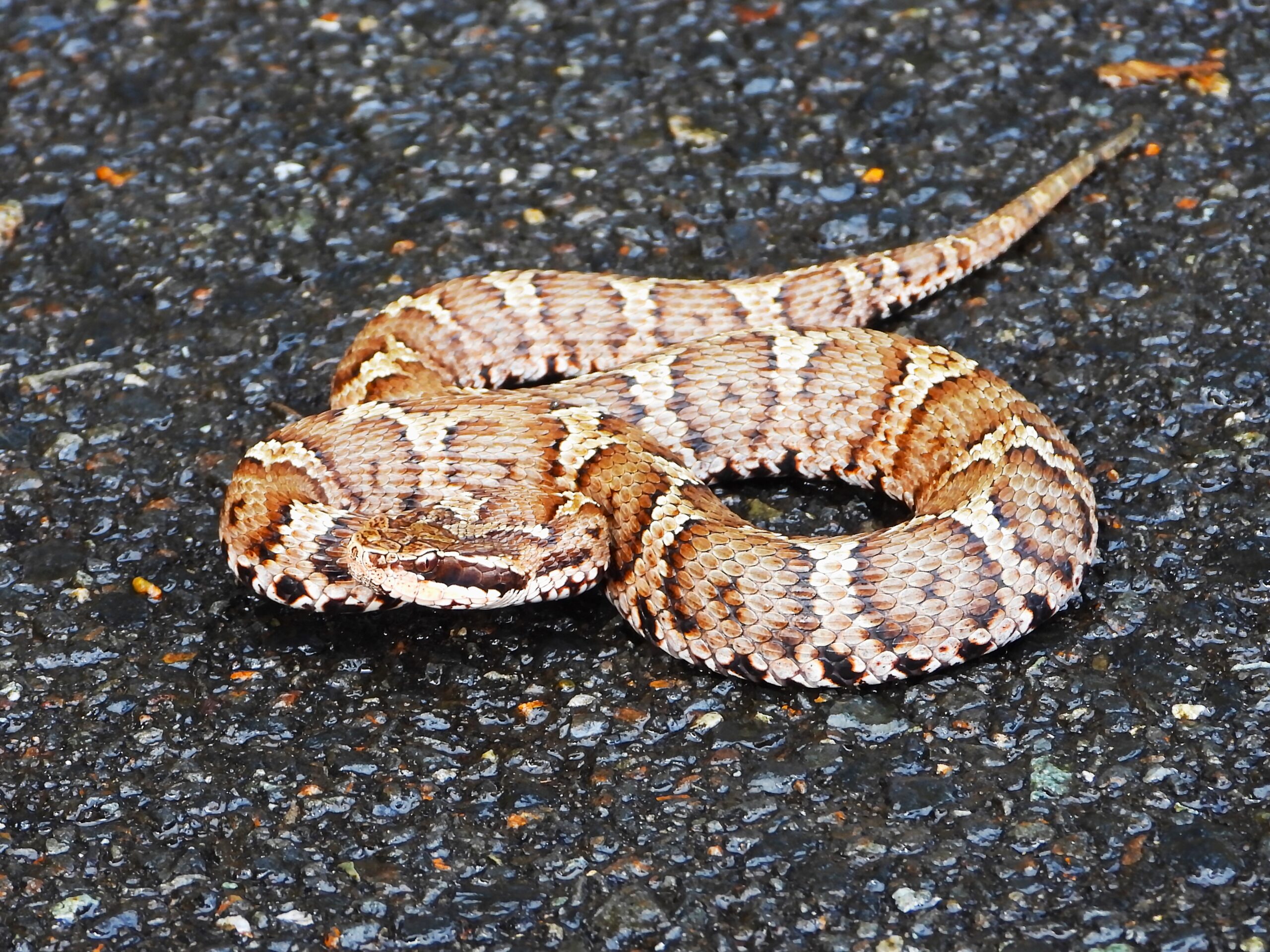
Its body color varies from gray-brown to reddish-brown. A row of dark, oval or hourglass-shaped markings runs along the back, often with a small black spot inside each marking. This pattern can blend extremely well with soil, stones, grass, and fallen leaves.
Color and markings vary between individuals, so identification should not rely on a single feature. Never approach an unidentified snake to examine it more closely.
Habitat & Distribution
The Japanese Mamushi is widely distributed across Japan, from Hokkaido through Honshu, Shikoku, and Kyushu. It is not native to Okinawa Prefecture.
It lives from lowlands to mountainous areas and is often found around riverbanks, bamboo groves, rice field edges, farmland, grass, and forest margins. These environments provide cover and access to prey such as frogs and small mammals.
Because Mamushi often remain still among vegetation and fallen leaves, they can be difficult to notice even in places used regularly by people.
Behavior
Japanese Mamushi often remain motionless and rely on camouflage while waiting for prey. This ambush behavior can make them difficult to notice among grass, stones, and fallen leaves.
Although they are often described as nocturnal, Mamushi may be active during both the day and night. Their activity varies with the season, temperature, weather, and local environment.
They generally avoid unnecessary contact with people. However, a motionless Mamushi may defend itself if stepped on, touched, or disturbed at close range.
Diet
The Japanese Mamushi feeds mainly on small animals such as rodents, frogs, and newts.
It usually waits in cover until prey comes within striking distance. Venom helps the snake subdue its prey before swallowing it whole.
Its diet may vary depending on the habitat and the animals available in the area. A long-term field study in Kyoto confirmed rodents, frogs, and newts among its prey.
Reproduction
Japanese Mamushi are viviparous, meaning females give birth to live young rather than laying eggs.
Mating has been observed mainly in late summer and early autumn. Females usually give birth from August through October, although timing can vary by region and climate.
A litter may contain several young, with larger females generally producing more offspring. Females may also skip one or more years between pregnancies.
Conservation
The Japanese Mamushi is a native predator that feeds on rodents, frogs, and other small animals.
Although it is venomous, it should not be killed simply because it is nearby. If you find one, keep your distance and allow it to move away. Do not try to catch or relocate it yourself.
Protecting forests, wetlands, riverbanks, and other natural habitats also helps maintain the ecosystems in which Mamushi and their prey live.
How to Observe a Japanese Mamushi Safely
• Wear boots and long pants when walking through tall grass or field edges.
• Step on, not over, logs or rocks, and check the far side before placing your hands or feet.
• Never attempt to handle or corner a mamushi.
• If bitten, seek medical care immediately. Keep the affected limb still. Do not cut, suck, or apply a tight tourniquet.
Author’s Field Notes
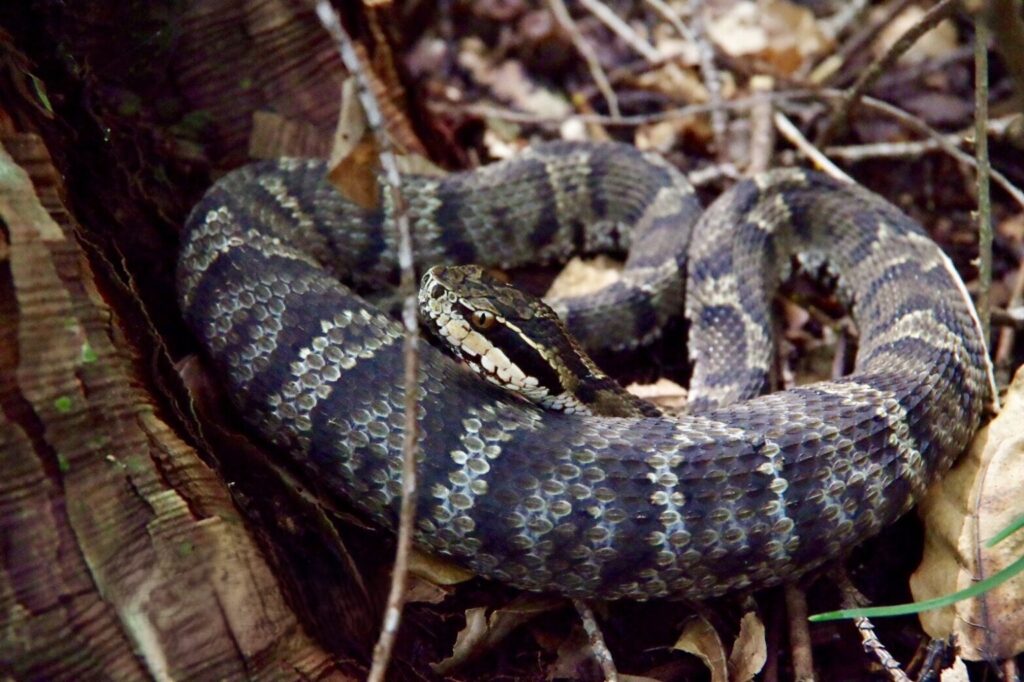
I have encountered Japanese Mamushi almost completely hidden among fallen leaves and roadside vegetation.
Their pattern blends so well with the ground that they can be difficult to notice, even from a short distance. Rather than moving away immediately, they may remain motionless and rely on camouflage.
When I find one, I keep a safe distance and avoid blocking its escape route. This experience has made me especially careful about watching where I step in forests, grasslands, and along rural roads.
Frequently Asked Questions
Is the Japanese Mamushi Venomous?
Yes. The Japanese Mamushi is a venomous pit viper. It usually avoids people but may bite if stepped on, handled, or disturbed at close range.
For bite symptoms and emergency action, see the Mamushi Snake Bite guide.
Where Does the Japanese Mamushi Live?
Japanese Mamushi occur from Hokkaido through Honshu, Shikoku, and Kyushu. They live in forests, grasslands, rice field edges, riverbanks, bamboo groves, and other places with cover and suitable prey.
They are not native to Okinawa Prefecture.
How Large Is a Japanese Mamushi?
Most Japanese Mamushi are about 40–60 cm long. They have a short, thick body compared with many other snakes found in Japan.
When Are Japanese Mamushi Active?
They are mainly active during the warmer months, from spring through autumn. Activity varies with temperature, weather, region, and habitat, and they may be seen during either the day or night.
How Can You Identify a Japanese Mamushi?
Japanese Mamushi usually have a gray-brown or reddish-brown body with dark oval or hourglass-shaped markings along the back.
However, color and pattern vary between individuals. Do not approach an unidentified snake to examine its head shape or markings more closely.
Related Japanese Snake Guides
Explore more guides about Japanese snakes, venomous species, and bite safety:
- Snakes in Japan: Native Species, Regions & Safety
- Venomous Snakes in Japan: Species, Regions & Safety
- Mamushi Snake Bite: Symptoms and Emergency Care
- Tiger Keelback: Identification, Habitat and Behavior