
Insects in Japan: Common, Seasonal & Dangerous Species Guide
Introduction
Japan is home to a remarkable diversity of insects, shaped by its wide range of climates and landscapes. From the humid nights of midsummer to the crisp air of autumn, insects are an essential part of the country’s natural environment.
Across this island nation, beetles gather on oak trees, butterflies drift through mountain meadows, and dragonflies patrol wetlands and rivers. Many species are strongly tied to the seasons, making Japan one of the best places to observe how insect life changes throughout the year.
Insects can be found almost everywhere in Japan, from forests and rural fields to city parks and residential areas. Some are known for their beauty or size, while others play important ecological roles or require caution due to their defensive behavior.
In this guide, you’ll discover some of the most iconic insects in Japan, along with insights into their habitats, seasonal activity, and where they can be found.
What Insects Live in Japan
Japan is home to a wide variety of insects, supported by its diverse climates and natural environments. From subtropical regions in the south to cooler forests in the north, thousands of insect species can be found across the country.
Many insects in Japan are strongly seasonal. Spring brings the first butterflies and emerging species, while summer is the peak season for beetles, cicadas, and other highly active insects. In autumn, dragonflies and late-season species are common, while winter activity is limited.
Insects can be found almost everywhere in Japan. Forests, riversides, rice fields, and even urban parks provide habitats for different species, making insect observation accessible even for beginners.
Iconic Insects of Japan
The insects below are some of the most iconic species you can find in Japan. Many of them are closely connected to the country’s seasons and are widely recognized by both locals and visitors.
From powerful beetles found in summer forests to elegant butterflies and large silk moths, these insects represent the diversity and character of Japan’s insect life. Some are easy to observe in parks and rural areas, while others are more closely tied to specific habitats.
Japanese Rhinoceros Beetle (Trypoxylus dichotomus septentrionalis)
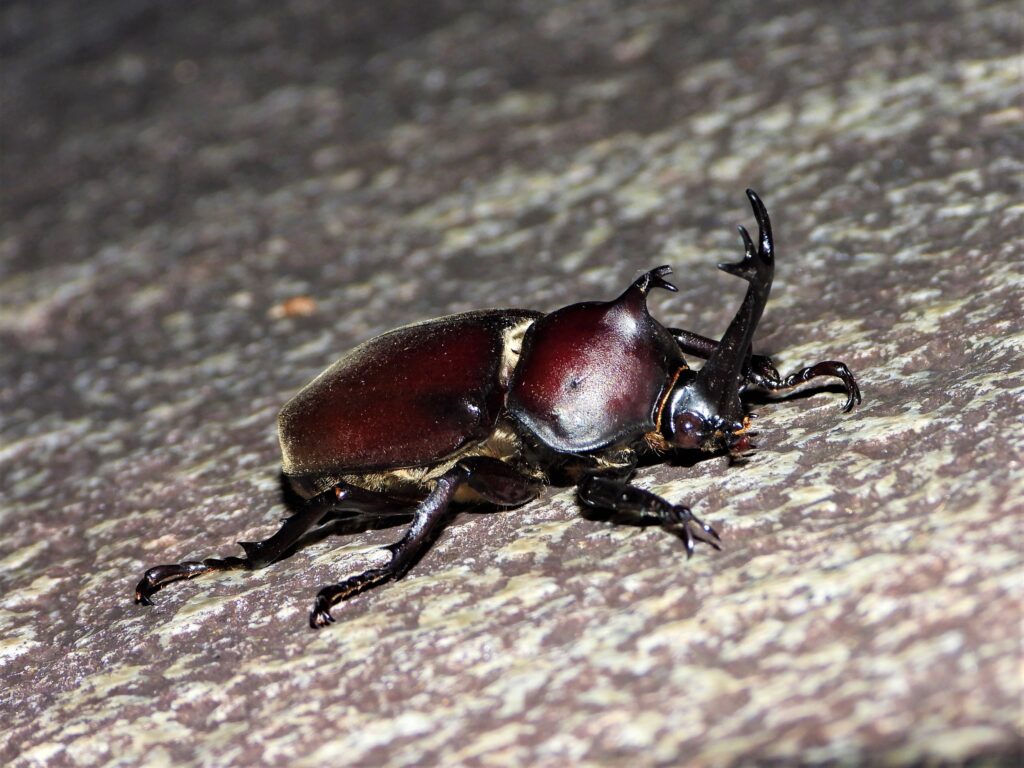
The undisputed king of Japan’s summer forests.
Males use their large, curved horns to lift and throw rivals from sap-covered trunks, battling for dominance each night.
Admired for both power and character, this beetle is a childhood icon and a favorite subject for wildlife photographers.
Where to See: Common in lowland oak forests and parks throughout Honshu, Shikoku, and Kyushu. Active from June to August on trees that ooze sweet sap.
Read the full profile →
Miyama Stag Beetle (Lucanus maculifemoratus)
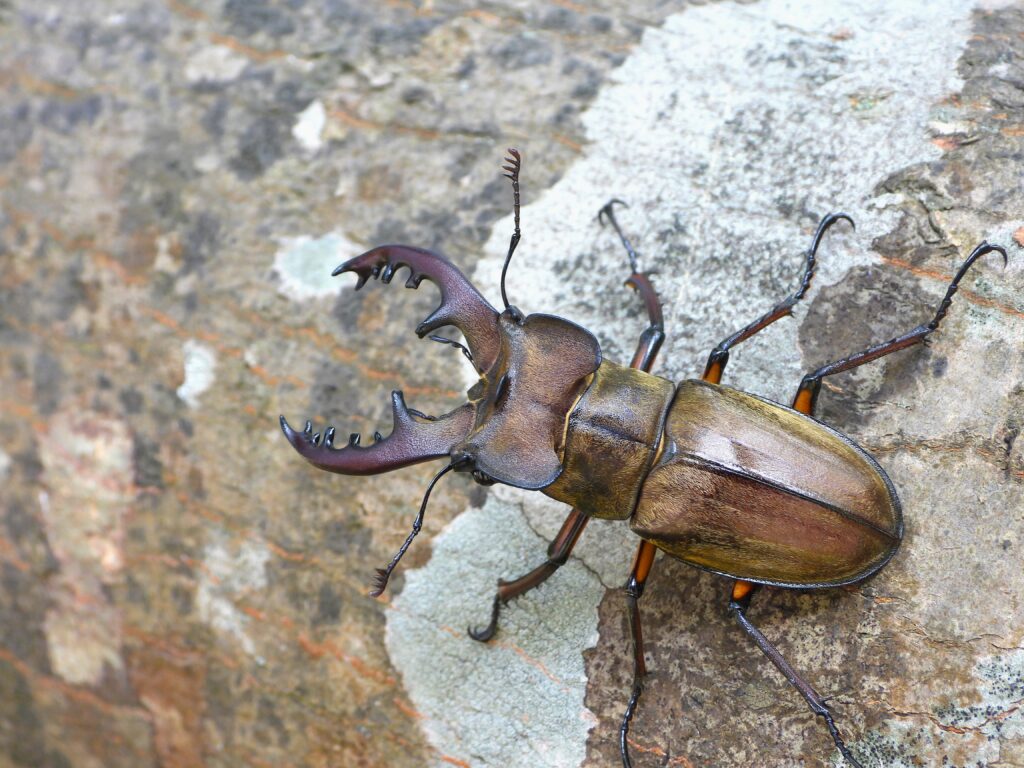
A mountain-dwelling species with elegant antler-like jaws and a deep brown sheen.
It prefers the cool air of upland beech forests, where males engage in stately pushing contests.
This species represents Japan’s wilder highlands, thriving where summer nights are still cool.
Where to See: Found in mountain forests of Honshu and Hokkaido, especially between 800–1,000 m elevation. Best observed in July and early August.
Read the full profile →
Japanese Saw Stag Beetle (Prosopocoilus inclinatus)
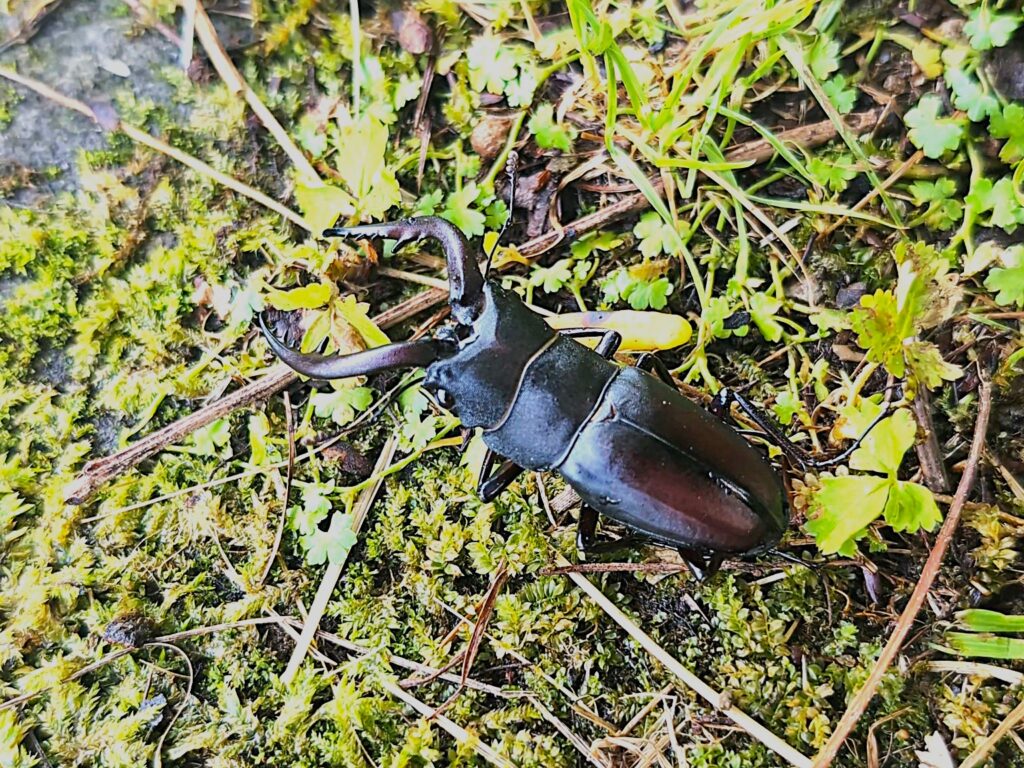
Sleek, dark, and combative, this stag beetle dominates Japan’s lowland forests.
Its sharp, saw-edged mandibles flash as males spar around sap flows on humid nights.
It’s one of the easiest stag beetles to find—and one of the most spirited.
Where to See: Widespread from Hokkaido to Kyushu. Commonly seen at tree sap or near lights from July to August.
Read the full profile →
Maack’s Swallowtail (Papilio maackii)
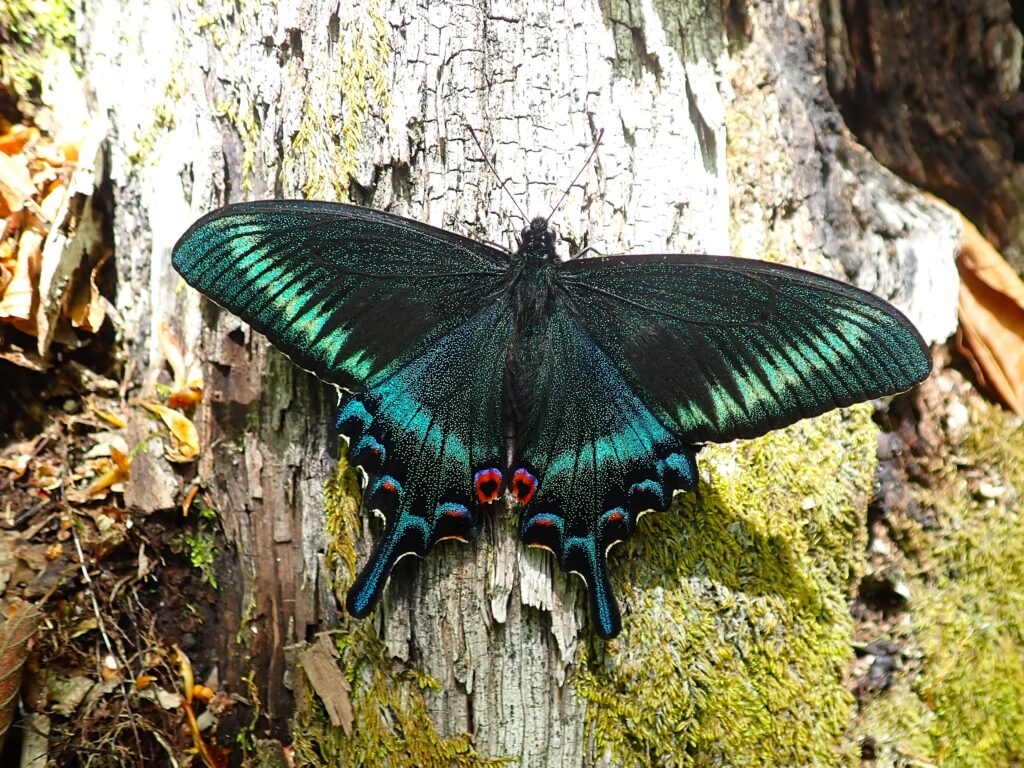
A magnificent swallowtail with metallic blue-green wings that shimmer like silk under the sun.
It glides gracefully through forest valleys, embodying the elegance of Japan’s summer skies.
Males often patrol ridges and streams, flashing color as they chase intruders away.
Where to See: Forested valleys and wooded hills across Honshu and Kyushu from May to August, especially near streams and flowering trees.
Read the full profile →
Chestnut Tiger (Parantica sita)
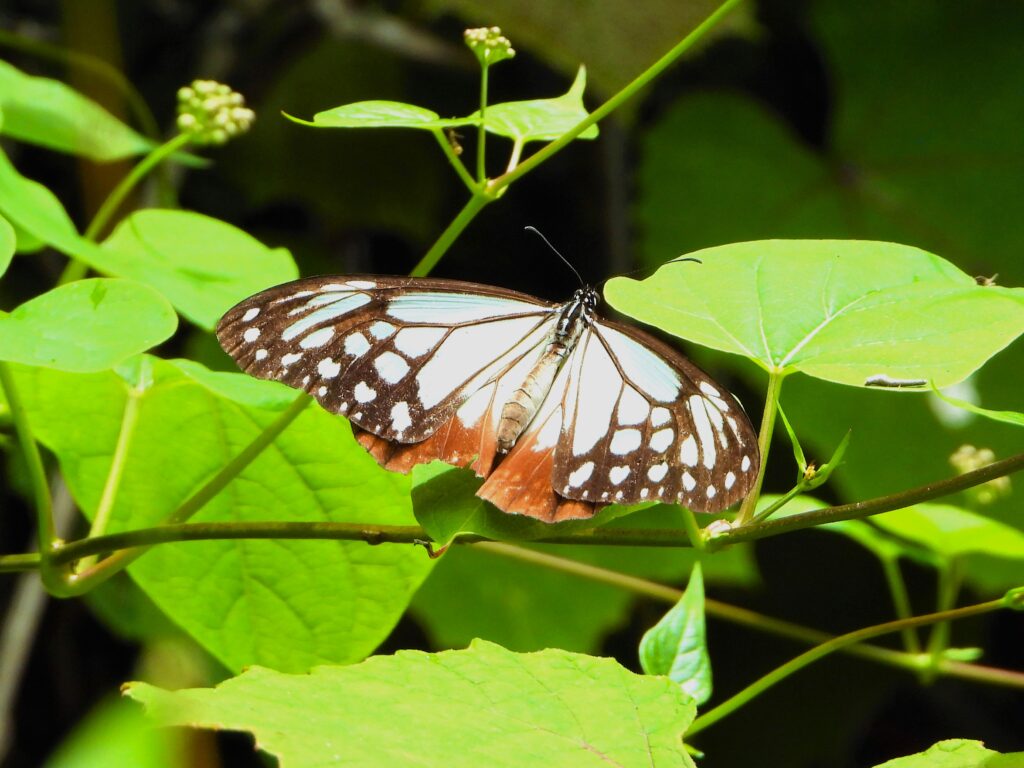
This ethereal butterfly floats slowly across the mountains, its pale blue wings glowing in sunlight.
Each year, it migrates over a thousand kilometers between central Japan and the southern islands—a miracle of endurance and direction.
Where to See: Mountain meadows and flower gardens from June to October. Common where milkweed and mistflower bloom.
Read the full profile →
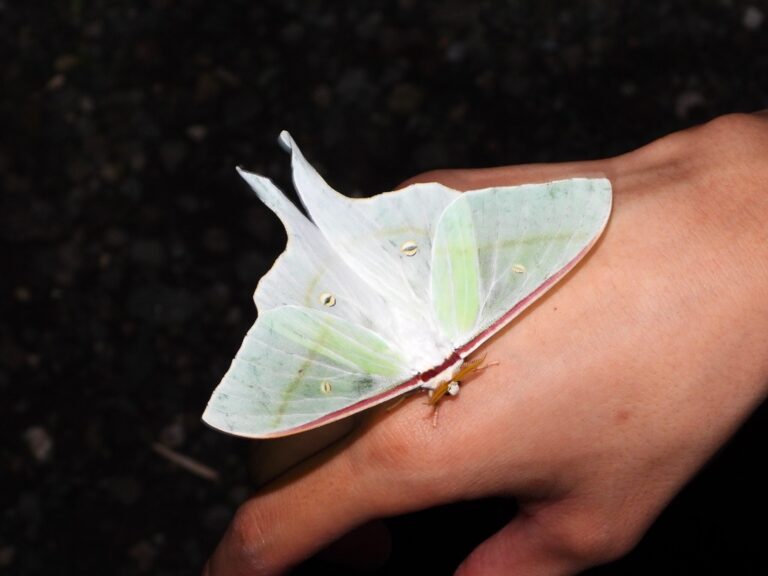
Japanese Oak Silk Moth (Antheraea yamamai)
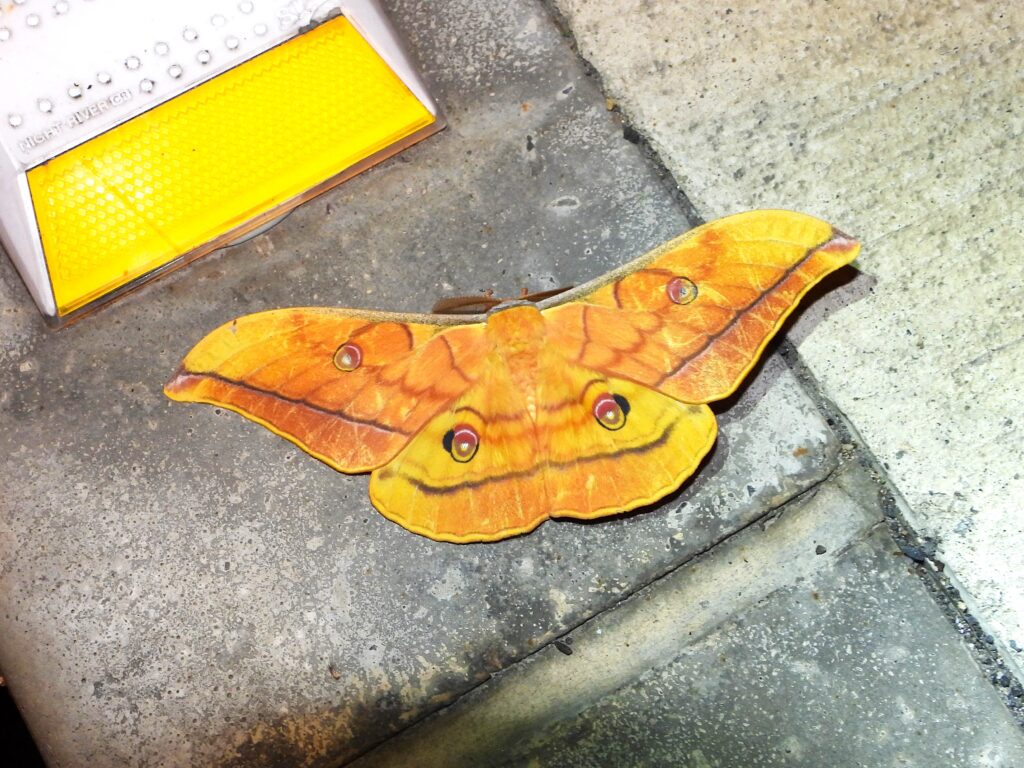
A soft green ghost of summer nights.
This large moth, source of Japan’s wild silk “tensan,” appears quietly under forest lights after dusk.
With delicate eye-spots on its wings and a short adult life devoted to reproduction, it captures the fleeting beauty of the season.
Where to See: Deciduous forests in central and western Japan from late August to October. Occasionally attracted to lights near forest roads.
Read the full profile →
Giant Mantis (Tenodera aridifolia)
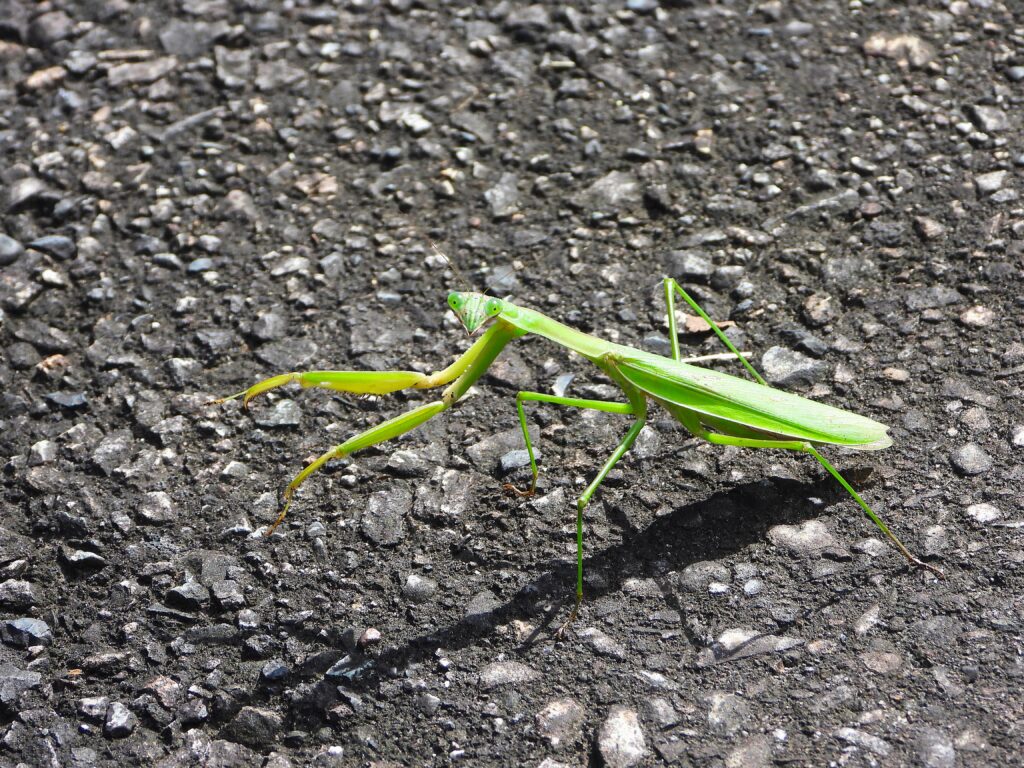
Graceful, still, and deadly.
This mantis rules Japan’s grasslands and gardens, waiting motionless before striking with astonishing speed.
It’s a symbol of precision and patience in nature.
Where to See: Grasslands, rice fields, and gardens nationwide from July to October.
Read the full profile →
Autumn Darter (Sympetrum frequens)
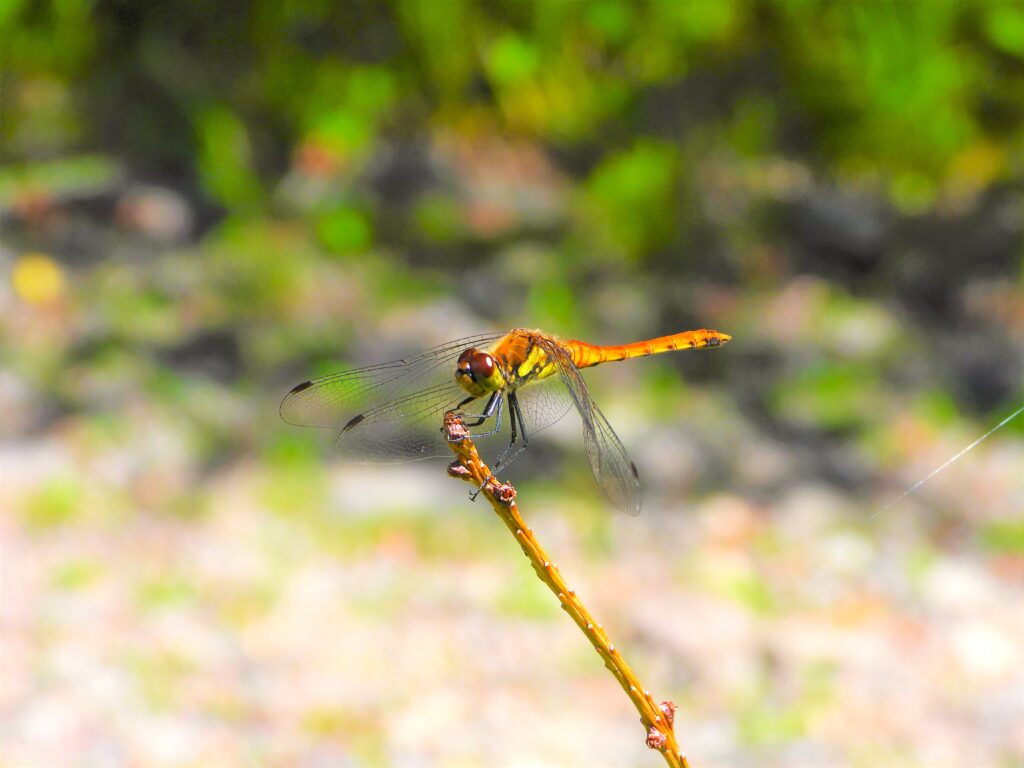
The bright red dragonfly that signals autumn’s return.
After breeding in cool mountain wetlands, it descends to the lowlands as rice fields turn golden.
Swarming over ponds and fields, it paints Japan’s countryside with motion and color.
Where to See: Throughout Japan from September to November, near ponds, rivers, and rural wetlands.
Read the full profile →
Hornets of Japan (Vespa species)
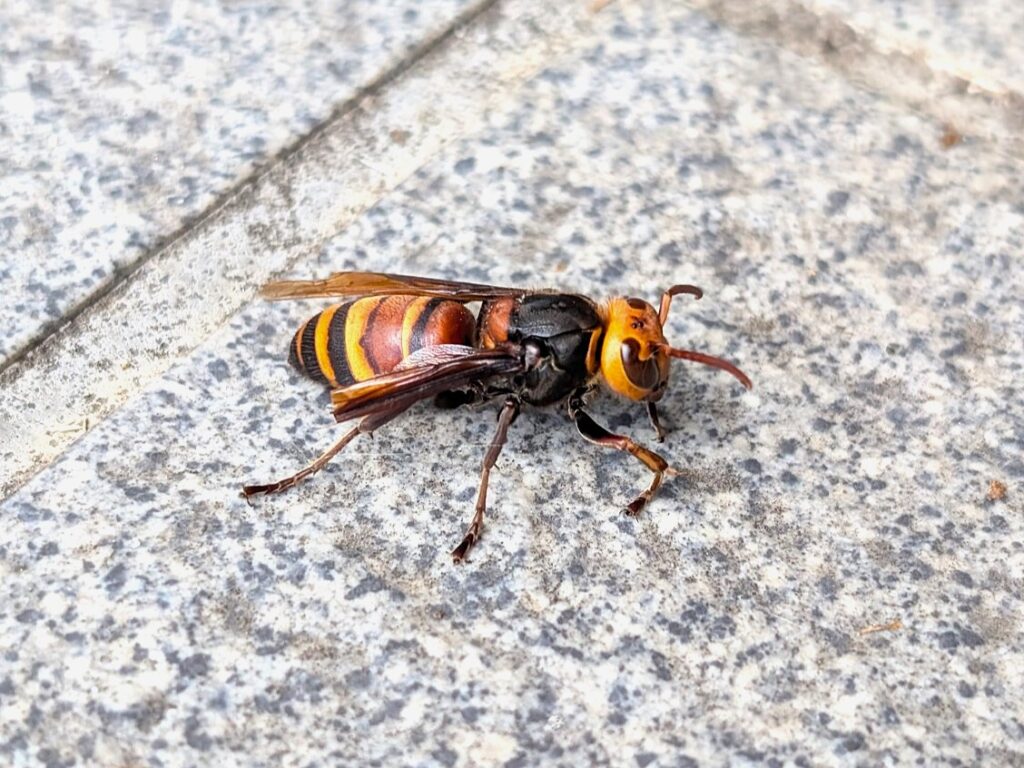
Japan is home to several species of hornets, powerful social wasps that command respect in the insect world.
They build paper nests in trees, under eaves, and even underground, defending their colonies with remarkable coordination.
While most species are shy and non-aggressive when undisturbed, a few—including the famous Japanese Giant Hornet (Vespa mandarinia japonica)—are large and formidable predators.
Hornets play a vital ecological role by controlling pest insects and maintaining forest balance, yet they remind us that even nature’s guardians can be dangerous when provoked.
Where to See: Forested and rural areas throughout Japan from spring to autumn. Their buzzing patrols are a familiar sound in wooded hills and countryside paths.
Dangerous Insects in Japan
While most insects in Japan are harmless, there are a few species that require caution. Understanding these insects can help you stay safe while exploring nature, especially in forests, mountains, and rural areas.
The most well-known is the Japanese giant hornet, one of the largest hornets in the world. They are highly defensive, particularly in late summer and autumn, and should never be approached.
Other stinging insects, such as paper wasps and honeybees, can also pose a risk if disturbed, especially near nests. While they are generally less aggressive than hornets, caution is still necessary.
In most cases, these insects are not aggressive unless provoked. Keeping a safe distance and being aware of your surroundings is usually enough to avoid problems.
Seasonal Insects in Japan
Japan’s insect life changes dramatically with the seasons, making each time of year unique for observation.
In spring, butterflies and early-emerging insects begin to appear as temperatures rise. You may see species becoming active in parks, gardens, and forest edges.
Summer is the peak season for insects in Japan. Beetles, cicadas, mantises, and many other species are highly active, especially in forests and rural areas. Warm nights are particularly good for observing insects attracted to lights and tree sap.
In autumn, insect activity gradually decreases, but dragonflies and some butterflies remain common. This season is often quieter, allowing for more relaxed observation in open areas and wetlands.
During winter, most insects are inactive or hidden. However, in milder regions, some species can still be found, especially on warmer days.
Where to See Insects in Japan
Insects can be found across a wide range of environments in Japan, from natural landscapes to urban areas. Knowing where to look can greatly increase your chances of observing different species.
Forests are one of the best places to find insects, especially in summer. Beetles, mantises, and many other species gather around tree sap and vegetation. Walking along forest trails or near oak trees is particularly effective.
Riversides, wetlands, and ponds are ideal for observing dragonflies and other water-associated insects. These areas are often rich in biodiversity and easy to access.
Rural areas and rice fields also support a wide variety of insects. Grasshoppers, butterflies, and seasonal species can often be seen in open landscapes.
Even in cities, insects are surprisingly common. Parks, gardens, and green spaces provide habitats for many species, making it possible to observe insects without traveling far.
Conclusion
Japan’s insect life is rich, diverse, and closely tied to the changing seasons. From iconic beetles and butterflies to species found in everyday environments, insects are an essential part of the country’s natural landscape.
Whether you are exploring forests, walking through city parks, or visiting rural areas, there are always opportunities to observe insects in Japan. By understanding where and when to look, even beginners can enjoy discovering this fascinating world.
For more detailed information, be sure to explore the related articles and species guides linked throughout this page.
For a broader overview of Japan’s animals beyond insects, see:
▶ Animals in Japan: Native, Endemic & Iconic Species
Explore Insect Groups in Japan
If you want to learn more about specific types of insects, explore the detailed guides below.
▶ Beetles in Japan
▶ Butterflies & Moths in Japan
▶ Dragonflies & Aquatic Insects in Japan
▶ Bees, Wasps & Other Insects in Japan