Giant Moths of Japan: The Largest Moths You Can See
Introduction
Japan is home to several spectacular giant moths, including some of the largest moth species found in the country. From giant silk moths widespread across the main islands to tropical species restricted to southern Japan, these moths vary greatly in size, color, and distribution.
Most of the giant moths in Japan belong to the family Saturniidae, although this guide also includes other exceptionally large species, such as the Japanese Owl Moth.
Below are some of the largest and most distinctive moths you can see in Japan, with their appearance, flight season, distribution, and links to detailed species guides.
1. Japanese Oak Silkmoth (Antheraea yamamai)
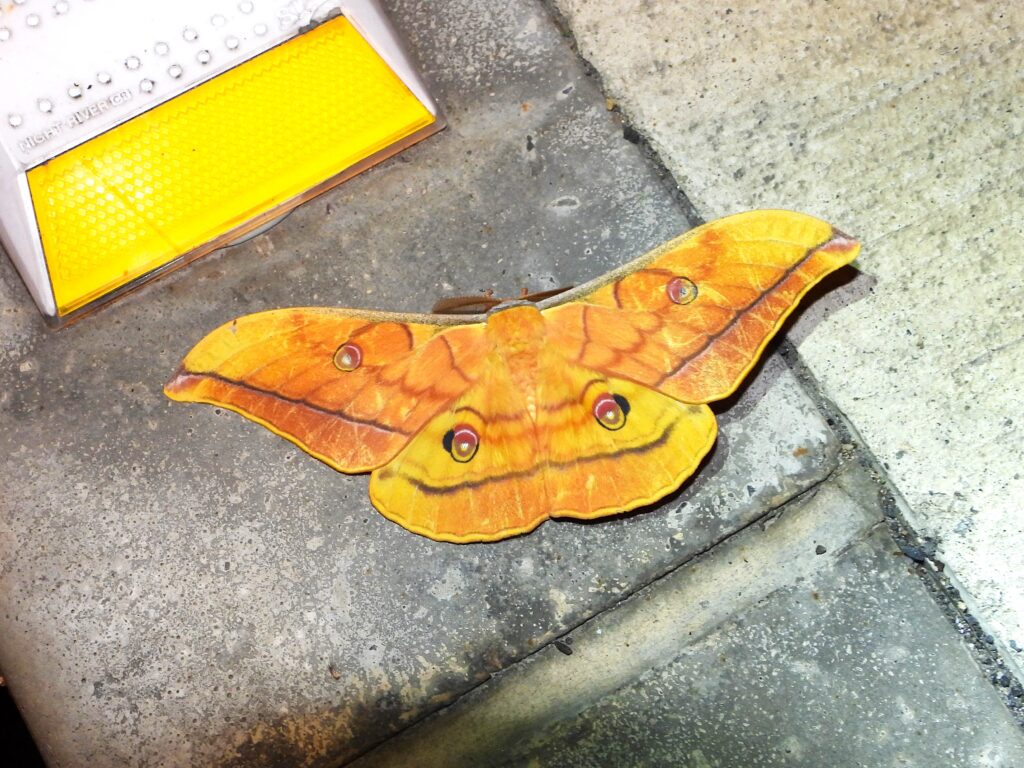
The Japanese Oak Silkmoth is one of the largest native moths in Japan. Its broad wings range from yellow-brown to olive green, with a large eyespot on each wing.
Flight season: Mainly summer to early autumn
Distribution: Hokkaido, Honshu, Shikoku, and Kyushu
Why it stands out: This species is famous for producing tensan, a traditional Japanese wild silk made from its cocoons.
▶Read the full profile →
2. Hime-yamamayu (Saturnia jonasii)
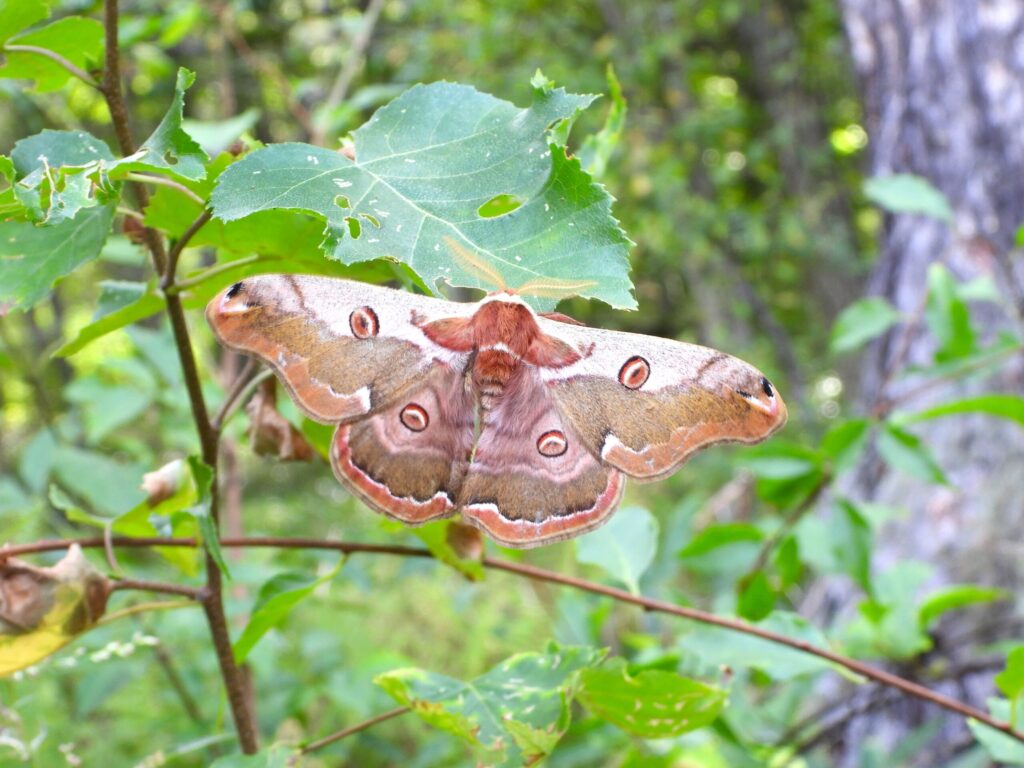
Hime-yamamayu is a large autumn moth with smoky green to brown wings and a prominent eyespot on each wing. Its color varies between individuals, with some appearing much darker or more yellow-brown than others.
Flight season: Mainly September–November
Distribution: Hokkaido, Honshu, Shikoku, Kyushu, Tsushima, and Yakushima
Why it stands out: This moth appears late in the year, when many other large moths are already gone, and it is often attracted to lights near forests.
▶Read the full profile →
3. Kususan (Saturnia japonica)
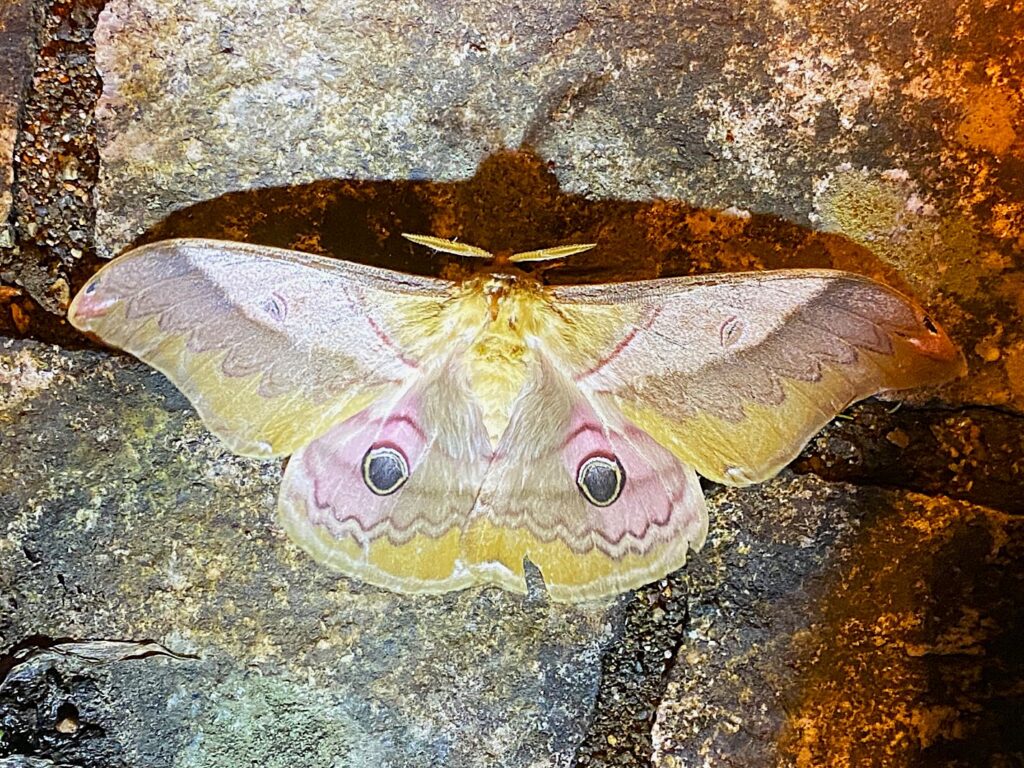
The Japanese Giant Silkworm, known as Kususan in Japan, is a huge autumn moth with broad brown wings and bold eyespots on the hindwings. Its color varies from pale yellow-brown to deep brown.
Flight season: Mainly late August–October
Distribution: Widespread in Japan, including Hokkaido, Honshu, Shikoku, Kyushu, and the southern islands
Why it stands out: Adults are strongly attracted to lights and can sometimes appear in large numbers around streetlights and buildings near wooded areas.
▶Read the full profile →
4. Japanese Luna Moth (Actias aliena)
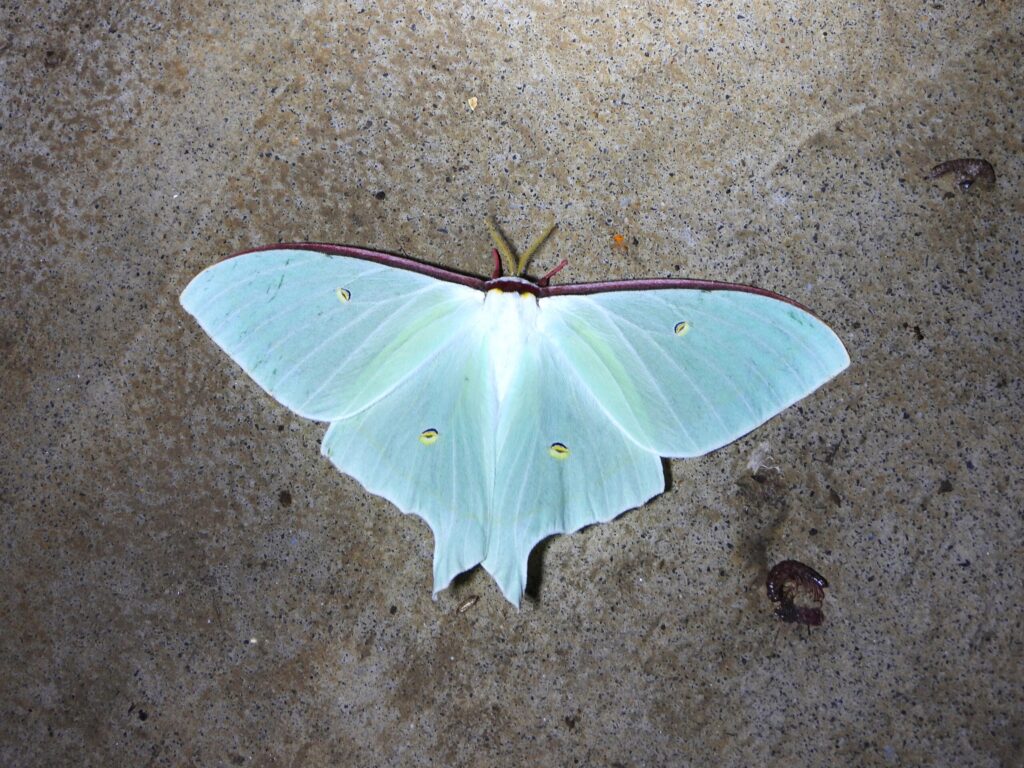
The Japanese Luna Moth is one of Japan’s most recognizable giant moths. Its pale-green wings, long hindwing tails, and reddish legs make it easy to notice when it appears around lights at night.
Flight season: Mainly late April–May and July–August
Distribution: Hokkaido, Honshu, Shikoku, Kyushu, and several surrounding islands
Why it stands out: Its unusual shape and soft green color make it one of the most distinctive moths you can encounter in Japan.
▶Read the full profile →
5. Onaga Mizuao (Actias gnoma)
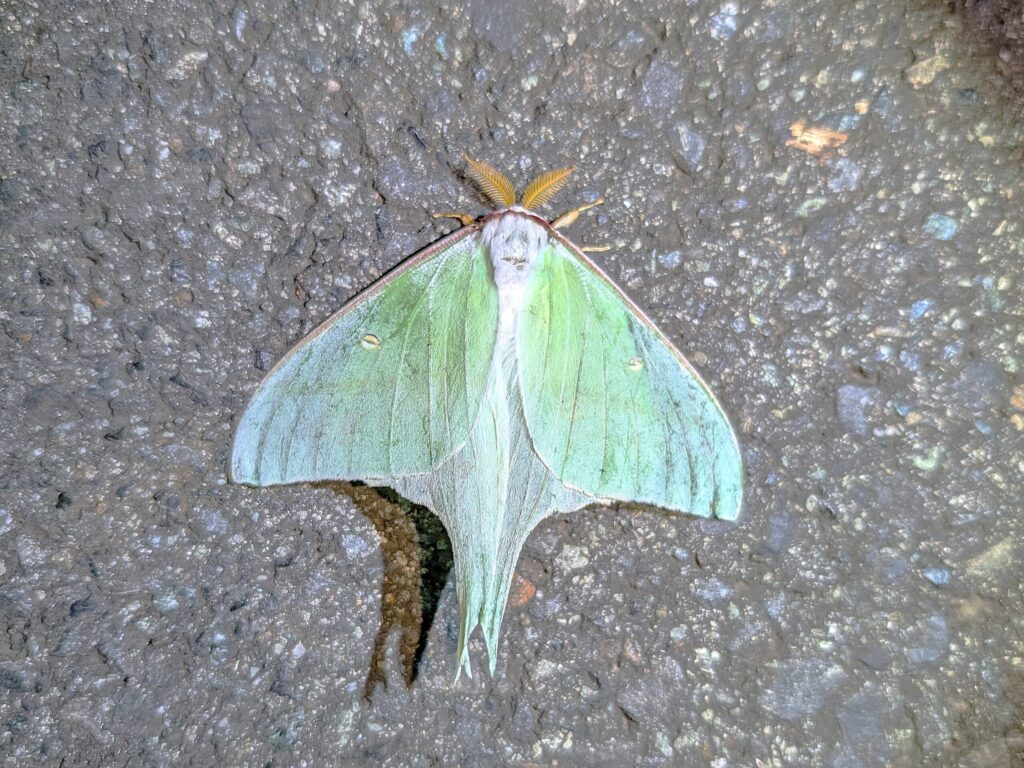
The Japanese Moon Moth is a pale-green giant silk moth that closely resembles the Japanese Luna Moth. Its longer, slimmer hindwing tails and subtle differences in the wing markings can help separate the two species.
Flight season: Mainly May–August, depending on region
Distribution: Hokkaido, Honshu, Kyushu, and parts of the Izu Islands
Why it stands out: It is one of Japan’s most easily confused giant moths and can be difficult to identify from photographs alone.
▶Read the full profile →
6. Japanese Owl Moth (Brahmaea japonica)
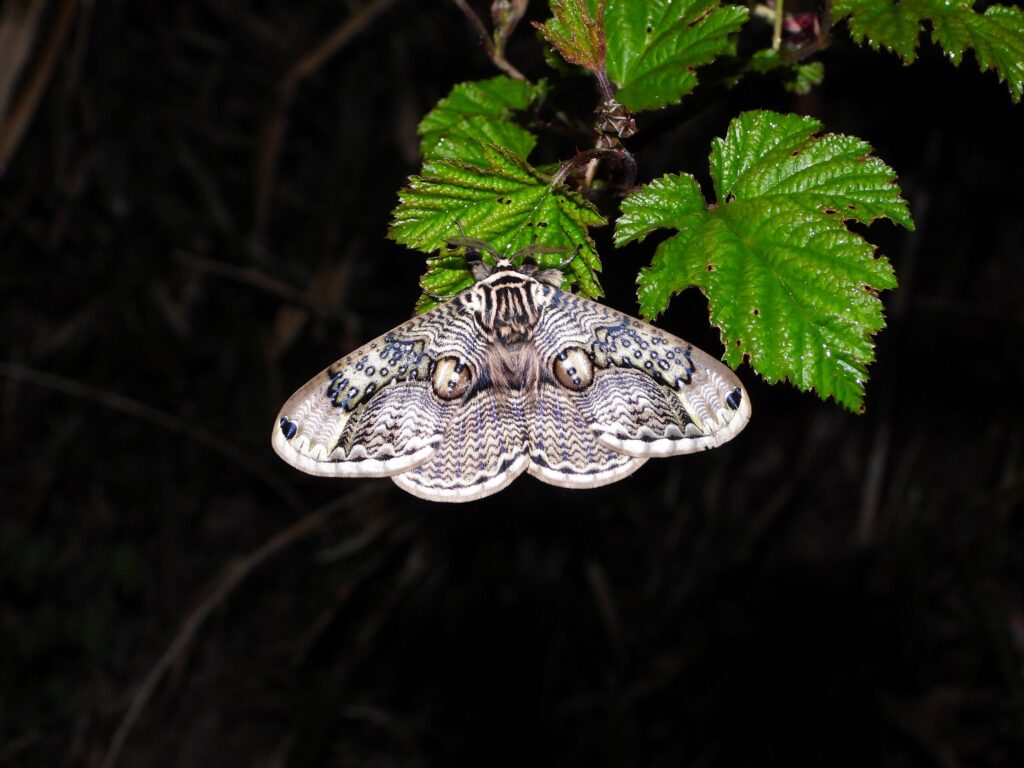
The Japanese Owl Moth is a large spring moth covered in intricate black, brown, and cream-colored wavy patterns. Unlike most species in this guide, it belongs to the family Brahmaeidae rather than Saturniidae.
Flight season: Late March–May
Distribution: Hokkaido, Honshu, Shikoku, Kyushu, and Yakushima
Why it stands out: It is one of the first large moths to appear in Japan each spring, and its maze-like wing pattern makes it easy to recognize.
▶Read the full profile →
7. Ailanthus Silkmoth (Samia cynthia)
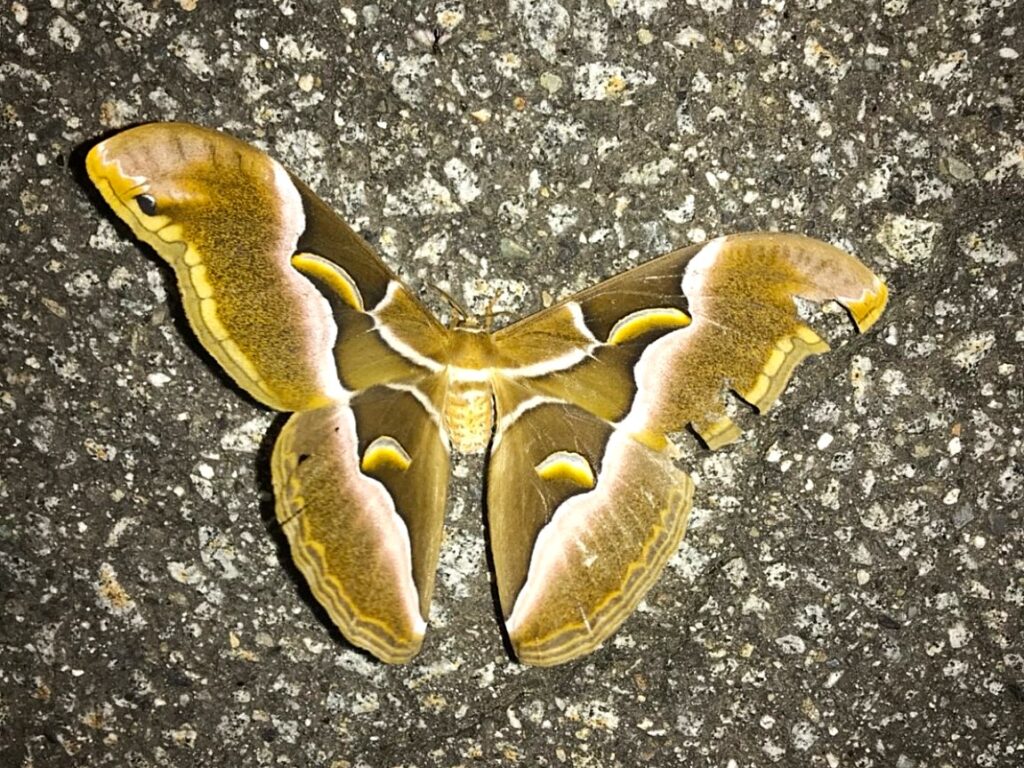
The Ailanthus Silkmoth is a large brown moth with pale bands and distinctive crescent-shaped markings across its wings. Its bold pattern makes it easy to recognize when resting with its wings spread.
Flight season: Mainly May–June and August–September in warmer areas; timing varies in cooler regions
Distribution: Widely distributed in Japan, including Hokkaido, Honshu, Shikoku, Kyushu, and Tsushima
Why it stands out: Its large size and curved, translucent wing markings give it one of the most distinctive patterns among Japan’s giant silk moths.
▶Read the full profile →
8. Japanese Tau Emperor (Smerinthus planus)
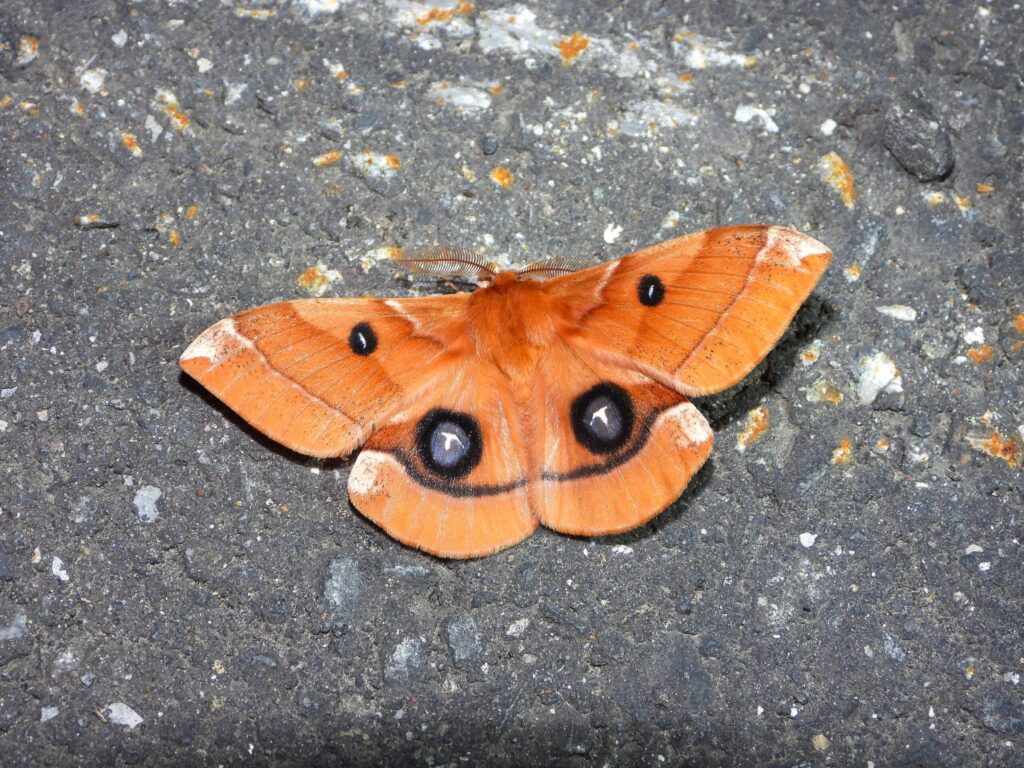
The Japanese Tau Emperor, known as Ezo-yotsume in Japan, is a large spring moth with warm brown to orange wings and striking blue eyespots on the hindwings.
Flight season: Spring, mainly April–May
Distribution: Hokkaido, Honshu, Shikoku, and Kyushu
Why it stands out: When disturbed, it can suddenly reveal the vivid blue eyespots on its hindwings, creating a dramatic flash of color.
▶Read the full profile →
9. Squeaking Silkmoth (Rhodinia fugax)
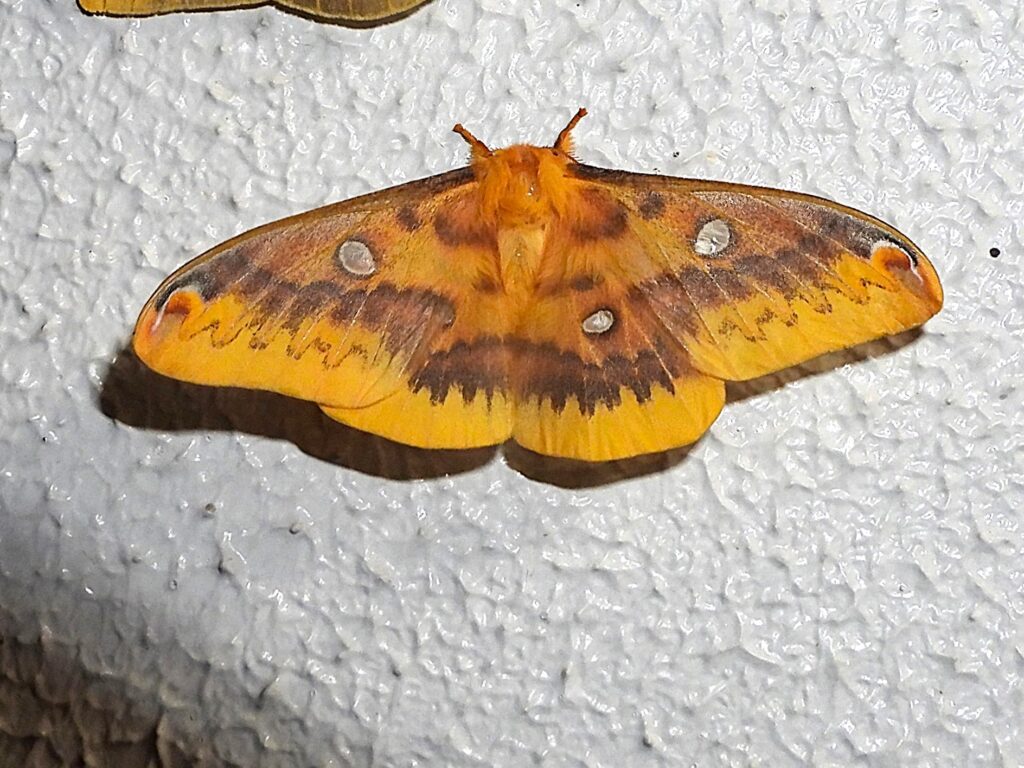
The Squeaking Silkmoth is a late-autumn species with yellow to orange-brown wings that blend surprisingly well with fallen leaves. Males can vary greatly in color, while females are usually much paler.
Flight season: Mainly October–November
Distribution: Hokkaido, Honshu, Shikoku, and Kyushu
Why it stands out: Its caterpillars can produce an audible squeaking sound when disturbed, which gives the species its unusual English name.
▶Read the full profile →
10. Jankowski’s Silkmoth (Rhodinia jankowskii)
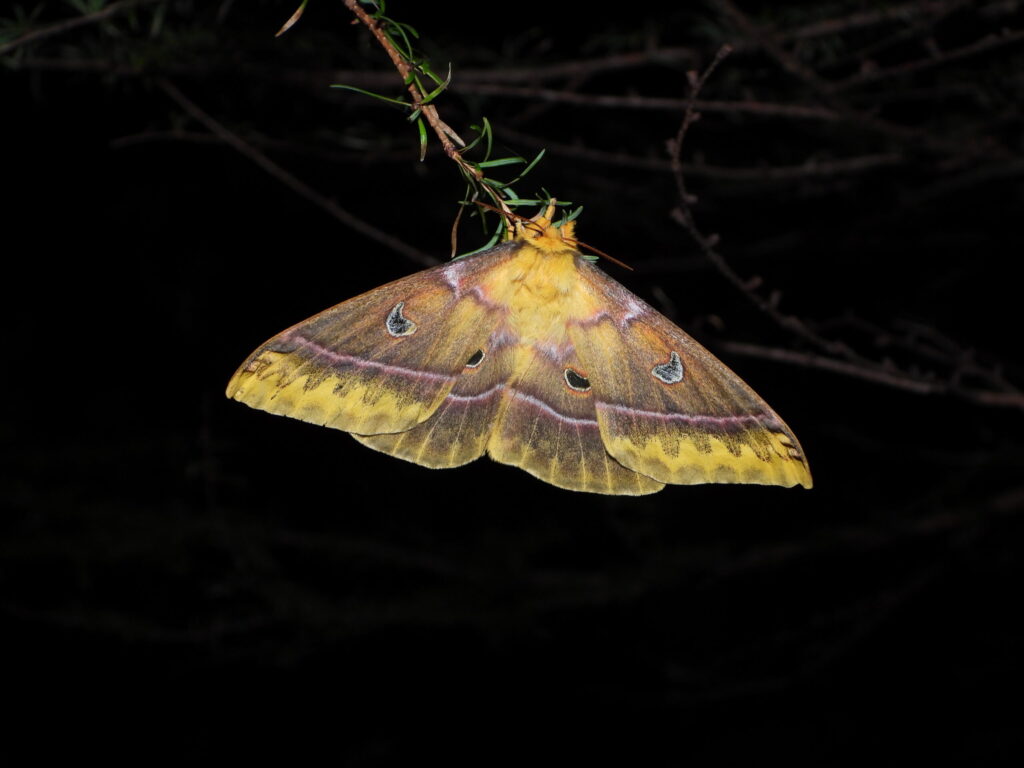
Jankowski’s Silkmoth is a dark-colored autumn silkmoth closely related to the Squeaking Silkmoth. Its brown to olive wings and irregular translucent spots give it a noticeably different look.
Flight season: Mainly September–October
Distribution: Hokkaido, Honshu, and Shikoku
Why it stands out: It is much less commonly encountered than the Squeaking Silkmoth and is associated mainly with cool, forested areas.
▶Read the full profile →
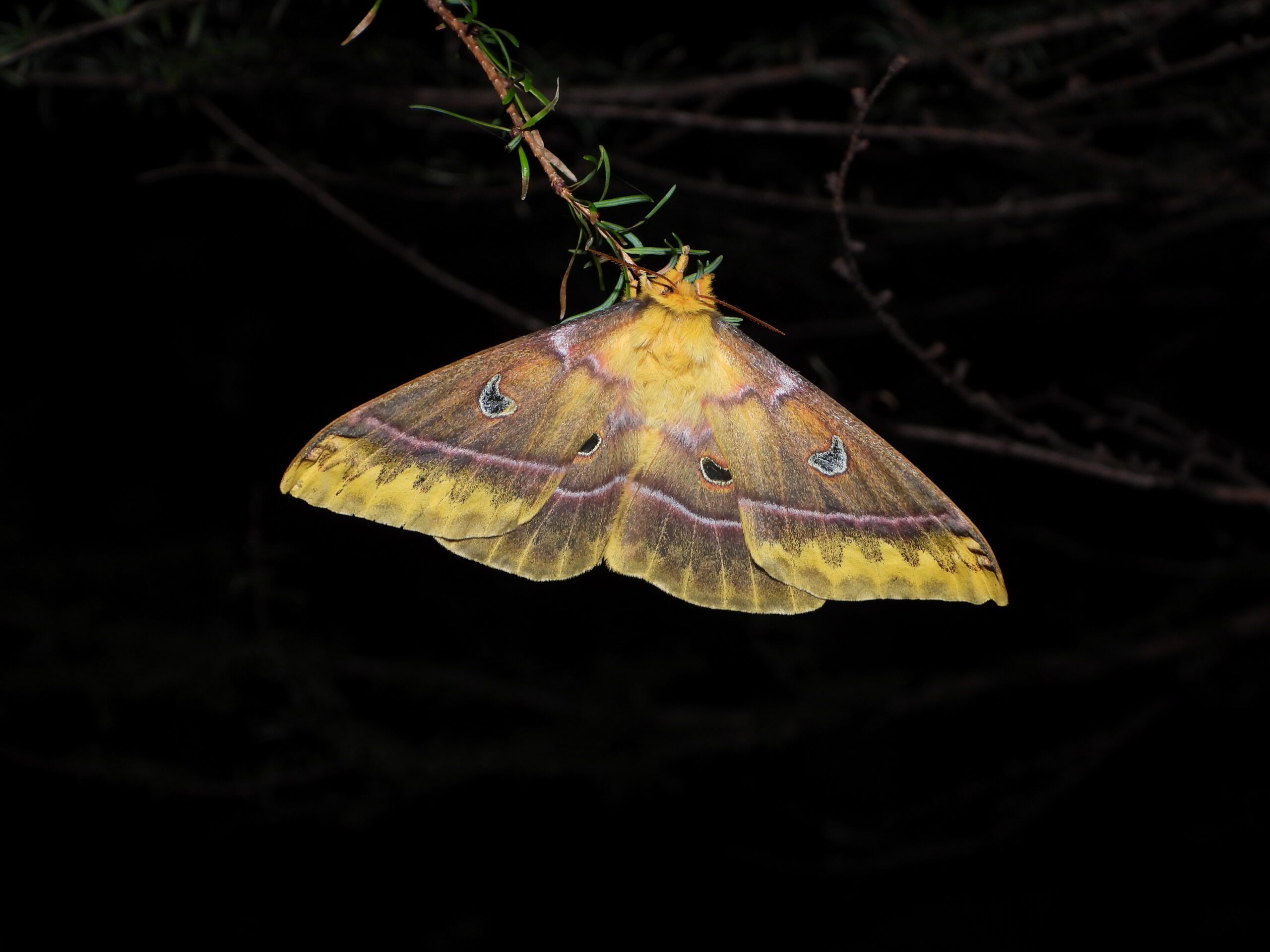
11. Ryukyu Silkmoth (Loepa sakaeratensis ryukyuensis)
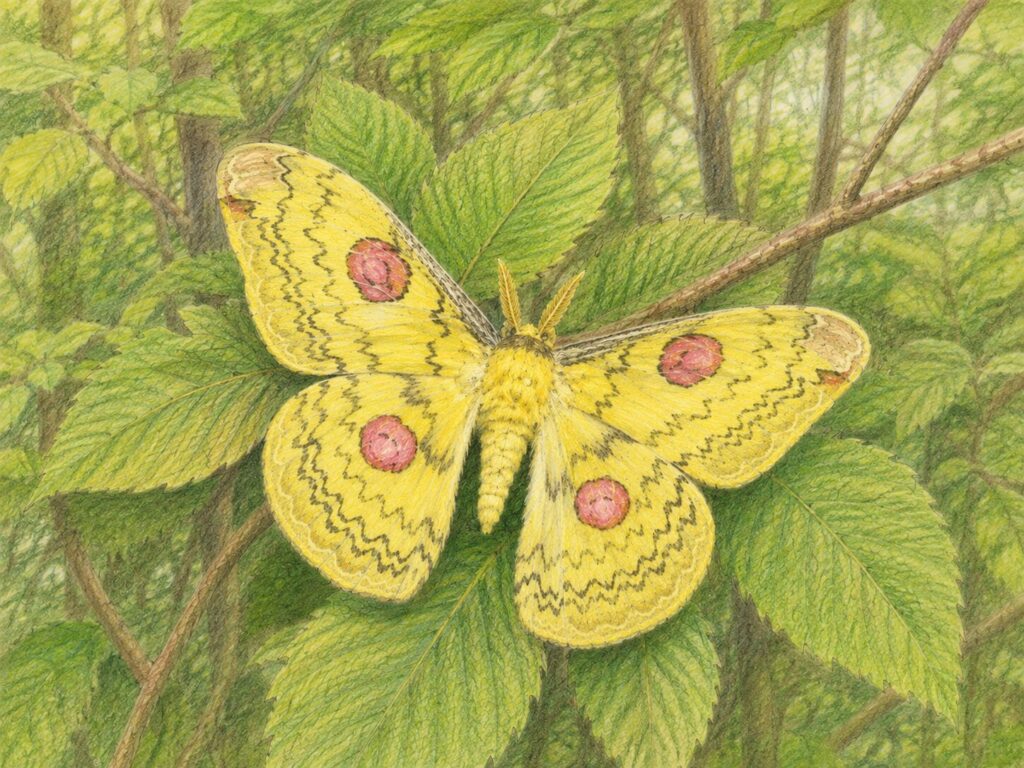
The Ryukyu Golden Emperor Moth is a striking yellow silk moth found only in Japan’s southern islands. Its bright golden wings are covered with reddish markings and small transparent spots.
Flight season: Mainly spring through autumn
Distribution: Amami Oshima, Tokunoshima, and Okinawa Island
Why it stands out: This rare moth has a very limited range in Japan and is listed as Near Threatened on Japan’s national Red List.
12. Atlas Moth (Yonaguni subspecies) (Attacus atlas ryukyuensis)
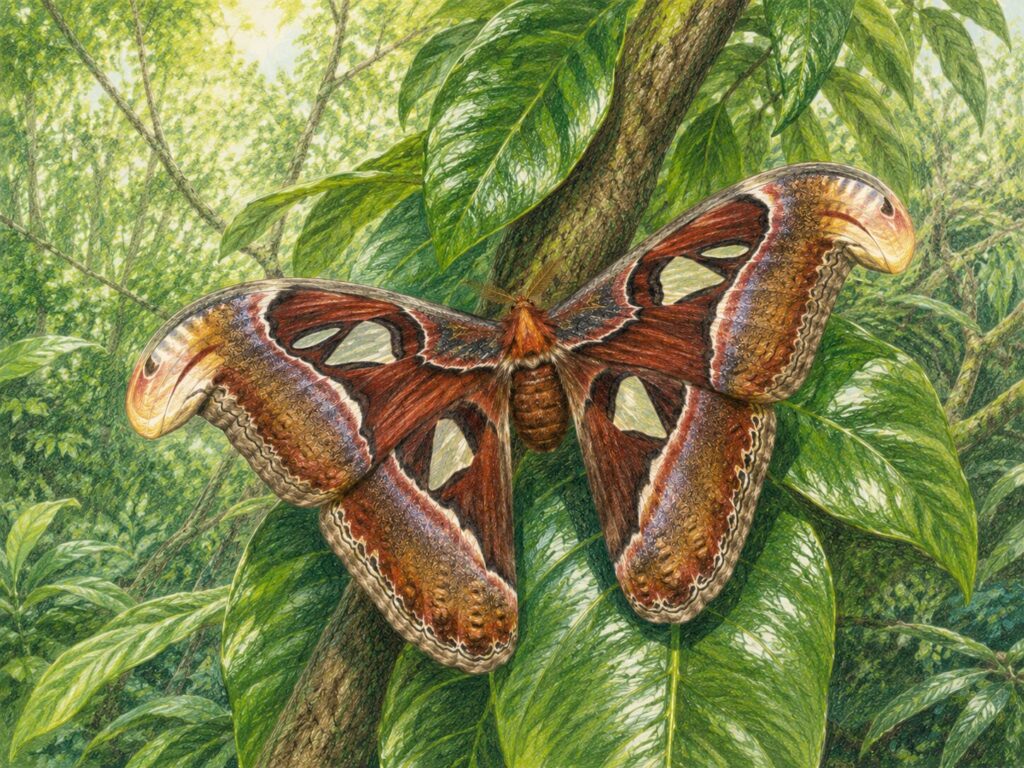
The Atlas Moth is the largest moth found in Japan and one of the largest moths in the world. Its enormous reddish-brown wings have transparent triangular patches and distinctive tips that resemble a snake’s head.
Flight season: Mainly spring, summer, and autumn
Distribution: Ishigaki, Iriomote, and Yonaguni islands in southern Japan
Why it stands out: With a forewing length of around 13–14 cm, this is Japan’s true giant among moths.
How to Identify Giant Moths in Japan
Large moths can look confusing at first, but a few features can quickly narrow down the species.
Check the wing shape: Actias moths, including the Japanese Luna Moth and Japanese Moon Moth, have long tails extending from the hindwings. The Atlas Moth is much larger, with broad, angular wings.
Look at the pattern: Eyespots are common among Japan’s giant silk moths, while the Japanese Owl Moth has dense, maze-like lines across its wings. The Ailanthus Silkmoth is easy to recognize by its pale, crescent-shaped markings.
Consider the season: Japanese Owl Moths and Japanese Tau Emperors appear in spring. Actias moths are mainly seen from late spring through summer, while several other large silk moths are most noticeable from late summer into autumn.
Do not rely on color alone: Color can vary between individuals, sexes, and populations. Wing shape, markings, season, and location are usually more useful for identification.
Where to look: Forest edges, wooded parks, and lights near forests can all be good places to find large moths in Japan. The best location and season depend on the species.
Author’s Impression
I have seen several of Japan’s giant moths around streetlights near forests and parks. Even when I know what species to expect, finding a huge moth resting under a light is always exciting.
What I find especially interesting is how different they look in person. Some are surprisingly colorful, while others blend almost perfectly into tree bark or fallen leaves.
Because many of these moths are nocturnal, checking lights near wooded areas after dark has given me some of my best encounters.