Where to See Wild Crested Ibis on Sado Island, Japan
Yes, you can see wild crested ibises on Sado Island.
While captive birds can be seen at Toki no Mori Park, one of the best things about visiting Sado is the chance to see crested ibises living wild among the island’s rice fields and rural landscapes.
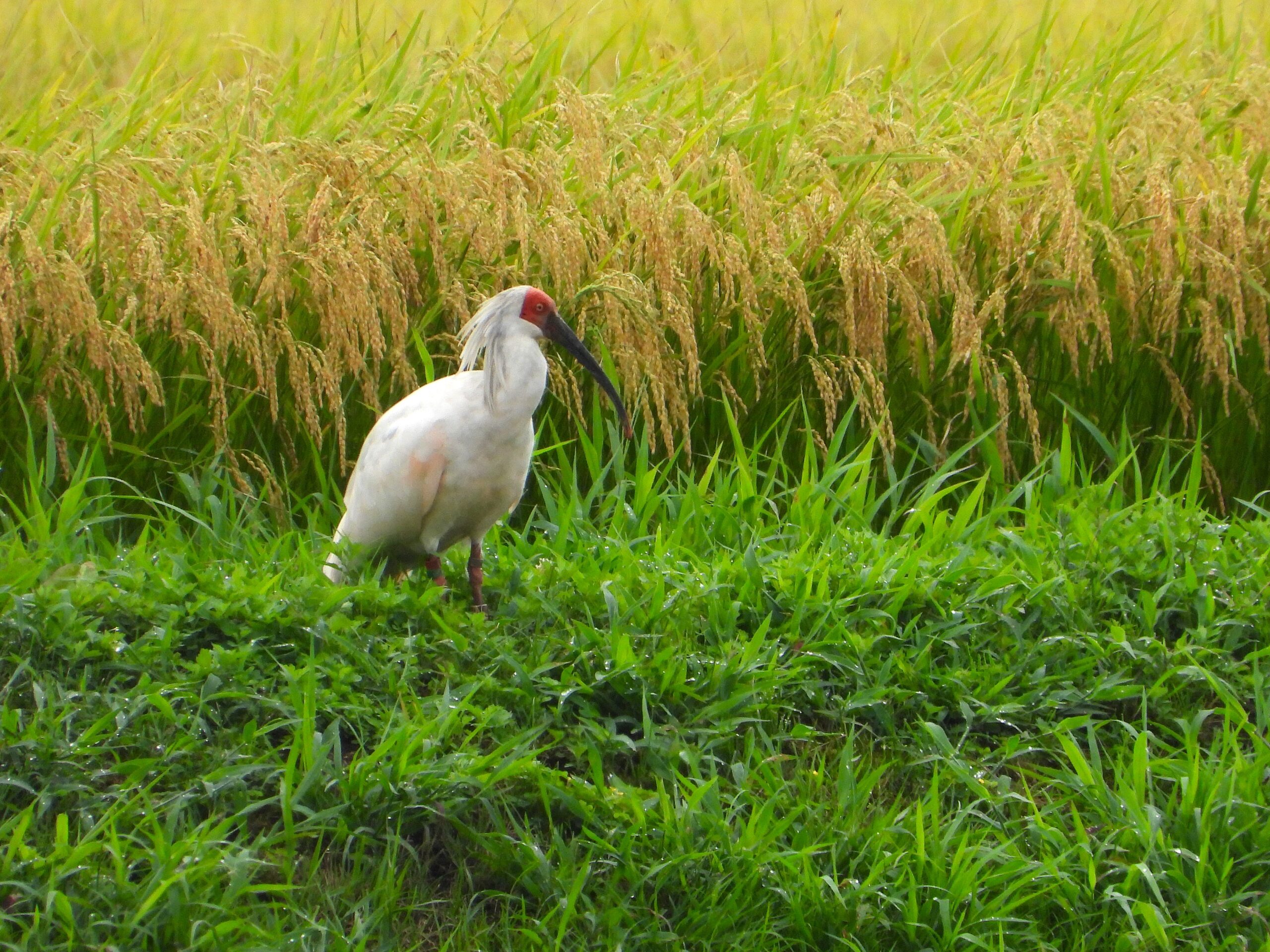
I visited Sado in September and was lucky enough to find and photograph wild crested ibises in the fields.
The tall rice made a beautiful background and gave the photos a strong sense of place. But it also made the birds surprisingly difficult to spot when they were feeding on the ground.
There is never a guarantee with wild birds, but knowing where to look, what time of year to visit, and how to search can make a big difference.
Here is what I learned from looking for wild crested ibises on Sado Island.
Where to See Wild Crested Ibis on Sado Island
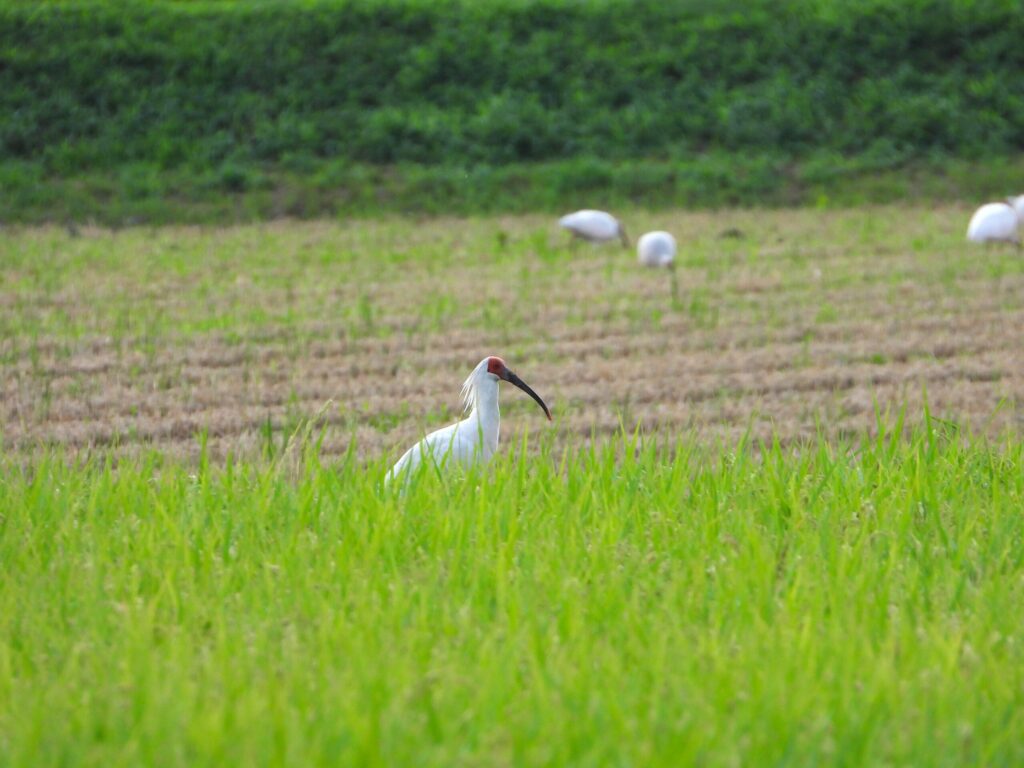
If you want to find wild crested ibises on Sado, rice paddies and the surrounding farmland are the best places to start.
Rice fields are important feeding habitat for the species, but the birds do not use exactly the same areas throughout the year. Depending on the season and the condition of the fields, they may also feed along levees, farm roads, grassland, and waterways.
Look Around Rice Paddies and Open Farmland
Do not spend all your time looking at the sky.
Crested ibises often feed on the ground, walking slowly through fields while probing the soil or shallow water with their long, curved bills.
Good areas to scan include:
- Rice paddies
- Field edges and levees
- Harvested fields
- Grassland beside farmland
- Waterways and wet areas
- Open areas along farm roads
When the rice is tall, a bird standing inside the field can be much harder to see than you might expect.
Check the edges and other open areas as well as the middle of the paddies.
Start Around the Kuninaka Plain
Sado is a large island, so telling someone to simply “look around Sado” is not very helpful.
A good area to know is the Kuninaka Plain in central Sado.
This broad agricultural area is covered with rice fields and is one of the main places where visitors have a chance of seeing wild crested ibises feeding.
There is no need to chase exact sighting locations. The birds move around, and keeping your distance is far more important than getting to a particular spot.
Avoid approaching roosting or nesting areas.
Toki Terrace Is a Good Starting Point
For first-time visitors, Toki Terrace is another useful place to begin.
The facility overlooks the rice fields of the Kuninaka Plain and was designed to allow people to watch wild crested ibises without disturbing them. Telescopes are available for visitors.
Seeing a bird there is never guaranteed, but it is a good place to get a feel for the landscape and habitat before searching elsewhere.
How to Find Crested Ibis in the Rice Fields
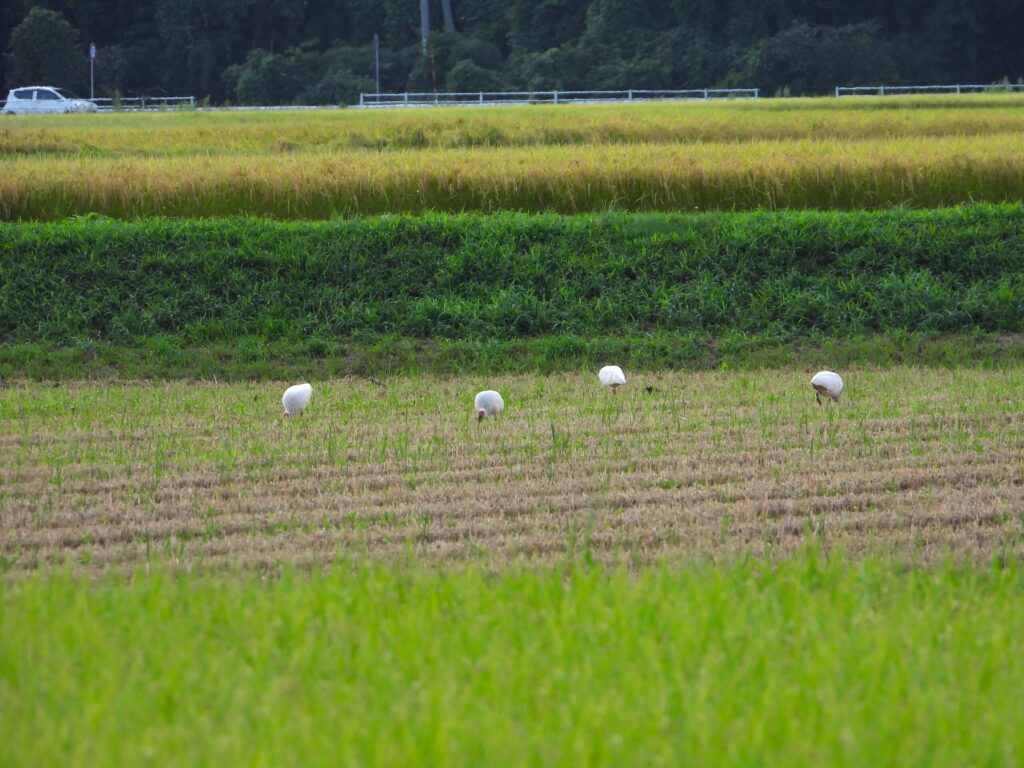
Even on Sado, wild crested ibises are not always easy to find.
The agricultural landscape is extensive, and vegetation can hide a bird remarkably well.
Check the Edges When the Rice Is Tall
When I visited in September, many of the rice plants were already tall.
That was great for photography but not so helpful for finding the birds.
Crested ibises are fairly large, yet they can almost disappear when they lower their heads to feed among tall rice.
If you visit before the harvest, spend extra time checking:
- Field edges
- Levees
- Shorter vegetation
- Open sections of paddies
- Areas beside farm roads
Scanning several fields carefully worked better for me than focusing on a single spot.
Take a Closer Look at Distant White Birds
From a distance, crested ibises can be easy to overlook among other pale-colored birds.
Herons and egrets also use the rice fields on Sado, and at long range they can look similar at first glance.
That can actually be useful.
If you see herons or other white birds feeding in a field, take another look with binoculars or a telephoto lens. Crested ibises sometimes use the same kinds of feeding areas.
Having a Car Helps
A car is extremely useful for looking for wild crested ibises on Sado.
It makes it much easier to move between agricultural areas, and it also allows you to observe the birds without approaching them on foot.
If you find a crested ibis, stay inside the vehicle whenever possible and watch from a respectful distance.
Remember that these are working farms as well as wildlife habitat. Do not block farm roads, stop where you interfere with agricultural work, or enter private fields.
Best Time to See Crested Ibis on Sado Island
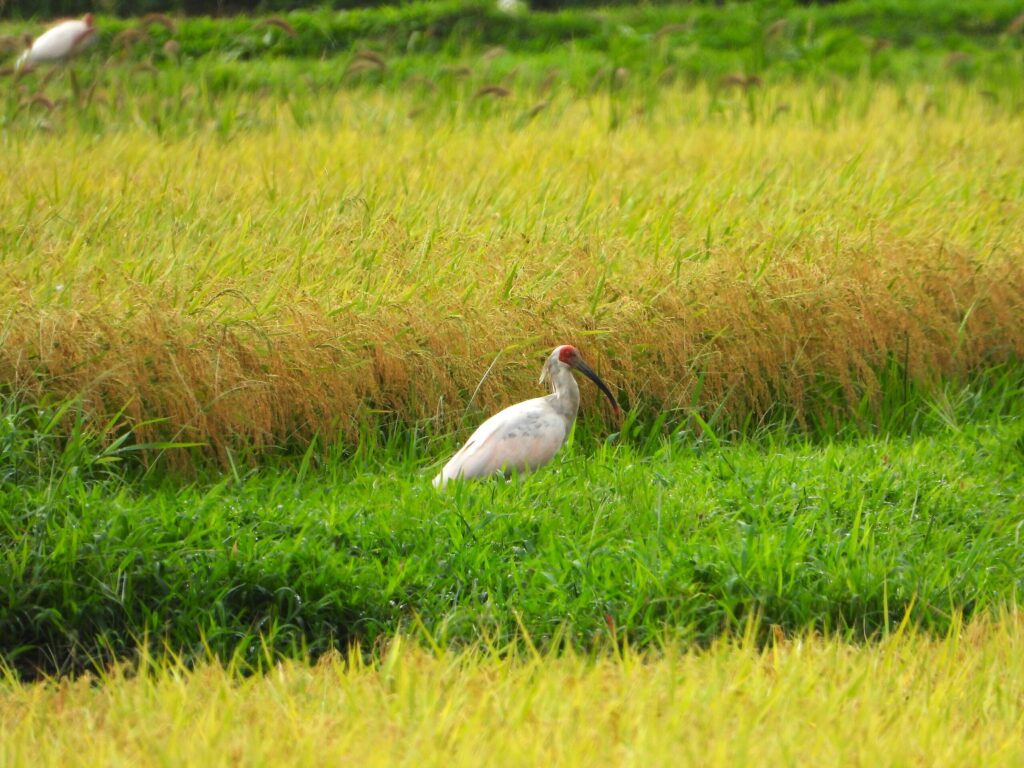
Wild crested ibises can be seen on Sado throughout the year.
However, the rice fields change dramatically with the seasons, and the best time for photography is not necessarily the easiest time to find the birds.
September Is Beautiful for Photography
I visited Sado in September, and the scenery was one of the highlights of the trip.
Photographing a crested ibis among mature rice gives the image much more context than a tight portrait alone. You can see the bird as part of the landscape it lives in.
I was able to photograph a wild crested ibis with rice behind it, and those images became some of my favorites from Sado.
Autumn can also be an attractive time to see the bird itself, as its soft pink tones become more noticeable after the summer molt.
But Tall Rice Makes the Birds Harder to Spot
The downside of visiting in September was simple: the rice was high.
A crested ibis can be standing in a field and still be very difficult to see, especially when it lowers its head while feeding.
Based on my experience, September offered a trade-off:
- Beautiful rice-field backgrounds
- A distinctly Sado-like setting
- Great photographic potential
- More difficulty finding birds hidden by the rice
So I would not call September the easiest month for finding crested ibises.
But for photographing them in the landscape, I found it very rewarding.
After the Harvest Can Be Easier
If your main priority is simply finding wild crested ibises, visiting after the rice harvest may be easier.
As the fields are harvested in autumn, the landscape opens up and birds feeding on the ground become easier to spot.
October can be particularly good because more fields have been harvested and crested ibises may also begin gathering in groups.
A simple way to think about it is:
September: better for photographing birds with standing rice.
After the harvest: potentially easier for spotting birds on the ground.
You Do Not Have to Go Only at Dawn
Early mornings are popular for birdwatching, but you do not need to be out before sunrise to have a chance of seeing crested ibises on Sado.
The birds can also be found feeding in rice fields during the day.
Of course, their movements depend on the weather, feeding conditions, and the birds themselves.
If you do not find one in the morning, keep checking suitable fields later in the day.
How to Identify a Crested Ibis in the Field
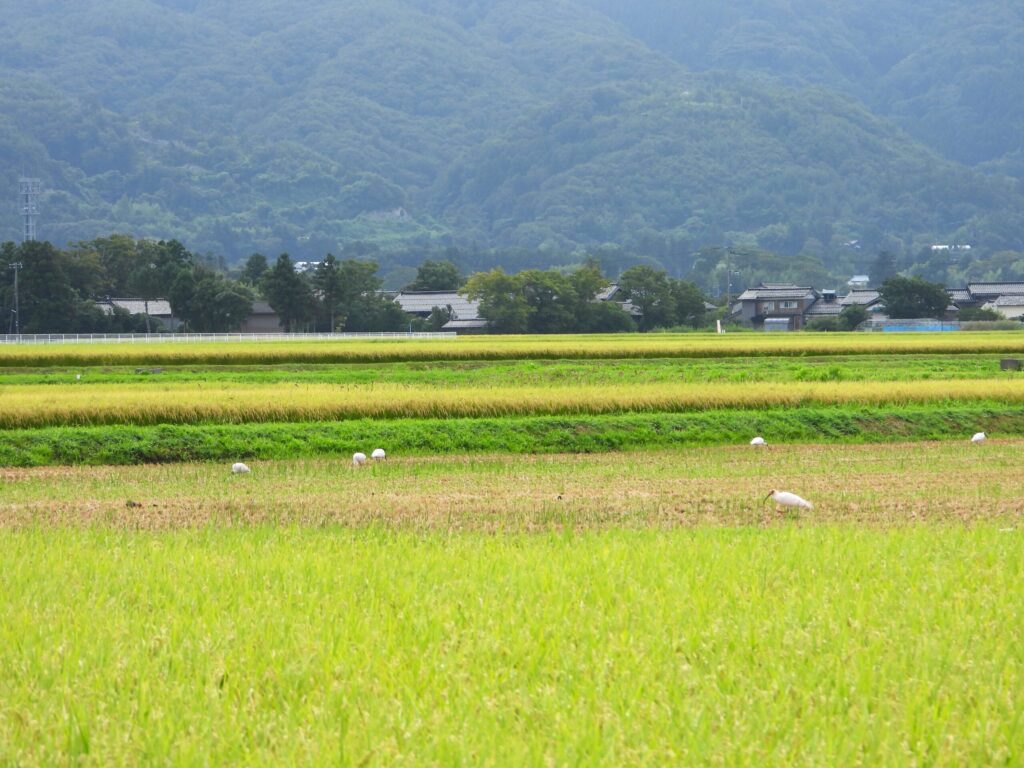
At a distance, a crested ibis can sometimes be confused with a heron or egret.
Look for:
- A bare red face
- A long, downward-curved bill
- Red legs
- Pale plumage with a pinkish tint
- Long crest feathers at the back of the head
The pink color can be especially noticeable when the bird opens its wings.
Flight posture is another useful clue.
Crested ibises fly with their necks extended straight forward, while herons usually fly with their necks pulled back.
That difference can be useful when identifying birds at a distance.
For more about the species itself, including its habitat, behavior, identification, and conservation, see my separate guide to the Crested Ibis in Japan.
▶ Learn more: Crested Ibis in Japan
How to Watch and Photograph Wild Crested Ibis Responsibly
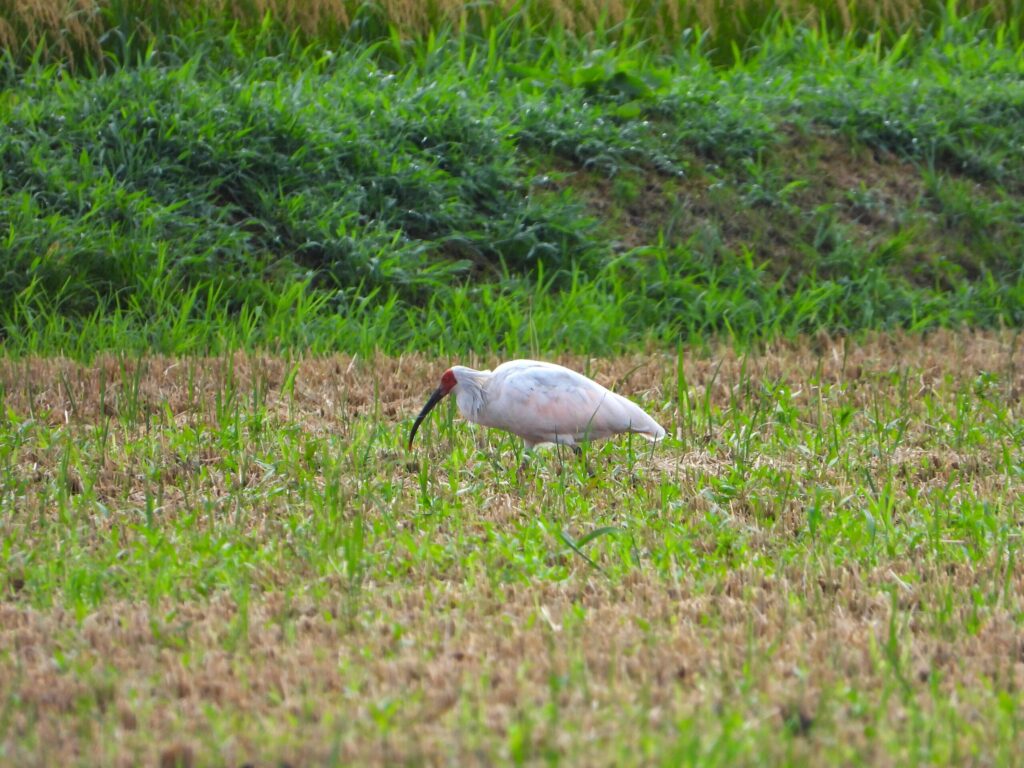
Finding a wild crested ibis is exciting, especially with a camera in your hands.
But getting closer should never be the goal.
When watching crested ibises on Sado:
- Keep your distance
- Stay quiet
- Observe from inside your car whenever possible
- Avoid loud noises and strong lights
- Never approach nests
- Respect local residents and farm workers
Use binoculars or a telephoto lens rather than walking closer to the bird.
If your presence causes a crested ibis to stop feeding or fly away, you are too close.
Rice paddies are also private working farmland. Never enter a field for a photograph.
On Sado, visitors are asked to take particular care around nesting areas from February through June.
The welfare of the bird should always come before the photo.
What to Bring for Crested Ibis Watching
You do not need a huge amount of equipment, but a few things make the experience much easier.
Useful gear includes:
- Binoculars
- A telephoto lens
- A camera
- A car
Binoculars are especially useful for checking distant birds before deciding whether you have found a crested ibis or a heron.
For photography, a telephoto lens lets you keep your distance while still getting detailed images.
You also do not need to fill the frame with the bird.
Some of the most memorable photos show a crested ibis as part of the wider Sado landscape.
That was certainly true during my September visit. The surrounding rice fields made the images more meaningful to me than a close-up alone would have.
What If You Cannot Find a Wild Crested Ibis?
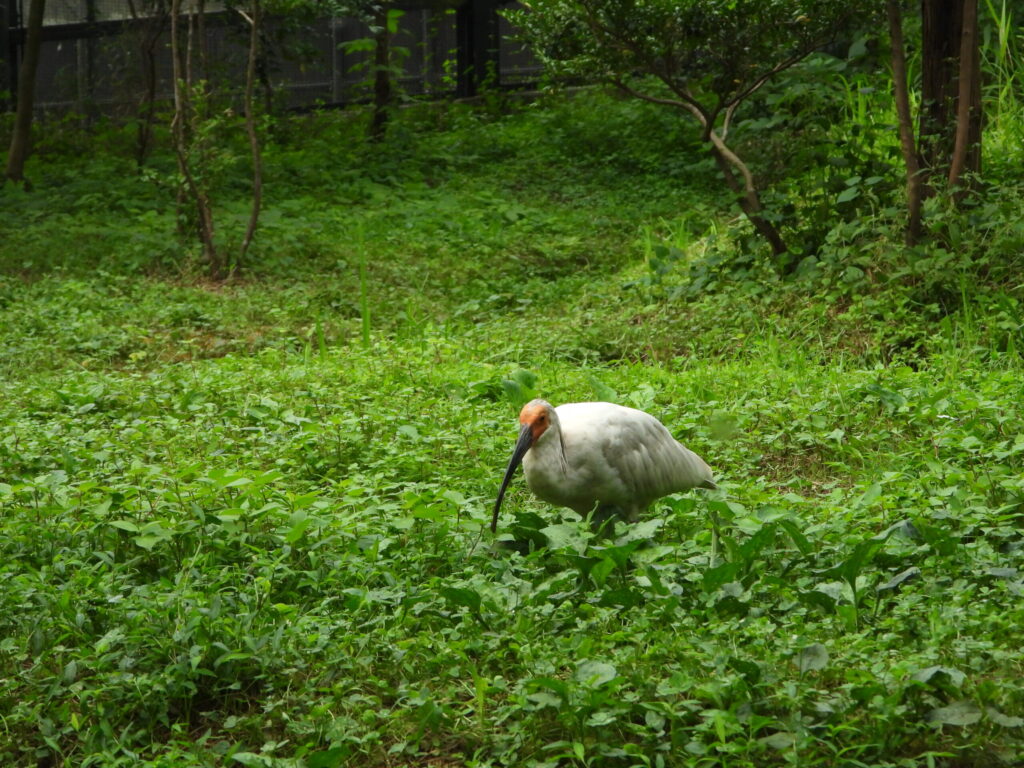
Wildlife sightings are never guaranteed.
Even on Sado, you may spend time searching the rice fields without finding a wild crested ibis.
If you still want to see the species, Toki no Mori Park is a good alternative.
The park allows visitors to see captive crested ibises at close range and learn more about their conservation, breeding, and return to the wild.
It is useful to know the difference between Sado’s two main toki facilities:
Toki Terrace
Best for looking for wild crested ibises in the surrounding landscape.
Toki no Mori Park
Best for seeing captive crested ibises up close and learning about the species.
For a first visit to Sado, combining time in the field with one of these facilities can give you a much better understanding of the bird.
Final Thoughts
Seeing a wild crested ibis was one of the highlights of my visit to Sado.
The birds were not always easy to find in September because of the tall rice, but that same landscape made the photographs much more memorable.
What stayed with me most was not simply seeing a rare bird.
It was seeing the crested ibis as part of Sado itself—feeding among rice fields and living in a landscape shaped by both nature and farming.
There is never a guarantee that you will find one. But if you scan the fields carefully, check distant birds, and give the ibises plenty of space, Sado offers a very real chance to see this remarkable species in the wild.
If you are lucky enough to find one, take a moment to enjoy the whole landscape, not just the bird.