Wildlife in Shinjuku Gyoen | Nature and Wildlife Guide in Central Tokyo
Introduction
Shinjuku Gyoen is one of the best places in Tokyo to experience wildlife without leaving the city.
Located in the heart of Tokyo, this large national garden combines woodlands, open lawns, traditional gardens, and ponds that support a surprising variety of wildlife throughout the year.
Most visitors come for the famous cherry blossoms or autumn colors, but nature lovers will discover something equally rewarding. From colorful songbirds and kingfishers to dragonflies and butterflies, Shinjuku Gyoen offers a chance to experience nature in one of the world’s largest cities.
Whether you are visiting Tokyo for sightseeing, photography, or birdwatching, Shinjuku Gyoen is an excellent place to slow down and enjoy Japan’s urban wildlife.
Why Shinjuku Gyoen Is One of Tokyo’s Best Wildlife Spots

A Large Natural Oasis in Central Tokyo
Covering approximately 58 hectares (144 acres), Shinjuku Gyoen is one of the largest green spaces in central Tokyo.
The garden contains a mixture of woodland, grassland, ponds, and landscaped gardens. These diverse habitats allow many species to thrive despite being surrounded by one of the busiest urban areas in Japan.
Easy Wildlife Watching for Beginners
Unlike mountain trails or remote nature reserves, Shinjuku Gyoen is easy to explore.
Well-maintained paths make it possible to enjoy wildlife observation at a relaxed pace. Even visitors with no previous birdwatching experience have a good chance of spotting several species during a short walk.
Perfect for Combining Nature and Sightseeing
One of Shinjuku Gyoen’s greatest strengths is its accessibility.
Located within walking distance of Shinjuku Station, it allows visitors to enjoy wildlife observation without leaving central Tokyo. Few places offer such an easy combination of nature and sightseeing.
Wildlife You Can See in Shinjuku Gyoen
Birds are the most noticeable wildlife in Shinjuku Gyoen, but the garden also supports a variety of insects and other small animals throughout the year.
The mix of woodland and wetland habitats creates opportunities to observe different species within a relatively small area.
Forest Birds of Shinjuku Gyoen
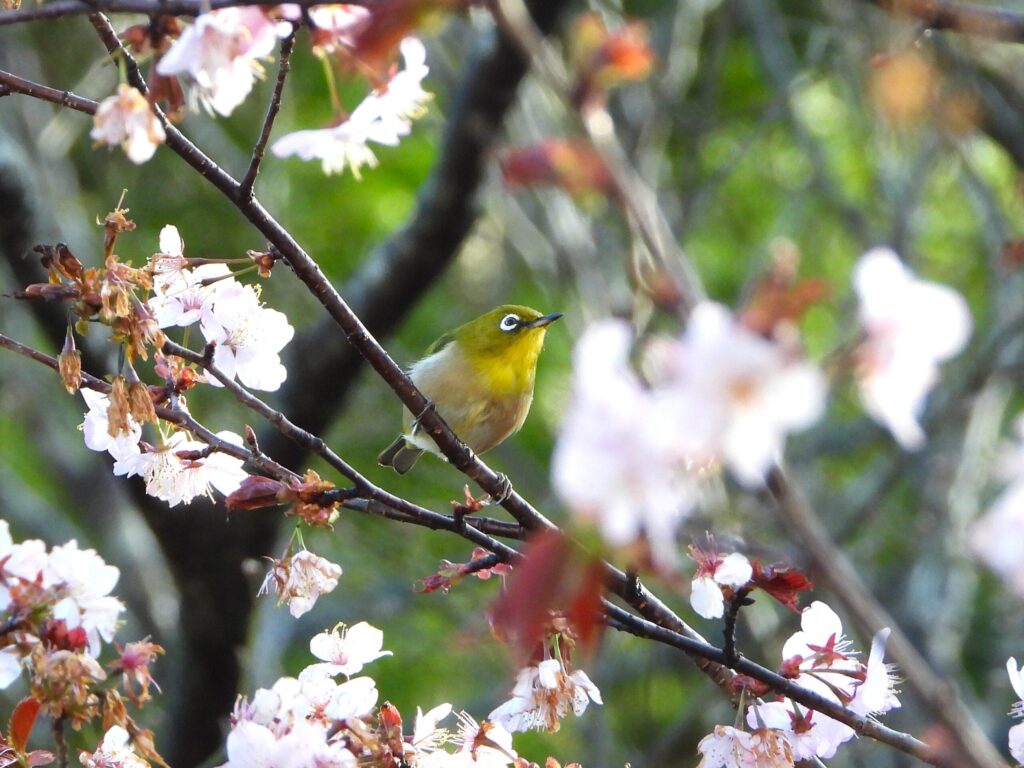
Japanese White-eye (Zosterops japonicus)
The Japanese White-eye is one of the most recognizable birds in the garden.
Its bright green plumage and distinctive white eye-ring make it easy to identify. During spring, these birds are often seen feeding on nectar among flowering trees.
Japanese Tit (Parus minor)
The Japanese Tit is one of the most common birds in Shinjuku Gyoen.
Active and curious, it spends much of its time searching for insects and seeds among branches.
Long-tailed Tit (Aegithalos caudatus)
This charming bird is known for its tiny body and remarkably long tail.
Long-tailed Tits often travel in small flocks and are a favorite among birdwatchers and photographers.
Varied Tit (Sittiparus varius)
The Varied Tit is a colorful woodland bird that can often be seen moving through the trees in search of food.
Its striking plumage makes it one of Japan’s most attractive tit species.
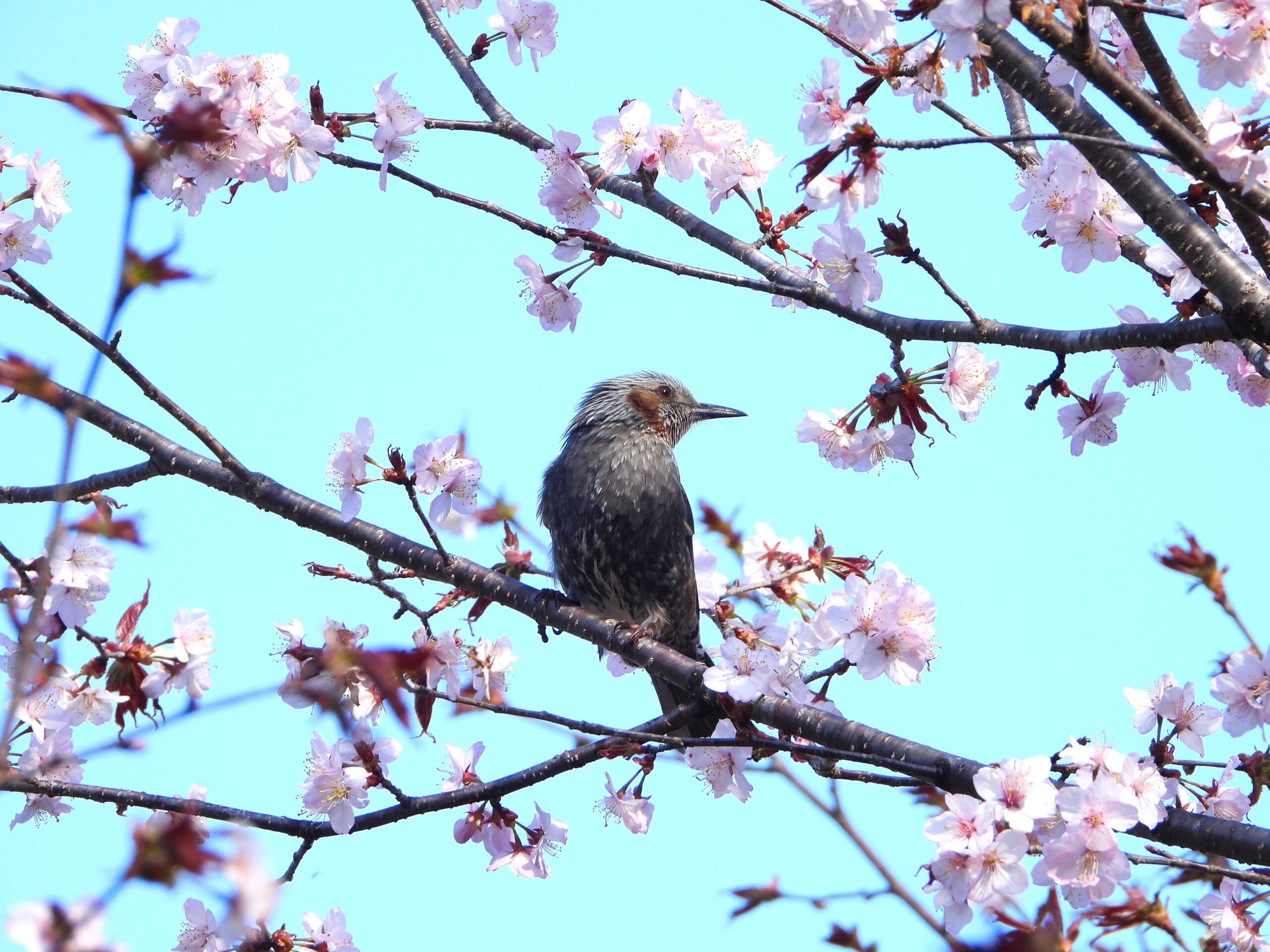
Brown-eared Bulbul (Hypsipetes amaurotis)
One of the most common birds in urban Japan, the Brown-eared Bulbul is frequently encountered throughout the garden.
Its loud calls are often heard before the bird is seen.
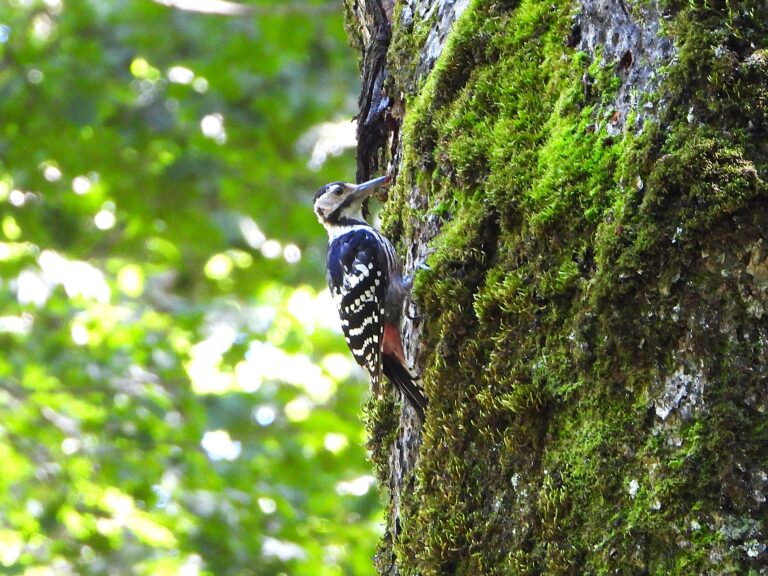
Japanese Pygmy Woodpecker (Yungipicus kizuki)
Japan’s smallest woodpecker can occasionally be observed climbing tree trunks while searching for insects.
Listening for gentle tapping sounds can help locate this species.
▶ Japanese Pygmy Woodpecker Guide
Japanese Bush Warbler (Horornis diphone)
Famous for its beautiful song, the Japanese Bush Warbler is one of the classic sounds of spring in Japan.
Although its call is familiar, spotting the bird itself can be surprisingly difficult.
Wildlife Around the Ponds
The ponds attract a different group of wildlife and are often among the most productive areas for observation.
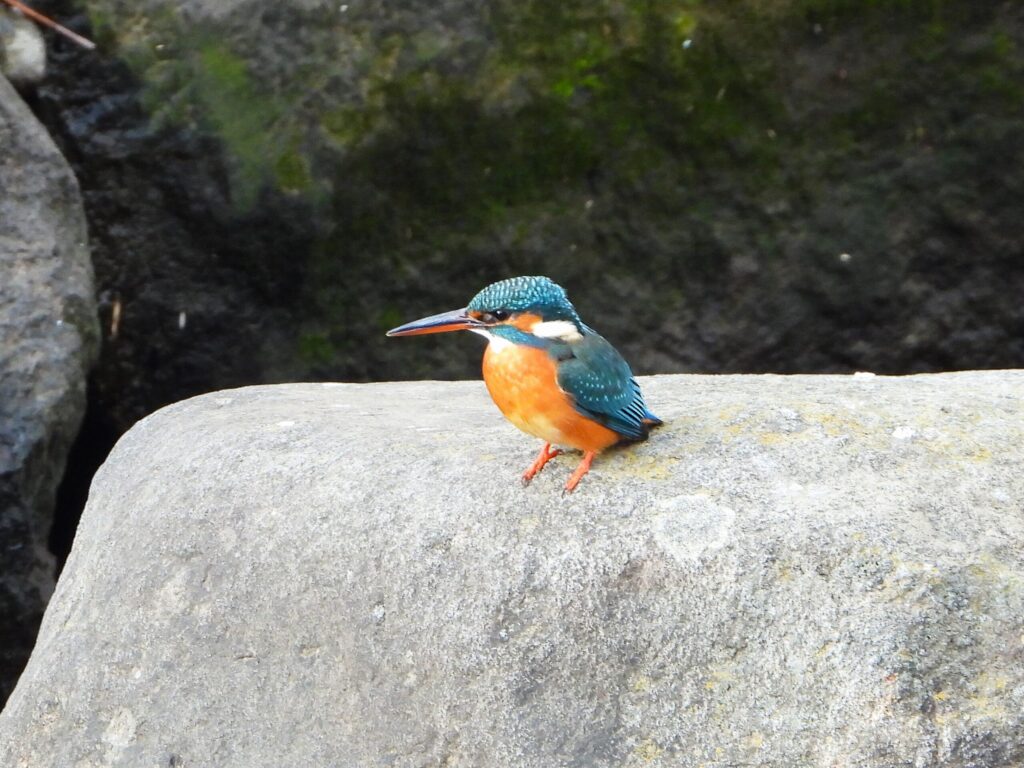
Common Kingfisher (Alcedo atthis)
The Common Kingfisher is one of the most sought-after birds in Shinjuku Gyoen.
Its brilliant blue plumage stands out against the water, and spotting one is often a highlight of any visit.
Mandarin Duck (Aix galericulata)
The Mandarin Duck is famous for its spectacular appearance.
Male birds display striking colors and are considered among the most beautiful waterfowl in the world.
Eastern Spot-billed Duck (Anas zonorhyncha)
This common resident duck can be observed throughout the year around the ponds.
▶ Eastern Spot-billed Duck Guide
Eurasian Coot (Fulica atra)
Recognizable by its black body and white bill, the Eurasian Coot is a regular visitor to the garden’s ponds.
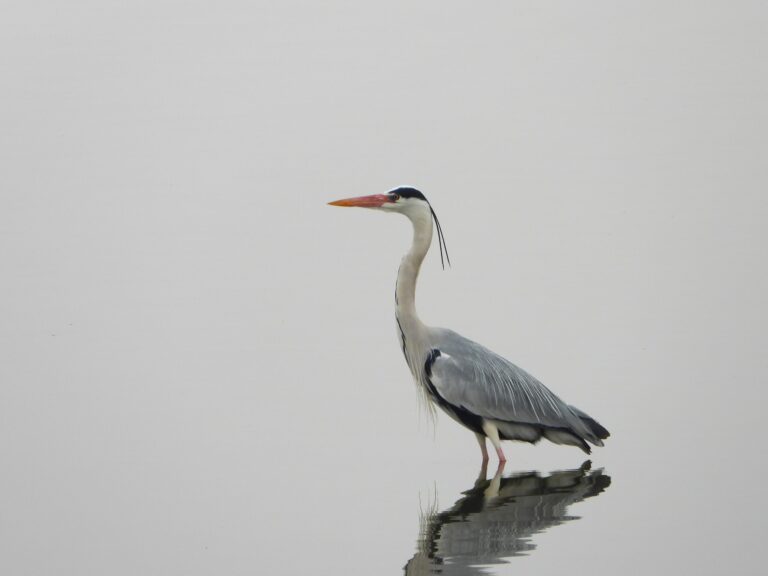
Grey Heron (Ardea cinerea)
The Grey Heron is a large wading bird that may occasionally be seen standing motionless near the water while waiting for prey.
Insects of Shinjuku Gyoen
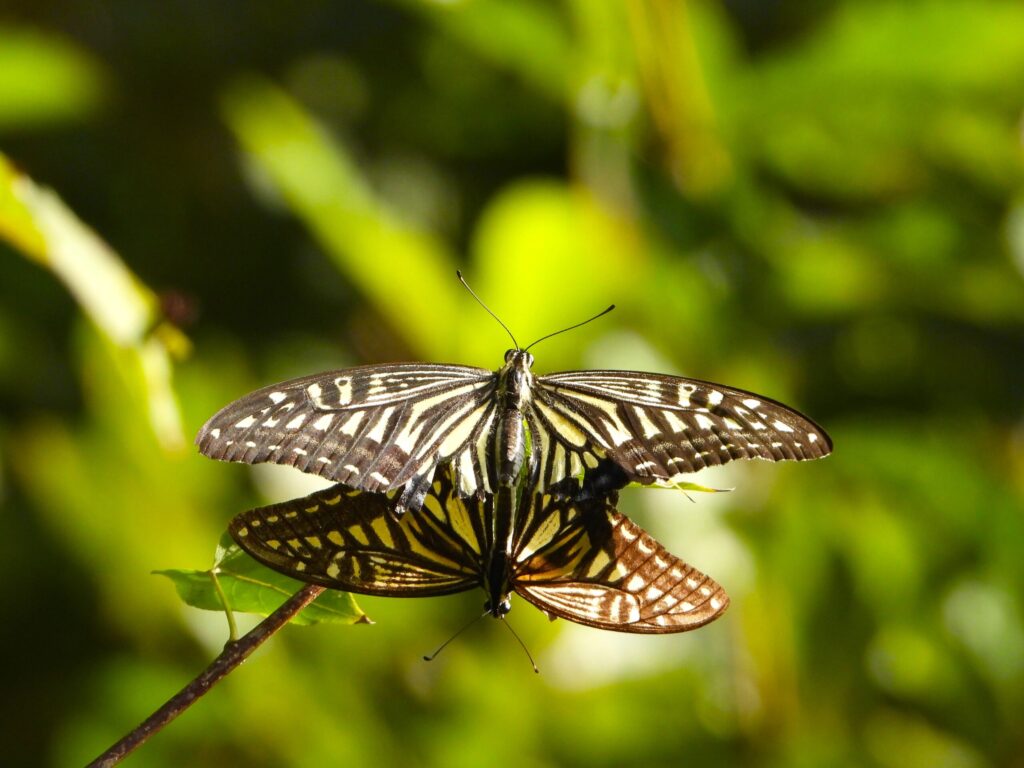
Wildlife in Shinjuku Gyoen is not limited to birds.
Butterflies
Various butterfly species can be observed from spring through autumn, particularly around flowers and sunny open areas.
Dragonflies
Dragonflies are commonly seen near ponds during the warmer months.
Their fast flight and bright colors make them easy to notice.
Cicadas
Summer visitors will quickly become familiar with the sound of cicadas.
Their calls are one of the defining sounds of summer in Japan.
Best Wildlife Watching Areas
Woodland Areas
The wooded sections of the garden are ideal for observing forest birds such as Japanese White-eyes, tits, and woodpeckers.
Walking slowly and listening for bird calls often produces the best results.
Pond Areas
The ponds attract waterbirds, dragonflies, and other wildlife.
Visitors may encounter Mandarin Ducks, Eastern Spot-billed Ducks, and, with some luck, a Common Kingfisher.
Open Lawn Areas
The open lawns provide a peaceful place to enjoy nature while keeping an eye out for birds moving between feeding and resting areas.
Wildlife by Season
Spring
Spring is one of the best times to visit.
Cherry blossoms and plum blossoms attract birds, while many species become more active during the breeding season.
Summer
Insects dominate the wildlife experience during summer.
Dragonflies, butterflies, and cicadas are particularly noticeable throughout the garden.
Autumn
Colorful autumn foliage creates a beautiful setting for nature photography and wildlife observation.
Winter
Winter is often the easiest season for birdwatching.
With fewer leaves on the trees, birds become easier to spot, and waterbirds are often more visible around the ponds.
Why Winter Is the Best Time for Wildlife Watching
If wildlife observation is your main goal, winter is an excellent time to visit Shinjuku Gyoen.
Reduced foliage improves visibility, making it easier to locate birds in the trees. The quieter atmosphere also allows visitors to enjoy wildlife watching at a slower pace.
Waterbirds around the ponds are often easier to observe during this season as well.
Tips for Wildlife Watching
- Visit early in the morning for the best activity.
- Bring binoculars for better views.
- Listen carefully for bird calls.
- Keep a respectful distance from wildlife.
- Do not feed animals.
- Follow all park rules and stay on designated paths.
Conclusion
Shinjuku Gyoen proves that you do not need to leave Tokyo to experience wildlife.
Its combination of woodlands, ponds, and open spaces supports a surprising variety of birds and insects throughout the year. From Japanese White-eyes and kingfishers to dragonflies and butterflies, there is always something interesting to discover.
Whether you are a dedicated wildlife enthusiast, a photographer, or simply a traveler looking for a peaceful escape, Shinjuku Gyoen is one of the best places in Tokyo to connect with nature.
Related Articles
▶ Wildlife in Japan: Where to See Wild Animals by Region
▶ Wild Animals You Can See in Tokyo – Wildlife of Japan
▶ Wildlife at Meiji Jingu | Tokyo Birdwatching Guide