Where to See Wildlife in Tokyo: Mount Takao Guide
Introduction
Mount Takao is a 599-meter mountain on the western edge of Tokyo, about an hour by train from central Tokyo. Despite its modest height and easy access, it receives several million visitors each year and is one of Japan’s most climbed mountains.
What makes Takao special is not only the temples and viewpoints, but also its rich wildlife. The mountain sits where warm and cool climate zones meet and still has large areas of natural forest, streams, and ravines. This mix of habitats supports roughly 30 species of wild vertebrate animals, about 150 species of birds, and more than 1,500 plant species.
This article introduces some of the mammals, birds, reptiles, amphibians, and insects you might encounter on Mount Takao, and gives practical tips for safe and responsible wildlife watching.
How Rich Is the Wildlife on Mount Takao?
Unlike nearby hills covered mainly with man-made cedar plantations, Mount Takao still has extensive natural broad-leaved forest. The southern slopes are dominated by evergreen oaks and other warm-temperate trees, while the cooler northern slopes hold deciduous species such as beech.
Because of this variety, the surrounding Takao–Jimba area forms part of a nature park where:
- Around 30 kinds of wild animals (mammals, reptiles, amphibians, fish) are recorded
- Roughly 150 bird species can be seen, close to one quarter to one third of all species recorded in Japan
For a mountain so close to one of the world’s largest cities, this level of biodiversity is exceptional.
Mammals of Mount Takao
Japanese Macaque (Macaca fuscata)
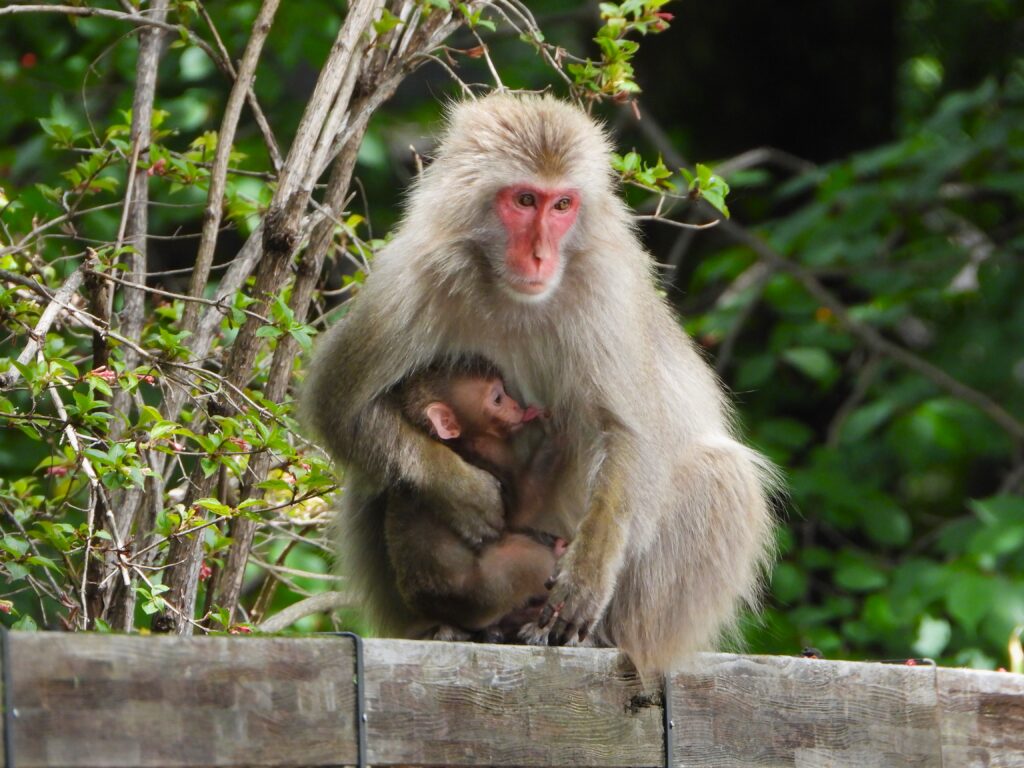
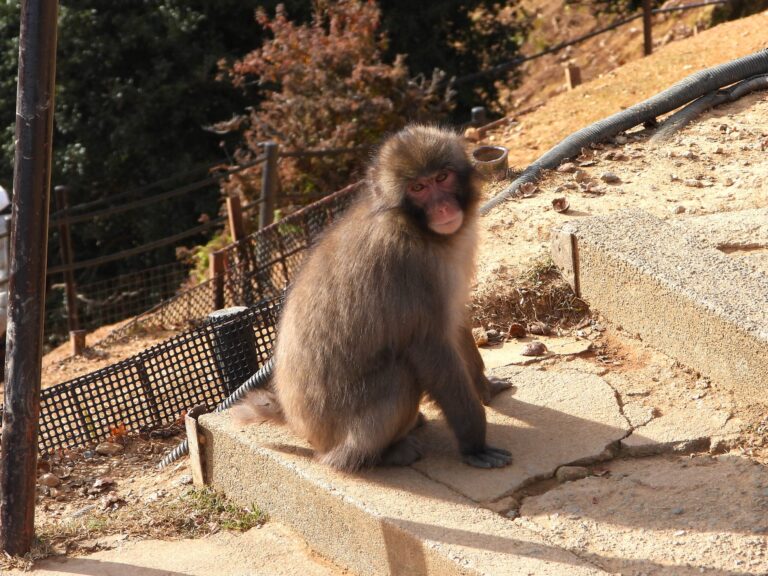
Japanese macaques inhabit the hills around Takao and are occasionally seen near the main trails, especially in quieter forest sections at dawn or dusk. They move in family groups and feed on buds, leaves, fruits, seeds, and insects. Keep a safe distance, avoid eye contact, and never feed them.
Full species profile → Japanese Macaque
Sika Deer (Cervus nippon)
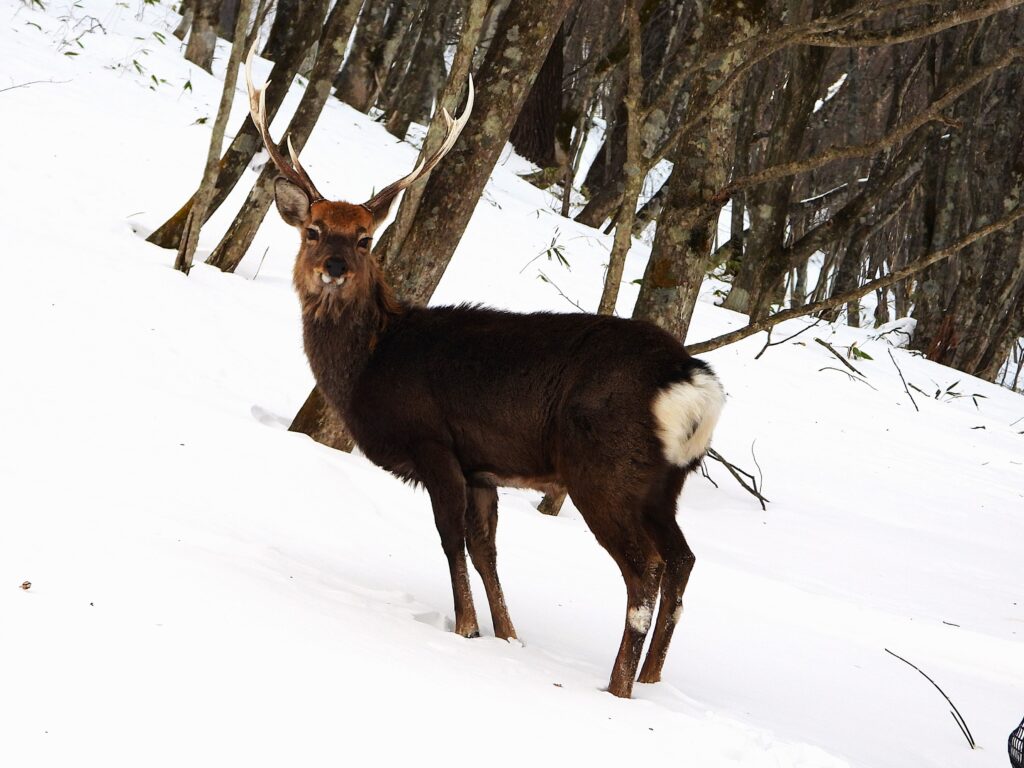
Sika deer occur widely in the Takao–Jimba region. Their numbers have been increasing in recent years, and hikers may notice tracks and other field signs more frequently, even if sightings themselves are uncommon. Look for hoofprints, pellet droppings, and bark stripped from young trees.
Full species profile → Sika Deer
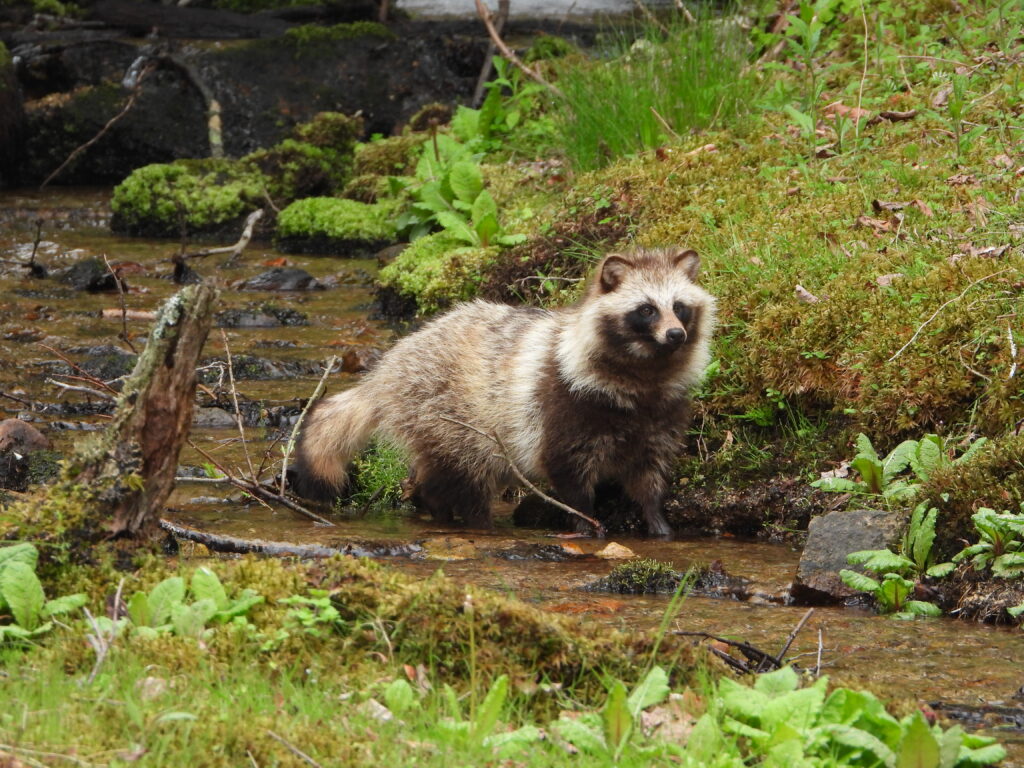
Raccoon Dog / Tanuki (Nyctereutes procyonoides viverrinus)
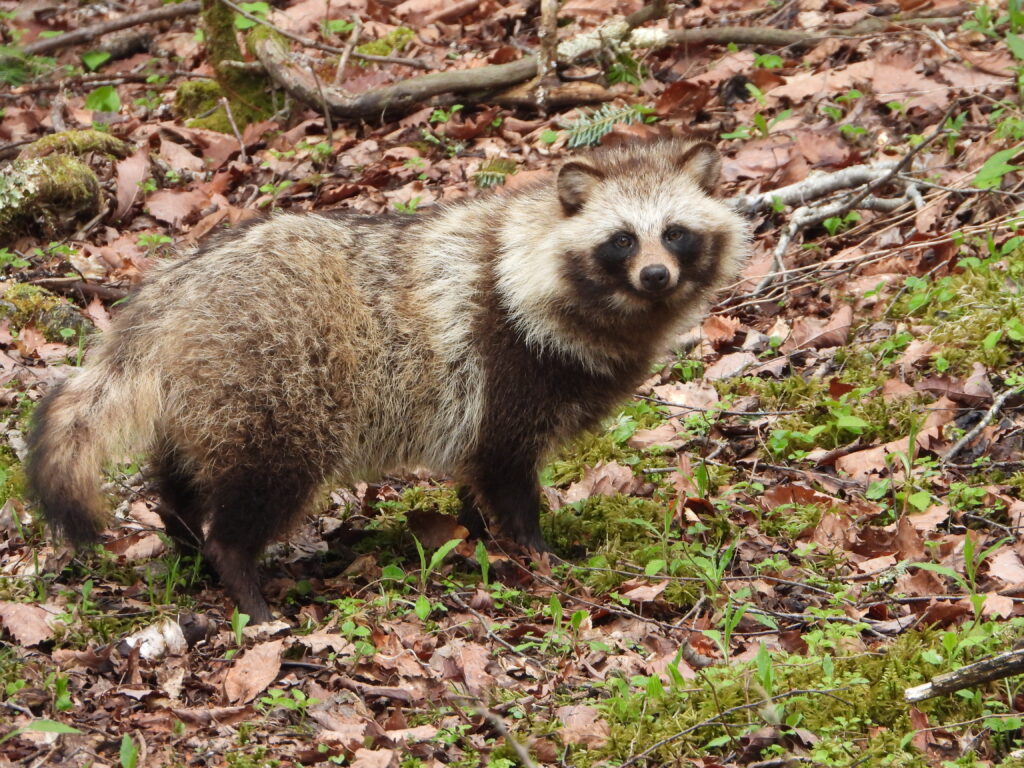
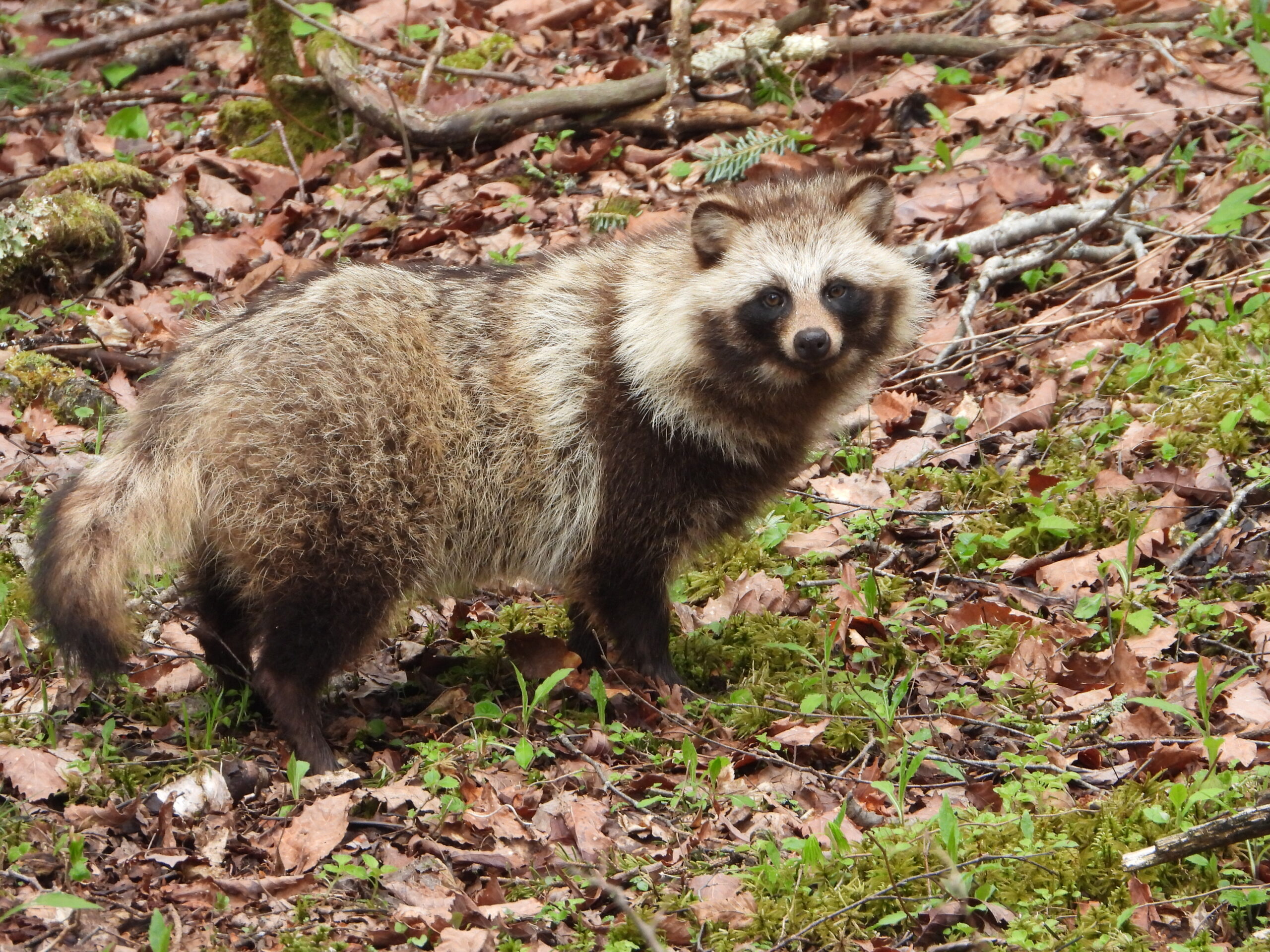
Tanuki inhabit woodland edges and shrubby slopes around the Kanto mountains, including the Takao region. They forage at night for insects, fruits, small animals, and carrion.
Full species profile → Japanese Raccoon Dog
Red Fox (Vulpes vulpes japonica)
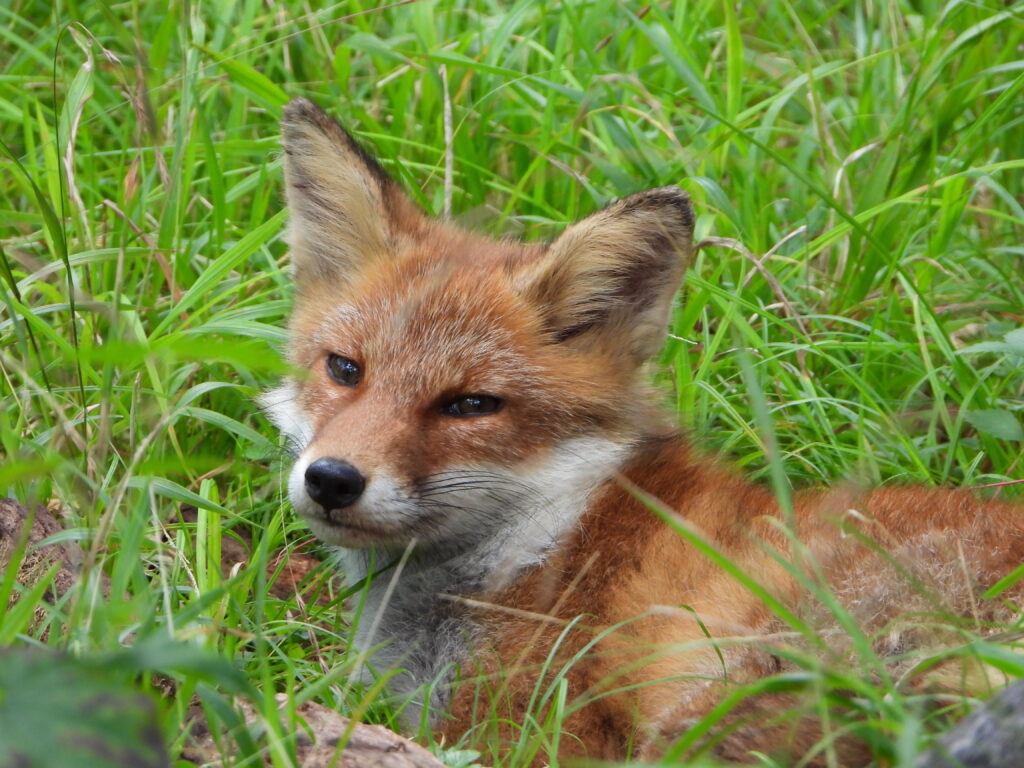
Red foxes roam forests and fields in western Tokyo and can occur in the broader Takao area. They mostly move at night and avoid people, so a daytime sighting would be special.
Full species profile → Red Fox
Japanese Giant Flying Squirrel (Petaurista leucogenys)
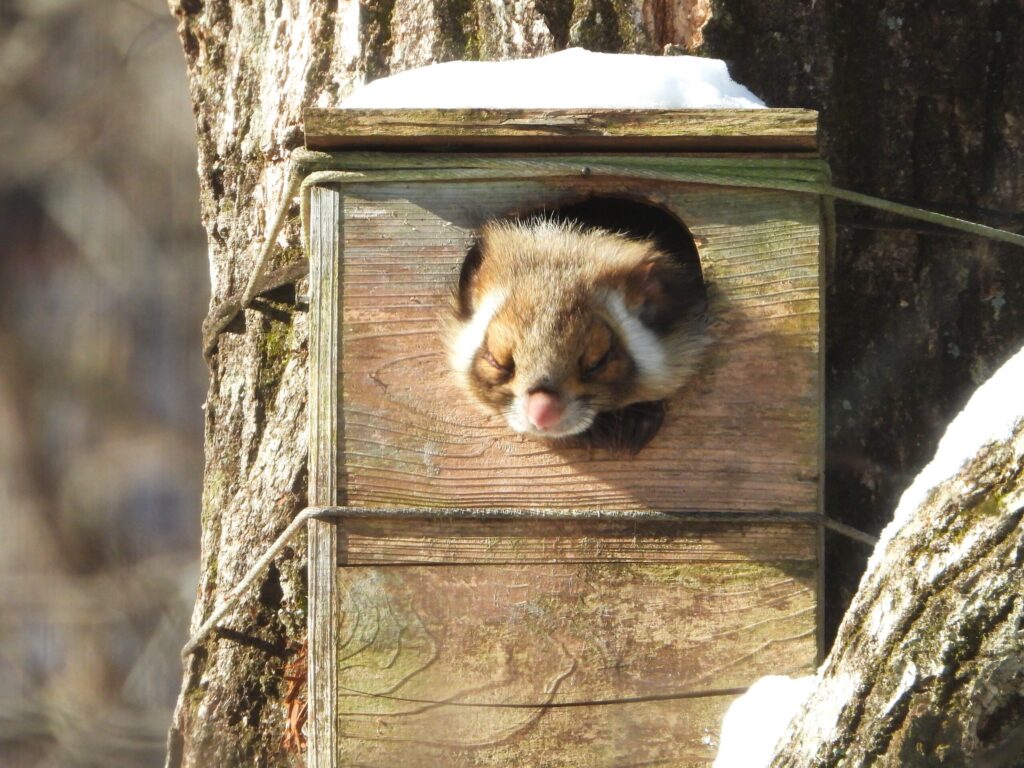
A symbolic nocturnal mammal of Mount Takao. Flying squirrels rest in tree cavities during the day and glide between trees at night. Ridge forests near the temple area are promising spots after sunset.
Full species profile → Japanese Giant Flying Squirrel
Japanese Badger (Meles anakuma)
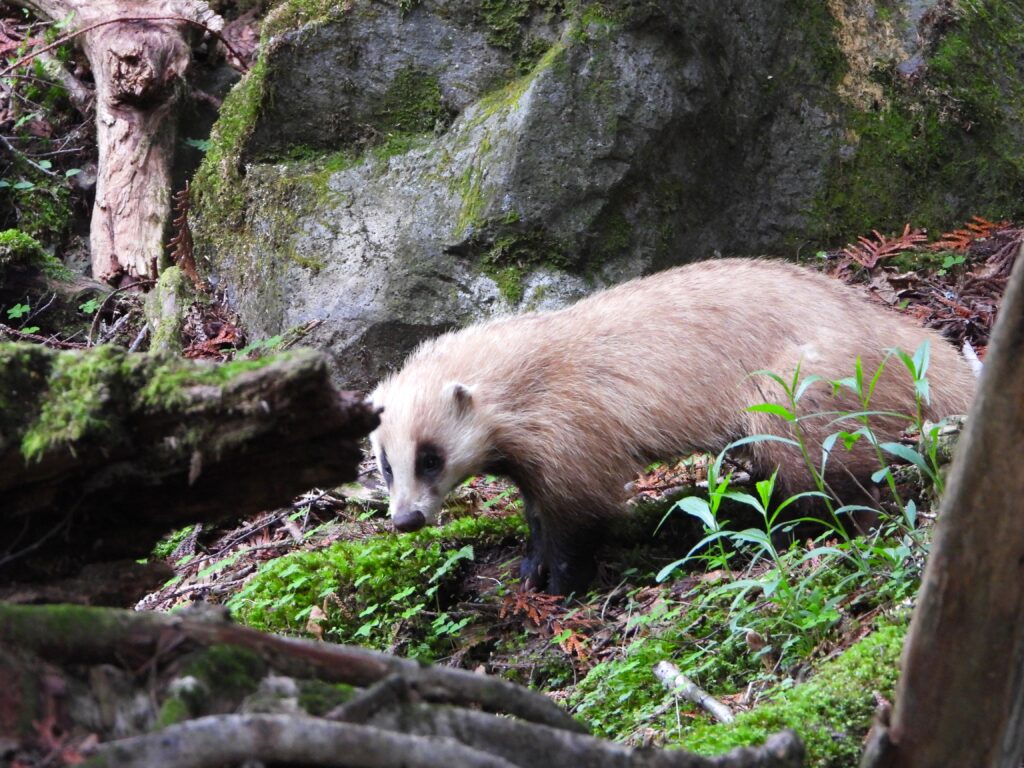
Japanese badgers dig burrows on wooded slopes and feed on earthworms, insects, fruits, and roots. Soil disturbed on banks or burrow entrances along paths can be signs of their presence.
Full species profile → Japanese Badger
Wild Boar (Sus scrofa leucomystax)
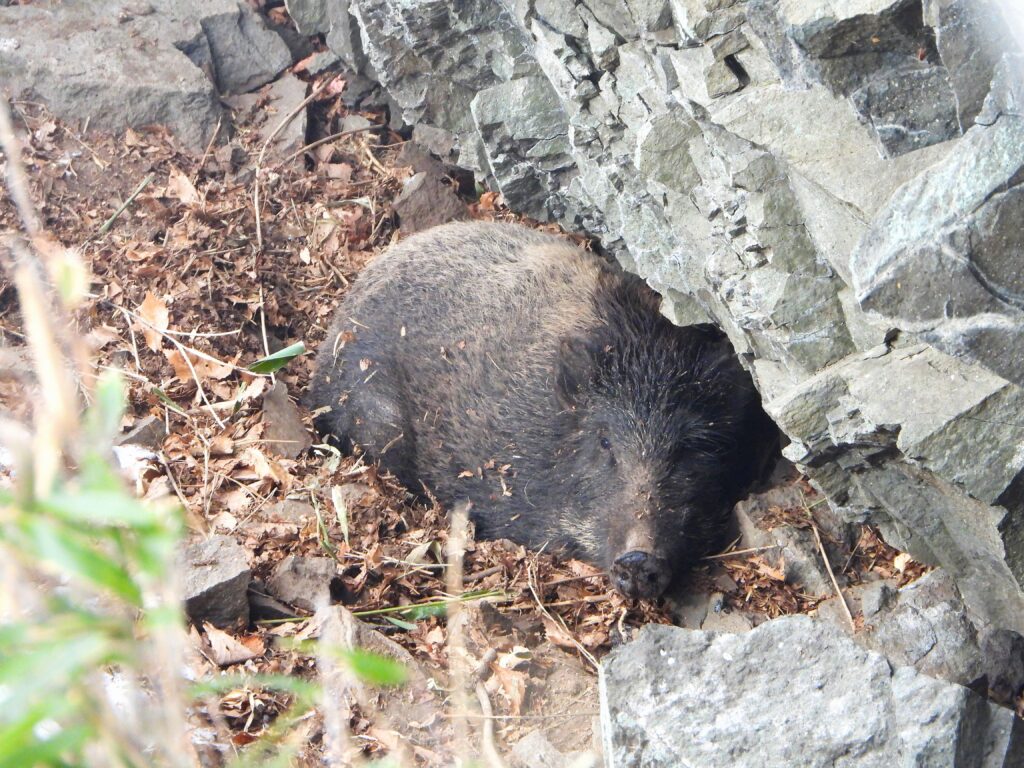
Wild boars occur in the Takao–Jimba area. Signs such as rooting marks have become more noticeable in recent years. If you encounter one, stay calm, give it space, and slowly move away. Never approach piglets.
Full species profile → Wild Boar
Birds You Can See in Every Season
Japanese Tit (Parus minor)
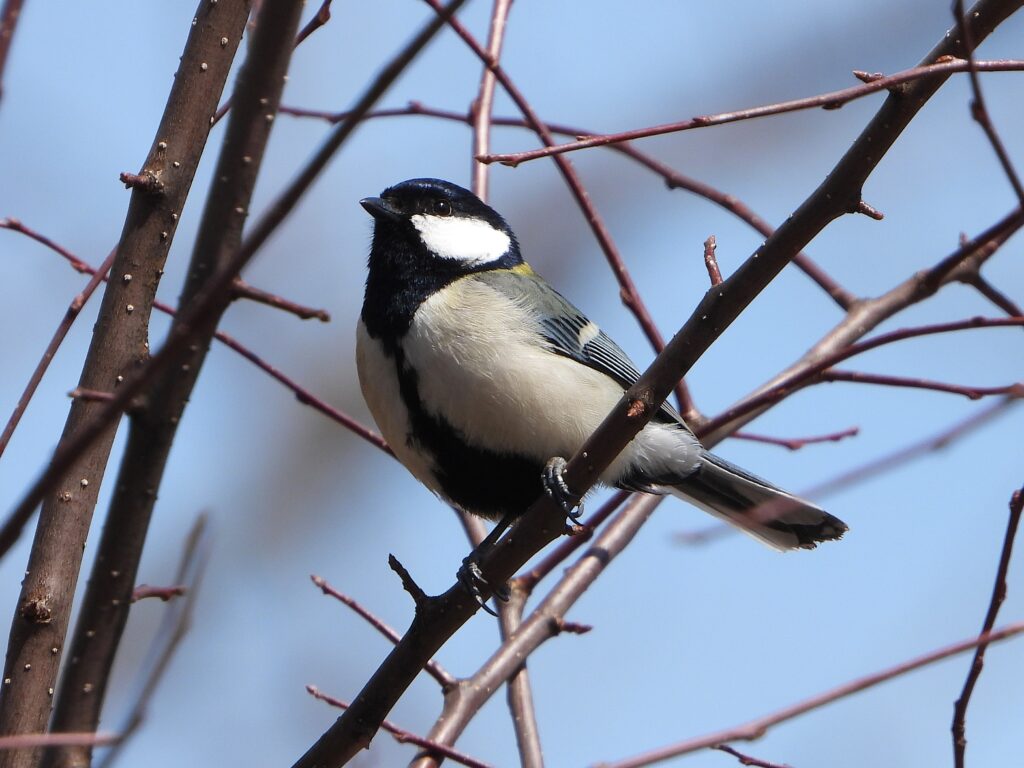
A very common small songbird in Japanese forests. On Takao, mixed flocks move through the canopy searching for caterpillars and insects.
Full species profile → Japanese Tit
Varied Tit (Sittiparus varius)
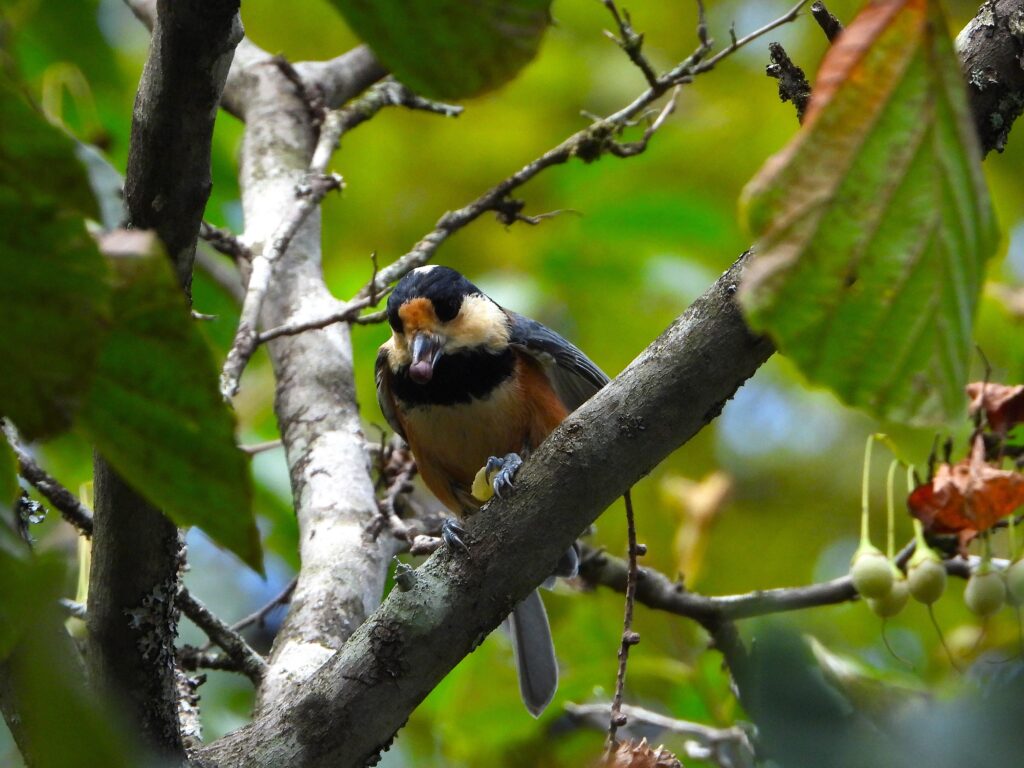
Colorful tits often seen around shrines, rest areas, and forest edges. Their high-pitched calls are frequently heard.
Full species profile → Varied Tit
Meadow Bunting (Emberiza cioides)
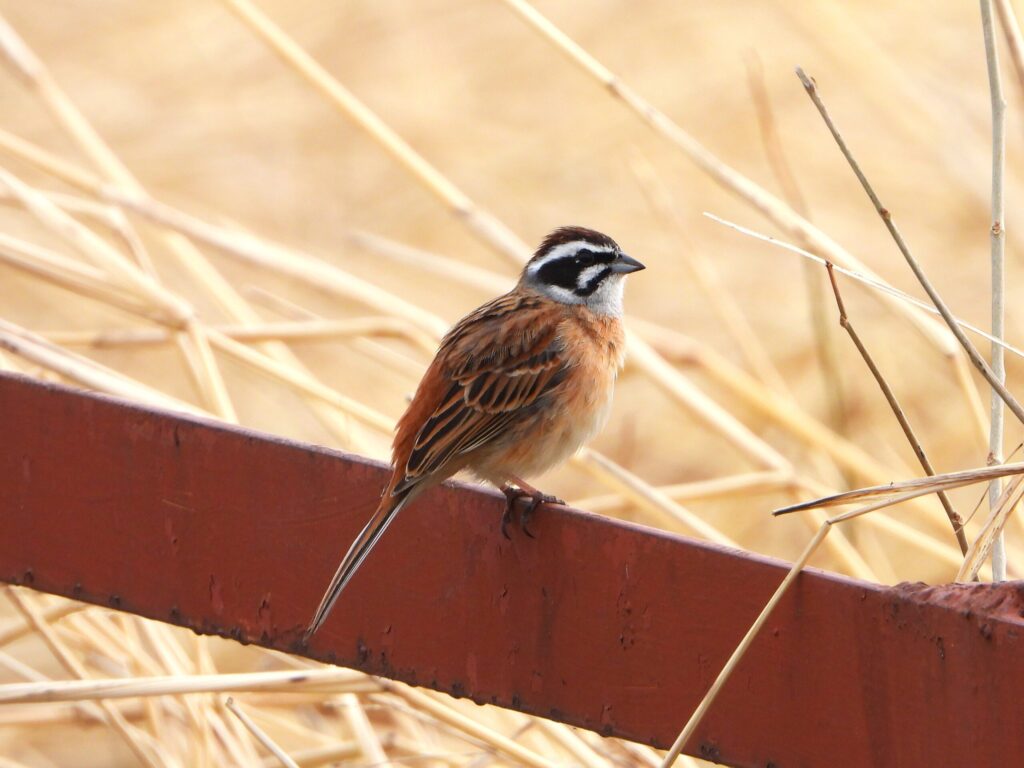
Favors open slopes and sunny ridges, with males singing from exposed perches.
Full species profile → Meadow Bunting
Japanese Bush Warbler (Horornis diphone)
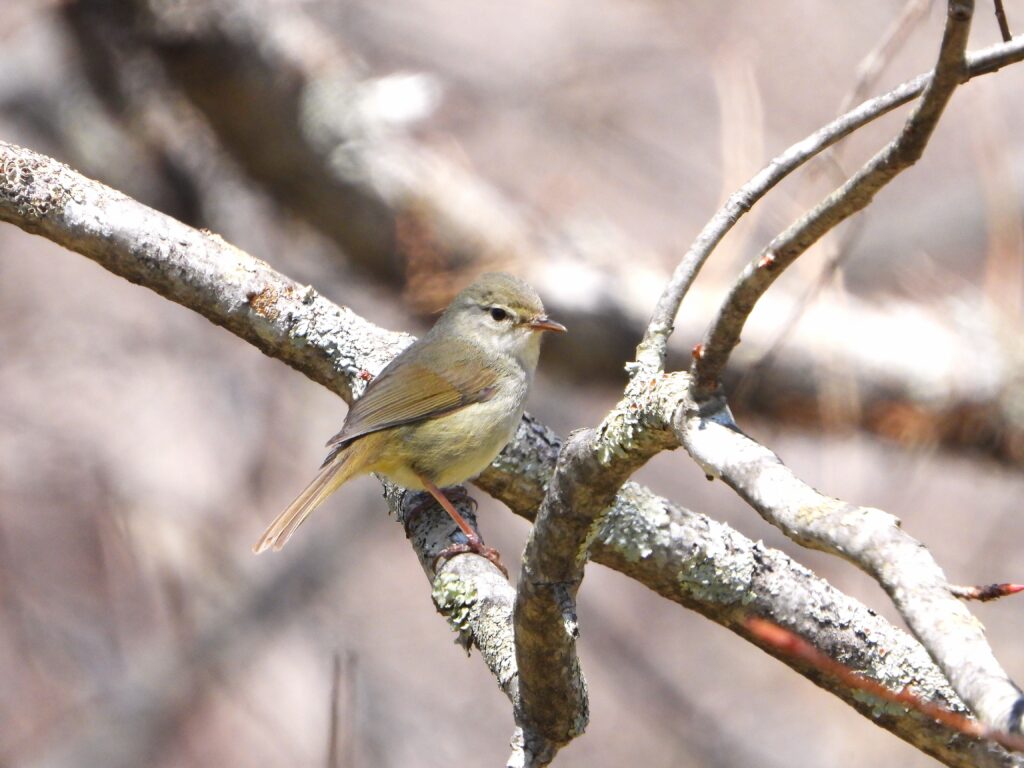
Famous for its spring song. Easier to hear than to see, as it often hides in dense vegetation.
Full species profile → Japanese Bush Warbler
Blue-and-white Flycatcher (Cyanoptila cyanomelana)
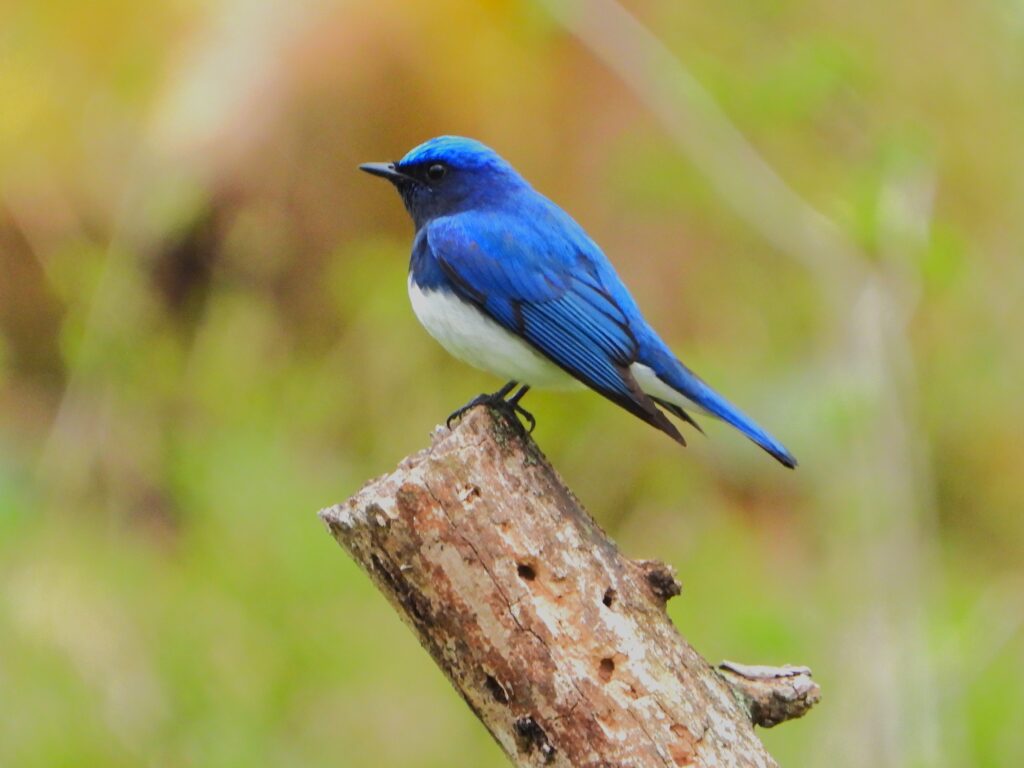
A highlight of spring and early summer. Males perch on tall branches in forested valleys and sing a beautiful fluty song, especially along stream trails such as Trail 6.
Full species profile → Blue-and-white Flycatcher
Black Kite (Milvus migrans lineatus)
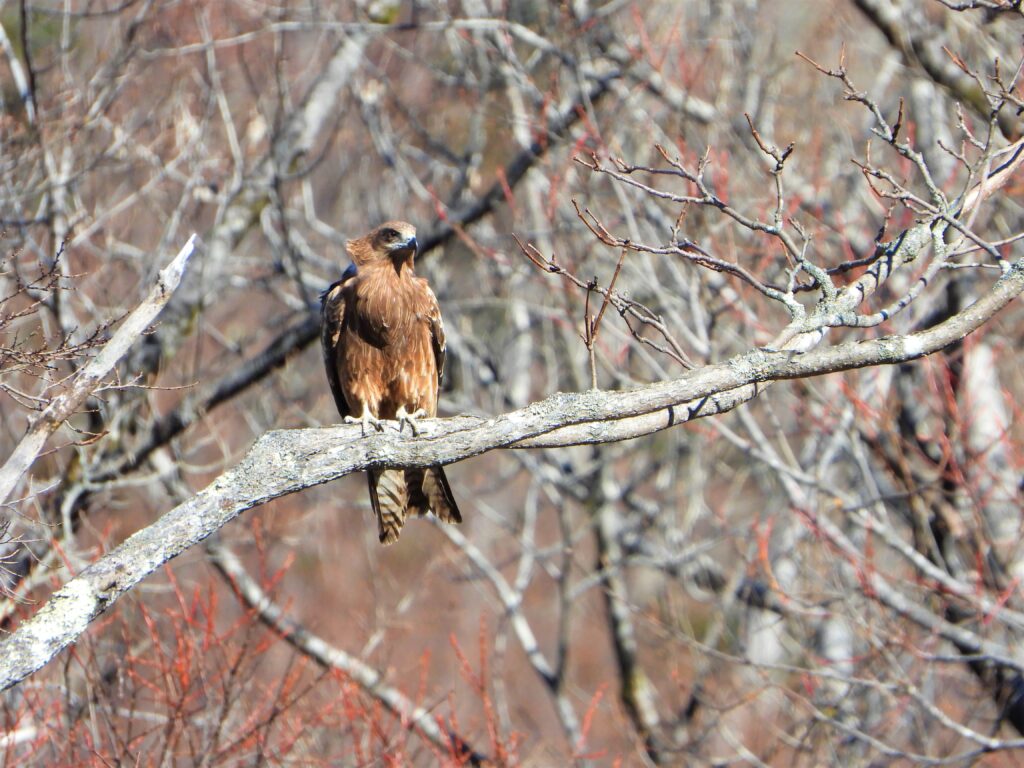
Regularly glides above ridges and viewpoints, circling on broad wings while scanning for food.
Full species profile → Black Kite
Woodpeckers
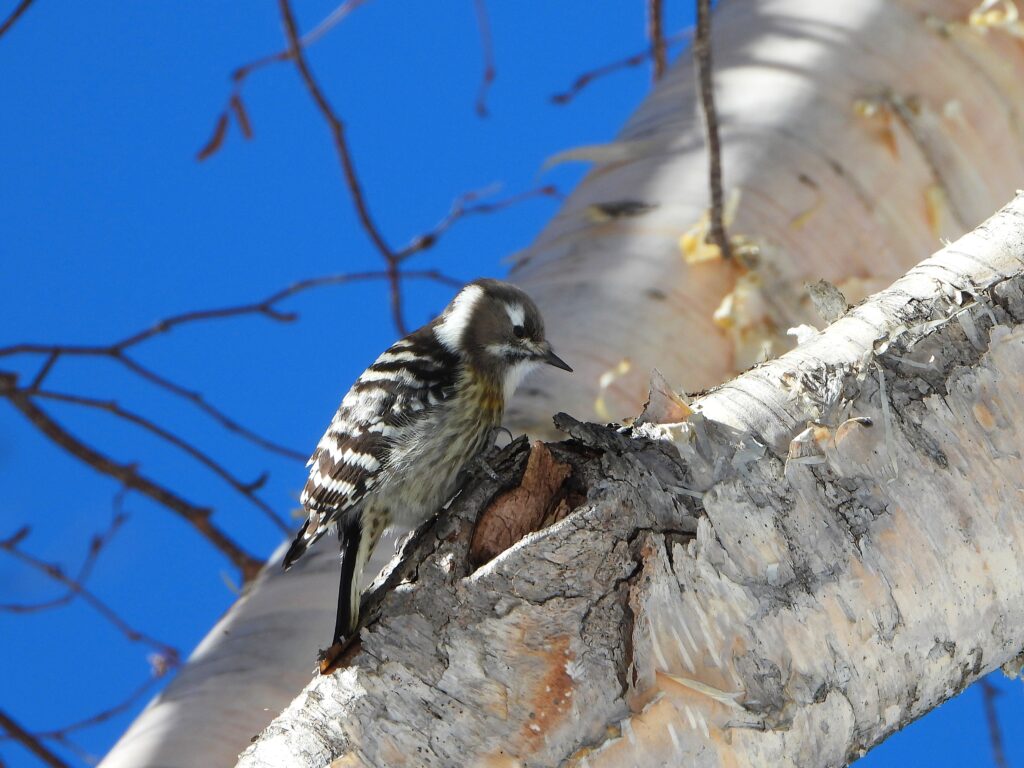
Several species inhabit Takao’s natural forests, including Japanese pygmy woodpecker and great spotted woodpecker. Listen for drumming along quieter trails.
Full species profile → Japanese Pygmy Woodpecker
Full species profile → Great Spotted Woodpecker
Carrion Crow (Corvus corone)
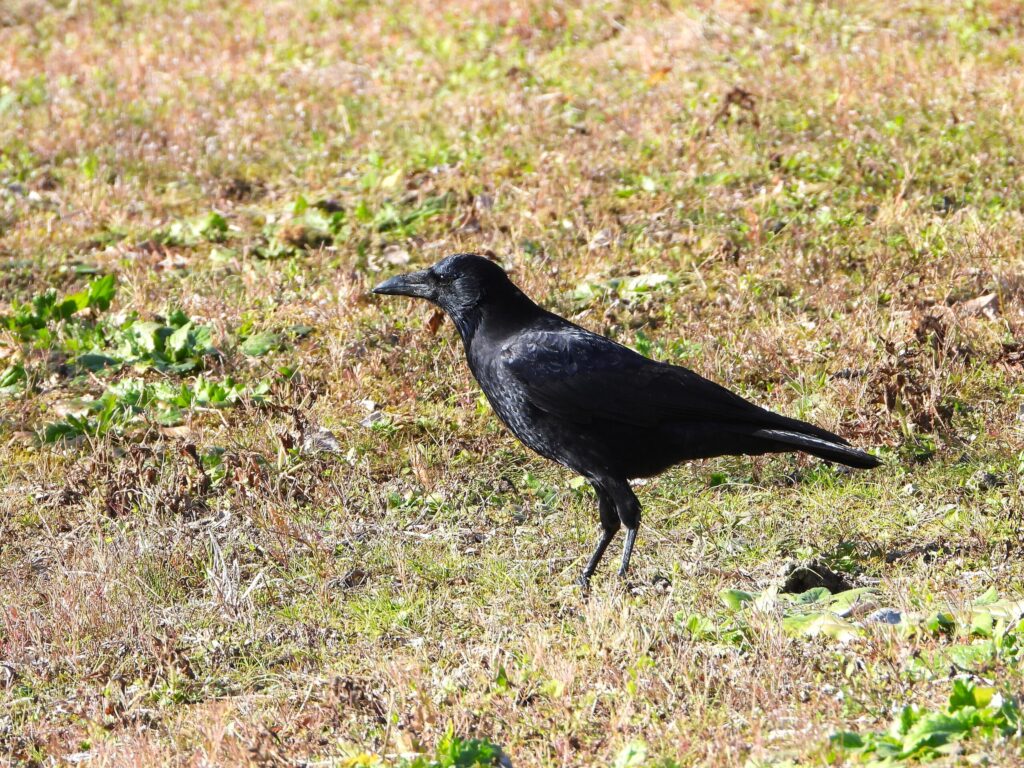
Common around stations, picnic areas, and open viewpoints. Very intelligent and adaptable. Avoid leaving food unattended to prevent attracting them.
Full species profile → Carrion crows
Reptiles and Amphibians
Japanese Rat Snake (Elaphe climacophora)
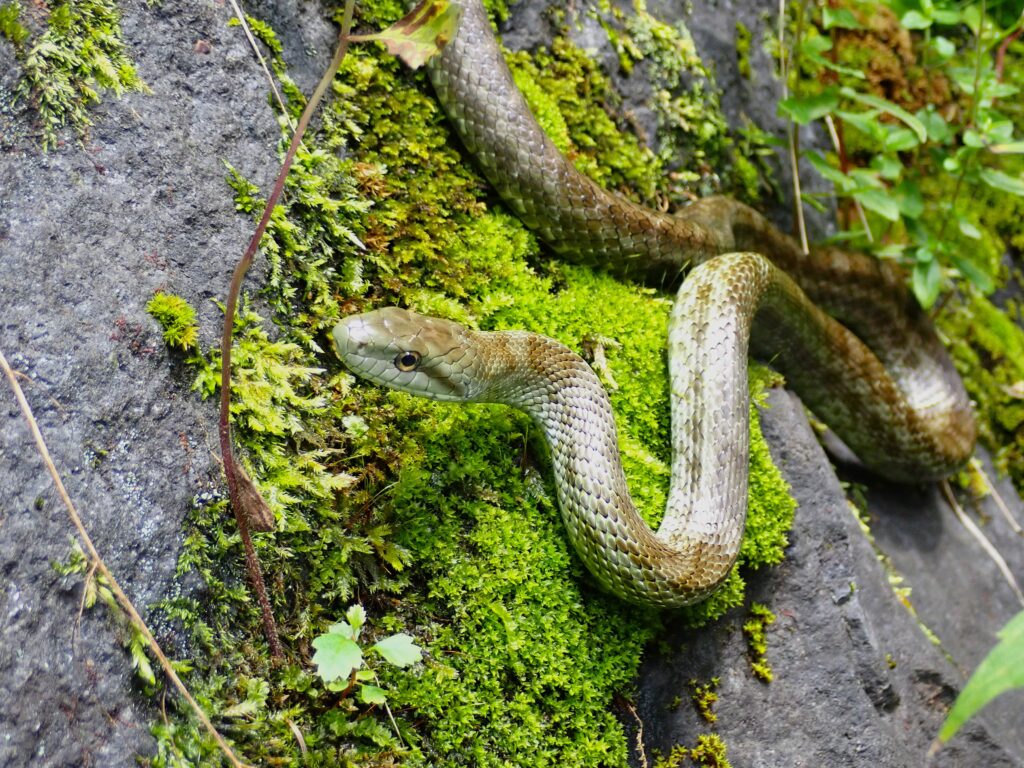
A long, non-venomous snake found along forest edges and rural paths. Excellent climber, sometimes seen in low branches or crossing trails.
Full species profile → Japanese Rat Snake
Japanese Pit Viper / Mamushi (Gloydius blomhoffii)
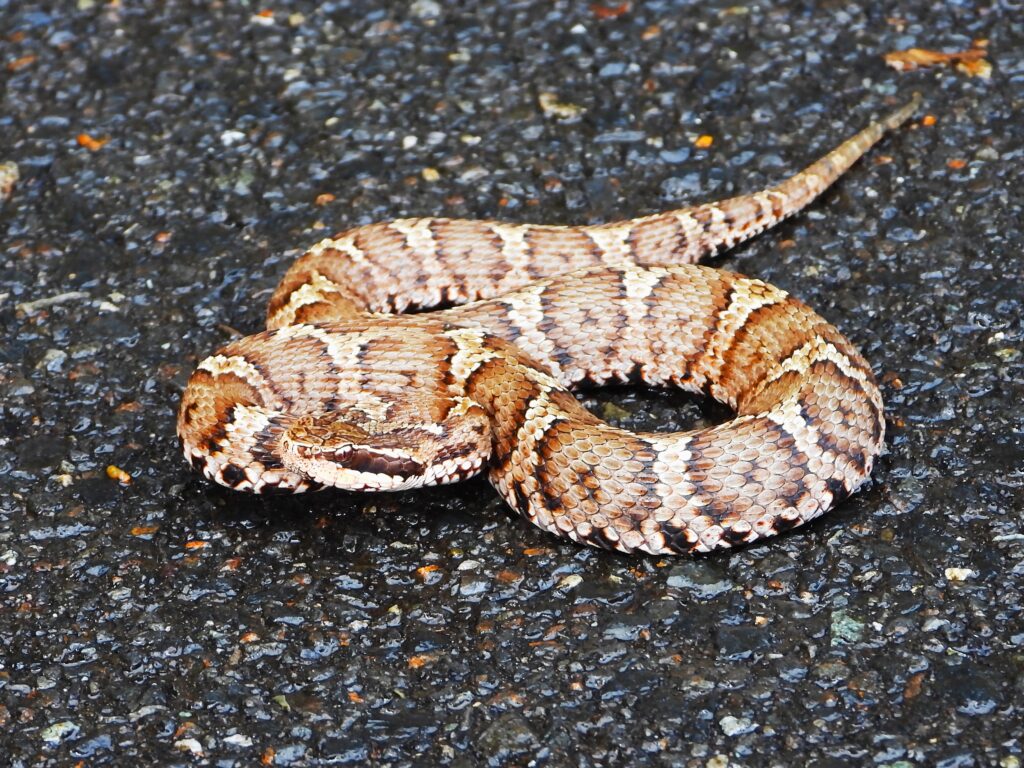
A venomous snake that may appear near streams or grassy banks in warm seasons. Watch your step and never disturb snakes. If you see one, slowly step back and give it space.
Full species profile → Mamushi
Japanese Eastern Toad (Bufo japonicus formosus)
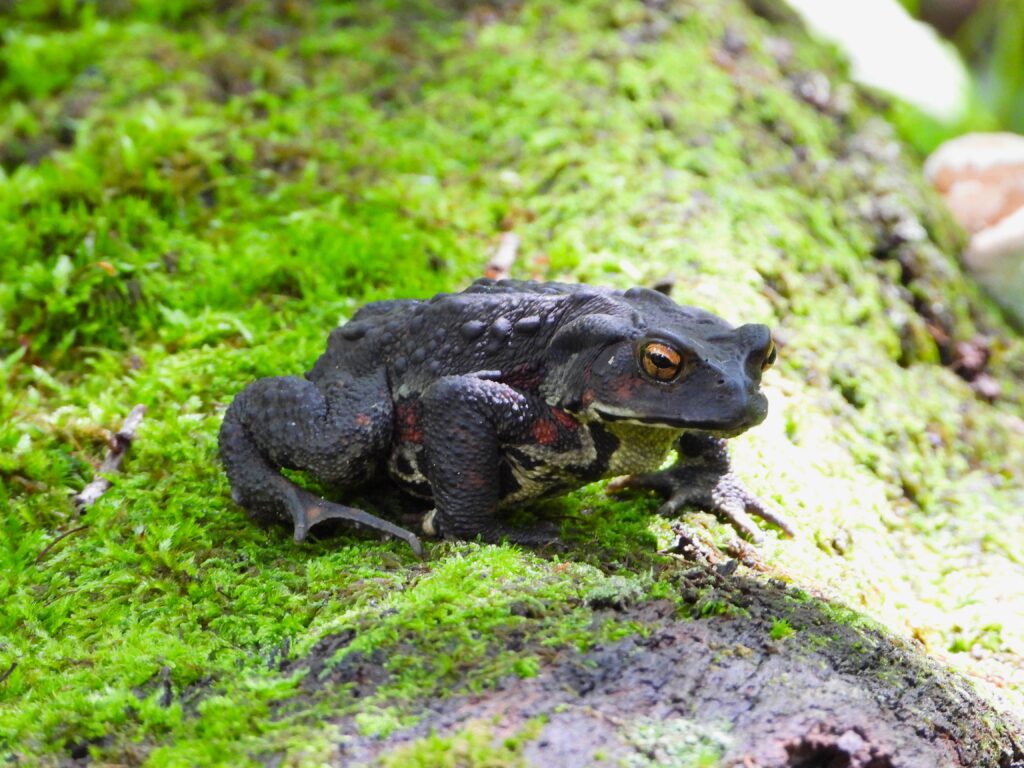
This common toad inhabits eastern Japan, including the Takao area.
It may appear on or near trails on rainy nights — watch your step and observe without touching.
Full species profile → Japanese Eastern Toad
Insects of Mount Takao
Japanese Rhinoceros Beetle (Trypoxylus dichotomus)
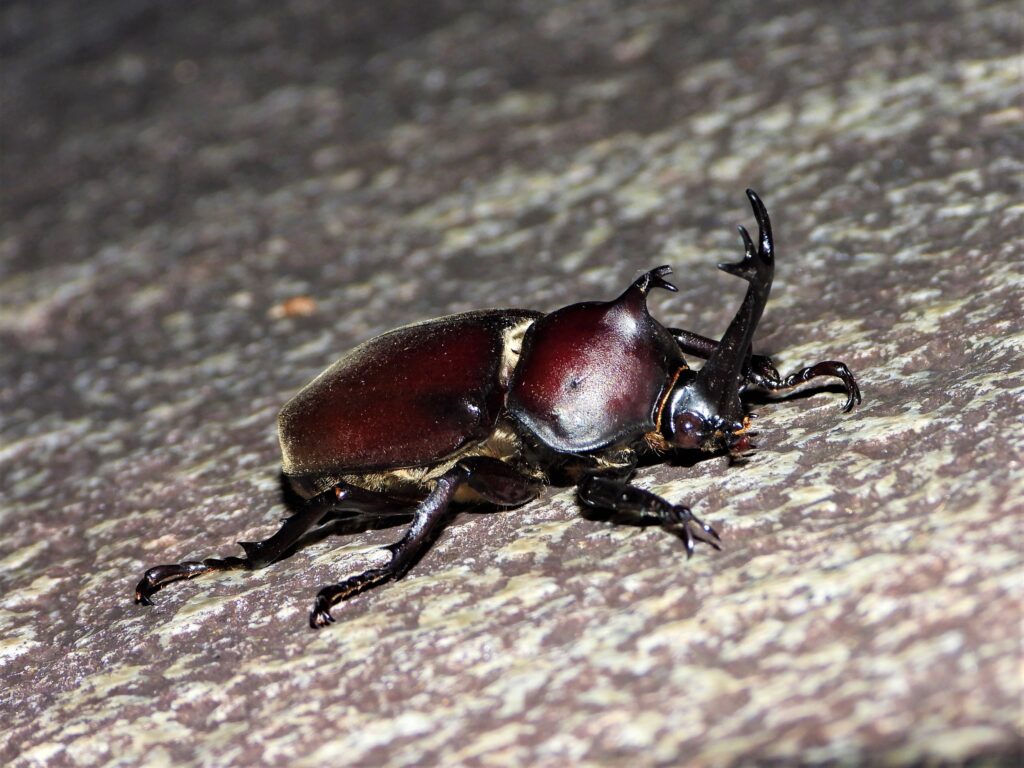
A well-known summer insect attracted to sap flows and lights at night. Forest edges around Takao provide good chances to see them.
Full species profile → Japanese Rhinoceros Beetle
Miyama Stag Beetle (Lucanus maculifemoratus)
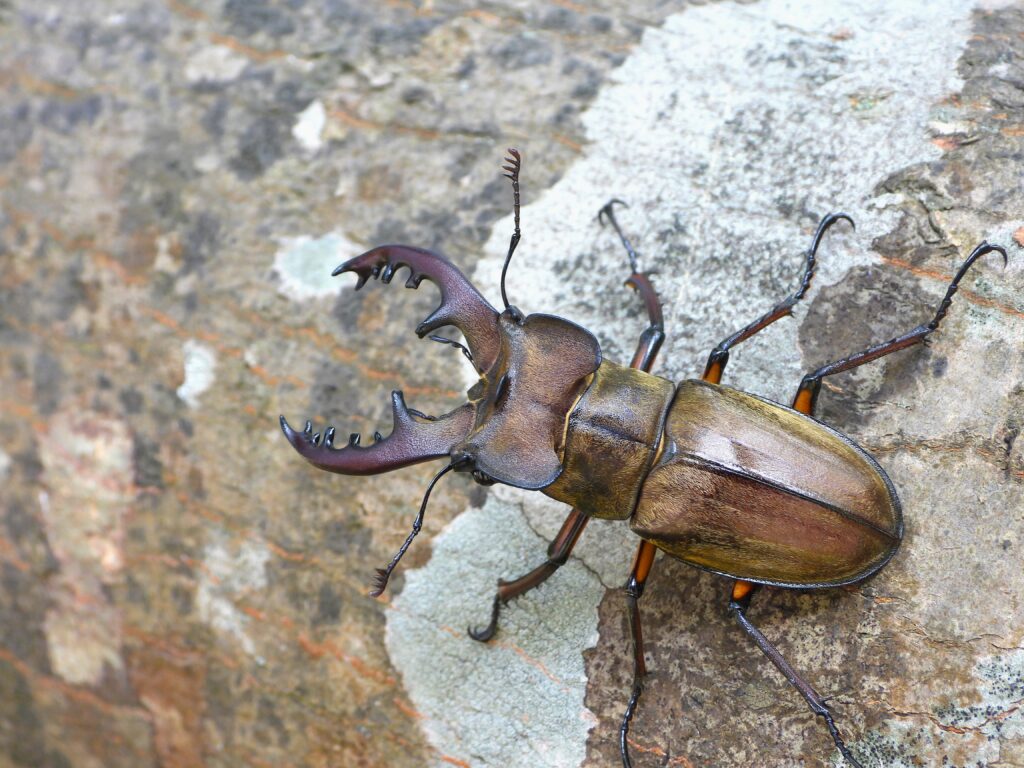
Associated with mountainous broad-leaved forests. Males gather at sap flows in summer evenings.
Full species profile → Miyama Stag Beetle
Maack’s Swallowtail (Papilio maackii)
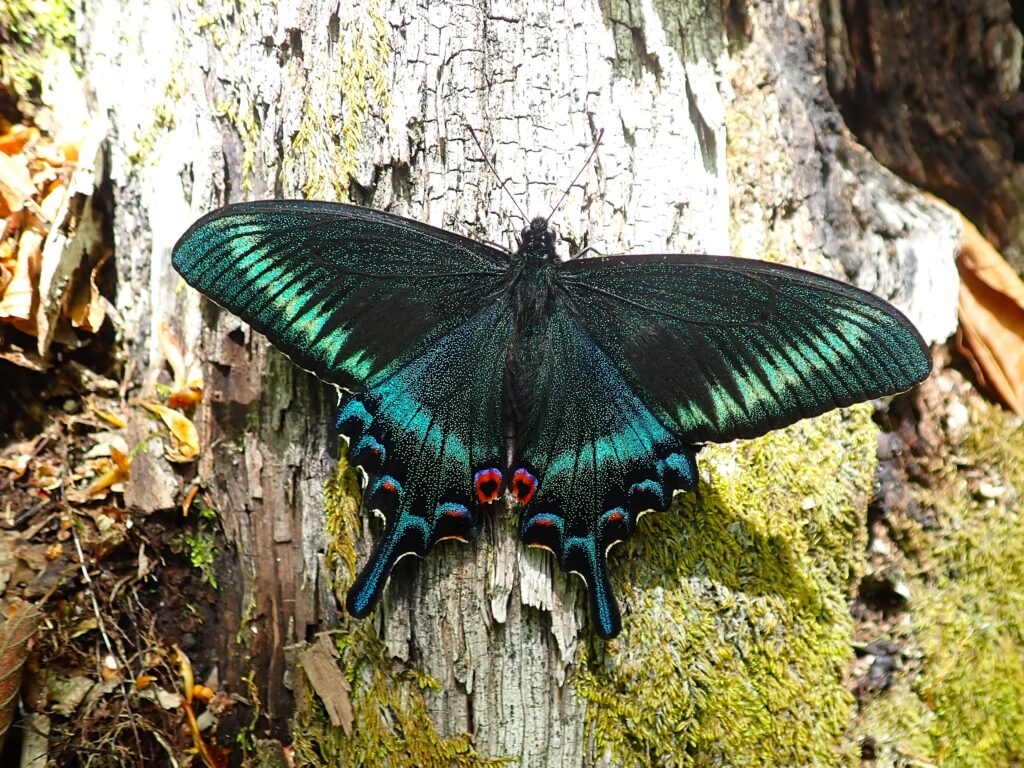
A large and striking butterfly with deep iridescent blue-green wings. On Mount Takao, it can be seen from spring to early summer along sunny forest edges and ridges. It often glides between flowers while feeding on nectar.
Full species profile → Maack’s Swallowtail
Best Trails and Times for Wildlife Viewing
Trail conditions, closures, and access may change due to weather or maintenance. Please check official sources before your hike.
Trail 1 (Omotesando Trail)
Main paved route via Yakuoin Temple to the summit. Good for common birds but fewer mammals by day because of crowds.
Trail 3 (Katsura Forest Trail)
Quieter mixed forest trail suitable for woodland birds like tits and woodpeckers.
Trail 4 (Suspension Bridge Trail)
Short trail with a bridge over a small valley. Forest edges and partial views attract raptors and mixed flocks.
Trail 6 (Biwa Waterfall / Water Course)
A shaded valley trail with stepping stones and a strong “deep forest” feel. Footing can be slippery after rain.
Inariyama Trail
Sunny ridge route good for butterflies in warm seasons and mammals early in the morning.
Takao–Jinba Ridge
Longer route beyond the summit with fewer people and increased chances of spotting deer or boar, though sightings are never guaranteed.
When to Look
Early morning and late afternoon are best for mammals and birds. Night is necessary for flying squirrels and other nocturnal species but requires proper experience and preparation.
- Spring: birdsong and migration
- Summer: insects and amphibians
- Autumn: clear views and raptors
- Winter: mountain birds move lower
Safety Tips
- Keep distance from macaques and boars
- Do not feed wildlife
- Store food securely
- Watch your step in warm seasons (snakes)
- Stay on marked trails
- Bring a light near dusk or after dark
Full species profile → Wild Boar
Full species profile → Mamushi
Photography Tips
Use a telephoto lens to keep distance.
Early morning and late afternoon provide softer light.
Choose quieter trails for photography.
Move slowly and avoid flash at close range.
Where Is Mount Takao and How to Get There?
Mount Takao stands in Hachioji City, western Tokyo.
Keio Line trains from Shinjuku run directly to Takaosanguchi Station in about 50 minutes to 1 hour.
The cable car and chairlift both offer access to mid-mountain, where several trails continue to the summit.
Check official information for train schedules, trail conditions, and lift operations before your trip.
Author’s Impression
Mount Takao is a place where you can feel true Japanese nature just a short ride from Tokyo’s skyscrapers. Monkeys call from the slopes, flocks of tits move through the trees, and flying squirrels glide above forest temples at night. For visitors who love wildlife, Takao is an ideal first mountain in Japan: easy to reach, rich in species, and full of discoveries in every season.