Birdwatching in Hokkaido: Best Places, Seasons & Birds
Hokkaido is one of the best destinations in Japan for birdwatching.
The island is home to some of Japan’s most distinctive birds, including Red-crowned Cranes, Steller’s Sea Eagles, White-tailed Eagles, and Blakiston’s Fish Owls.
But Hokkaido is huge, and the best place to go depends on what you hope to see.
Quick answer:
- Best overall birding region: Eastern Hokkaido
- Red-crowned Cranes: Kushiro & Tsurui
- Steller’s and White-tailed Eagles: Rausu, Nemuro & Notsuke Peninsula
- Easy birdwatching during a sightseeing trip: Sapporo
- Spring and autumn migration: Miyajima-numa
- Cranes and sea eagles on the same trip: Eastern Hokkaido in winter
I have watched birds across Hokkaido myself, including Red-crowned Cranes, Steller’s Sea Eagles, White-tailed Eagles, Blakiston’s Fish Owls, Whooper Swans, and Shima-enaga.
This guide focuses on the two things that matter most when planning a birdwatching trip to Hokkaido: where to go and when to go.
▶ Birdwatching in Japan: Best Places, Seasons & Birds
Best Places for Birdwatching in Hokkaido
Kushiro & Tsurui — Best for Red-crowned Cranes
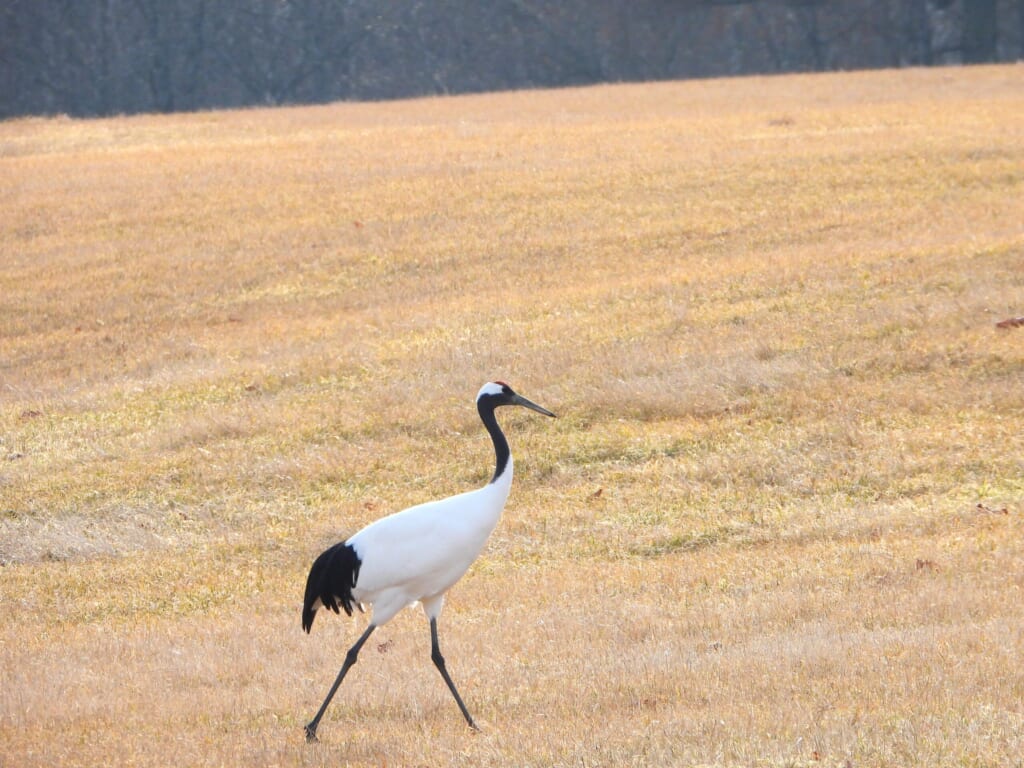
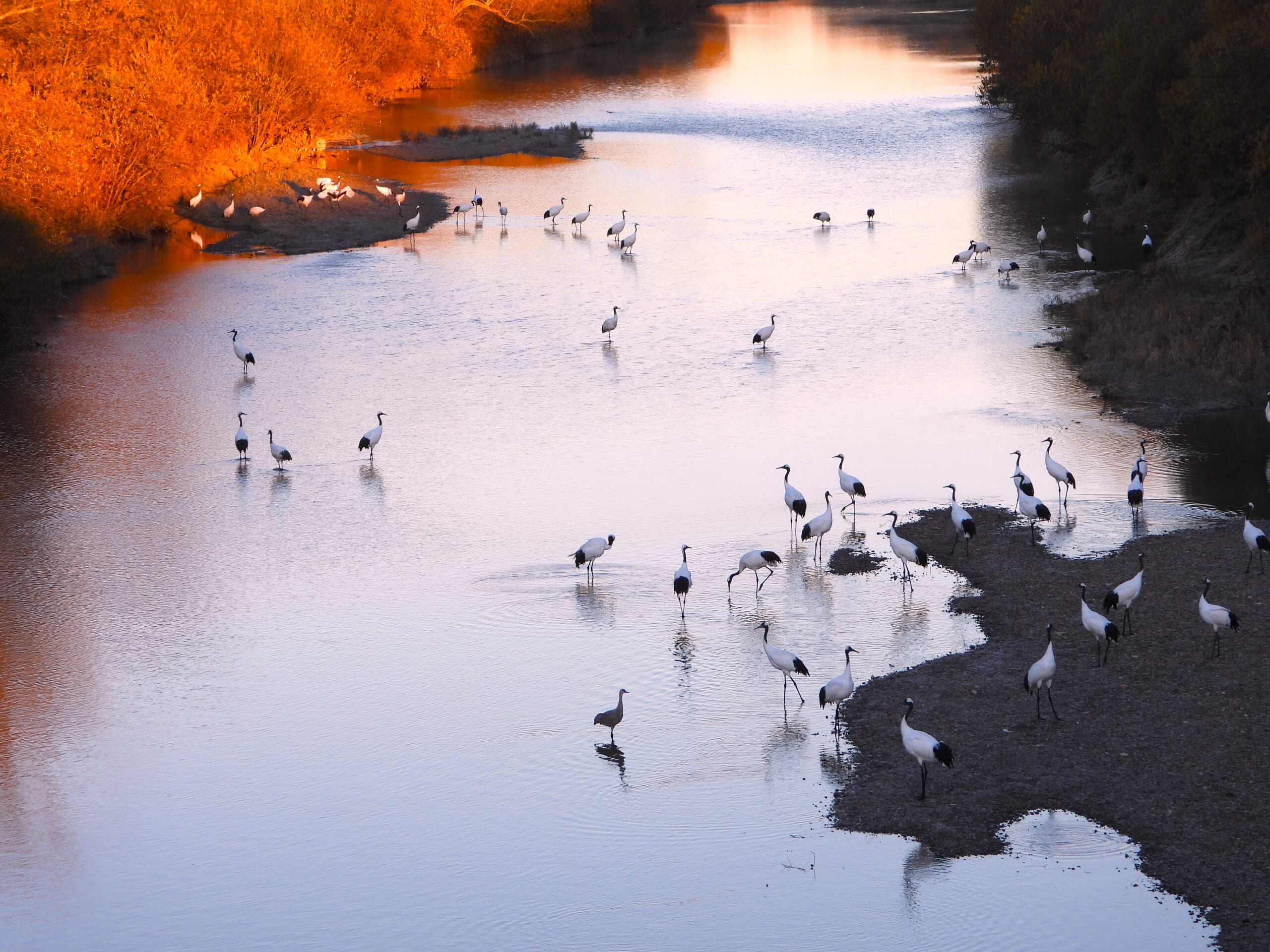
If Red-crowned Cranes (Grus japonensis) are your main target, Kushiro and Tsurui should be near the top of your list.
The cranes live in eastern Hokkaido year-round, but winter is one of the easiest seasons for visitors because birds gather around well-known feeding and wintering areas.
I have seen groups of wild Red-crowned Cranes in Hokkaido myself.
There was no snow on the ground when I saw them.
The classic image is a crane standing in deep snow, but snow is not essential if your main goal is simply to see the birds.
Watching several of these large cranes together was impressive enough, and I still remember how far their calls carried across the landscape.
For a first visit, staying in Kushiro and making trips toward Tsurui is a practical way to plan your time.
For specific viewing sites and a more detailed route:
▶ Where to See Red-crowned Cranes in Hokkaido
Rausu & Shiretoko — Sea Eagles in Winter
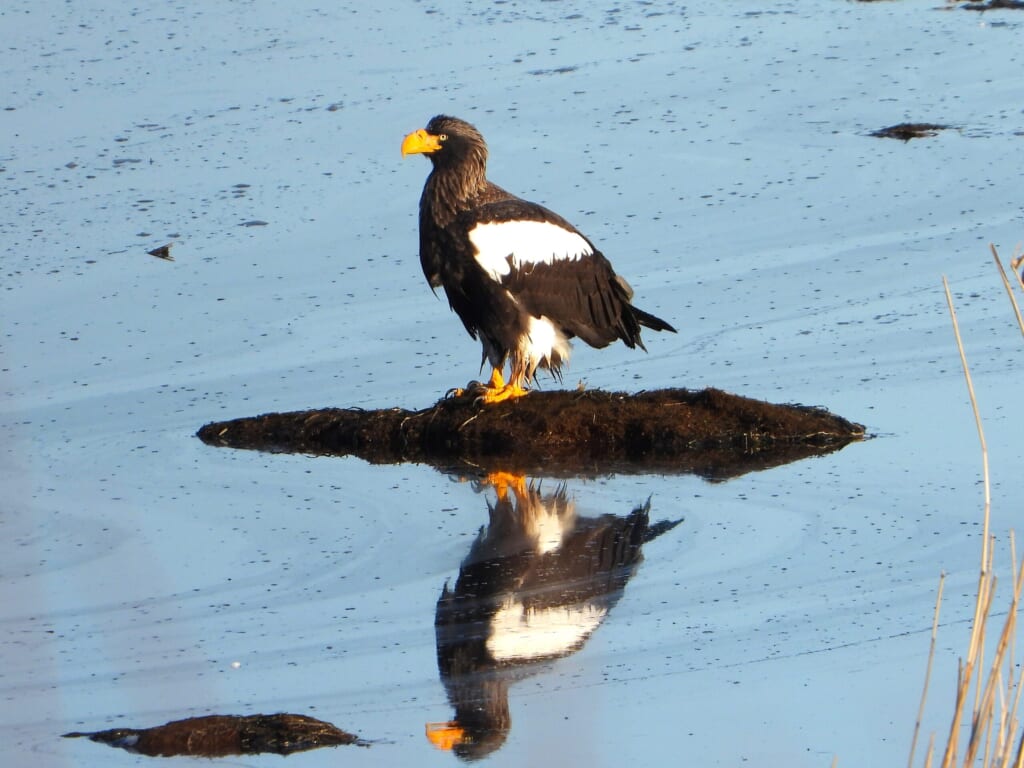
Rausu and the Shiretoko area are among the best places in Hokkaido to look for large eagles in winter.
The two main species are:
- Steller’s Sea Eagle (Haliaeetus pelagicus)
- White-tailed Eagle (Haliaeetus albicilla)
Steller’s Sea Eagles are famous winter visitors to Hokkaido.
White-tailed Eagles are different. Some breed in Hokkaido and can be seen in parts of the island outside the winter season as well.
Winter, however, is an excellent time to look for both species on the same trip.
Birdwatching cruises operate from Rausu during the drift-ice season, but you do not need to take a boat to see sea eagles.
I have watched both species from land many times in Hokkaido.
If your goal is to photograph eagles on drift ice, a Rausu cruise is an excellent option. If you simply want to see wild Steller’s and White-tailed Eagles, there are also good opportunities from shore.
▶ Where to See Sea Eagles in Hokkaido
If you are not comfortable driving in eastern Hokkaido in winter, a guided tour or organized excursion may be a better option.
Nemuro, Lake Furen & Notsuke Peninsula — Coastal Birding
The area between Nemuro and the Notsuke Peninsula is one of my favorite parts of Hokkaido for wildlife watching.
Lakes, wetlands, coastlines, grasslands, and open country sit relatively close together, so birding here is not limited to one target species.
I have seen both Steller’s Sea Eagles and White-tailed Eagles around the Notsuke Peninsula.
Wild birds are never guaranteed, of course.
But in the right wintering areas, these eagles are so large that they can be surprisingly easy to notice even at a distance.
Do not scan only the trees.
Check the coastline, water, ice, open sky, and distant perches as well.
This part of eastern Hokkaido is especially enjoyable if you like searching broad landscapes and finding birds for yourself, rather than visiting only one famous viewing site.
Sapporo — The Easiest Option for Most Travelers
You do not need to travel all the way to eastern Hokkaido to enjoy birdwatching.
Sapporo has large parks, rivers, wooded areas, and forested hills close to the city.
Its biggest advantage is simple: birdwatching is easy to fit into a normal sightseeing trip.
You can walk through a park in the morning, check a river between sightseeing stops, or spend a few hours near a forest edge.
For a full guide to birdwatching in and around the city:
▶ Birdwatching in Sapporo: A Complete Guide
If you are traveling through New Chitose Airport, Lake Utonai near Tomakomai is another useful option for wetland and migratory birdwatching.
Miyajima-numa — Spring and Autumn Migration
Hokkaido birdwatching is not only about winter.
For migration, Miyajima-numa near Bibai is one of the island’s best-known sites.
It is particularly famous for huge gatherings of Greater White-fronted Geese during spring and autumn migration.
One of the highlights is watching large numbers of geese leave the roost around sunrise.
I have not birdwatched at Miyajima-numa myself, so I will not pretend to offer detailed local advice.
But it is an important reminder that Hokkaido offers much more than cranes and sea eagles in winter.
Best Time for Birdwatching in Hokkaido

There is no single best month for birdwatching in Hokkaido.
The best season depends on what you want to see.
Winter — Cranes, Sea Eagles and Swans
Winter is the classic season for many of Hokkaido’s most famous birds.
In eastern Hokkaido, targets can include:
- Red-crowned Cranes
- Steller’s Sea Eagles
- White-tailed Eagles
- Whooper Swans
- Winter ducks and other waterbirds
I have also seen large groups of Whooper Swans in Hokkaido.
Midwinter is especially good if cranes and sea eagles are your main priority.
But it is not automatically the best time for overall species diversity.
Late autumn, early winter, and early spring can also be rewarding, especially when migration overlaps with wintering birds.
A simple way to think about it is:
For iconic cranes and sea eagles → winter.
For a wider mix of species → also consider the edges of winter.
Spring — Migration and Forest Birds
Spring brings a major change in Hokkaido’s birdlife.
Migrants move through wetlands, while woodland birds become more vocal as the breeding season begins.
If you prefer walking through forests and listening for birds rather than focusing on snowy wildlife scenes, spring can be an excellent choice.
Summer — Forest, Wetland and Grassland Birds
Summer offers a completely different birdwatching experience.
Forests, wetlands, and grasslands become the main focus, with breeding birds replacing many of the winter visitors.
If seabirds are your priority, Teuri Island is also worth knowing about, especially from spring into early summer when large numbers of seabirds gather to breed.
The key is not to visit Hokkaido in summer expecting the famous winter experience.
Choose your destination based on summer birds instead.
Autumn — Migration Before Winter
Autumn is another migration season.
Greater White-fronted Geese gather at Miyajima-numa, while lakes and wetlands gradually change as migrants move south and winter birds begin to arrive.
For travelers who enjoy spending long periods outdoors, autumn can also be more comfortable than the coldest part of winter.
Birds to Look For in Hokkaido
Hokkaido has far more bird species than can fit into one travel guide.
For a first trip, however, these are some of the birds worth knowing about.
Red-crowned Crane

The Red-crowned Crane is one of Hokkaido’s most iconic birds.
In Japan, the main population is found in eastern Hokkaido, with Kushiro and Tsurui among the best-known areas.
Snowy photographs are famous, but when I saw a group of wild cranes, there was no snow at all.
If seeing the birds matters more than getting the classic snow photograph, do not make snow your only priority.
▶ Where to See Red-crowned Cranes in Hokkaido
Steller’s Sea Eagle & White-tailed Eagle

These are two of the most impressive raptors to look for in eastern Hokkaido.
I have watched both species many times.
Steller’s Sea Eagles in particular are enormous, and even a bird perched far away can stand out in the landscape.
I have also seen both species around the Notsuke Peninsula, so a Rausu cruise is not the only way to find them.
▶ Where to See Sea Eagles in Hokkaido
Blakiston’s Fish Owl
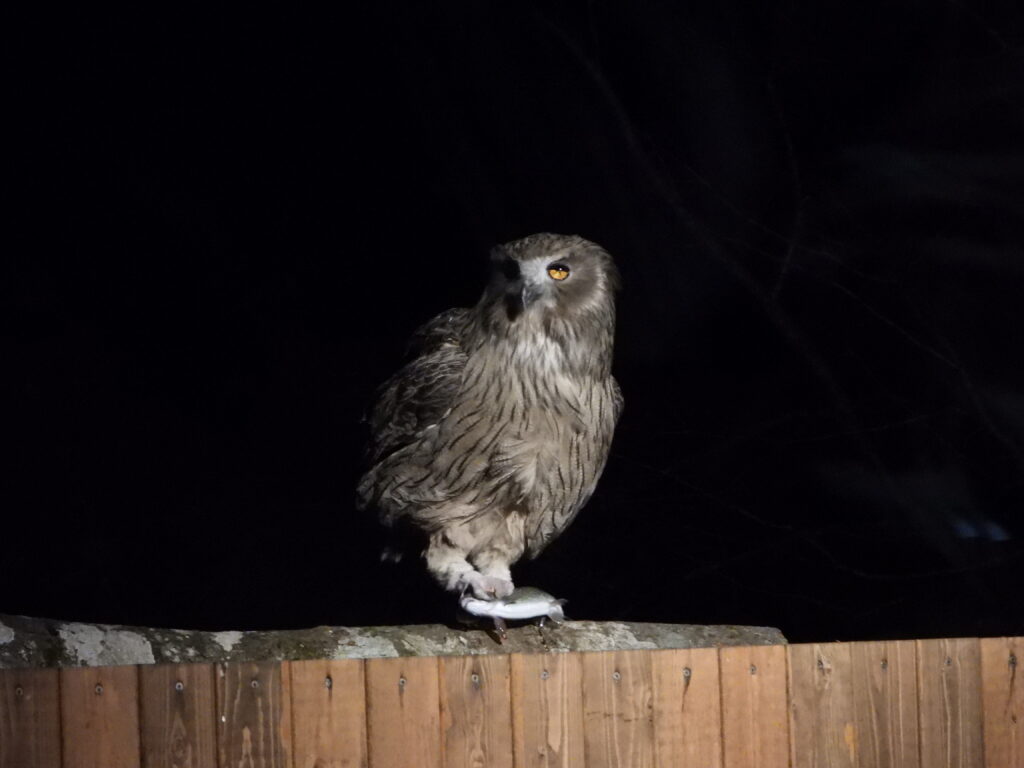
Blakiston’s Fish Owl (Ketupa blakistoni) is one of Hokkaido’s most special birds.
I watched one in a managed viewing environment in eastern Hokkaido.
Seeing this huge owl enter a snowy stream and catch a fish was one of my most memorable bird encounters in Hokkaido.
This is also a species that requires extra care.
Do not search for nests or try to track down sensitive wild locations. If you hope to see one, use responsible viewing opportunities and follow local conservation rules.
Whooper Swan
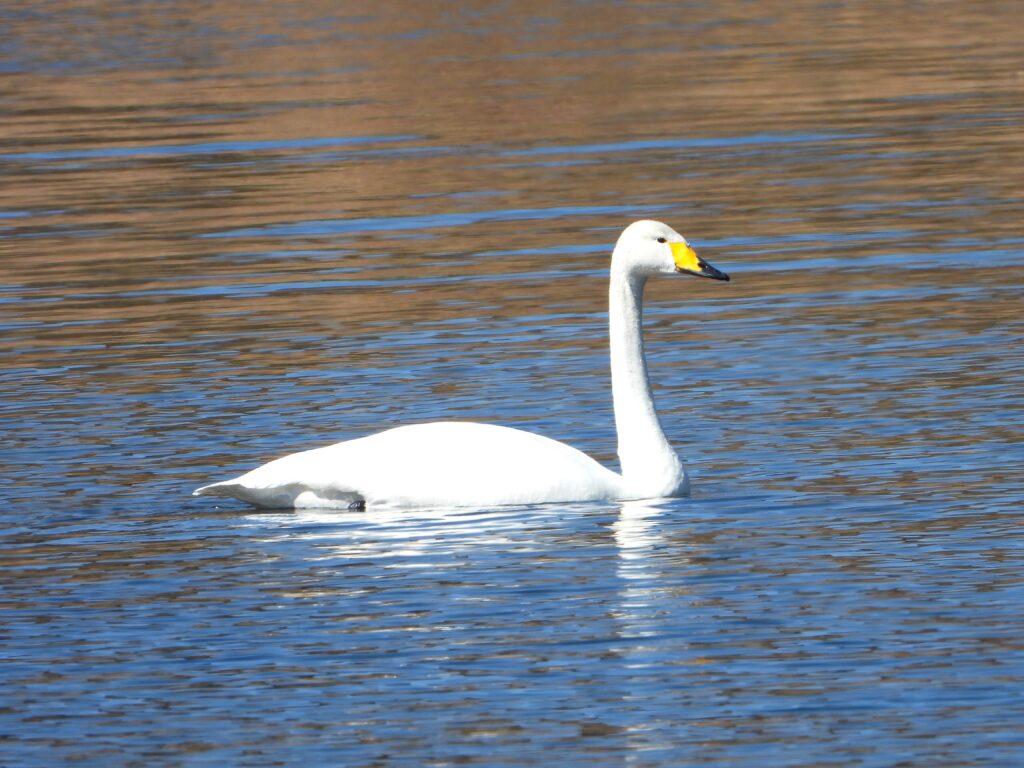
Whooper Swans (Cygnus cygnus) are winter visitors to lakes and wetlands across Hokkaido.
I have seen large flocks here myself.
They may not receive as much international attention as Red-crowned Cranes or Steller’s Sea Eagles, but a flock of these huge white swans is still one of the classic sights of winter birding in Hokkaido.
Black Woodpecker
The Black Woodpecker (Dryocopus martius) is one of the birds I would still like to photograph in Hokkaido.
It is Japan’s largest woodpecker, with mostly black plumage and distinctive red on the head.
I have not photographed one in Hokkaido yet, but it is well worth keeping in mind when exploring mature forests.
Listening for calls and drumming can be just as useful as watching for movement.
Shima-enaga and Other Forest Birds
Shima-enaga, the white-faced Hokkaido form of the Long-tailed Tit, has become one of the island’s most popular birds.
I have seen them myself, but photographing them is much harder than simply finding them.
They rarely stay still for long.
By the time you raise your camera, the bird may already have moved to another branch.
That makes watching them very different from watching a crane or a large eagle.
Rather than focusing only on Shima-enaga, keep an eye out for tits, nuthatches, and woodpeckers as you move through the forest.
Migrants, Waterbirds and Seabirds
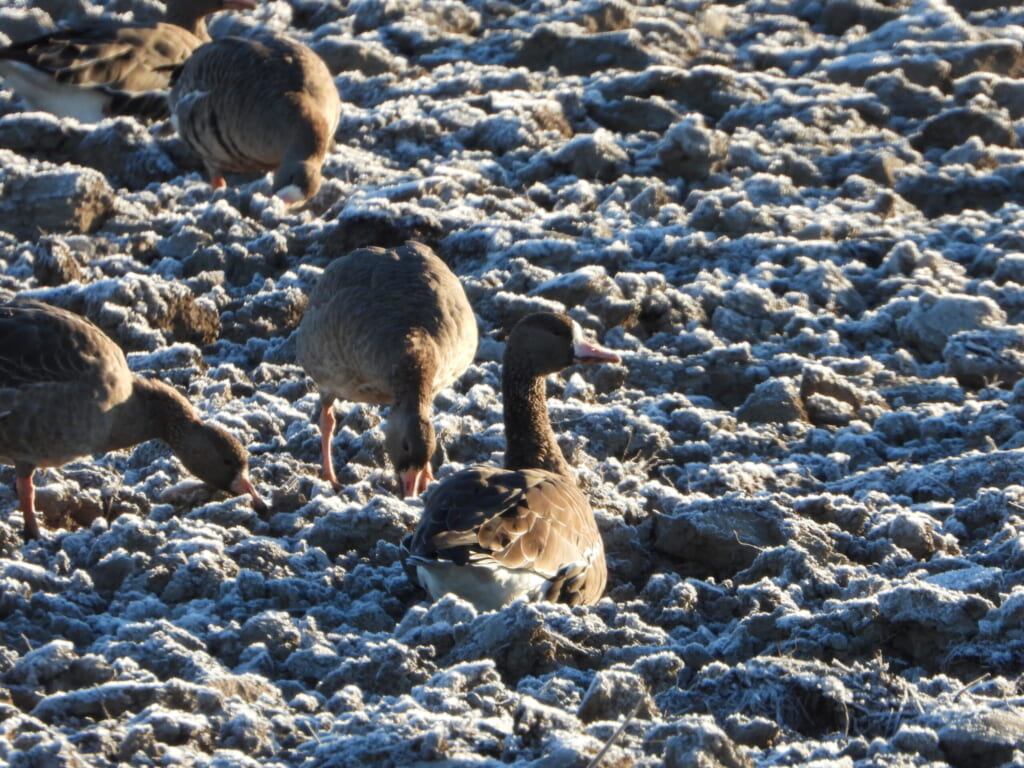
Hokkaido’s famous large birds are only part of the picture.
Depending on the season and habitat, wetlands and lakes may hold:
- Greater White-fronted Geese
- Ducks
- Swans
- Shorebirds
Coasts and offshore islands add seabirds as well.
One of the best things about birding in Hokkaido is that the birdlife changes as the habitat changes.
Sapporo or Eastern Hokkaido: Which Is Better?
For most travelers, the choice is fairly simple.
Choose Sapporo if:
- Birdwatching is only part of your Hokkaido trip
- You have half a day or one day
- You want to stay based in Sapporo
- You do not want to add long-distance travel
Choose Eastern Hokkaido if:
- Red-crowned Cranes are a major target
- You want Steller’s or White-tailed Eagles
- You hope to see Blakiston’s Fish Owl
- Birdwatching is one of the main reasons for your trip
If birds are the main purpose of your trip, choose eastern Hokkaido.
If birdwatching is something you want to add to a general Hokkaido vacation, Sapporo is easier.
How to Plan a Birdwatching Trip in Hokkaido
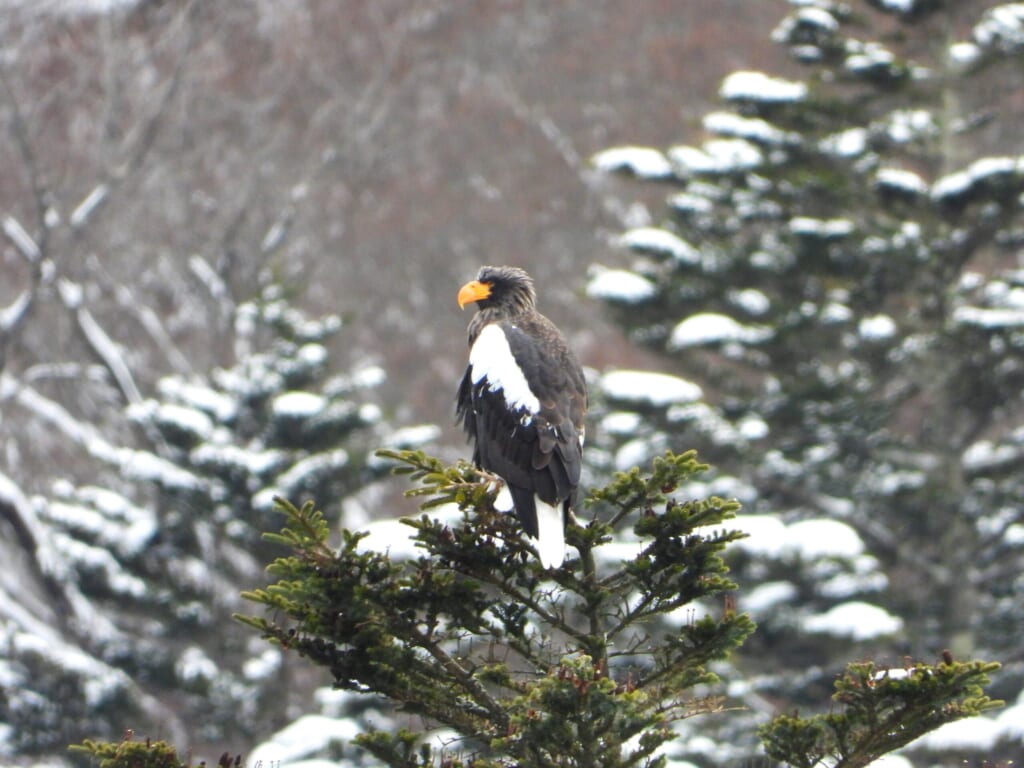
Start with the Bird, Not the Destination
Because Hokkaido is so large, it is usually easier to choose your target bird first.
Red-crowned Cranes
→ Kushiro & Tsurui
Steller’s and White-tailed Eagles
→ Rausu, Nemuro & Notsuke
Forest birding from Sapporo
→ Sapporo area
Greater White-fronted Geese in migration
→ Miyajima-numa
Choose the bird first, then build your trip around the right region.
Do Not Use Too Many Bases
One thing becomes obvious when traveling around Hokkaido for wildlife: distances are long.
Trying to cover too many areas in one day can leave you spending more time driving than watching birds.
A better approach is to group nearby areas together.
For example:
- Kushiro & Tsurui
- Nemuro & Notsuke
- Rausu
Give yourself enough time to stop, scan, and wait.
Do You Need a Car?
It depends on where you go.
Around Sapporo, some birdwatching can be done by public transport and on foot.
In eastern Hokkaido, a car gives you much more freedom when moving between wetlands, coastlines, and wildlife areas.
Winter is different.
If you are not experienced with snowy or icy roads, do not feel that you have to rent a car just for birdwatching.
Public transport, taxis, guided trips, and organized tours may be safer and easier.
Keep Winter Plans Flexible
Winter weather can change your plans.
Heavy snow, icy roads, strong winds, blizzards, and cruise cancellations are all possible.
Drift-ice conditions also vary from day to day.
Do not build your entire trip around the assumption that you will see an eagle standing on drift ice on one exact date.
Wild birds and winter weather do not follow our schedules.
Leaving some flexibility gives you a much better chance to slow down and actually enjoy the birding.
Birdwatching Etiquette in Hokkaido
Hokkaido is home to several rare and sensitive bird species.
Basic rules include:
- Keep a respectful distance
- Do not approach nests
- Do not feed wild birds
- Stay off private property
- Avoid excessive use of playback
- Do not publicly share sensitive locations for rare birds
- Follow local rules at viewing sites
Extra care is especially important around crane roosts and sensitive species such as Blakiston’s Fish Owl.
Getting closer is not always better.
The best wildlife encounters are the ones where the bird can continue behaving naturally.
Hokkaido Birdwatching FAQ
What is the best month for birdwatching in Hokkaido?
It depends on what you want to see.
If Red-crowned Cranes, Steller’s Sea Eagles, and White-tailed Eagles are your priorities, January and February are especially attractive in eastern Hokkaido.
Spring and autumn are better for migration, while spring and summer offer a different mix of forest, wetland, grassland, and seabirds.
What is the best birdwatching area in Hokkaido?
If I had to choose one region, I would pick eastern Hokkaido.
Kushiro, Tsurui, Nemuro, Notsuke, and Rausu offer very different habitats within one broad region, along with several of Hokkaido’s most famous birds.
For a general sightseeing trip, however, Sapporo is much easier.
Can I go birdwatching in Sapporo?
Yes.
Parks, rivers, forest edges, and nearby wooded areas offer birdwatching throughout the year.
▶ Birdwatching in Sapporo: A Complete Guide
Can I see Red-crowned Cranes and Steller’s Sea Eagles on the same trip?
Yes.
A winter trip through eastern Hokkaido can combine Red-crowned Cranes around Kushiro and Tsurui with sea eagles around Nemuro, Notsuke, and Rausu.
Do not try to fit everything into one day. Several days will give you a much better experience.
Final Thoughts
The easiest way to plan a Hokkaido birdwatching trip is to decide what you want to see first.
Red-crowned Cranes → Kushiro & Tsurui
Steller’s and White-tailed Eagles → Rausu, Nemuro & Notsuke
Easy birdwatching → Sapporo
Spring and autumn migration → Miyajima-numa
Hokkaido is too large to rush.
Choose the region that matches your target birds and give yourself enough time there.
That is the simplest way to enjoy birdwatching in Hokkaido.
Interested in mammals and other wildlife too?
▶ Wildlife in Hokkaido – 15 Amazing Animals You Can See