
Birds of Prey in Japan: Eagles, Hawks, Falcons & Where to See Them
Japan is home to an impressive variety of birds of prey, from huge sea eagles wintering in Hokkaido to Mountain Hawk-Eagles in forested mountains and Crested Serpent Eagles on the subtropical islands of the south.
Some, such as Black Kites, Eastern Buzzards, and Ospreys, are relatively easy to find. Others, including Mountain Hawk-Eagles and Golden Eagles, can be much harder to encounter.
Over the years, I have watched and photographed raptors in different parts of Japan, including Steller’s and White-tailed Eagles in Hokkaido, Crested Serpent Eagles on Ishigaki Island, and migrating raptors at both Shirakaba Pass and Cape Irago.
This guide covers some of the main birds of prey you can see in Japan, where to look for them, when to go, and which species are easiest to find.
What Birds of Prey Live in Japan?
Japan is home to eagles, hawks, goshawks, buzzards, kites, ospreys, and falcons, as well as several species of owl.
Their habitats are just as varied. Raptors can be found along the coasts of Hokkaido, above mountain forests, around rivers and lakes, over farmland and grassland, and on the subtropical islands of southern Japan.
This is not intended to be a complete checklist of every raptor ever recorded in the country. Instead, it focuses on representative species that birdwatchers are realistically likely to look for in Japan.
Birds of Prey You Can See in Japan
Steller’s Sea Eagle
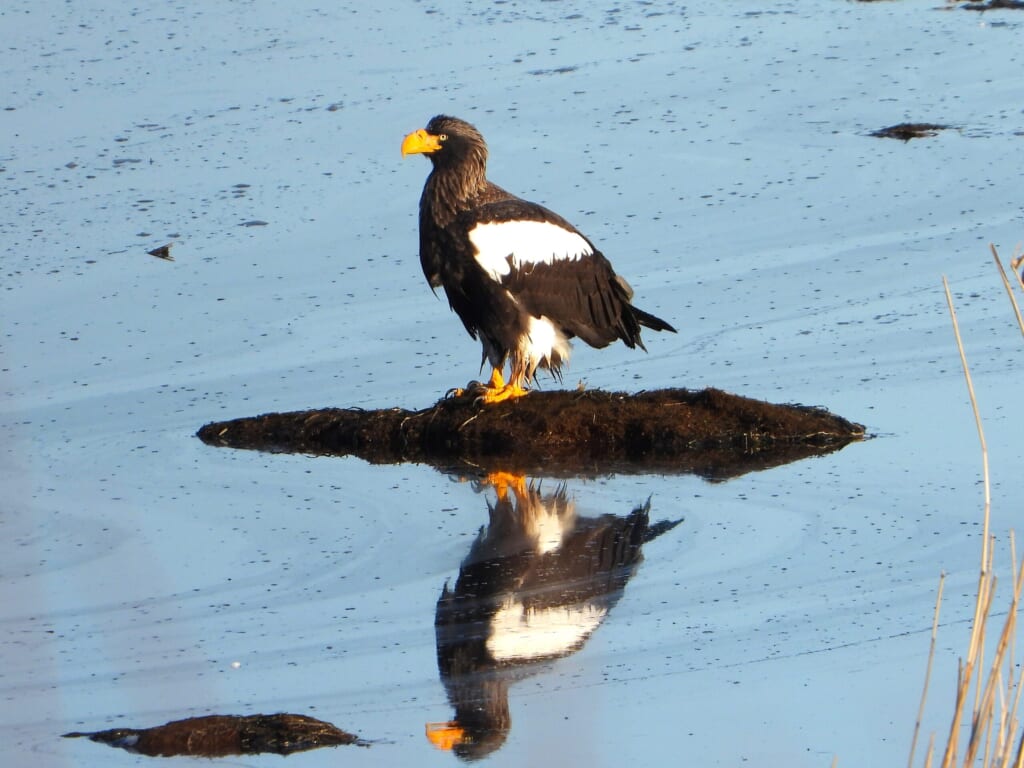
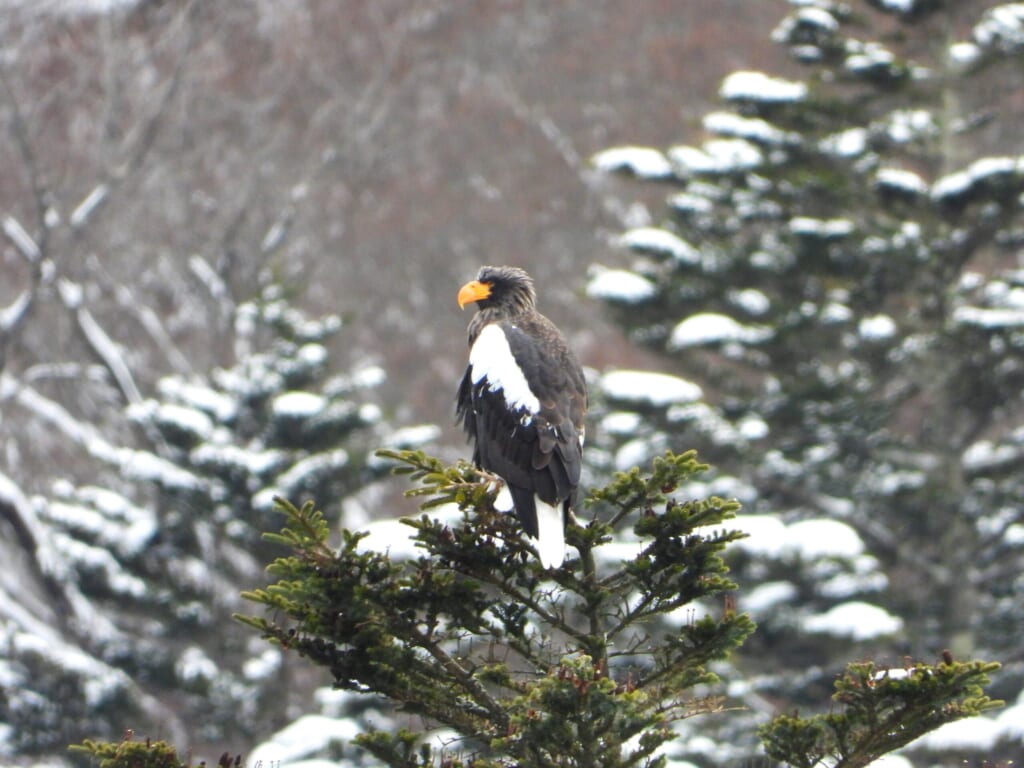
The Steller’s Sea Eagle (Haliaeetus pelagicus) is one of Japan’s most spectacular winter birds.
These enormous eagles breed farther north and migrate to Japan for the winter, with eastern Hokkaido being the main area to see them. Shiretoko and Rausu, Nemuro, Lake Furen, and the Notsuke Peninsula are among the best-known locations.
I have watched and photographed Steller’s Sea Eagles several times in Hokkaido, including on the Notsuke Peninsula.
Although they are globally rare, they can be surprisingly easy to find if you visit the right part of eastern Hokkaido at the right time of year. Their huge size also makes them easier to spot at a distance than many smaller raptors.
▶ Where to See Sea Eagles in Hokkaido
White-tailed Eagle

The White-tailed Eagle (Haliaeetus albicilla) is another huge eagle closely associated with Hokkaido.
Some White-tailed Eagles breed in Hokkaido and remain year-round, while additional birds arrive from farther north in winter. Coastal areas, lakes, and river mouths are all good places to look.
I have seen Steller’s and White-tailed Eagles in the same areas of eastern Hokkaido. Seeing the two species side by side makes their differences in bill size, plumage, and overall shape much easier to appreciate.
Mountain Hawk-Eagle
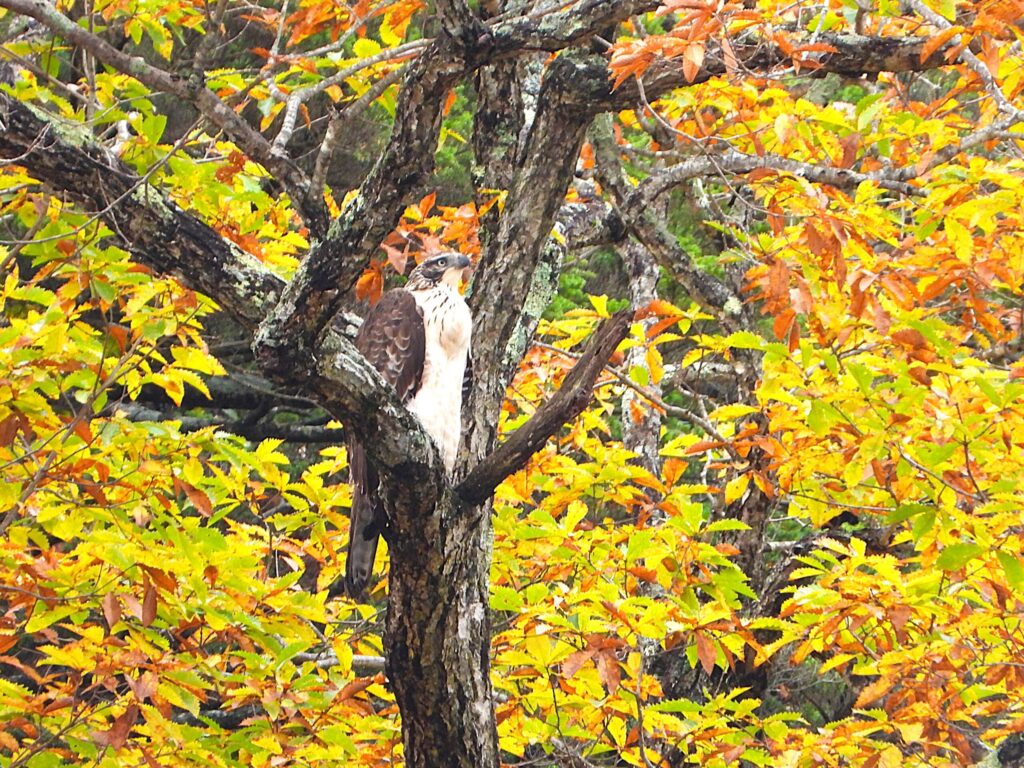
The Mountain Hawk-Eagle (Nisaetus nipalensis), known as Kumataka in Japanese, is one of Japan’s most impressive forest raptors.
It is a bird of mountainous, heavily forested landscapes rather than open coastlines or farmland.
On one trip into the mountains, I found a Mountain Hawk-Eagle calling from across a small lake surrounded by forest. On another occasion, I was lucky enough to encounter a juvenile.
Experiences like these have also shown me just how different this species is from more conspicuous raptors such as Black Kites and Eastern Buzzards. Even in suitable habitat, I never expect a Mountain Hawk-Eagle to be easy to find.
Crested Serpent Eagle
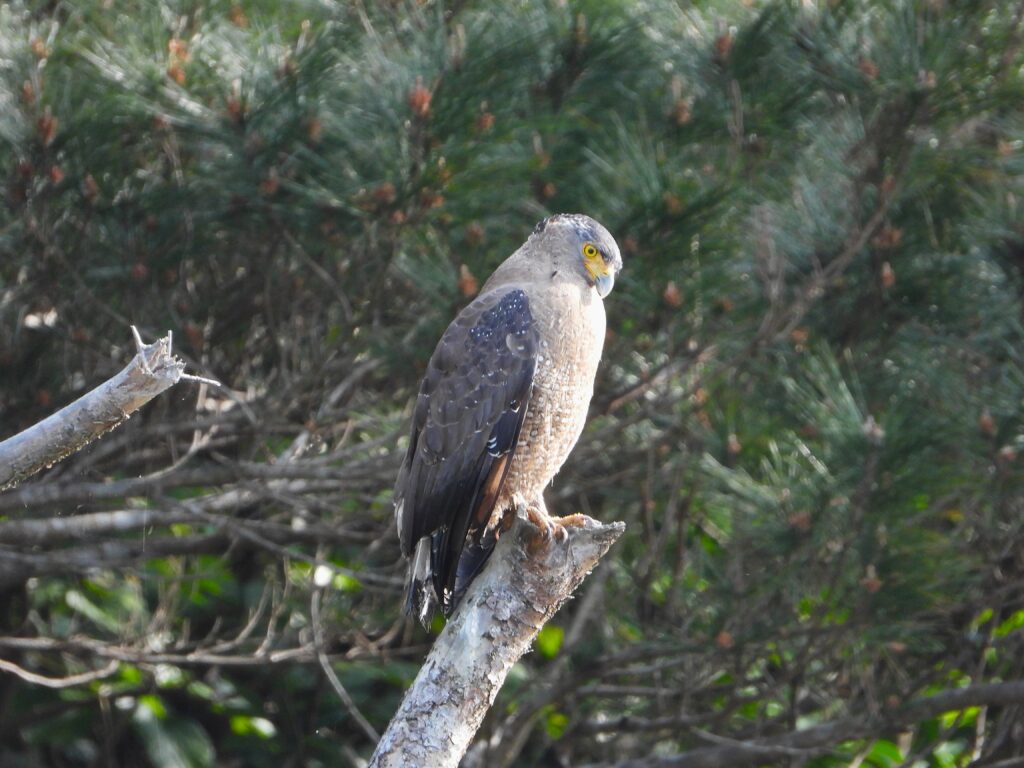
The Crested Serpent Eagle (Spilornis cheela) is one of the most distinctive raptors of southern Japan.
In Japan, it is found on Ishigaki and Iriomote in the Yaeyama Islands. The birds use forests, forest edges, agricultural areas, and other open habitats, and can sometimes be seen perched on roadside trees or utility poles.
I went to Ishigaki specifically hoping to see them and encountered several birds during the trip.
Most were perched some distance away, but early in the morning I found several resting in roadside trees and even saw two birds perched together.
Early morning worked particularly well for me, although there is never a guarantee with wildlife.
Crested Serpent Eagles are vulnerable to road collisions, so drive slowly on the islands and never stop somewhere unsafe just to photograph one.
Northern Goshawk
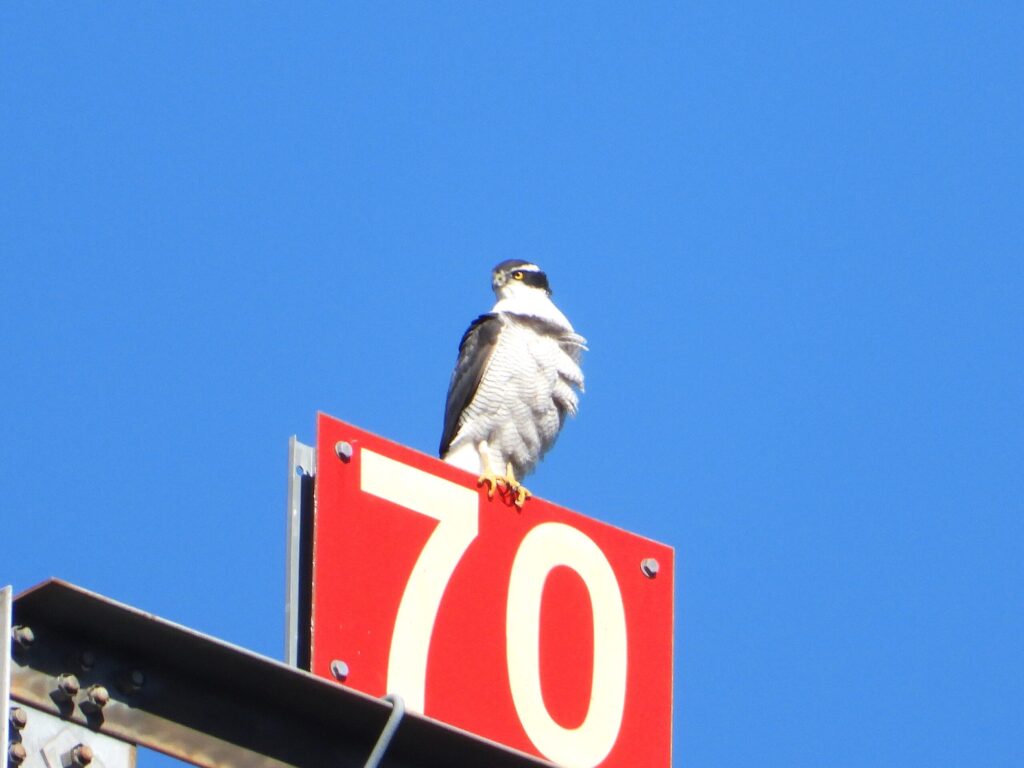
The Northern Goshawk (Accipiter gentilis) is a powerful woodland raptor found in Japan.
It uses forests for cover but also hunts around woodland edges, farmland, and river corridors.
Unlike large soaring buzzards or kites, goshawks can be surprisingly difficult to notice. Sometimes a sighting is little more than a bird suddenly crossing an opening before disappearing back into the trees.
If you are specifically looking for one, areas where mature woodland meets more open hunting habitat are worth watching.
Eastern Buzzard
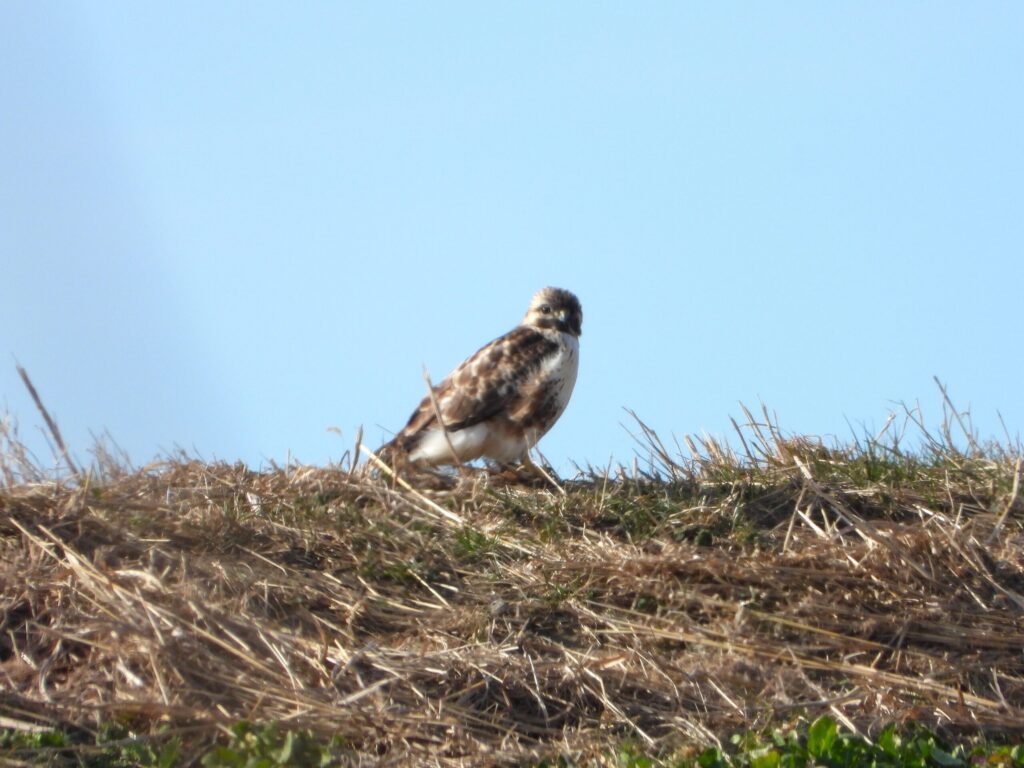
The Eastern Buzzard (Buteo japonicus), known as Nosuri in Japanese, is one of the more familiar raptors in Japan.
Farmland, riverbanks, grassland, woodland edges, and satoyama landscapes are all good places to look.
They can often be seen circling over open country or sitting quietly on trees and utility poles while watching the ground below.
If you are beginning to watch raptors in Japan, this is one of the species worth learning early.
Black Kite
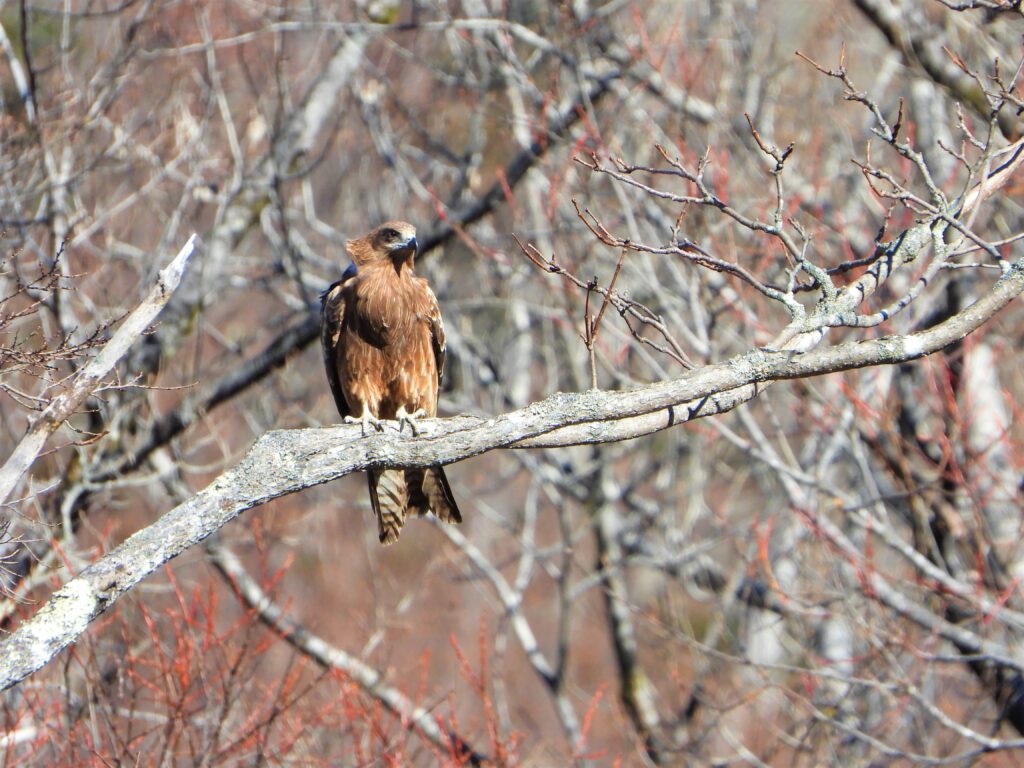
The Black Kite (Milvus migrans) is probably the best bird of prey to learn first in Japan.
It is widespread and often easy to spot around coasts, fishing ports, rivers, lakes, farmland, and even urban areas.
Its shallowly forked tail is particularly useful for identification. Once you become familiar with the silhouette of a Black Kite, it becomes much easier to notice when the raptor above you is something different.
That is why I think learning Black Kite first is one of the easiest ways to get started with raptor watching in Japan.
In some coastal and tourist areas, Black Kites have also learned to snatch food from people. Keep food covered and never deliberately feed them.
Osprey

The Osprey (Pandion haliaetus) is one of the easiest Japanese raptors to associate with a particular habitat.
If you want to find one, look for water.
Ospreys occur around coasts, rivers, lakes, and reservoirs, where they hunt for fish. They may circle above the water or hover briefly before diving toward the surface.
Whenever I am birdwatching beside a large river, lake, or coastline, Osprey is one of the raptors I keep in mind.
Common Kestrel
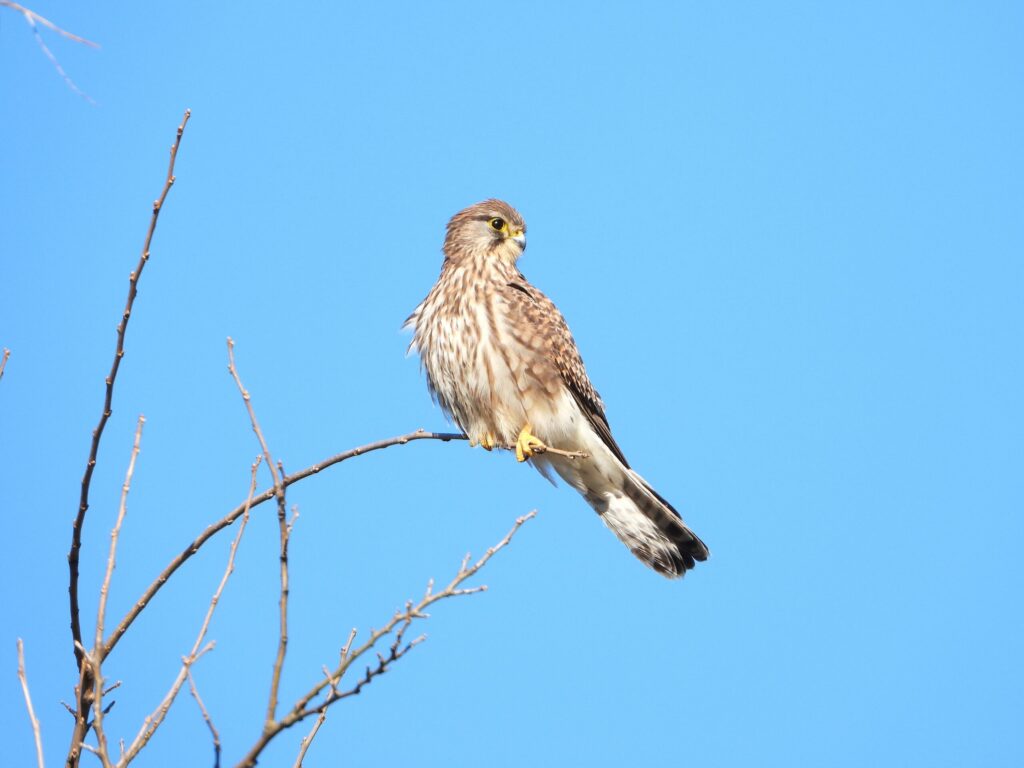
The Common Kestrel (Falco tinnunculus) is a small falcon found across much of Japan.
Open farmland, grassland, riverbanks, and other open landscapes are good places to look. Kestrels also make use of human-made structures such as bridges and buildings.
Their characteristic hovering behavior is one of the easiest clues to notice.
If you see a small raptor appearing to hang almost motionless above an open field, it is worth checking carefully.
Other Raptors Found in Japan
These are only some of the birds of prey found in Japan.
Golden Eagles still survive in mountainous parts of the country, although their population is small and they can be extremely difficult to find.
Grey-faced Buzzards and Oriental Honey-buzzards are particularly notable during migration, while Japanese Sparrowhawks, Eurasian Sparrowhawks, and Peregrine Falcons are among the other raptors birdwatchers may encounter.
Rather than turning this page into a long checklist, I think it is more useful to focus on the species visitors are most likely to actively look for and the habitats where they have a realistic chance of finding them.
Where to See Birds of Prey in Japan
There is no single best place for raptor watching in Japan.
Where you should go depends heavily on the species you want to see.
Hokkaido – Sea Eagles
If large eagles are your priority, eastern Hokkaido is one of the most exciting places in Japan.
Steller’s Sea Eagles and White-tailed Eagles can be found around areas such as Rausu and Shiretoko, Nemuro, Lake Furen, and the Notsuke Peninsula in winter.
I have seen both species in Hokkaido, including on Notsuke.
When searching from land, I do not just check the tops of large trees. I also scan the shoreline, ice, open water, distant perches, and the sky.
Because these birds are so large, they can stand out even from surprisingly far away.
▶ Where to See Sea Eagles in Hokkaido
Mountains and Forests of Honshu
Mountainous and forested areas of Honshu are important habitat for species such as Mountain Hawk-Eagles, Northern Goshawks, and Eastern Buzzards.
Do not spend all your time looking deep into the forest.
Ridges, valleys, forest edges, and places with a wide view of the sky can be particularly useful when searching for soaring raptors.
A Mountain Hawk-Eagle may be somewhere in the forest without ever giving you a clear view, so patience matters.
Rivers, Lakes and Coasts
Water is one of the easiest habitats for visiting birdwatchers to understand.
Black Kites are widespread around coasts and large rivers, while Ospreys are closely associated with fish-rich waters.
Eastern Buzzards can also occur along river corridors and in nearby open country.
If you are new to Japanese raptors and are not sure where to begin, spending some time beside a large river, lake, or coastline is a good starting point.
Ishigaki and Iriomote – Crested Serpent Eagles
If the Crested Serpent Eagle is your main target, head to the Yaeyama Islands.
In Japan, the species is found on Ishigaki and Iriomote, where birds can be seen in and around forests, agricultural areas, and roadside habitats.
On Ishigaki, I had particularly good results checking roadside trees early in the morning.
Just remember that wildlife watching should never come before road safety. If you are driving, keep your attention on the road and only stop where it is safe to do so.
Shirakaba Pass and Cape Irago – Autumn Raptor Migration
Autumn offers a completely different way to experience Japan’s birds of prey.
Shirakaba Pass in Nagano is one of the country’s best-known raptor migration sites. Grey-faced Buzzards, Oriental Honey-buzzards, and other raptors pass through as they move south.
Cape Irago in Aichi is another famous migration point, particularly for Grey-faced Buzzards.
I have watched autumn migration at both locations.
One thing you quickly learn is that no two migration days are the same. Weather, wind, and timing make a huge difference. On a good day, raptors may keep appearing one after another. On another visit, the sky can be much quieter.
That unpredictability is part of what makes migration watching so interesting.
What Is the Best Time to See Birds of Prey in Japan?
There is no single best season for every species.
Winter
Winter is the standout season for sea eagles in Hokkaido.
If Steller’s and White-tailed Eagles are your main targets, eastern Hokkaido is at its best during the colder months.
Winter can also make some raptors easier to spot elsewhere in Japan because deciduous trees have lost their leaves.
Spring and Summer
Spring and summer can be productive for resident forest raptors, but this is also the breeding season for many species.
Never approach nests or keep moving closer to a bird that is showing signs of disturbance.
With rare raptors especially, getting a closer photograph is never more important than giving the bird space.
Autumn
Autumn is the season for raptor migration.
Grey-faced Buzzards, Oriental Honey-buzzards, and other species move south, and certain locations concentrate those movements into impressive migration flights.
If you want to see numbers of raptors rather than search for a single resident bird, autumn migration can be one of the most rewarding experiences in Japan.
Which Birds of Prey Are Easiest to See in Japan?
For a first-time visitor, I would start with the Black Kite.
It is widespread, conspicuous, and relatively easy to identify once you learn its silhouette.
Eastern Buzzards, Ospreys, and Common Kestrels can also be realistic targets if you choose the right habitat.
Regional specialties work differently.
A Steller’s Sea Eagle is globally rare, yet in the right part of eastern Hokkaido in winter it can actually be easier to find than a Mountain Hawk-Eagle hidden somewhere in a Japanese forest.
The same applies to the Crested Serpent Eagle. Its range in Japan is extremely limited, but once you reach Ishigaki or Iriomote, you are finally looking in the right place.
That is one of the most useful lessons I have learned while watching wildlife in Japan:
A rare species is not always the hardest species to find. Habitat, season, and distribution matter just as much.
How to Find Raptors in Japan

The easiest way to improve your chances is to stop looking for simply “a bird of prey” and start looking for the habitat used by your target species.
Around coasts, rivers, and lakes, watch for Black Kites and Ospreys.
Around farmland, grassland, and riverbanks, keep an eye out for Eastern Buzzards and Common Kestrels.
In mountain country, spend time scanning ridges, valleys, and the sky above mature forest.
In eastern Hokkaido in winter, check coastlines, lakes, ice, large trees, and open sky for sea eagles.
And do not only look for birds in flight.
Raptors often sit quietly on treetops, dead branches, utility poles, and other high perches.
Binoculars are extremely useful because many sightings begin with nothing more than a distant silhouette.
Most importantly, give the birds space. Do not approach nests, do not force a resting bird to fly for a photograph, and never feed wild raptors.
Are Owls Birds of Prey?
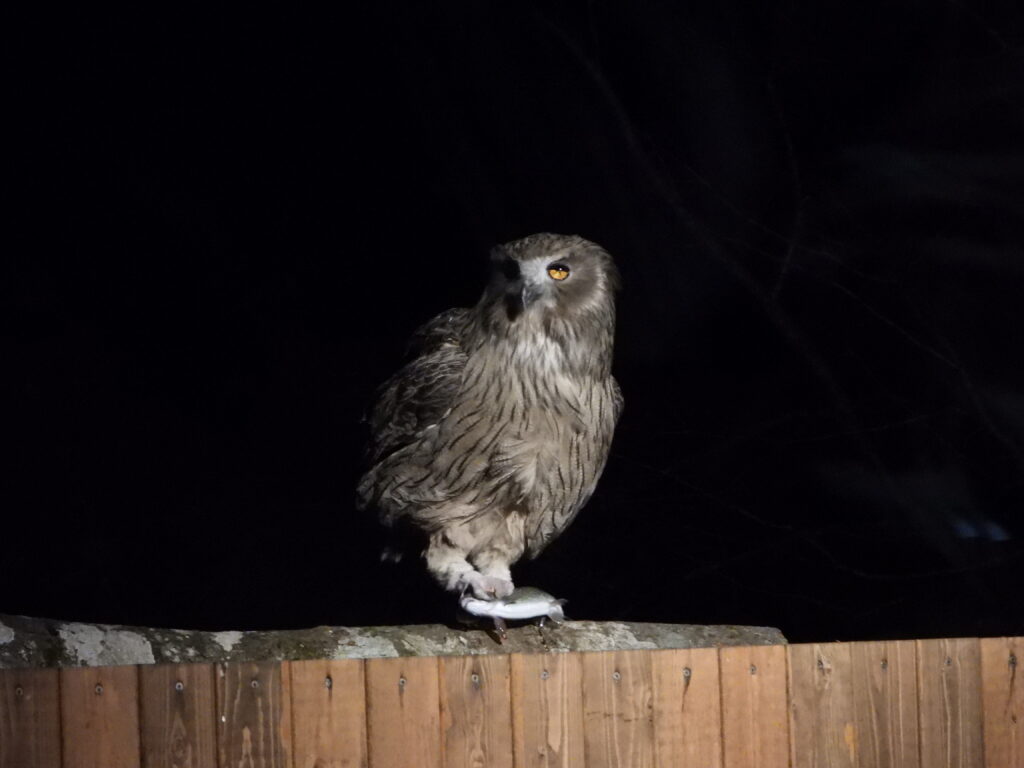
Yes. Owls are birds of prey too.
Japan is home to several remarkable owls, including Blakiston’s Fish Owl and the Ryukyu Scops Owl.
However, looking for nocturnal owls is very different from scanning the sky for eagles, hawks, and falcons during the day.
For that reason, this guide focuses mainly on diurnal raptors.
Explore More Birds in Japan
Birds of prey are only one part of Japan’s birdlife.
For a broader introduction to the birds found across the country:
▶ Birds in Japan: Common, Native & Iconic Species
If you are deciding where to go birdwatching:
▶ Birdwatching in Japan: Best Places, Seasons & Birds to See
For birdwatching in northern Japan:
And if you are visiting during the colder months:
Japan’s raptors change dramatically from north to south and from season to season.
You can watch huge sea eagles along a wintry Hokkaido coastline, search mountain forests for a Mountain Hawk-Eagle, find Crested Serpent Eagles on subtropical islands, or stand beneath migrating hawks in autumn.
You do not need to begin with the rarest species.
Start with the Black Kite. Learn its shape and the way it flies.
Once the common raptors become familiar, you may be surprised by how often something different begins to stand out in the sky.