Frogs in Japan: A Field Guide to Japanese Frog Species
Japan is home to a diverse range of frogs, from tree frogs and brown frogs found around rice fields and forests to endemic species restricted to islands in the Ryukyu Archipelago. Which species you can see depends strongly on the region, habitat, and season.
This field guide introduces frogs found in Japan with photos, scientific names, main ranges, and typical habitats, with links to detailed species guides. It also covers where and when to find frogs in the wild, based on my own observations across Japan.
Frogs in Japan at a Glance
Japan has a wide variety of frogs, ranging from familiar tree frogs and toads found across the main islands to highly localized species that live only on islands in southern Japan.
Some are closely associated with rice fields and ponds, while others live in forests, mountain streams, or subtropical island habitats. The groups below provide a simple introduction to some of the main types of frogs you may encounter in Japan.
How Many Frog Species Live in Japan?
Japan’s current standard-name list includes 53 frog species recorded in the country. This total includes both native frogs and introduced species.
The diversity is especially striking because Japan stretches from cool northern regions to subtropical islands. Many species have limited distributions, and some occur only on a single island or small group of islands.
Tree Frogs
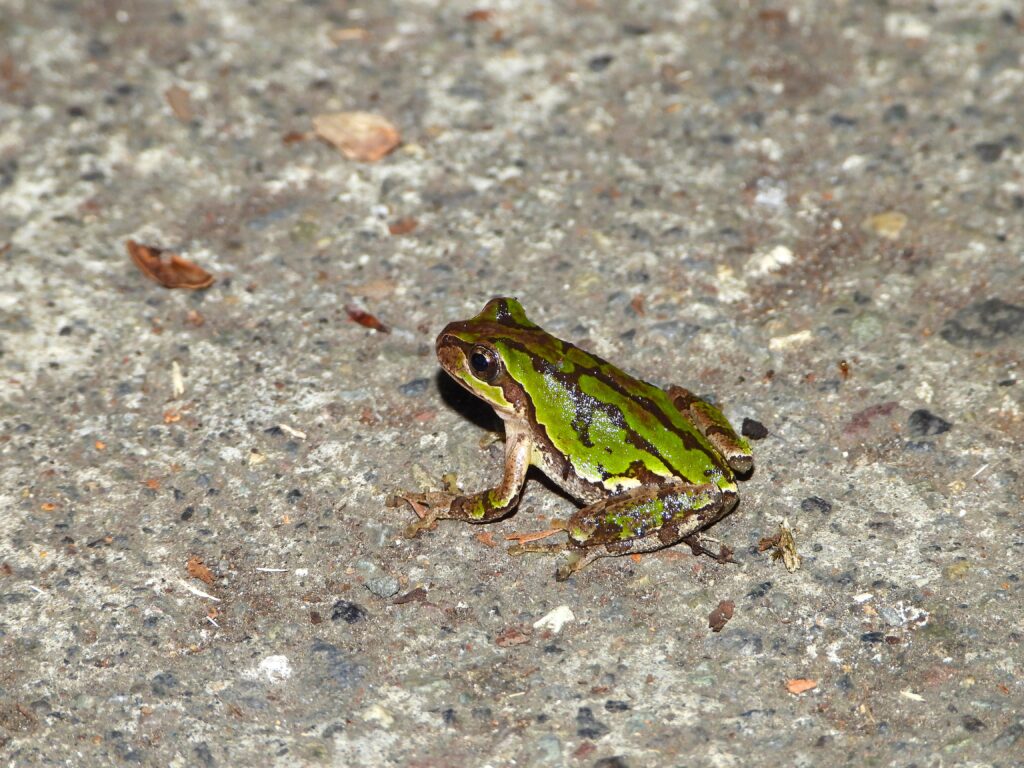
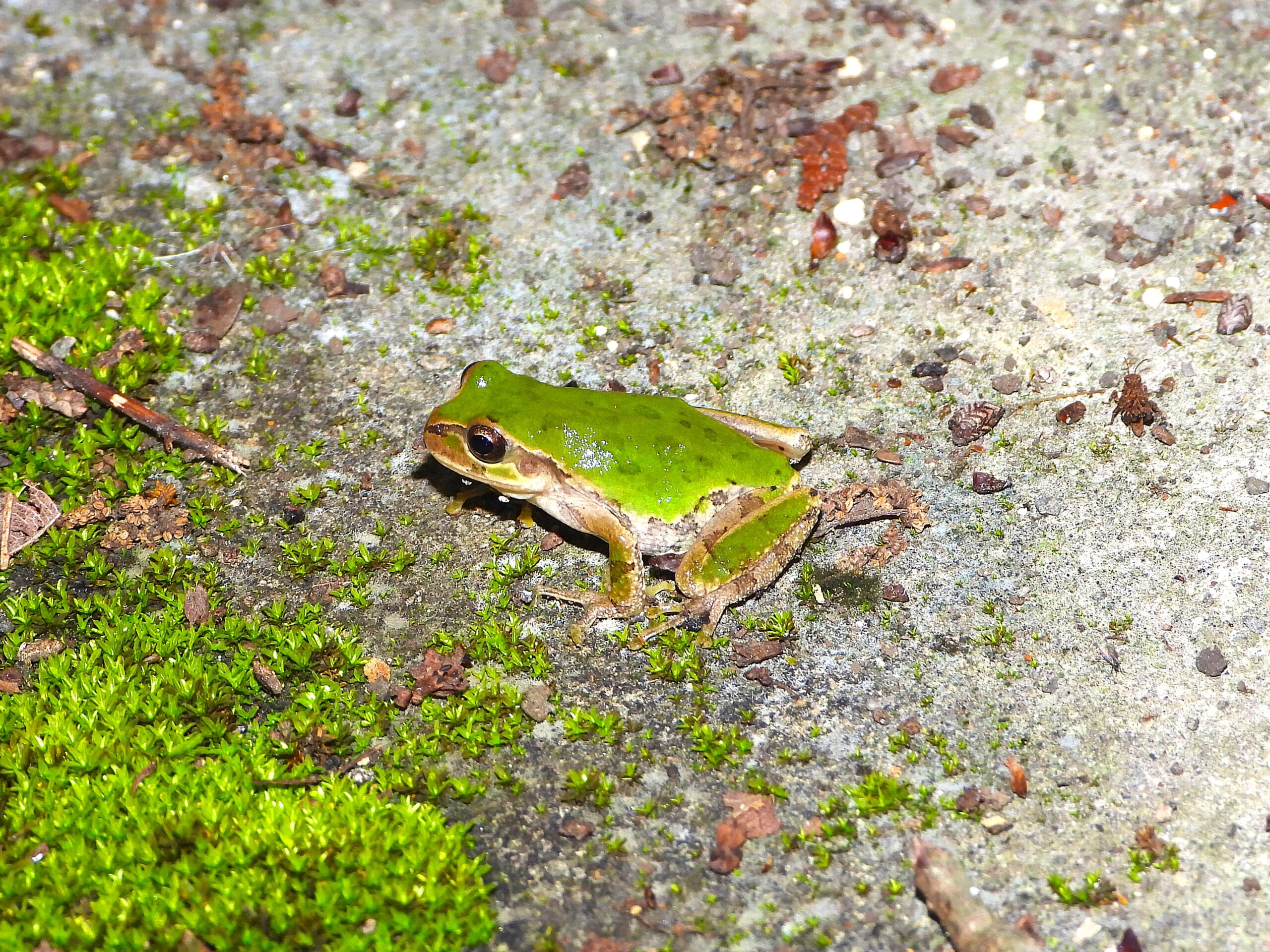
Tree frogs are among the most familiar frogs in Japan. They are small, usually green or brownish, and have expanded toe pads that help them cling to leaves, grasses, and other surfaces.
Japan’s current taxonomy recognizes the Japanese Tree Frog (Dryophytes japonicus) and the Eastern Japanese Tree Frog (Dryophytes leopardus) as separate species. The latter was described as a new species in 2025.
Representative species:
- Japanese Tree Frog(Dryophytes japonicus)
- Eastern Japanese Tree Frog(Dryophytes leopardus)
Toads
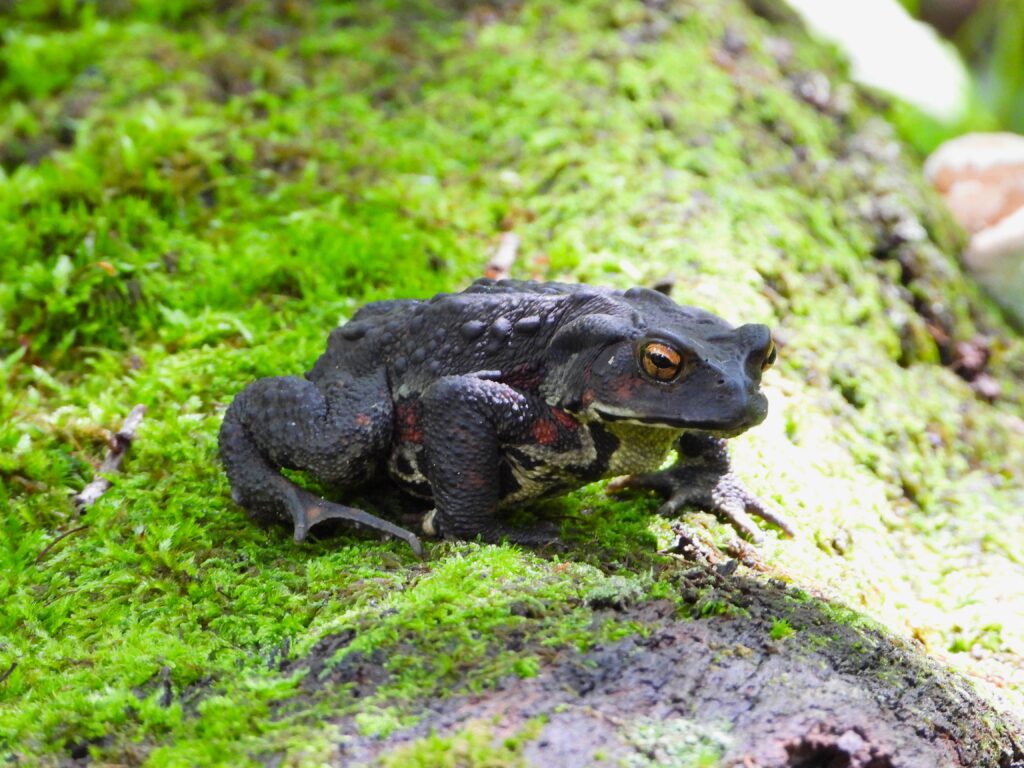
Toads are larger, more ground-dwelling frogs with rough, bumpy skin. In Japan, several Bufo species occur in different regions and habitats, from forests and parks to mountain valleys.
Representative species:
- Japanese Common Toad (Bufo japonicus)
- Eastern Japanese Toad (Bufo formosus)
- Japanese Stream Toad (Bufo torrenticola)
Brown Frogs
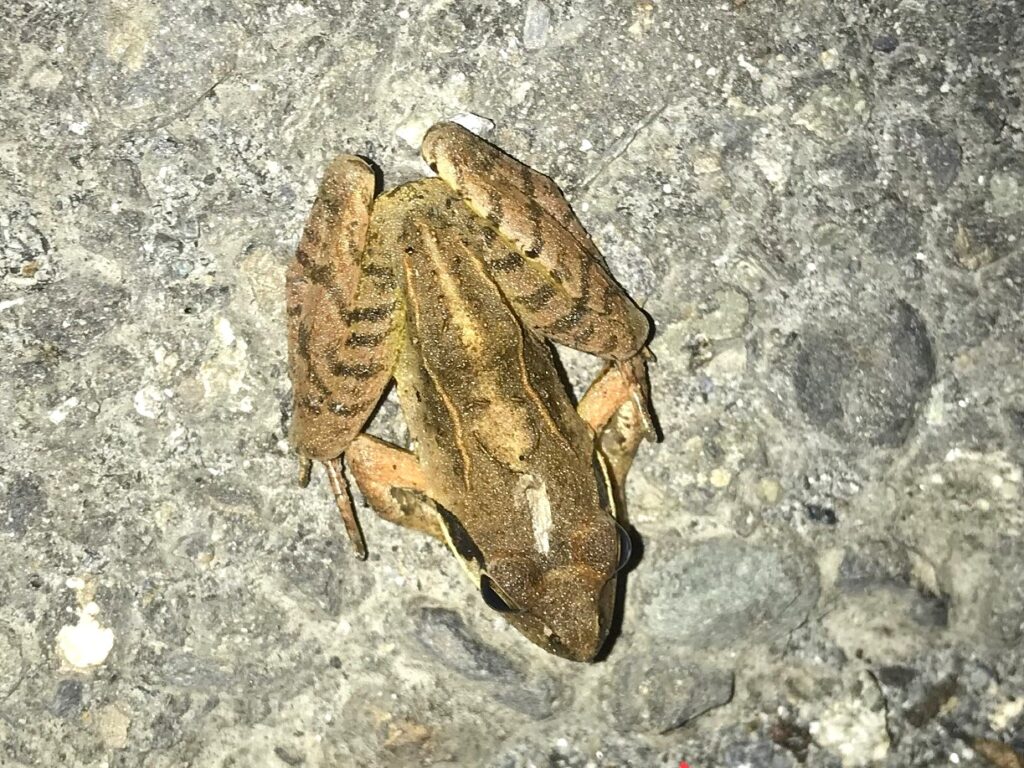
Brown frogs in Japan include several species in the genus Rana. Many have brown or reddish-brown coloration that helps them blend into leaf litter, grass, and the forest floor.
Depending on the species, they can be found around forests, wetlands, rice fields, and mountain habitats.
Representative species:
- Japanese Brown Frog (Rana japonica)
- Montane Brown Frog (Rana ornativentris)
Japanese Frog Species
Japan is home to a wide range of frog species, from familiar frogs found around rice fields and forests to endemic species with very limited distributions. The species below are some of the frogs you may encounter or look for across Japan.
- Japanese Tree Frog
- Eastern Japanese Tree Frog
- Forest Green Treefrog
- Schlegel’s Green Tree Frog
- Japanese Toad
- Eastern Japanese Toad
- Japanese Brown Frog
- Montane Brown Frog
- Otton Frog
- Amami Ishikawa Frog
- Amami Green Tree Frog
- Greater Tip-nosed Frog
- American Bullfrog
Note: The species you can see vary by region. Tokyo Daruma Pond Frog is mainly found in parts of eastern Japan.
Iconic and Endemic Frogs of Japan
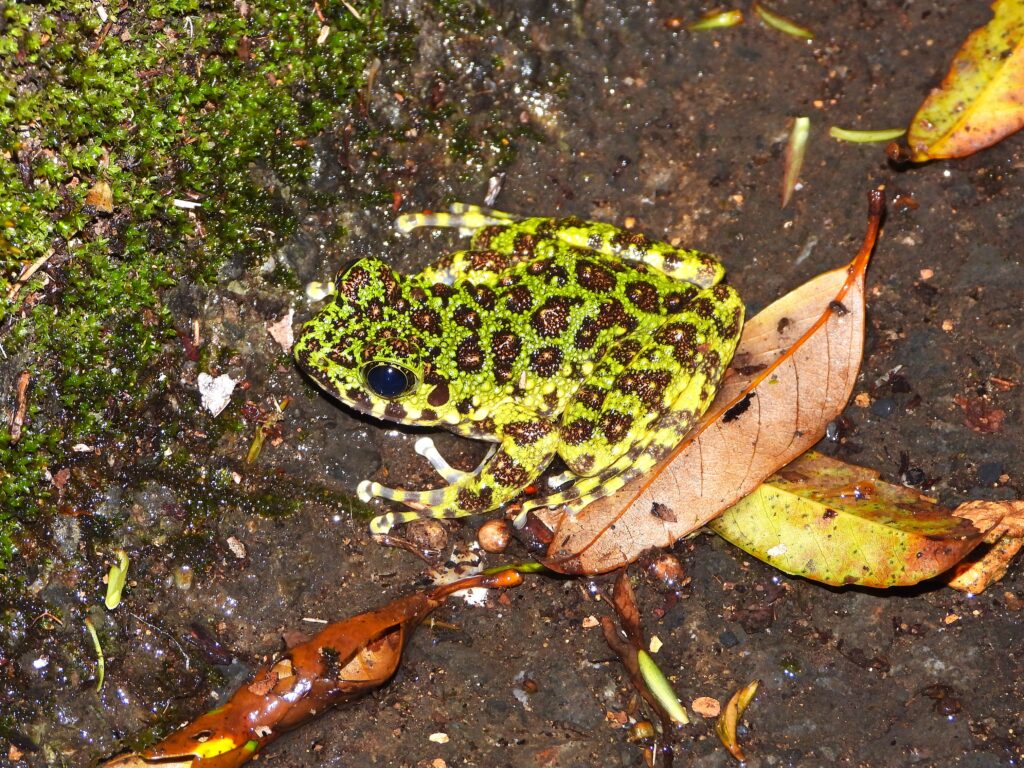
Some of Japan’s most distinctive frogs have very limited distributions, especially on the southern islands. These species are one of the highlights of Japan’s amphibian diversity.
- Forest Green Treefrog (Zhangixalus arboreus)
- Otton Frog (Babina subaspera)
- Amami Ishikawa Frog (Odorrana splendida)
- Amami Tip-nosed Frog (Odorrana amamiensis)
- Amami Green Tree Frog (Zhangixalus amamiensis)
- Yaeyama Harpist Frog (Nidirana okinavana)
- Greater Tip-nosed Frog (Odorrana supranarina)
Many of these frogs occur on only one island or a small group of islands, making southern Japan particularly important for frog diversity.
Native and Introduced Frogs in Japan
Most of the frogs featured in this guide are native to Japan, and many are endemic, meaning they occur naturally nowhere else in the world.
Japan also has introduced frogs. The American Bullfrog (Lithobates catesbeianus) is one of the best-known examples and is now established in many parts of the country. Other introduced frogs, including the Cane Toad (Rhinella marina) and Common Tree Frog (Polypedates leucomystax), occur in parts of southern Japan.
These introduced species are treated separately from Japan’s native frog fauna.
Where to Find Frogs in Japan
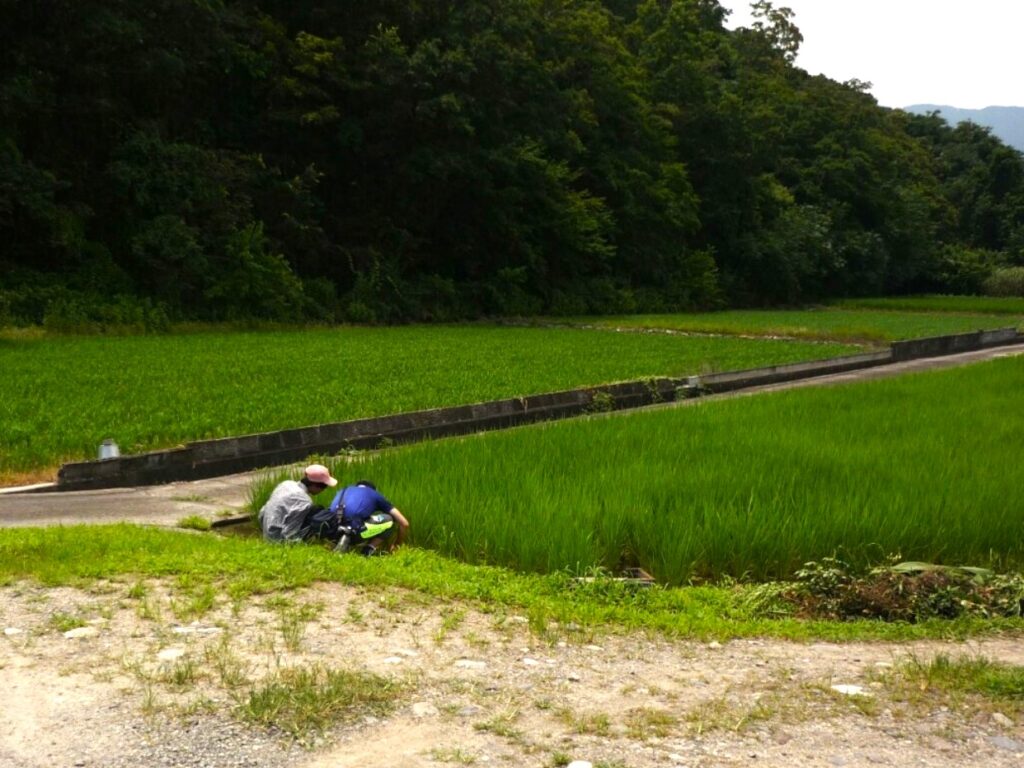
Where you should look for frogs in Japan depends on the species. Rice fields, irrigation channels, ponds, wetlands, and grassy areas near water are good places to search for many species, especially during the breeding season.
Other frogs are more closely associated with forests, wooded ponds, or mountain streams. Some species also move between breeding sites and surrounding forests or grasslands, so frogs are not always found directly beside water.
Best Time to See Frogs in Japan
For many frog species in Japan, late spring through summer is an excellent time for observation. Warm, humid nights and rainy weather often make frogs easier to hear and find, especially around breeding habitats.
However, the best season depends on the species. Some brown frogs begin breeding much earlier, in late winter or early spring. If you are looking for a particular frog, its breeding season is often the best time to search.
How to Find Frogs in the Wild
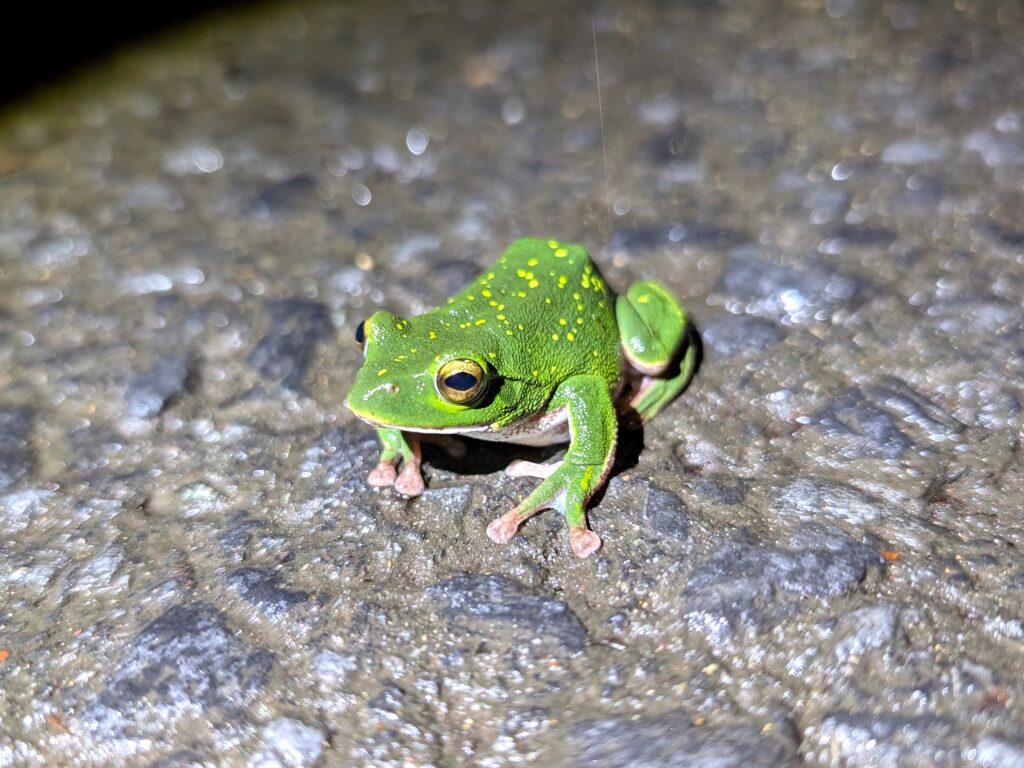
One of the best ways to find frogs is to listen first. During the breeding season, calling males can lead you to ponds, rice fields, wetlands, and other places where frogs are active.
Move slowly and quietly once you get close. Check the edges of ponds and waterways, low vegetation, wet ground, and leaves around the water rather than looking only in the water itself.
Night can also be a good time to search. A flashlight makes frogs easier to spot, especially after rain, but watch your footing and avoid entering rice fields or other private land without permission.
Behavior and Ecology of Japanese Frogs
Japanese frogs have adapted to a wide range of habitats and lifestyles. Many are most active from evening through the night, when they hunt insects and other small invertebrates.
Breeding behavior varies greatly by species. Some frogs lay their eggs directly in ponds, wetlands, or other shallow water, while others use very different strategies. Forest Green Treefrogs, for example, make foam nests near water, where the developing tadpoles can later reach the pond below.
Outside the breeding season, some species also spend much of their time away from water. Montane Brown Frogs, for example, use forests as an important habitat during the non-breeding season.
Field Notes from My Frog Observations in Japan
My frog observations in Japan have shown me how strongly season and weather affect what you can find.
At a breeding pond used by Forest Green Treefrogs, I have seen their foam nests above the water. After a strong summer storm, I also watched tadpoles dropping from the foam nests into the pond below.
On Amami Ōshima, I encountered an Otton Frog along a forest road shortly after rain. I have also found Montane Brown Frog egg masses in March, when the weather was still cold. Experiences like these are why I usually check the season, recent rainfall, and habitat before looking for a particular frog.
Conservation of Japanese Frogs
While some frogs remain common across Japan, others have very limited distributions and face conservation concerns. Several of Japan’s endemic frogs are found only on small islands or in restricted forest and stream habitats.
Protecting breeding sites, wetlands, forests, and clean streams is important for maintaining this diversity. When observing frogs in the wild, avoid disturbing eggs or breeding sites, and do not move frogs between locations.
Frequently Asked Questions
Are there frogs in Japan?
Yes. Japan is home to many native frog species, including tree frogs, brown frogs, toads, and several species found only in Japan. Frogs occur from the main islands to the subtropical islands of southern Japan.
What frogs are native to Japan?
Native frogs include the Japanese Tree Frog, Forest Green Treefrog, Japanese Brown Frog, Montane Brown Frog, and many others. Japan also has highly localized endemic frogs, especially on islands such as Amami Ōshima and the Ryukyu Islands.
What are some Japanese frog names?
Some well-known frogs found in Japan include the Japanese Tree Frog, Eastern Japanese Tree Frog, Forest Green Treefrog, Japanese Brown Frog, Montane Brown Frog, and Otton Frog.
When can you see frogs in Japan?
Many species are easiest to find from spring through summer, especially during humid or rainy weather. However, the best season varies by species, and some brown frogs begin breeding in late winter or early spring.
Where can you find frogs in Japan?
Good places to look include rice fields, ponds, wetlands, irrigation channels, forests, and mountain streams. The best habitat depends on the species you are trying to find.
Conclusion
Japan has many frogs that can be found in everyday places such as parks, rice fields, and small waterways.
If you pay attention to season, weather, and habitat, even beginners have a good chance of finding them…
Related Articles
Explore more guides to amphibians and wildlife in Japan:
▶ Amphibians in Japan: Frogs, Newts and Giant Salamanders
Explore Japan’s frogs, newts, salamanders, and other amphibians.
▶ Animals in Rice Fields in Japan: What Wildlife You Can Actually See
See the frogs, birds, insects, and other wildlife found around Japanese rice fields.
▶ Animals in Japan: Native, Endemic & Iconic Species
Explore the major animal groups found across Japan, including mammals, birds, reptiles, amphibians, insects, and marine life.