Amami Endemic Wildlife: Rare Animals of Amami Ōshima
Introduction
Amami Ōshima is one of the best places in Japan to see endemic wildlife — animals that evolved in isolation and are found in only a very limited part of the world.
The island’s subtropical forests are home to remarkable species such as the Amami rabbit, Lidth’s jay, Amami woodcock, Amami Ishikawa’s frog, Otton frog, and Amami tip-nosed frog.
This guide focuses specifically on Amami’s endemic and rare wildlife, including the species most worth looking for, how difficult they are to see, and the habitats where they live.
For a broader guide to all kinds of wildlife on the island, including snakes and other non-endemic species, see:
▶ Animals of Amami Island: Wildlife of Amami Ōshima
Why Amami Has So Many Endemic Species
Amami Ōshima has an unusually high number of endemic species because its wildlife evolved in long isolation from the Eurasian continent and from neighboring islands.
As the Ryukyu island chain formed and became separated by sea, populations of animals were isolated for long periods. Over time, they evolved independently, producing species found nowhere else in the world. UNESCO specifically highlights this geographic isolation as one of the main reasons the region has such unique biodiversity.
Amami’s warm, humid subtropical forests have also preserved habitats for ancient animal lineages that disappeared from many other parts of East Asia.
This combination of isolation, stable forest habitat, and long independent evolution explains why Amami Ōshima is home to animals such as the Amami rabbit, Amami spiny rat, Lidth’s jay, Amami woodcock, and several endemic frogs.
That exceptional concentration of endemic and threatened species is one of the main reasons Amami Ōshima became part of a UNESCO World Natural Heritage Site in 2021.
Endemic Wildlife of Amami Ōshima
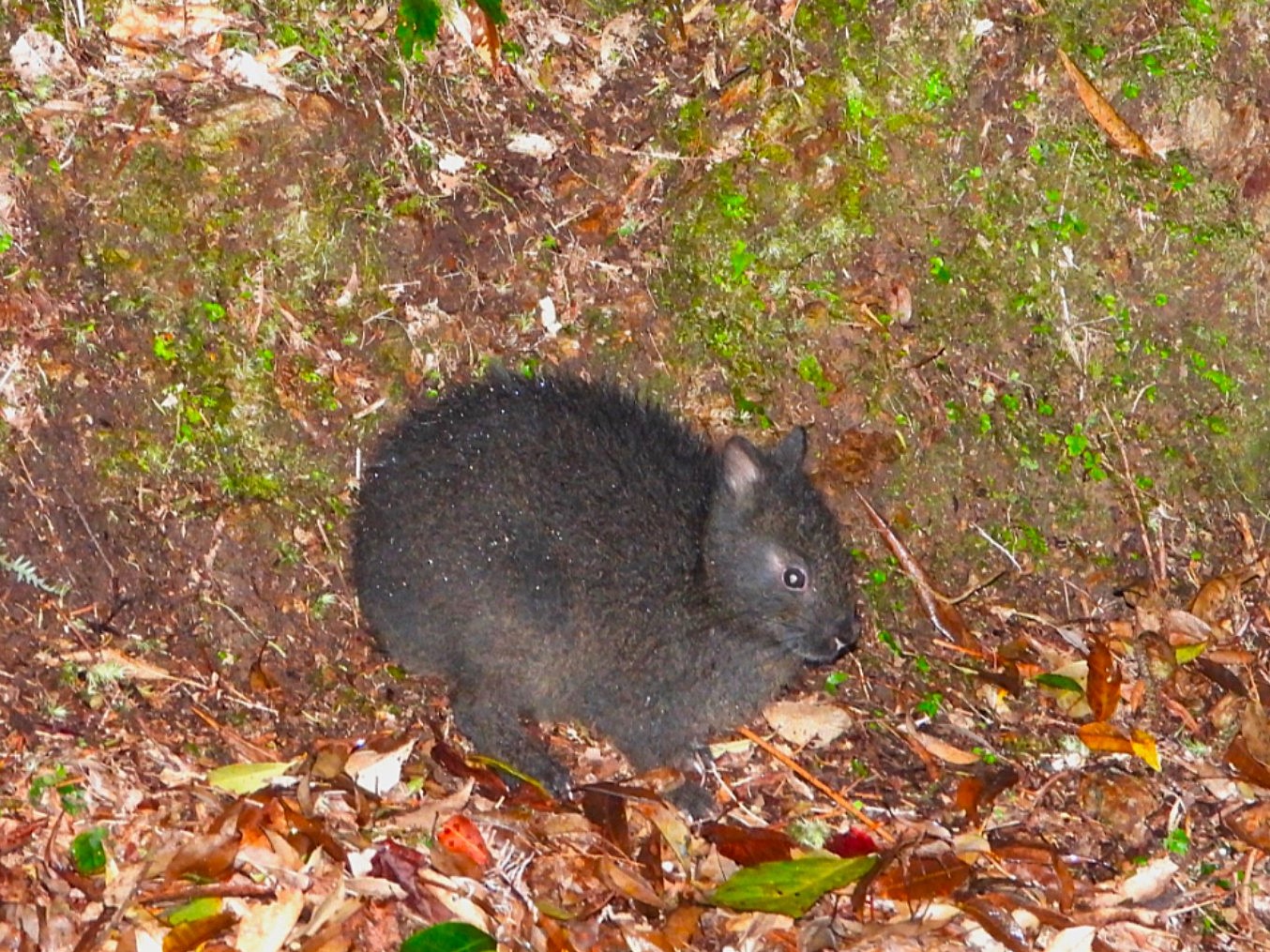
Amami Rabbit (Pentalagus furnessi)
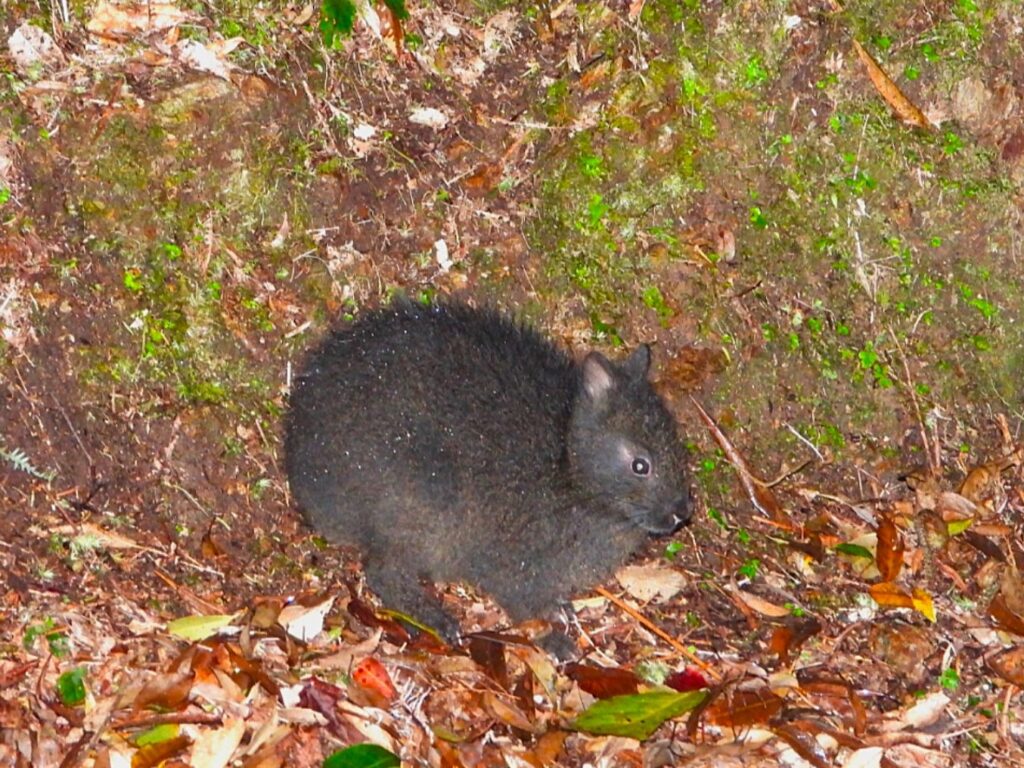
The Amami rabbit is the most iconic endemic mammal of Amami Ōshima. It is found only on Amami Ōshima and Tokunoshima and is the only living species in its genus. Japan’s Ministry of the Environment lists it as Endangered.
This dark, short-eared rabbit is strictly nocturnal, so daytime sightings are extremely unlikely. On Amami Ōshima, it uses forested slopes for shelter and often forages around streamside vegetation and forest edges after dark.
For wildlife travelers, this is usually the number-one species to hope for on Amami. Sightings are never guaranteed, but it is much more realistic to encounter than many of the island’s rarer rodents and forest birds.
▶ Amami Rabbit – Full Species Guide
Lidth’s Jay (Garrulus lidthi)
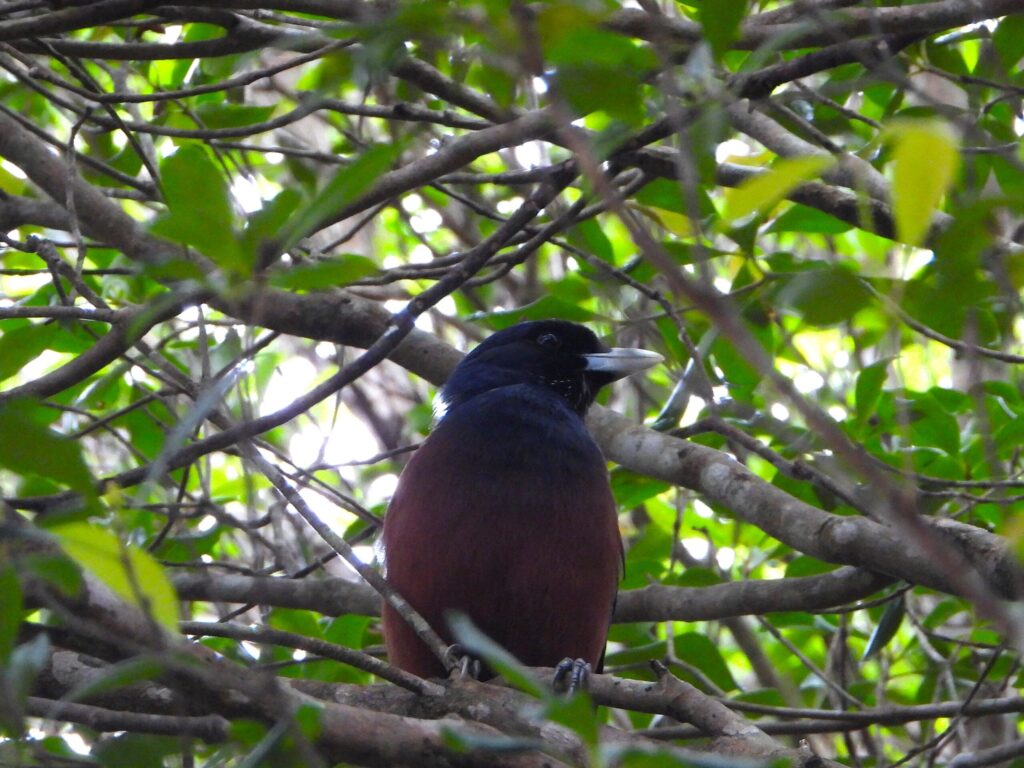
Lidth’s Jay, also known as the Amami Jay, is one of the most distinctive endemic birds of the Amami Islands.
Its deep blue wings and tail, black head, and chestnut-brown body make it easy to recognize when seen well. The species occurs naturally only on Amami Ōshima and Tokunoshima.
Unlike many of Amami’s nocturnal mammals, Lidth’s Jays are active during the day. They can be found in evergreen forests, forest edges, and sometimes around villages, making them one of the more realistic endemic species for visitors to see.
Their loud, harsh calls often reveal their presence before the bird itself becomes visible.
Viewing difficulty: Moderate
Early morning in quiet forested areas usually offers the best chance of an encounter.
▶ Lidth’s Jay – Full Species Guide
Amami Woodcock (Scolopax mira)
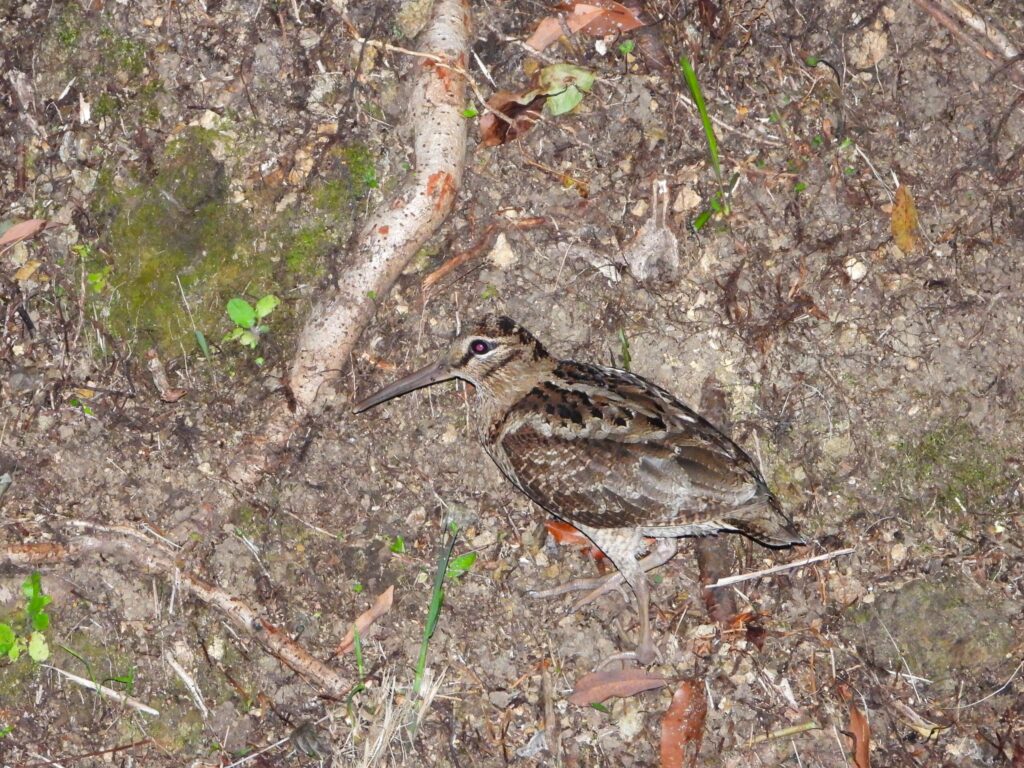
The Amami Woodcock is a rare forest bird found mainly on Amami Ōshima and Tokunoshima.
Its mottled brown plumage provides excellent camouflage against leaf litter, while its long bill is adapted for probing soft ground for earthworms and other invertebrates.
The species is mostly active from dusk through the night. On Amami Ōshima, it can sometimes be encountered on quiet forest roads or open ground after dark, where it may stand still rather than immediately flying away.
Viewing difficulty: Moderate to Difficult
It is much less predictable than Lidth’s Jay, but nighttime observation offers a realistic chance of seeing one.
Because Amami Woodcocks sometimes use roads at night, drive slowly and never approach or pressure a bird for a closer photograph.
▶ Amami Woodcock – Full Species Guide
Amami Ishikawa’s Frog (Odorrana splendida)
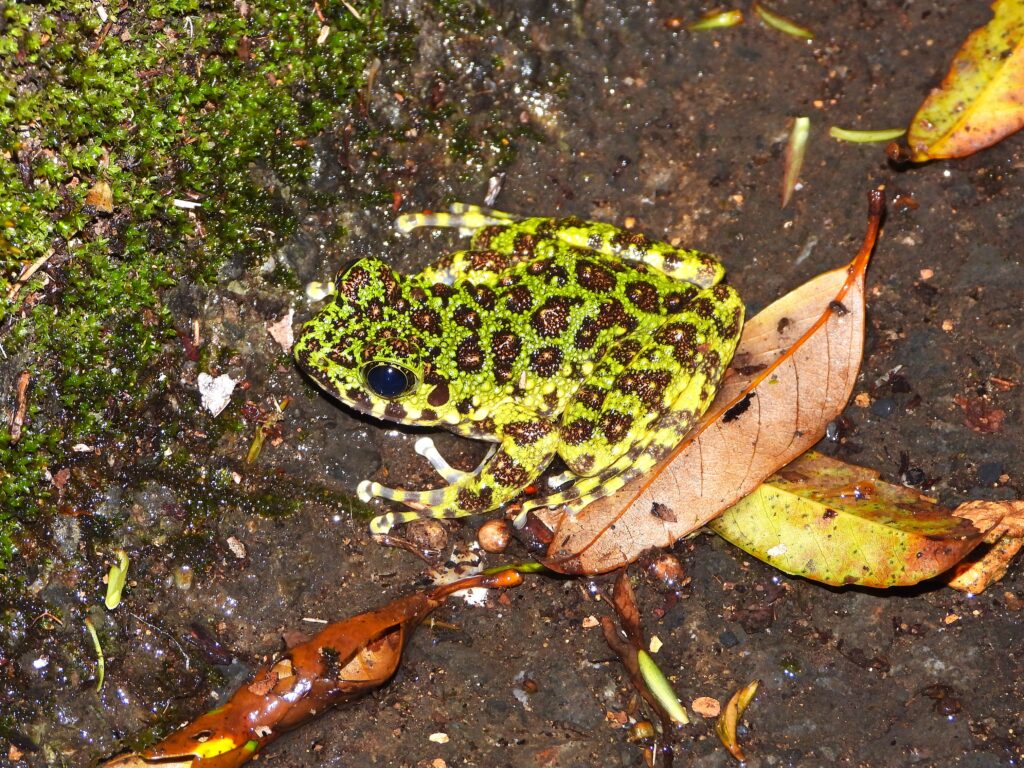
The Amami Ishikawa’s Frog is one of the most striking endemic amphibians of Amami Ōshima.
Its bright green body is covered with dark markings and golden spots, giving it an appearance unlike any other frog in Japan. The species is found only on Amami Ōshima and is listed as Endangered by Japan’s Ministry of the Environment.
It lives around clear mountain streams in subtropical evergreen forest and is mainly active at night. During the breeding season, its calls can sometimes be heard echoing along forest streams.
Viewing difficulty: Difficult
Even in suitable habitat, sightings are unpredictable. Listening for calls at night can be more realistic than trying to search visually for the frog.
▶ Amami Ishikawa Frog – Full Species Guide
Otton Frog (Babina subaspera)
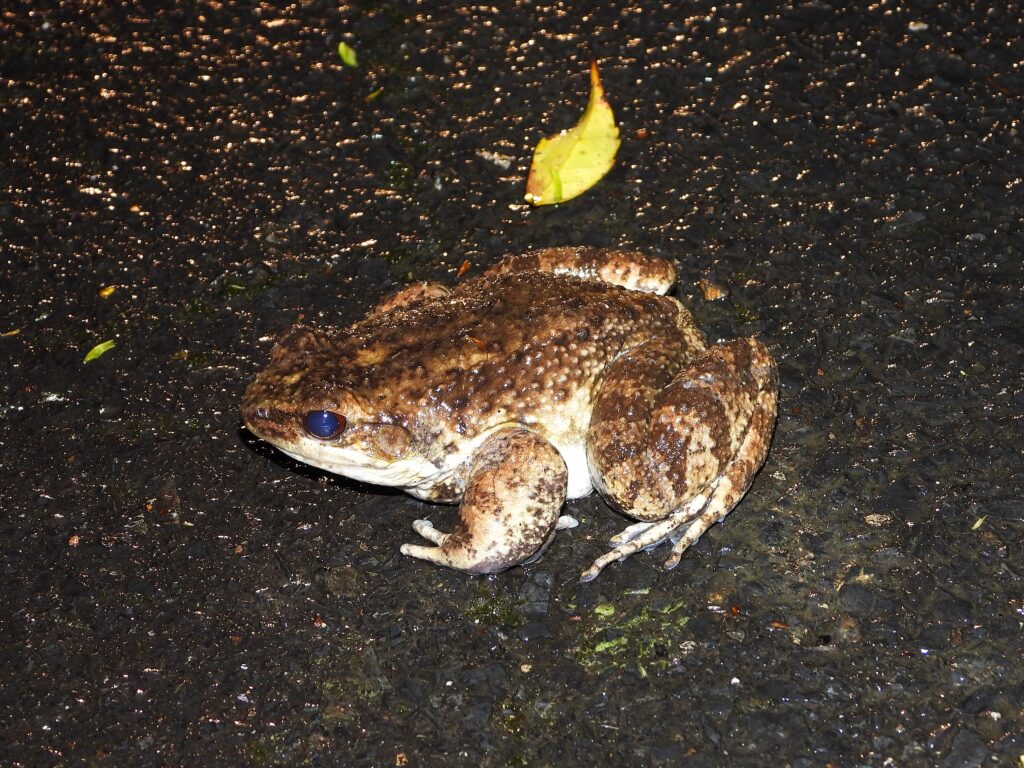
The Otton Frog is a large, heavy-bodied frog found only in the Amami Islands, including Amami Ōshima and nearby Kakeroma Island.
It lives in humid subtropical forest, especially around streams, wetlands, and damp forest floors. The species is mainly nocturnal and becomes more active during warm, wet conditions.
One of its most distinctive features is its large size and powerful build. Its deep calls can also make it easier to detect at night than some of Amami’s smaller frogs.
Viewing difficulty: Moderate
Nighttime after rain can offer a realistic chance of encountering one in suitable forest habitat.
Because the species is threatened and protected, it should only be observed from a distance and never handled. Japan’s Ministry of the Environment lists the Otton Frog among nationally protected endangered species.
▶ Otton Frog – Full Species Guide
Amami Tip-nosed Frog (Odorrana amamiensis)
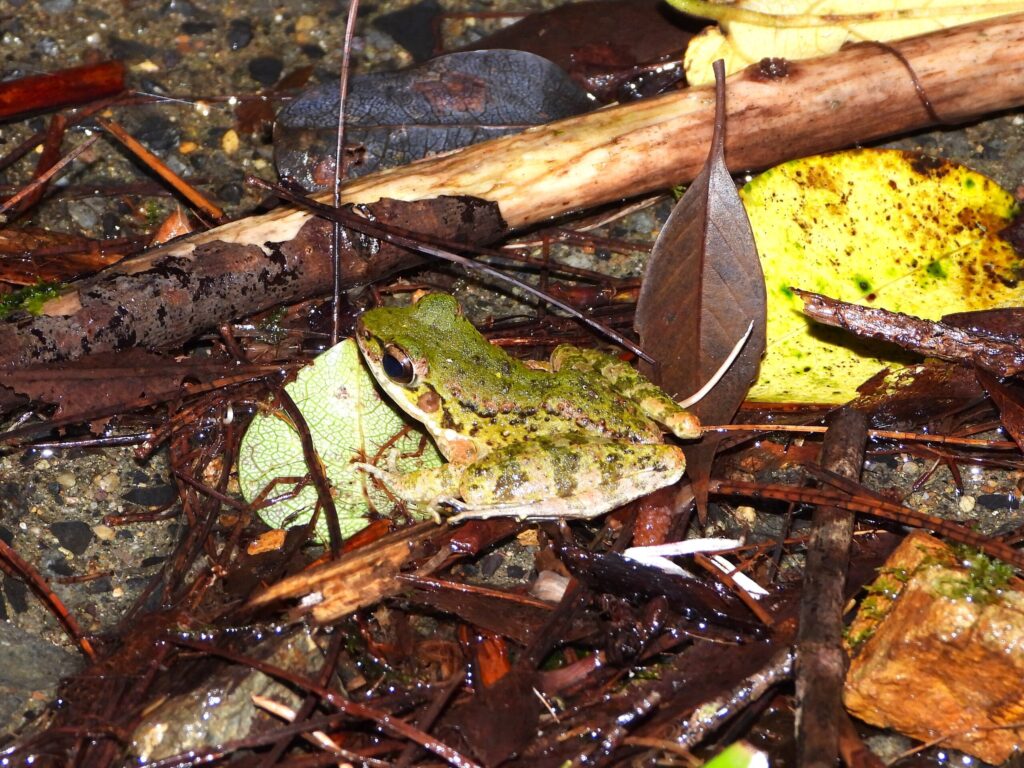
The Amami Tip-nosed Frog is a rare frog found only on Amami Ōshima and Tokunoshima. It lives in humid subtropical forest, especially around mountain streams and wet forest floors.
It has a slender body, long legs, and strong jumping ability, which helps it move quickly through rocky stream environments and dense vegetation. Japan’s Ministry of the Environment lists the species as threatened.
The species is mainly active at night and is easier to encounter during warm, wet conditions.
Viewing difficulty: Difficult
Even in suitable habitat, sightings are unpredictable, and the frog can disappear quickly into vegetation or along stream edges.
If you find one, observe it from a distance and avoid handling or disturbing the surrounding habitat.
Rare and Hard-to-See Endemic Species
Amami Spiny Rat (Tokudaia osimensis)
The Amami Spiny Rat is one of the rarest mammals on Amami Ōshima and is found nowhere else in the world.
It is a small nocturnal rodent covered with stiff, spine-like hairs mixed into its fur. The species lives in subtropical evergreen forest and is strongly associated with well-preserved native habitat. Japan’s Ministry of the Environment identifies it as endemic to Amami Ōshima.
The Amami Spiny Rat is extremely difficult to see in the wild. Unlike the Amami rabbit, it is not a species most visitors should realistically expect to encounter.
Viewing difficulty: Very Difficult
If you are lucky enough to see one, keep your distance and avoid disturbing it or its habitat.
Amami Thrush (Zoothera major)
The Amami Thrush is a rare thrush that breeds only on Amami Ōshima.
It prefers mature evergreen forest with a closed canopy and a damp forest floor. Its brown, heavily patterned plumage provides excellent camouflage among fallen leaves. (env.go.jp)
One of the best ways to detect the species is by sound. During the breeding season, males sing before sunrise, and their distinctive calls can carry through quiet forest.
The population has recovered substantially in recent decades, and Japan’s Ministry of the Environment completed its formal protection and recovery program in June 2026. Monitoring will continue to ensure the population remains stable. (kyushu.env.go.jp)
Viewing difficulty: Very Difficult
For most visitors, hearing an Amami Thrush is more realistic than getting a clear view of one.
Owston’s White-backed Woodpecker (Dendrocopos leucotos owstoni)
Owston’s White-backed Woodpecker is a distinctive subspecies found only on Amami Ōshima.
It depends heavily on mature evergreen broadleaf forest, where large old trees provide feeding and nesting habitat. Because of this close association with well-preserved forest, its presence is a strong sign of high-quality native woodland.
The bird spends much of its time on trunks and large branches, searching for insects beneath bark and in decaying wood.
Viewing difficulty: Very Difficult
It is much harder to find than Lidth’s Jay, and most visitors should not expect a sighting during a short trip. Quiet, mature forest offers the best chance of detecting one.
Where and When to See Endemic Wildlife on Amami
The best time and place to look for wildlife on Amami Ōshima depends on the species you want to see.
Nighttime for Mammals
Many of Amami’s most famous endemic mammals are nocturnal.
Species you may hope to encounter after dark include:
- Amami Rabbit
- Amami Spiny Rat
- Ryukyu Long-haired Rat
The Amami rabbit is the most realistic target for most wildlife travelers, while the island’s rare rodents are much harder to find.
Quiet forest roads can provide opportunities for nighttime observation, but wildlife should never be chased or surrounded with vehicles.
Some popular areas, including roads around the Santaro Line, have special nighttime wildlife-watching rules and may require advance reservations. Visitors unfamiliar with nighttime wildlife watching are encouraged to use a local ecotour guide.
Early Morning for Birds
Early morning is usually the best time to look for endemic forest birds.
Species to watch and listen for include:
- Lidth’s Jay
- Amami Thrush
- Owston’s White-backed Woodpecker
Lidth’s Jay is the most realistic of these for most visitors. The Amami Thrush and Owston’s White-backed Woodpecker are much more difficult and are often easier to detect by sound than by sight.
Warm, Wet Nights for Frogs
Rainy or humid nights can be especially good for Amami’s endemic amphibians.
Mountain streams and damp forest areas provide habitat for:
- Amami Ishikawa’s Frog
- Otton Frog
- Amami Tip-nosed Frog
Listening for calls is often more effective than actively searching through vegetation.
Wildlife activity changes with weather and season, so no species should ever be considered guaranteed.
Conservation of Amami’s Endemic Wildlife
Amami Ōshima is one of Japan’s greatest conservation success stories, but its endemic wildlife still faces serious threats.
One major turning point was the eradication of the small Indian mongoose. Mongooses were introduced to the island in 1979 but preyed on native animals instead of solving the problems they were intended to control.
After decades of intensive trapping and monitoring, Japan’s Ministry of the Environment officially declared the mongoose eradicated from Amami Ōshima in September 2024.
Native species including the Amami rabbit, Amami Woodcock, Otton Frog, and Amami Ishikawa’s Frog have shown signs of recovery as mongoose numbers declined.
However, important threats remain:
- Roadkill
- Feral and free-roaming cats
- Habitat disturbance
- Invasive species
- Disturbance from wildlife tourism
Road traffic is particularly important. In 2025, traffic collisions remained the most common identified cause of death among recovered Amami rabbits and Ryukyu long-haired rats on Amami Ōshima and Tokunoshima.
Protecting Amami’s wildlife therefore requires more than preserving forests. How visitors behave around animals also matters.
How to Watch Wildlife Responsibly on Amami
Seeing rare wildlife is one of the highlights of visiting Amami Ōshima, but observation should never come at the expense of the animals.
When watching wildlife:
- Keep a respectful distance
- Never touch or feed wild animals
- Do not chase animals for photographs
- Keep noise to a minimum
- Avoid repeatedly shining bright lights at animals
- Stay on roads and designated trails
- Drive slowly at night
- Watch carefully for small animals crossing roads
- Do not bring pets into sensitive wildlife-watching areas
Night driving requires particular care. Amami rabbits, frogs, newts, snakes, and other animals may suddenly appear on the road.
Around the Santaro Line, official nighttime observation rules ask drivers to travel very slowly, remain quiet around wildlife, limit the use of lights, and keep their distance from animals.
Roadkill remains a serious conservation issue on Amami, and the Ministry of the Environment continues to ask nighttime drivers to slow down and watch carefully for wildlife entering the road.
For visitors unfamiliar with Amami’s forests, joining a responsible local wildlife guide can also make observation safer while reducing unnecessary disturbance.
My Experience with Amami’s Endemic Wildlife
Seeing an Amami rabbit in the wild was one of my most memorable wildlife experiences in Japan.
During the day, Amami Ōshima already feels different from mainland Japan, with subtropical forest covering much of the landscape. But after dark, the character of the island changes completely.
Animals that remain hidden during the day begin to move through the forest, and even a brief encounter with an Amami rabbit makes it clear how unusual this ecosystem is.
What impressed me most was not simply seeing one famous animal. Amami supports endemic mammals, birds, frogs, and other wildlife within a relatively small island landscape.
For anyone interested in Japan’s rare native animals, Amami Ōshima is one of the most remarkable places in the country.
For a broader guide covering mammals, birds, amphibians, reptiles, and other wildlife found across the island: