Nara Park Deer Guide: Where to See Deer, Best Times & Safety

Nara Park is one of the easiest places in Japan to see wild sika deer up close.
More than 1,000 deer live in and around the park, and you can encounter them around lawns, temple approaches, wooded areas, and even roads used by visitors. Although many are accustomed to people, they are not pets or captive animals—they are wild deer.
What makes Nara unusual is how closely these wild deer live alongside people. You may see them resting beside walking paths, feeding on open lawns, or moving between temples, forests, and city streets.
This guide explains where to see deer in Nara Park, the best times to visit, what to expect in different seasons, and how to watch and photograph them safely.
Why Nara Park Is Special
Nara Park is not simply a place where deer happen to live. Deer have been closely connected with Nara for more than 1,000 years and have long been regarded as sacred messengers of the deities of Kasuga Taisha Shrine.
Today, the deer living in and around Nara Park are protected as a National Natural Monument of Japan. They are still wild animals, moving freely between lawns, forests, temple and shrine areas, and nearby streets.
What makes Nara unusual is this long coexistence between people and wild deer. You can watch deer grazing beside historic temples, resting near walking paths, or crossing roads in the middle of the city.
That combination of wildlife, history, and everyday human activity is what makes seeing deer in Nara different from almost anywhere else in Japan.
What Kind of Deer Live in Nara Park?
The deer in Nara Park are sika deer (Cervus nippon), the same species found in many parts of Japan.
Their appearance changes with the seasons. In summer, adults have a reddish-brown coat with distinct white spots. During winter, the coat becomes darker and thicker, and the spots become much less noticeable.
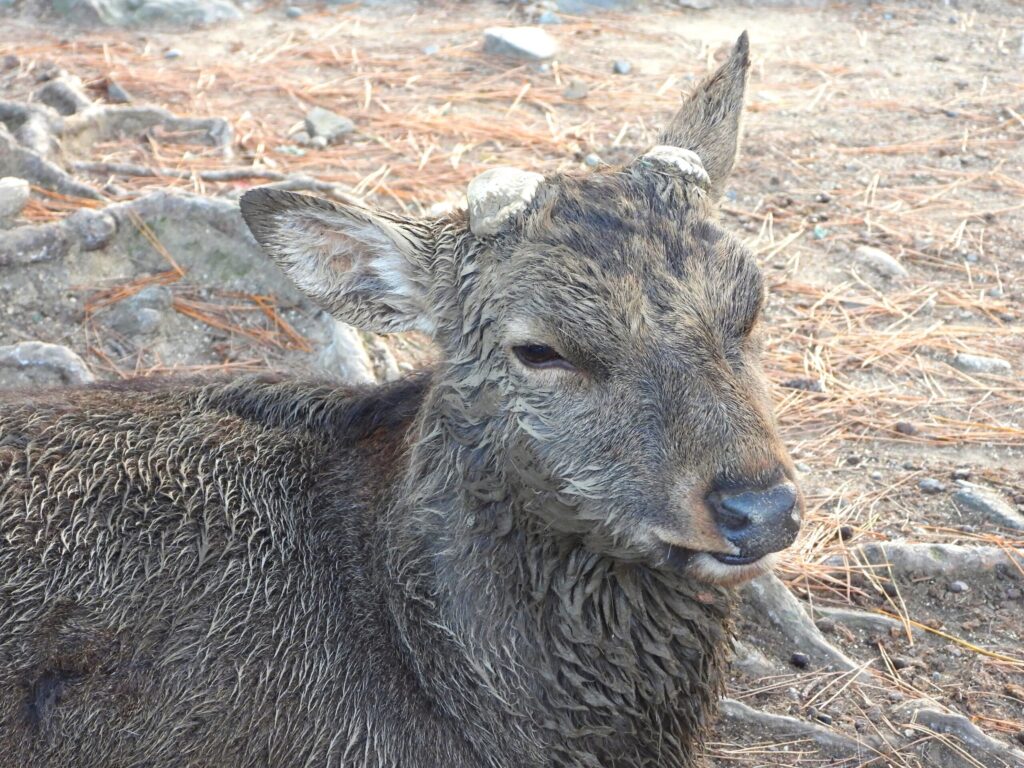
Adult males grow antlers, which are shed and regrown each year. During the autumn rut, males become more active, so it is especially important to give them plenty of space.
For more about their identification, habitat, diet, and behavior:
Are Nara Park Deer Really Wild?
Yes. The deer in Nara Park are wild animals, even though many are highly accustomed to people.
They are not kept in enclosures or managed like animals in a zoo. They move freely through the park, surrounding forests, temple and shrine grounds, and nearby streets.
Many deer have learned that people are a normal part of their environment, especially in busy areas where visitors are common. This is why some individuals may approach people closely or wait near places where deer crackers are sold.
However, being accustomed to humans does not mean they are tame. Their behavior can change quickly, especially when food is involved or during the breeding season.
The best way to experience Nara’s deer is to treat them as wildlife: watch their behavior, give them space, and let them move freely.
Best Places to See Deer in Nara Park
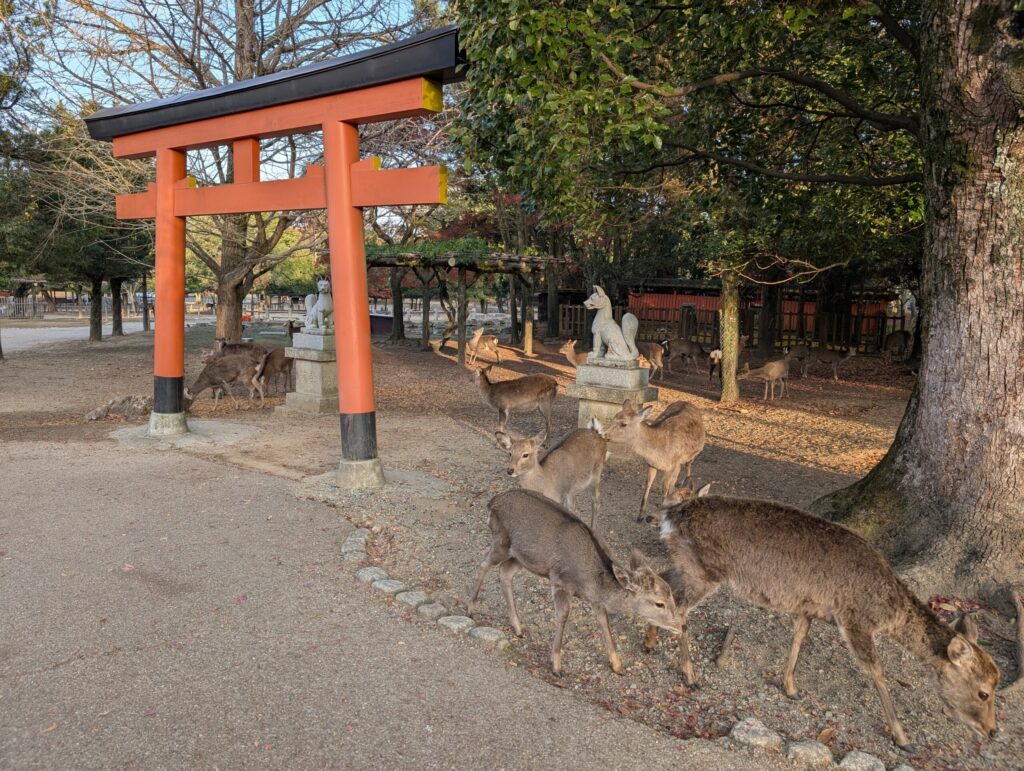
If this is your first visit to Nara Park, you do not need to search for one exact “deer spot.”
Deer move freely throughout the park, and the main areas below can all be visited while exploring Nara’s temples, shrines, and walking paths.
The best area depends on the kind of experience you want.
Tōdai-ji Area — Easiest for First-Time Visitors
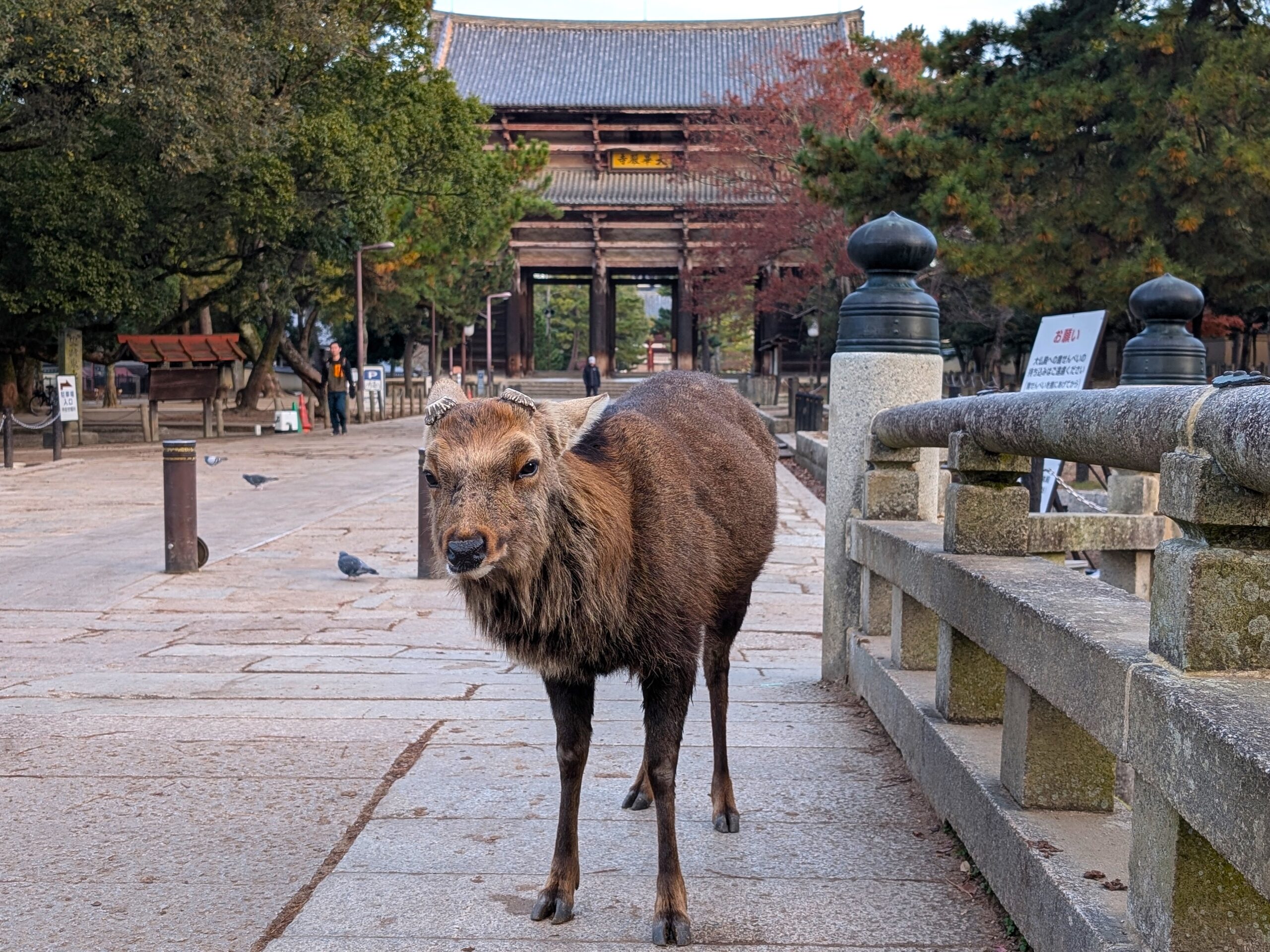
The area around Tōdai-ji Temple is one of the easiest places to see deer during a normal visit to Nara.
Deer are often found along the approaches, lawns, and open areas around the temple, including near the large Nandaimon Gate.
This is a good place to start if you are visiting Nara for the first time because you can see deer while also visiting one of the city’s most famous temples.
The area becomes busy during the day, so early morning is better if you want a quieter atmosphere or fewer people in your photographs.
Tobihino — Best for Open Grassland and Quiet Watching
Tobihino is a large grassy area near Kasuga Taisha and offers a very different experience from the busy temple approaches.
Because the landscape is open, it is easier to watch deer grazing, resting, and moving across the grass from a comfortable distance.
This is one of the better areas if you want to spend time observing deer rather than simply taking a quick photograph.
Morning is especially pleasant when the grassland is quieter.
Tobihino is also the location of the traditional Shikayose deer-calling event, which is held on selected dates.
Kasuga Taisha Approach — Best for Deer in a Forest Setting
The walk toward Kasuga Taisha is a good choice if you want to see deer in a more wooded environment.
Instead of wide lawns, you will find forest edges, shrine paths, and rows of stone lanterns.
Deer may appear beside the paths, rest among the trees, or move between the forest and more open areas.
For photographers, this area can provide a very different background from the open spaces around Tōdai-ji.
Quieter Areas of Nara Park — Best for Natural Behavior
You do not need to stay around the busiest tourist attractions.
Deer also use quieter lawns, forest edges, and walking paths throughout the wider park.
These areas can be especially interesting if you want to watch deer feeding, resting, or moving through the landscape without large crowds nearby.
One of the most interesting things about Nara is watching deer move freely between roads, lawns, tourist areas, and quieter vegetation.
Rather than rushing between specific “deer spots,” walk slowly through the park and pay attention to how the animals use different parts of the landscape.
Best Time to See Deer in Nara Park
Deer can be seen in Nara Park throughout the year, and during the daytime you may encounter them across much of the main park area.
However, the experience changes depending on both the time of day and the season.
Best Time of Day
Early morning is one of the best times to watch deer in Nara Park.
The park is much quieter before the main sightseeing crowds arrive, making it easier to watch deer grazing, resting, and moving between lawns, paths, and wooded areas.
Deer are active from around sunrise and spend much of the day moving between feeding and resting areas. Toward evening, some begin moving back toward wooded areas where they spend the night.
If photography or quiet wildlife watching is your priority, early morning is the best choice. If you simply want to see deer during a normal sightseeing visit, daytime is also fine.
Best Season
There is no single best season because Nara’s deer can be seen year-round.
Late spring to early summer is the fawning season. Most fawns are born from mid-May through July. If you see a fawn, keep your distance because females can become very protective of their young.
Summer is when the deer show their reddish-brown coats with clear white spots. Hot weather can make the middle of the day less comfortable for wildlife watching.
Autumn is the rutting season. Adult males become more active and can behave more aggressively, so give them extra space even if they appear calm.
Winter offers a quieter atmosphere and deer in their darker winter coats. Cold mornings can be especially peaceful if you do not mind the temperature.
For most first-time visitors, early morning offers the best balance of fewer people, better photography conditions, and more relaxed deer watching.
Photography and Observation Tips
Nara Park is one of the easiest places in Japan to photograph sika deer, but the best photographs often come from watching their natural behavior rather than trying to get as close as possible.
Visit Early
Early morning gives you the best combination of softer light, fewer visitors, and quieter deer-watching conditions.
Around Tōdai-ji and other popular areas, backgrounds can become crowded later in the day. If photography is important to you, arriving before the main sightseeing crowds makes a noticeable difference.
Give the Deer Space
You do not need to stand directly beside a deer to get a good photograph.
Step back and watch what the animal is doing. Deer feeding on grass, resting beneath trees, or walking through the park often make more interesting photographs than a close-up of a deer approaching for food.
A longer focal length is useful if you want to photograph natural behavior without getting too close.
Use the Landscape
Nara is not only about photographing the deer themselves.
Tōdai-ji, stone lanterns near Kasuga Taisha, open grassland at Tobihino, and forest edges can all help show what makes Nara’s deer different from deer seen elsewhere in Japan.
Try including some of the surrounding landscape rather than filling every photograph with the animal.
Do Not Use Food to Create a Photograph
Do not hold deer crackers above a deer, make it wait for food, or use food to force an animal into a particular position for a photograph.
If you choose to feed a deer, give the cracker promptly and then continue watching from a respectful distance.
In my experience, simply slowing down and watching the deer move through the park naturally is much more rewarding than trying to control the encounter.
Are Nara Park Deer Dangerous?
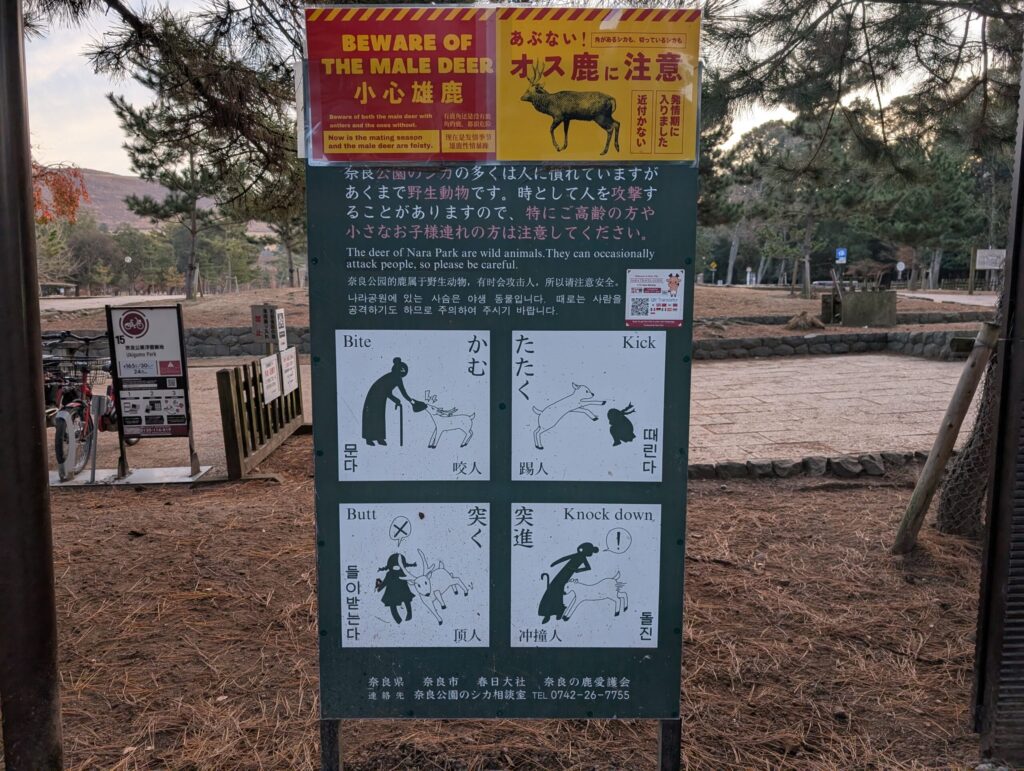
Nara’s deer are accustomed to people, but they are still wild animals and can sometimes injure visitors.
Most encounters are peaceful, but deer can bite, kick, charge, or use their antlers if they feel threatened or become excited around food.
A little caution is especially important when you are standing close to several deer at once.
Be Extra Careful in Spring and Autumn
Spring and autumn require more caution than usual.
In spring, female deer with young fawns can become protective if people approach too closely.
In autumn, adult males enter the rutting season and may behave more aggressively or unpredictably. Give males plenty of space, even if they appear calm.
Never approach a fawn, stand between a mother and her young, or try to touch a deer.
Feed Deer Crackers Carefully
If you want to feed the deer, use only the official deer crackers sold around Nara Park.
Once you show a deer that you have food, give the cracker promptly. Do not hold it out of reach or tease the deer while trying to take photographs.
Several deer may gather quickly when they notice food, so pay attention to the animals around you as well as the one directly in front of you.
Do not give deer bread, snacks, vegetables, or other human food.
Keep Children Close
Young children should not approach deer alone.
Even a calm deer is large enough to knock over or frighten a small child, especially when food is involved.
Stay beside children and give the deer enough room to move away.
Watch Your Belongings
Deer sometimes investigate bags, maps, paper, and other objects that visitors are carrying.
Keep food and loose items inside your bag, and do not allow deer to chew plastic or paper.
Watch for Deer on Roads
Deer move freely across roads as well as walking paths in and around Nara Park.
If you are driving or cycling, slow down and be prepared for a deer to step into the road unexpectedly.
As a pedestrian, avoid encouraging deer to remain in the road for photographs or food.
Do Not Chase or Disturb the Deer
Do not chase, hit, ride, surround, or intentionally frighten a deer.
Take your rubbish with you and never leave plastic bags or food packaging where deer may eat them.
The simplest rule is to treat Nara’s deer as wildlife, even when they are standing only a few steps away.
FAQ – Nara Park Deer
Where is the best place to see deer in Nara Park?
Deer can be seen throughout much of Nara Park.
For first-time visitors, the area around Tōdai-ji is one of the easiest places to start. Tobihino is better for watching deer in open grassland, while the approach to Kasuga Taisha offers a more wooded setting.
What is the best time to see deer in Nara Park?
Deer can be seen throughout the day, but early morning is best if you want fewer people and a quieter wildlife-watching experience.
It is also a good time for photography around popular areas before the main sightseeing crowds arrive.
Are Nara Park deer really wild?
Yes. The deer are wild animals, even though many are highly accustomed to people.
They are not kept in enclosures and move freely through the park, surrounding forests, temple and shrine areas, and nearby streets.
Can I feed the deer in Nara Park?
Yes, but only feed them the official deer crackers sold around the park.
Do not give deer bread, snacks, vegetables, or other human food. Once you show a deer that you have a cracker, give it promptly rather than teasing the animal.
Are the deer dangerous?
Most encounters are peaceful, but deer can bite, kick, charge, or knock people down.
Take extra care around females with young in spring and adult males during the autumn rut. Children should not approach deer alone.
Why do some Nara deer have no antlers?
Male sika deer naturally shed and regrow their antlers each year.
In Nara, some males also have their antlers cut during a traditional autumn event intended to reduce injuries to people and other deer.
Conclusion
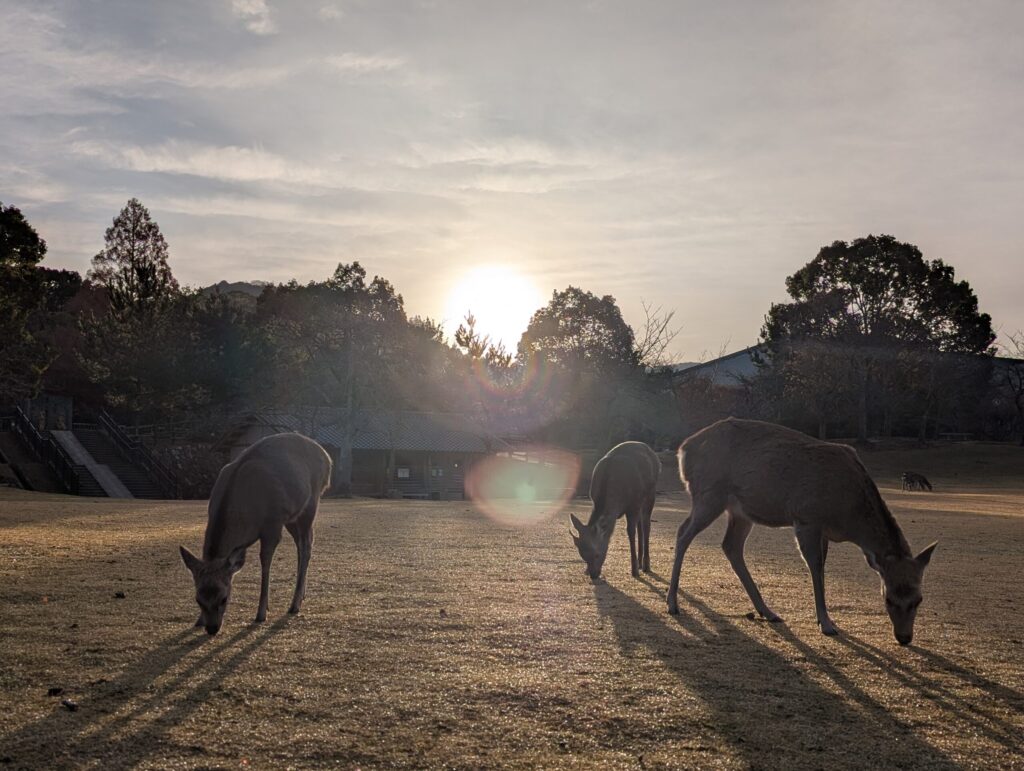
Nara Park is much more than a place to take a close-up photo with a deer.
The most interesting part is watching wild sika deer live alongside people while still moving freely between grasslands, forests, temples, shrines, and city streets.
If you simply want to see deer, you can find them throughout much of the park during the day. But if you want a quieter experience and more natural behavior, I recommend visiting early in the morning and spending some time away from the busiest areas.
Give the deer space, pay attention to their behavior, and remember that even the most approachable individuals are still wild animals.
If you are deciding between Nara and other deer-watching destinations in Japan:
▶ Best Places to See Sika Deer in Japan