Where to See Red-crowned Cranes in Hokkaido
If you want to see Red-crowned Cranes in Japan, the best place to start is eastern Hokkaido, especially around Kushiro and Tsurui Village.
Hokkaido is a large island, but several of the best-known crane-watching sites are clustered around this part of eastern Hokkaido.
For most international visitors, staying in Kushiro and making a day trip to Tsurui is one of the easiest ways to plan a crane-watching trip.
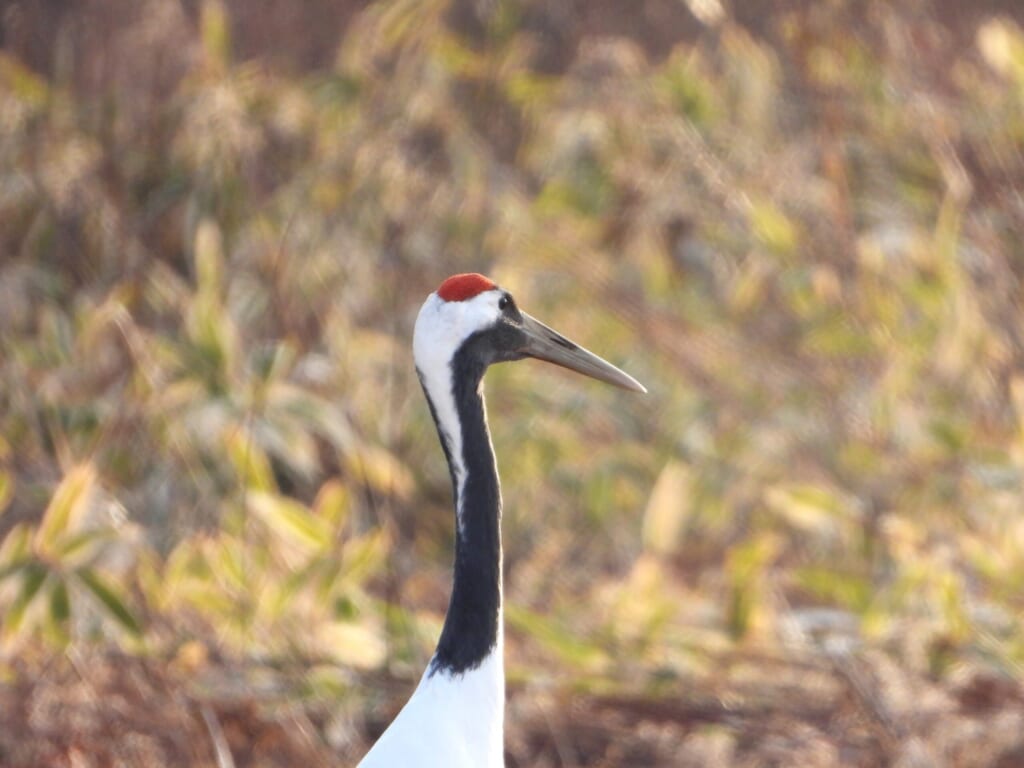
Red-crowned Cranes (Grus japonensis), known as tancho in Japan, live in eastern Hokkaido throughout the year.
Winter, however, is usually the easiest season for visitors because wild cranes gather at traditional wintering and supplementary feeding areas.
At Tsurui-Ito Tancho Sanctuary, for example, the best viewing period is generally from late November to mid-March.
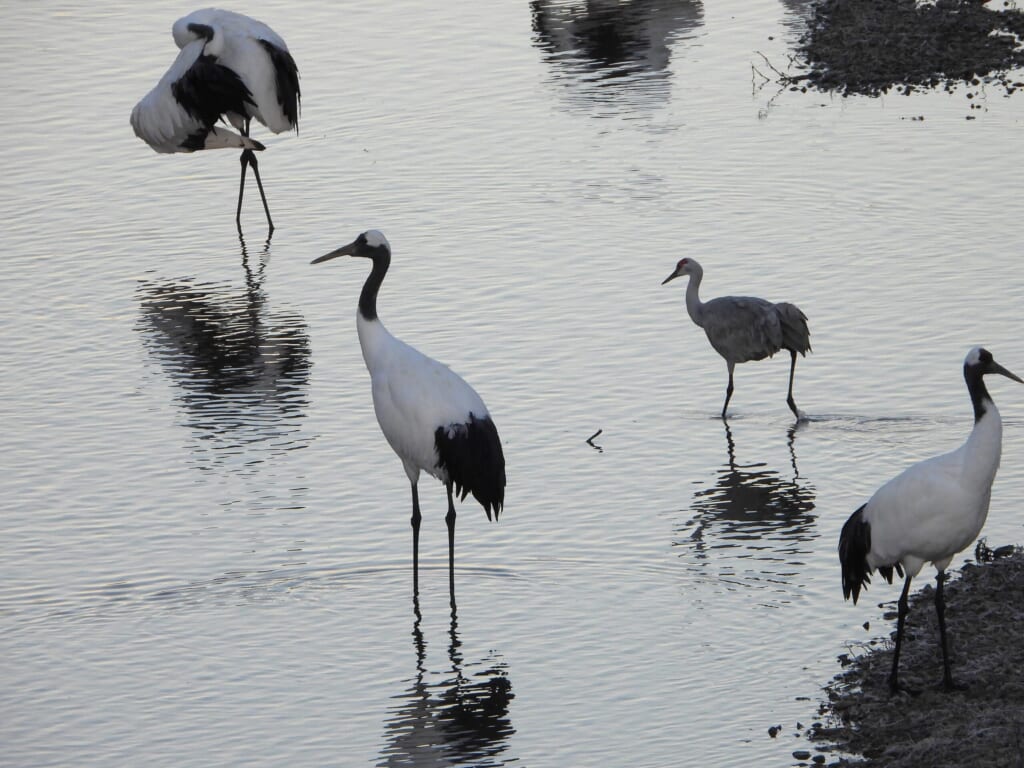
I have also seen wild Red-crowned Cranes in Hokkaido myself, including groups of cranes together.
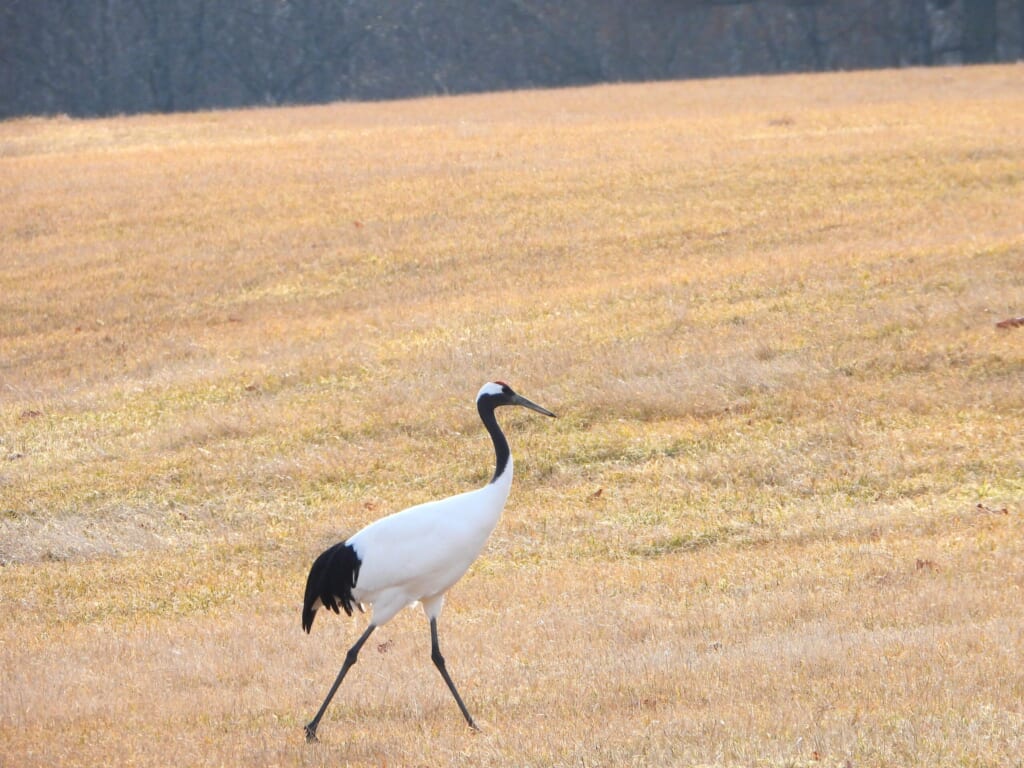
When I visited, there was actually no snow on the ground. Many famous photographs show Red-crowned Cranes surrounded by deep snow, but you do not need snowy conditions to see these birds in Hokkaido.
The important thing is that not every crane-watching site offers the same experience.
Some places are best for seeing wild cranes in winter. Others are better for photography, exploring their natural wetland habitat, or seeing the species outside the main winter season.
Here are the places I would consider first.
▶Red-crowned Crane in Japan: Identification, Habitat & Behavior
Best Places to See Red-crowned Cranes in Hokkaido

1. Tsurui-Ito Tancho Sanctuary
Best for: First-time visitors who want to see wild cranes in winter
Tsurui-Ito Tancho Sanctuary is in Tsurui Village, northwest of Kushiro.
Managed by the Wild Bird Society of Japan, it is an important Red-crowned Crane conservation site.
The cranes gathering here in winter are wild birds, not captive cranes.
Although the viewing area can be accessed throughout the year, cranes are much less likely to approach it during the warmer months.
The best viewing period is generally from late November to mid-March.
During winter, wild cranes gather in the open area in front of the sanctuary.
There is also a Nature Center where visitors can learn more about Red-crowned Cranes and their conservation. Opening days and hours can change, so check the official sanctuary website before visiting.
This is one of the easiest places for a first-time visitor to spend time watching wild cranes.
It is especially suitable if you want to:
- watch wild Red-crowned Cranes for more than a quick stop
- observe their behavior
- learn more about crane conservation in Hokkaido
The sanctuary can also be reached by public transport from Kushiro, although bus timetables should always be checked before traveling.
One thing to remember is that supplementary feeding schedules can change.
Feeding has played an important role in crane conservation, but efforts are also being made to reduce the concentration of cranes at individual feeding sites.
Do not build your entire trip around an old feeding time found in a travel article. Check the latest local information before you go.
2. Tsurumidai
Best for: Easy wild crane watching and visitors without a car
Tsurumidai is another major winter crane-watching site in Tsurui Village.
Wild Red-crowned Cranes gather here during the colder months.
Compared with the sanctuary, Tsurumidai is a simpler roadside crane-watching stop.
The landscape is open, making the cranes relatively easy to spot, and it is a convenient place to use binoculars or a telephoto lens.
It is also one of the easiest crane-watching locations to visit without renting a car.
Buses connect Kushiro with Tsurumidai, although you should check the latest timetable before traveling.
Tsurumidai is also very close to the other main crane-watching sites in Tsurui.
It is about 7 km from Tsurui-Ito Tancho Sanctuary and only about 2.5 km from Otowa Bridge.
That makes it easy to combine several crane-watching locations in a single day.
3. Otowa Bridge
Best for: Sunrise photography and cranes at their winter roost
Otowa Bridge is quite different from Tsurumidai and Tsurui-Ito Tancho Sanctuary.
You do not come here primarily to watch cranes feeding in an open field.
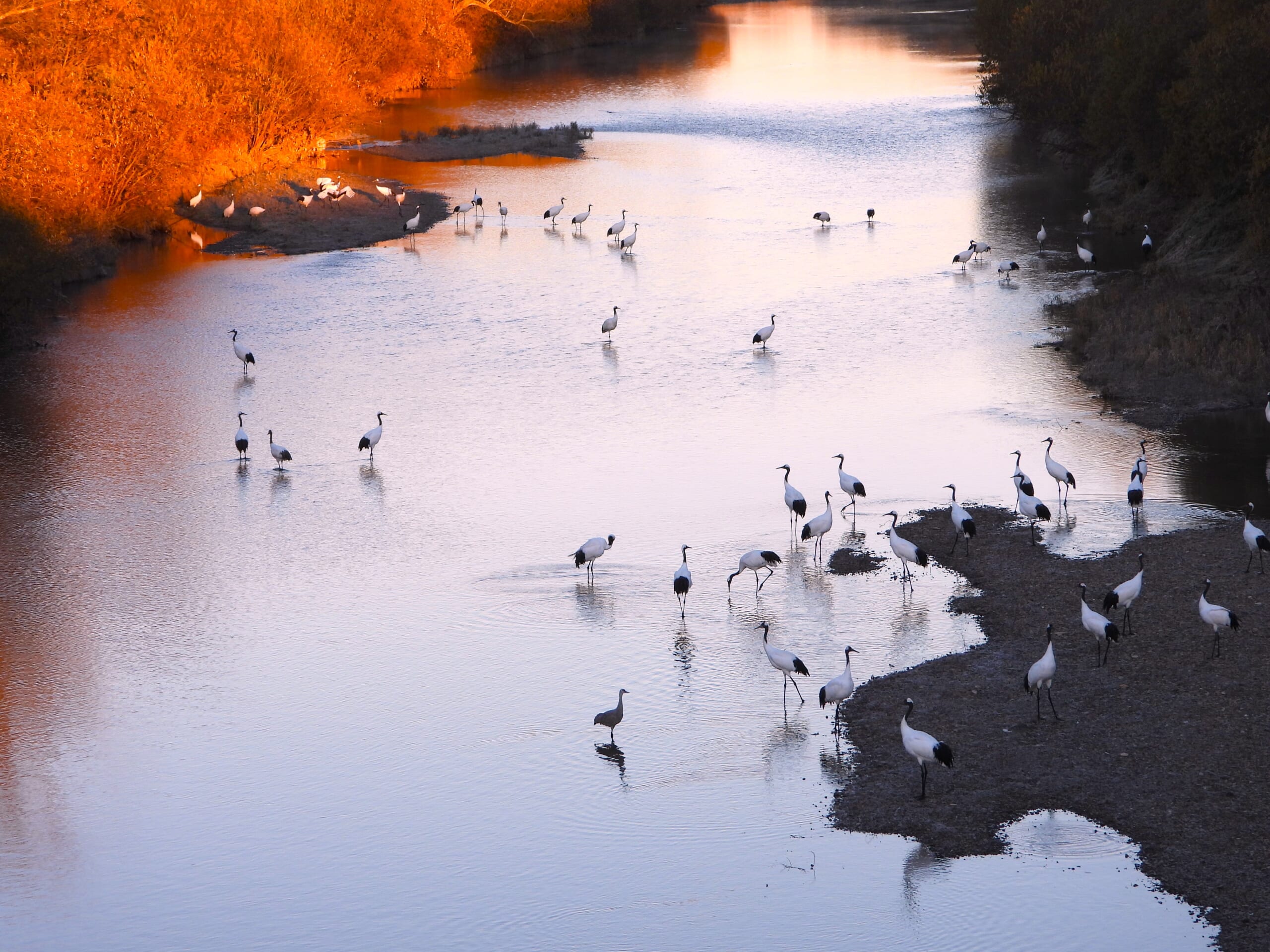
Instead, Otowa Bridge overlooks a river used by Red-crowned Cranes as a winter roost.
The classic experience is around sunrise.
On very cold mornings, mist can rise from the river while cranes remain at the roost.
Frost, river mist and the first light of morning can create some of the most memorable Red-crowned Crane scenes in Hokkaido.
Photographers often arrive before dawn.
However, I would not choose Otowa Bridge as your only crane-watching stop if this is your first visit.
The cranes are viewed from a distance, and much of the attraction is the combination of cranes, river and winter atmosphere.
If your priority is simply to get a good look at wild Red-crowned Cranes, combine Otowa Bridge with Tsurumidai or Tsurui-Ito Tancho Sanctuary later in the morning.
Otowa Bridge also has specific observation and photography rules.
Use the designated viewing area and avoid disturbing the cranes at their roost.
4. Kushiro Marsh
Best for: Looking for cranes in their natural wetland habitat
Kushiro Marsh offers a completely different crane-watching experience.
This is not a feeding station where cranes gather in one predictable field.
It is a vast wetland where Red-crowned Cranes actually live throughout the year.
That also means you should not expect to arrive at one viewpoint and immediately find a crane.
If your only goal is to see Red-crowned Cranes during a short winter trip, Tsurui is easier.
But if you want to understand the environment these birds live in — and spend time looking for wildlife rather than simply visiting a viewing site — Kushiro Marsh is well worth adding.
The northeastern part of the wetland is one area where Red-crowned Cranes are particularly worth looking for, including around Kottaro Wetland Observatory.
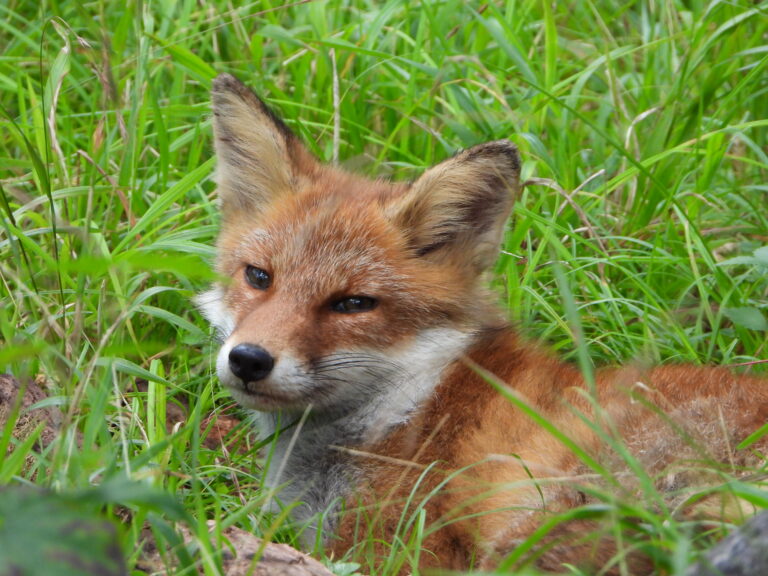
The marsh is also home to other Hokkaido wildlife such as White-tailed Eagles, Ezo Deer and red foxes.
For a shorter stop after visiting the Tsurui crane sites, Onnenai is another convenient option.
The Onnenai area has boardwalks through several types of wetland habitat and is about 15 km from Tsurui-Ito Tancho Sanctuary.
I would think of Onnenai primarily as a place to experience Kushiro Marsh rather than somewhere you are guaranteed to see cranes.
5. Akan International Crane Center [GRUS]
Best for: Learning about Red-crowned Cranes and visiting outside winter
Akan International Crane Center, usually called GRUS, is a research, conservation and education facility dedicated to cranes.
Red-crowned Cranes kept in its outdoor enclosure can be observed throughout the year.
During winter, wild cranes may also visit the surrounding biotope.
This makes GRUS useful if:
- you are visiting outside the main winter crane-watching season
- you want to learn more about crane biology and conservation
- you want a reliable opportunity to see a Red-crowned Crane
It is important, however, to distinguish this from the experience at Tsurui.
At Tsurui-Ito Tancho Sanctuary and Tsurumidai, you are watching wild cranes gathering at winter feeding areas.
At GRUS, you can also see cranes kept by the facility.
For the latest visitor information, check the official Akan International Crane Center website before your trip.
6. Kushiro City Tancho Crane Nature Park
Best for: Year-round viewing and travelers with limited time
Kushiro City Tancho Crane Nature Park is another place where Red-crowned Cranes can be seen throughout the year.
Unlike the winter gathering sites in Tsurui, the cranes here are protected and managed within the facility.
For a wildlife-focused trip, I would still prioritize Tsurui and Kushiro Marsh.
But the park can be useful if you are visiting outside winter, have limited time, or simply want another opportunity to see the species.
Which Crane-Watching Site Should You Choose?
If all of these place names are new to you, this is the simplest way to decide.
First time seeing wild Red-crowned Cranes
→ Tsurui-Ito Tancho Sanctuary or Tsurumidai
Want to see winter gatherings of wild cranes
→ Tsurui Village
Want sunrise, river mist and photography
→ Otowa Bridge
Want to look for cranes in natural wetland habitat
→ Kushiro Marsh
Visiting outside winter
→ Akan International Crane Center or Kushiro City Tancho Crane Nature Park
Do not want to rent a car
→ Tsurumidai is one of the easiest options
For a first winter trip, I would use Kushiro as a base and spend one day around Tsurui.
You do not need several days just to visit the main crane-watching sites.
A One-Day Red-crowned Crane Route from Kushiro
If you have a rental car, the main crane-watching sites around Tsurui can comfortably be combined in one day.
A practical winter route is:
Early morning: Otowa Bridge
Start around sunrise to watch cranes at their river roost.
Morning: Tsurumidai
After the cranes begin leaving the roost, continue to Tsurumidai.
Late morning to early afternoon: Tsurui-Ito Tancho Sanctuary
Spend some time watching the cranes and visit the Nature Center if it is open.
The distances between the main Tsurui sites are short.
Otowa Bridge is only about 2.5 km from Tsurumidai, while both are a short drive from Tsurui-Ito Tancho Sanctuary.
Afternoon: Onnenai, Kushiro Marsh
If you still have time, continue to Onnenai for a walk through the wetland environment.
This gives you two very different experiences in one day: concentrated winter crane watching around Tsurui and the wider natural landscape of Kushiro Marsh.
Winter conditions always come first, however.
Snow, ice and poor visibility can make driving slower than expected, so keep your itinerary flexible.
Best Time to See Red-crowned Cranes in Hokkaido
Winter Is the Easiest Season
Red-crowned Cranes can be seen in eastern Hokkaido throughout the year.
For a first-time visitor, however, winter is usually the easiest season.
At Tsurui-Ito Tancho Sanctuary, late November to mid-March is generally the best viewing period.
Tsurumidai also attracts cranes during the colder months.
Winter gives you the chance to see cranes against snow-covered landscapes — the scene many travelers associate with Red-crowned Cranes in Hokkaido.
But snow is not essential.
When I visited Hokkaido and saw wild Red-crowned Cranes, there was no snow on the ground.
The cranes were still easy to appreciate in the open landscape, and seeing several together was impressive even without the classic snowy background.
February Is Excellent for Courtship Displays
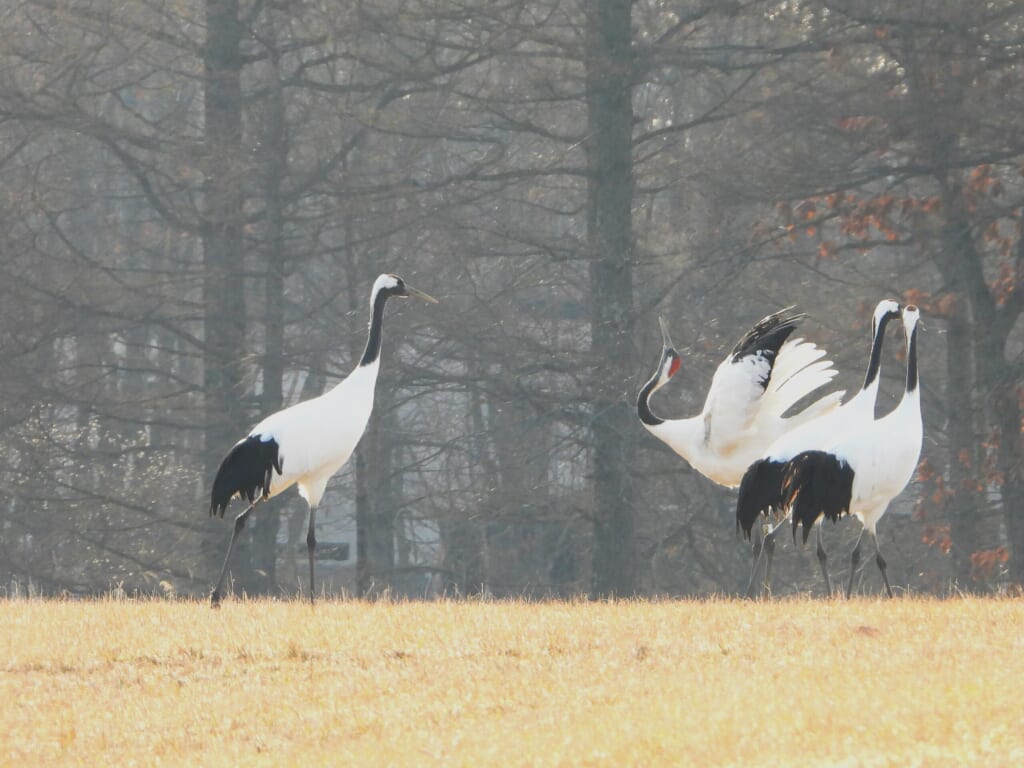
If you also hope to see courtship behavior, February is a particularly interesting time to visit.
Red-crowned Cranes may bow, call together, spread their wings and leap into the air during their displays.
February is one of the best times to look for this behavior around the wintering areas.
Of course, these are wild birds.
Going in February does not mean you are guaranteed to see a dance.
Can You See Red-crowned Cranes in Summer?
Yes.
The Hokkaido population is resident, so the cranes do not simply arrive for winter and leave again in spring.
They live in eastern Hokkaido throughout the year.
The difference is that they are much more dispersed during the warmer months.
You will not have the same concentration of birds around the winter feeding grounds, so finding wild cranes can take more time.
If simply seeing a Red-crowned Crane is your top priority outside winter, Akan International Crane Center or Kushiro City Tancho Crane Nature Park provides a more reliable option.
Should You Stay in Kushiro?
For most international visitors, Kushiro is the easiest base.
From Kushiro, you can travel to:
- Tsurui Village
- Kushiro Marsh
- Akan
- other wildlife areas in eastern Hokkaido
A rental car gives you much more flexibility, especially if you want to visit several wildlife locations.
But do not underestimate winter driving.
Roads in eastern Hokkaido can be covered with packed snow and ice.
If you have little or no experience driving in those conditions, I would not rent a car simply because it looks more convenient.
Tsurumidai and Tsurui can also be reached by public transport, although bus schedules should always be checked before traveling.
A local wildlife tour is another option if you want to avoid driving.
If you prefer not to drive on winter roads, joining a guided tour can be an easier way to explore the Kushiro and Tsurui area.
My Experience Seeing Red-crowned Cranes in Hokkaido
I have seen wild Red-crowned Cranes in Hokkaido myself, including groups of cranes together.
When I visited, there was no snow on the ground.
That was actually a useful reminder that the famous snowy photographs show only one side of Red-crowned Crane watching in Hokkaido.
You do not need deep snow to enjoy seeing these birds.
Seeing several of these large cranes together in the open landscape was impressive on its own.
Their calls also carried surprisingly far.
Hokkaido is one of my favorite places in Japan for wildlife watching because a crane trip can easily be combined with other species.
I have also seen Steller’s Sea Eagles, White-tailed Eagles and Ezo Deer in Hokkaido.
If wildlife is the main purpose of your trip, I would not treat Red-crowned Cranes as an isolated attraction.
Build them into a wider eastern Hokkaido wildlife itinerary.
Crane-Watching and Photography Etiquette
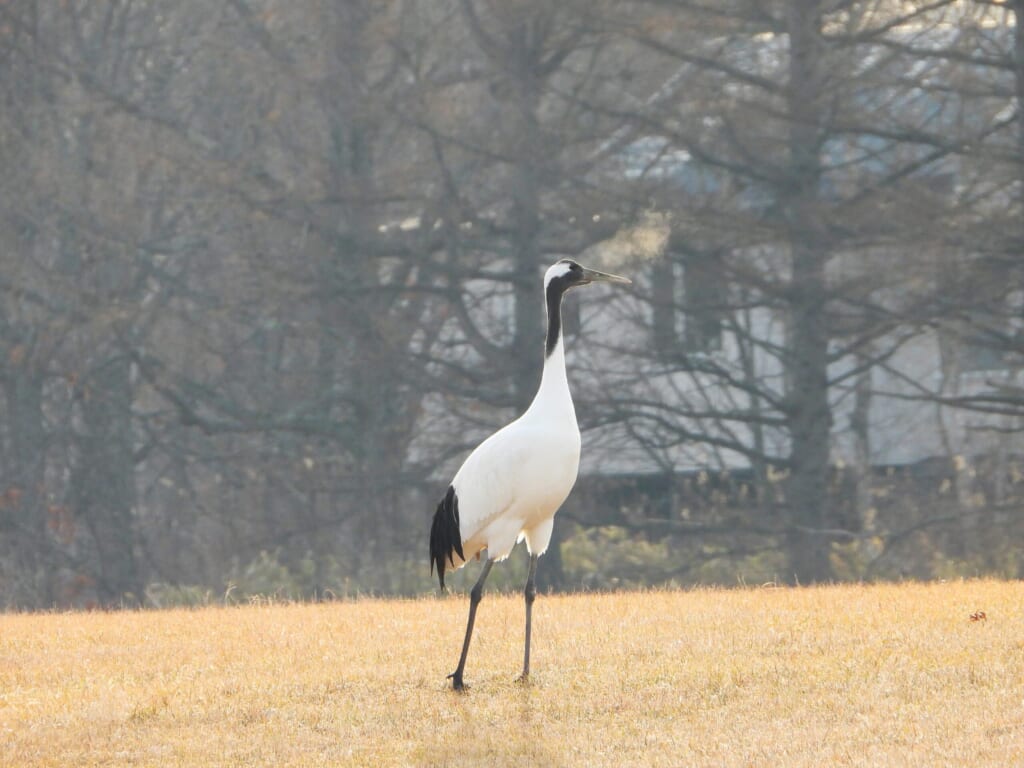
Red-crowned Cranes are large and often easy to see, but they are still wild animals.
Do not move closer simply because you want a better photograph.
Tsurui Village has established local rules for crane observation and photography, including specific guidance for Otowa Bridge.
In particular:
- stay out of restricted areas and private property
- do not feed the cranes yourself
- do not use flash
- do not fly drones near the cranes
- use designated parking areas
- keep noise to a minimum
- do not approach roosting or breeding birds
- follow any additional rules posted at each observation site
If a crane changes its behavior because of your presence, you are already too close.
The opportunity to watch wild Red-crowned Cranes in Hokkaido exists because of long-term conservation work and cooperation with local communities.
Respecting that environment is part of wildlife watching.
Other Wildlife to See in Eastern Hokkaido
If you are already traveling to eastern Hokkaido in winter, Red-crowned Cranes are only part of what you can see.
Depending on where you travel, you may also find:
- Steller’s Sea Eagle
- White-tailed Eagle
- Ezo Red Fox
- Ezo Deer
Kushiro Marsh itself supports White-tailed Eagles, deer and red foxes, while Steller’s Sea Eagles are another major winter highlight of eastern Hokkaido.
▶Where to See Steller’s Sea Eagles and White-tailed Eagles in Hokkaido
FAQ
Where is the best place to see Red-crowned Cranes in Hokkaido?
For a first winter visit, Tsurui Village is one of the easiest areas to plan around.
Tsurui-Ito Tancho Sanctuary and Tsurumidai are the two places I would consider first if your priority is seeing wild cranes.
What is the best month to see Red-crowned Cranes?
December through February is an excellent period for a first visit.
The cranes gather around wintering and feeding areas, and snow is more likely to give you the classic Hokkaido winter scenery.
February is also particularly good if you hope to see courtship displays.
Are the cranes at Tsurui wild?
Yes.
The cranes visiting Tsurui-Ito Tancho Sanctuary and Tsurumidai are wild Red-crowned Cranes living in eastern Hokkaido.
They gather around supplementary feeding sites during winter.
Can I see Red-crowned Cranes without renting a car?
Yes.
Tsurumidai and Tsurui can be reached by public transport.
A car is more convenient if you want to visit Otowa Bridge, several crane sites and Kushiro Marsh in the same day.
Always check the latest bus timetable before traveling.
Can I see Red-crowned Cranes in summer?
Yes, but wild cranes are more dispersed than in winter.
For wild crane watching, you will need to look around their natural habitat in eastern Hokkaido.
If simply seeing the species is the priority, the crane facilities at Akan or Kushiro are easier year-round options.
Can I visit the main crane sites in one day?
Yes.
Otowa Bridge, Tsurumidai and Tsurui-Ito Tancho Sanctuary are close together and can comfortably be combined in one day by car.
If conditions are good and you still have time, you can also add Onnenai on the western side of Kushiro Marsh.
Final Thoughts
If you want to see wild Red-crowned Cranes in Hokkaido, start with Kushiro and Tsurui in eastern Hokkaido.
For a first winter visit, I would prioritize:
Tsurui-Ito Tancho Sanctuary
or
Tsurumidai
Add Otowa Bridge if you want the classic early-morning winter scenery.
Add Kushiro Marsh if you want to see the landscape where Red-crowned Cranes actually live rather than only visiting winter gathering sites.
And you do not need several days just for the main Tsurui crane sites.
They are close enough to combine into a single day, making Red-crowned Crane watching easy to include in a wider eastern Hokkaido wildlife trip.
I have seen wild Red-crowned Cranes in Hokkaido myself, and even without snow on the ground, seeing a group of these birds in the open landscape was one of the wildlife experiences I remember from eastern Hokkaido.