
Japanese Black Bear (Ursus thibetanus japonicus) – Wildlife of Japan
Introduction
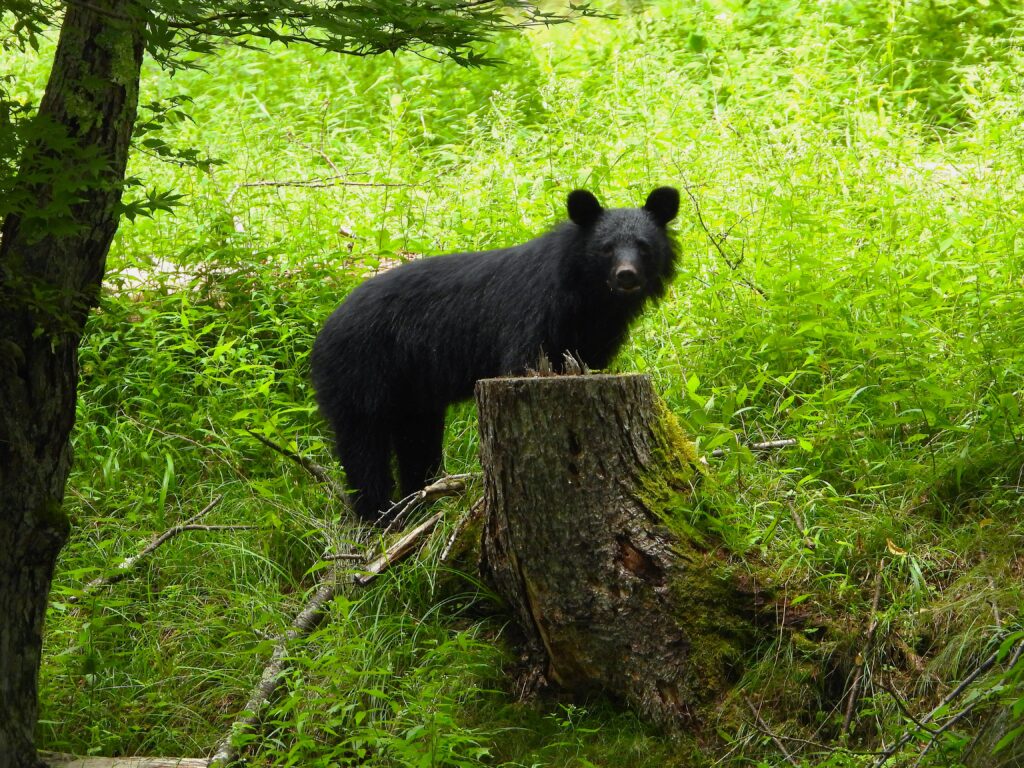
The Japanese black bear (Ursus thibetanus japonicus) is a subspecies of the Asian black bear found in Japan. It lives mainly in the forested mountains of Honshu and Shikoku and is easily recognized by the white crescent-shaped mark on its chest. Although it is generally shy and avoids humans, encounters can happen in mountain regions, so basic bear safety is important for hikers and outdoor visitors.
For a full comparison of wildlife risks and practical safety advice, see our complete guide below.
▶ Dangerous Animals in Japan: What Travelers Need to Know
Are Asian Black Bears Dangerous?
Asian black bears in Japan are generally shy and tend to avoid humans. Most encounters happen when a bear is surprised at close range, especially in dense forest or near food sources. While attacks are rare, they are recorded every year and usually involve accidental encounters.
The most dangerous situations occur when a mother bear is protecting her cubs or when a bear feels cornered. In autumn, Japanese black bears become more active as they search for food before hibernation, which can increase the chance of encounters in mountain areas.
By making noise while hiking, traveling in groups, and properly managing food waste, the risk of conflict can be greatly reduced.
In recent years, bear encounters and attacks have increased in several regions of Japan.
▶ Read more: Bear Attacks in Japan Are Surging – Why It’s Happening Now
What to Do If You Encounter a Bear in Japan
If you encounter an Asian black bear, stay calm and do not run. Running may trigger the bear’s instinct to chase. Instead, slowly back away while facing the bear and avoid direct eye contact, which can be perceived as a threat.
Make yourself appear larger by raising your arms and speak in a calm, firm voice. If the bear approaches, continue backing away slowly without turning your back. In rare cases of defensive contact, protecting your head and neck is essential.
Preventive measures are the most effective strategy. While hiking in Asian black bear habitats, make noise regularly, travel in groups when possible, and avoid leaving food or trash behind.
If you plan to hike in Japan’s mountains, it’s worth learning practical ways to avoid bear encounters.
▶ Bear Safety Tips for Hiking in Japan
Appearance
The Asian black bear is a medium-sized bear with a body length of 110–140 cm. Adult males typically weigh 60–120 kg depending on the season, while females are smaller at 40–90 kg. It has rounded ears, a sturdy build, and is an excellent climber. The white crescent on the chest is the species’ most striking feature.
Habitat & Distribution
The Asian black bear inhabits forested mountain regions across Honshu and Shikoku, making it the only bear species native to Japan’s main islands. It is considered extinct in Kyushu, and it does not occur in Hokkaido, where the brown bear lives instead.
This subspecies prefers broadleaf and mixed mountain forests, ranging from low hills to high elevations. Asian black bears rely on areas with abundant natural food sources such as acorns, beechnuts, and seasonal fruits.
Although bears mainly live in remote wooded areas, individuals are sometimes reported near rural towns at the edges of mountain ranges, especially in autumn when food becomes scarce. Japanese black bears do not inhabit central Tokyo; however, mountainous regions west of Tokyo are within their natural range, and hikers in these areas should remain aware of bear habitats.
Behavior
Asian black bears are generally crepuscular or nocturnal near human settlements, but may be active in the daytime in remote forests. They are excellent climbers and sometimes leave claw marks or broken branches on trees. Bears hibernate in dens between November and April, depending on food supply and region.
Diet
Asian black bears are omnivorous. Acorns, beechnuts, chestnuts, and seasonal fruits form the bulk of their diet. They also eat insects, larvae, carrion, and sometimes small vertebrates or crops such as corn. In poor nut years, Japanese black bears may enter villages and farmlands in search of food.
Reproduction
Mating occurs mainly in June–July. Like other bears, they exhibit delayed implantation: fertilized eggs implant only when hibernation begins in late autumn. Cubs, usually 1–2, are born in January–February inside the den. They are weaned by 6–8 months and become independent at about 1.5 years.
Conservation
The species (U. thibetanus) is listed as Vulnerable on the IUCN Red List. In Japan, habitat loss, mast failures, and increasing human–bear conflicts are major challenges. Encounters have risen in recent years, sometimes resulting in injuries. Conservation efforts include habitat management, monitoring populations, and public safety measures such as avoiding attractants and making human presence clear in bear habitats.
FAQ
Are there bears in Japan?
Yes, there are bears in Japan. The Asian black bear, also called the Japanese black bear, lives across Honshu and Shikoku in forested mountain regions.
Are Japanese black bears dangerous?
They are generally shy and avoid humans. Attacks are rare, but encounters do occur each year, usually when a bear is surprised at close range or protecting its cubs.
Do bears live near Tokyo?
Bears do not live in central Tokyo. However, mountainous areas west of Tokyo are within the natural range of Asian black bears, and occasional sightings are reported in rural regions.
What should you do if you see a bear in Japan?
Stay calm and do not run. Slowly back away while facing the bear, avoid direct eye contact, and make noise to prevent surprising bears in the first place.
When are bears most active in Japan?
Asian black bears are most active from spring to autumn. Activity often increases in autumn as they search for food before hibernation.
Field Notes (Author’s Impression)
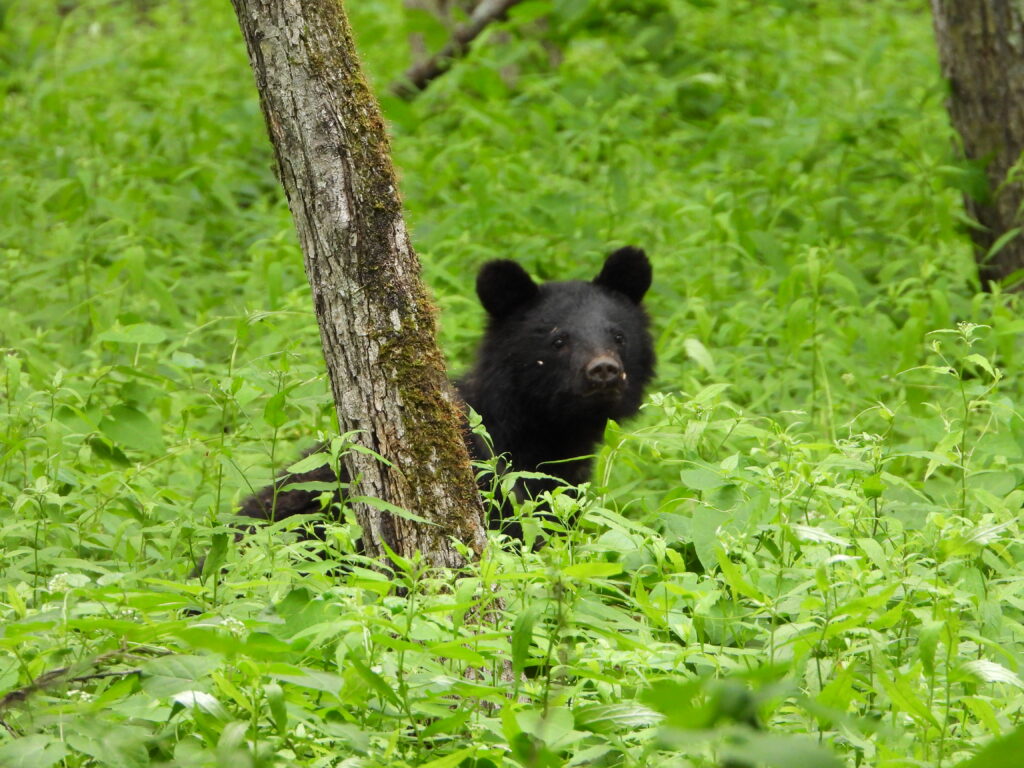
I often encounter Asian black bears while hiking in the mountains, and every time my heart races with fear. Once, I came face to face with one at close range, and only by hiding behind a tree did I manage to avoid danger. From a distance, Japanese black bears can appear almost cute, but up close they are truly dangerous animals and should always be treated with caution.
Video