Animals of Amami Island: Wildlife of Amami Ōshima
Amami Ōshima, located between Kyushu and Okinawa, is one of the best places in Japan to experience subtropical wildlife.
Its evergreen forests, mountain streams, mangroves, and coastal habitats are home to an extraordinary range of animals, including the Amami rabbit, Ryukyu long-haired rat, Lidth’s jay, Amami woodcock, rare frogs, and habu snakes.
Many of these species are found only on Amami Ōshima or the surrounding Ryukyu Islands. This exceptional biodiversity helped make Amami Ōshima part of the UNESCO World Natural Heritage Site inscribed in 2021.
This guide introduces the animals of Amami Island, from mammals and birds to amphibians and reptiles, including species I have observed and photographed in the field.
For a guide focused specifically on the island’s endemic and rare species:
▶ Amami Endemic Wildlife – Where to See Rare Animals in Japan
Mammals of Amami Island
Amami Ōshima is home to several rare mammals that evolved in isolation from mainland Japan.
Amami Rabbit (Pentalagus furnessi)
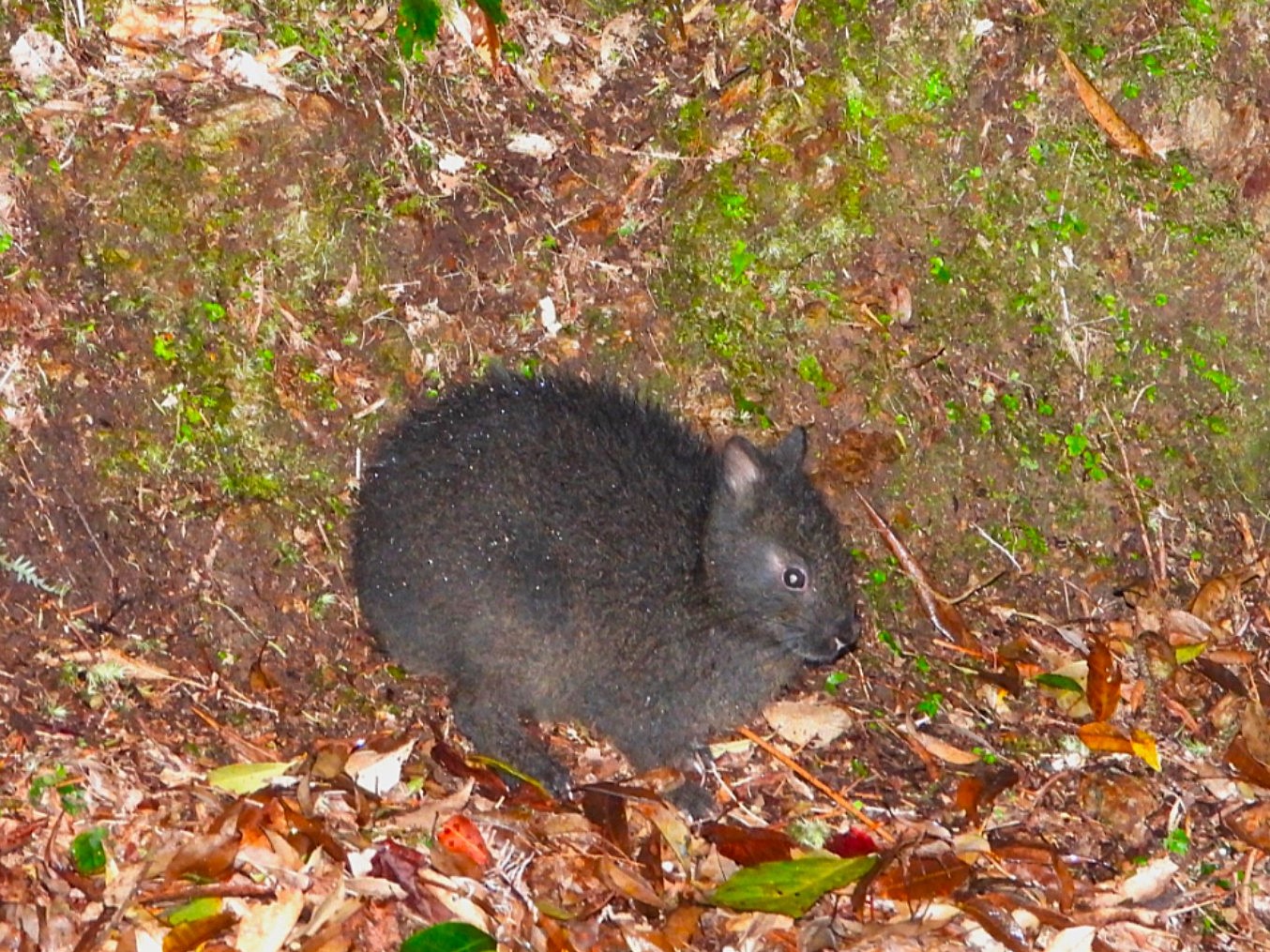
The Amami rabbit is the island’s most famous wild animal. It is found only on Amami Ōshima and Tokunoshima and is mainly active at night.
Its short ears, dark fur, and stocky body make it very different from the rabbits most visitors are familiar with. During nighttime wildlife drives, it may sometimes be seen crossing quiet forest roads or feeding along the roadside.
▶ Amami Rabbit – Full Species Guide
Ryukyu Long-haired Rat (Diplothrix legata)
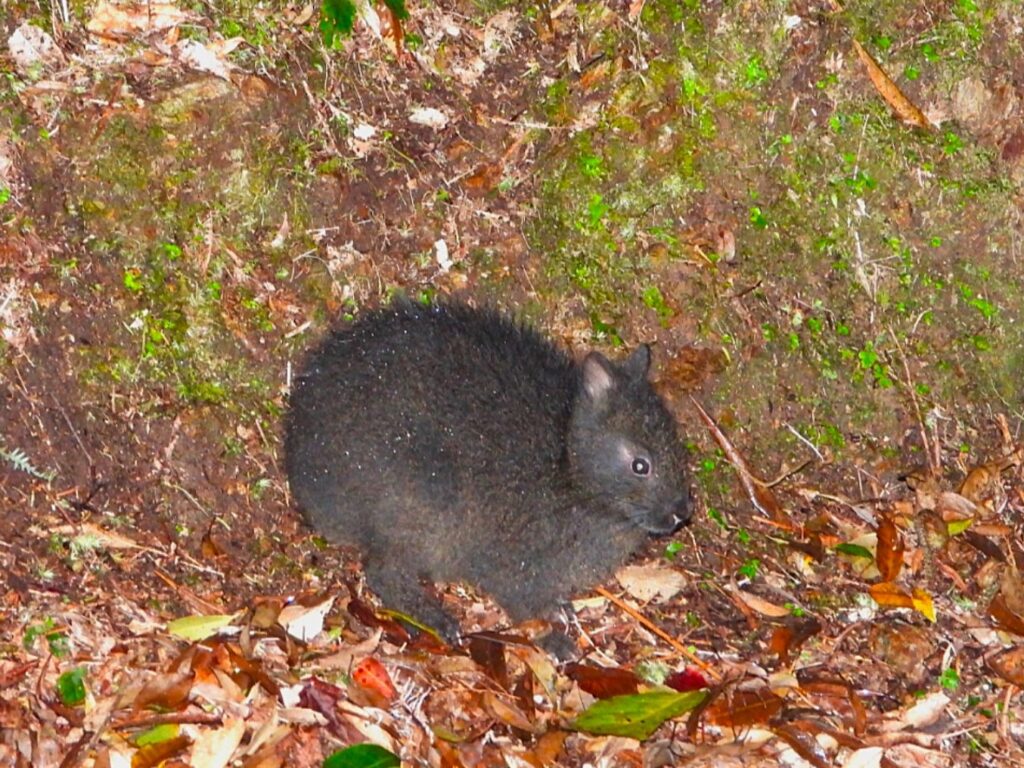
The Ryukyu long-haired rat is one of Japan’s largest native rodents. It lives in mature forests and is mainly nocturnal and arboreal.
The species occurs on Amami Ōshima, Tokunoshima, and northern Okinawa Island. It is much harder to see than the Amami rabbit, making any encounter especially memorable.
▶ Ryukyu Long-haired Rat – Full Species Guide
Birds of Amami Island
Amami Ōshima’s subtropical forests support several distinctive birds, including species with extremely limited distributions.
Lidth’s Jay (Garrulus lidthi)
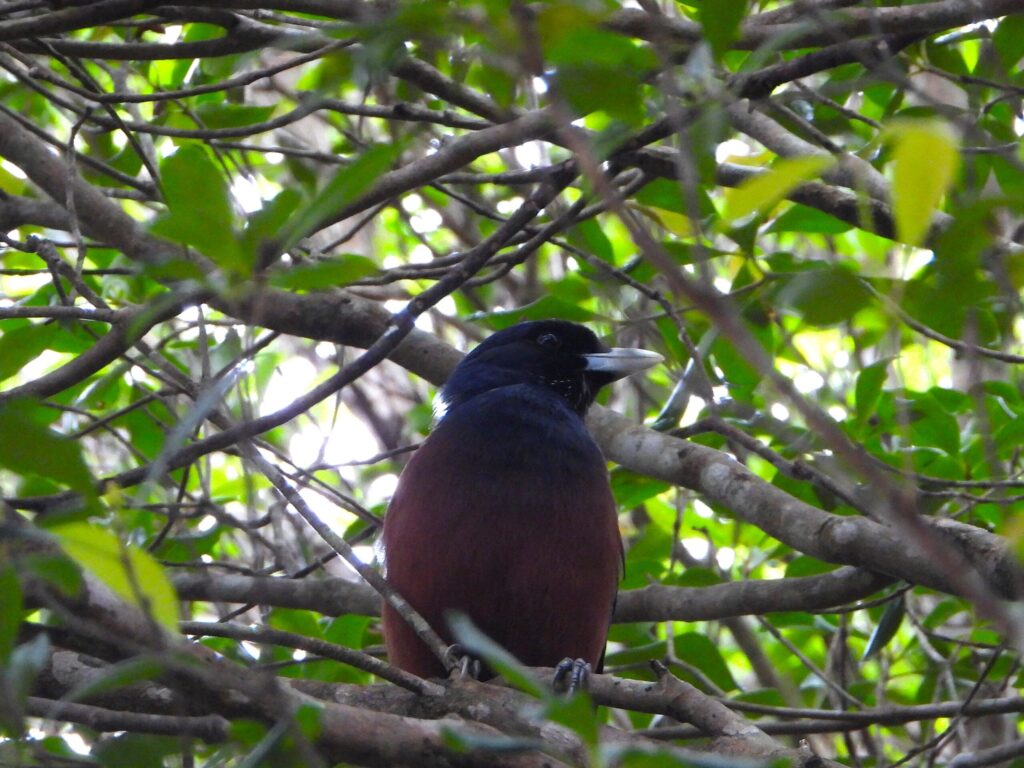
The Lidth’s Jay, also known as the Amami Jay, is one of the island’s most recognizable birds. Its deep blue wings and tail contrast with a chestnut-brown body, making it unmistakable when seen well.
It occurs naturally only in the Amami Islands and is especially associated with evergreen forests. Lidth’s Jays feed on acorns, fruits, insects, and other foods, and their habit of caching acorns also helps disperse seeds through the forest.
Their loud, harsh calls often reveal them before they are visible among the trees.
▶ Lidth’s Jay – Full Species Guide
Amami Woodcock (Scolopax mira)
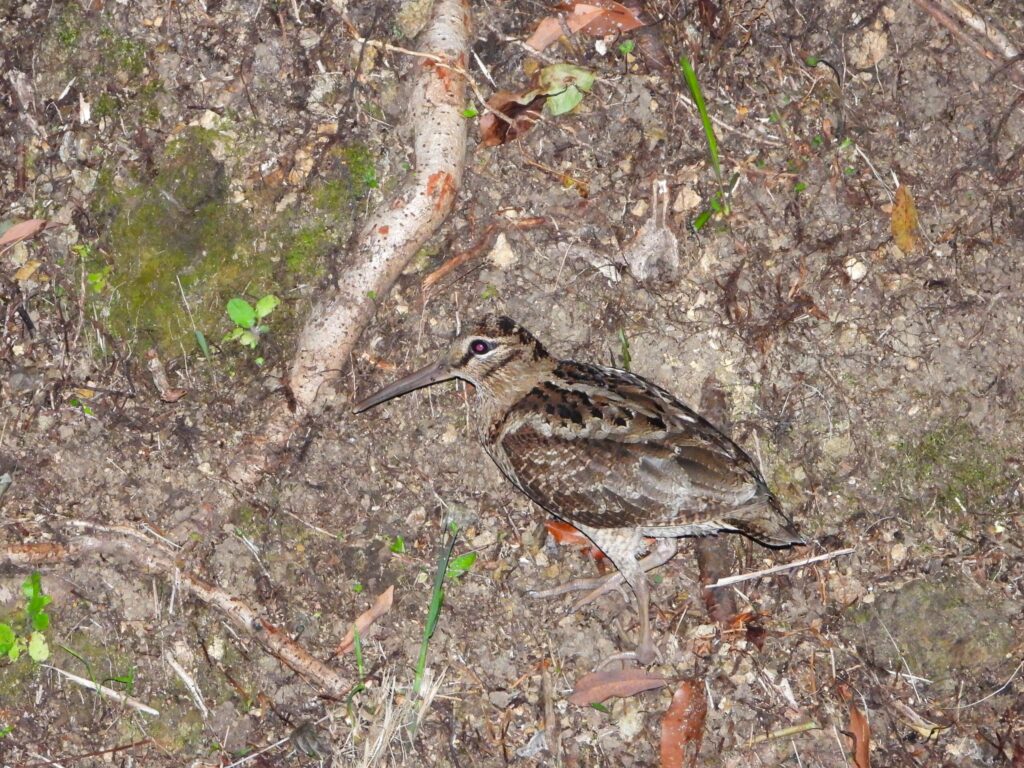
The Amami Woodcock is a rare, mostly nocturnal forest bird with mottled brown plumage and a long bill used to search damp soil for earthworms and other invertebrates.
On Amami Ōshima, it may sometimes be encountered on quiet forest roads and other open ground at night. Because the bird often remains still rather than immediately flying away, drivers and wildlife watchers need to take particular care not to disturb or hit it.
▶ Amami Woodcock – Full Species Guide
Amphibians of Amami Island
Amami Ōshima is especially rich in amphibians. Its humid subtropical forests, clean mountain streams, and frequent rainfall support several species found nowhere else in Japan.
Amami Ishikawa’s Frog (Odorrana splendida)
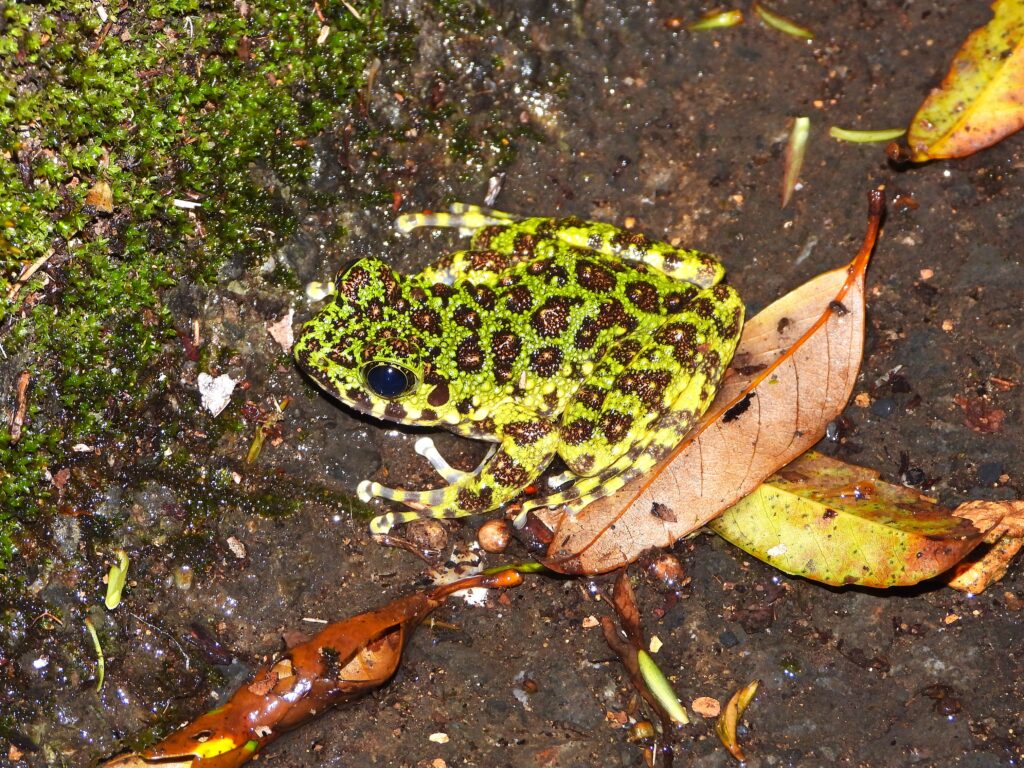
The Amami Ishikawa’s Frog is one of the island’s most distinctive amphibians. Its bright green body is covered with dark and golden markings, making it easy to recognize when seen well.
It lives only on Amami Ōshima and is closely associated with shaded mountain streams in evergreen forest. The species is mainly active at night and is often easier to detect by its calls during the breeding season.
▶ Amami Ishikawa Frog – Full Species Guide
Ototon Frog (Odorrana amamiensis)
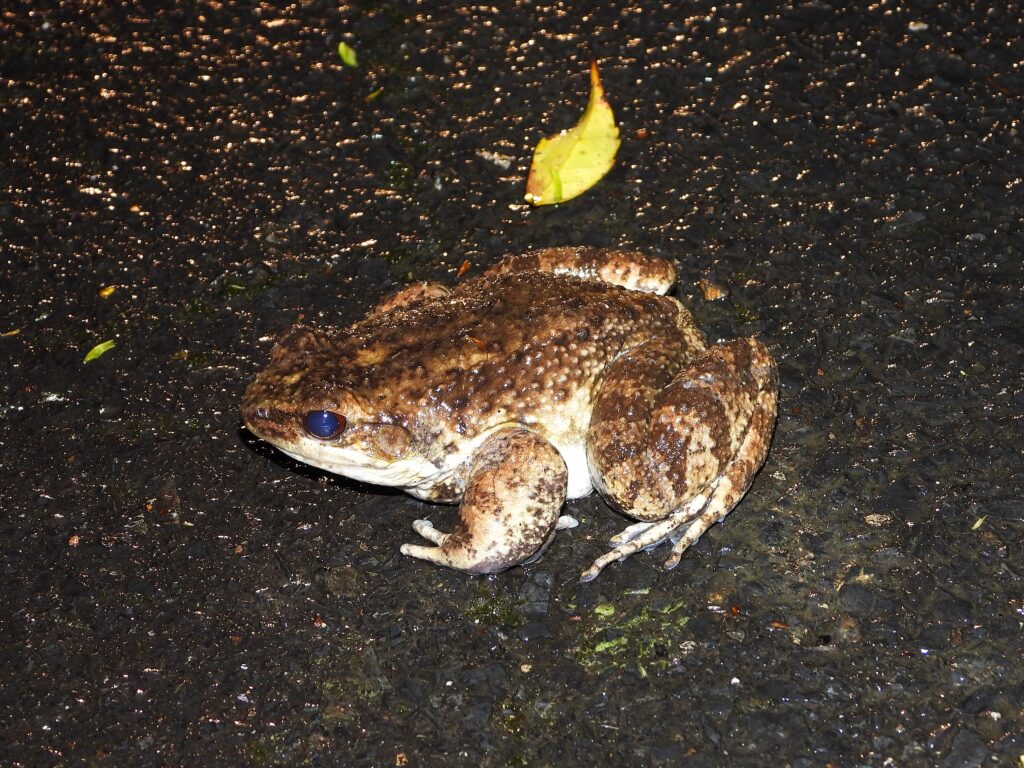
The Otton Frog is a large, heavy-bodied frog endemic to the Amami Islands. It lives in humid forest environments near streams and wetlands and is mainly active at night.
Its deep calls are especially noticeable during the warmer and wetter months. I have encountered this species on a wet forest road after rain, which is one of the situations in which it may appear.
▶ Otton Frog – Full Species Guide
Amami Sword-tailed Newt (Cynops ensicauda popei)
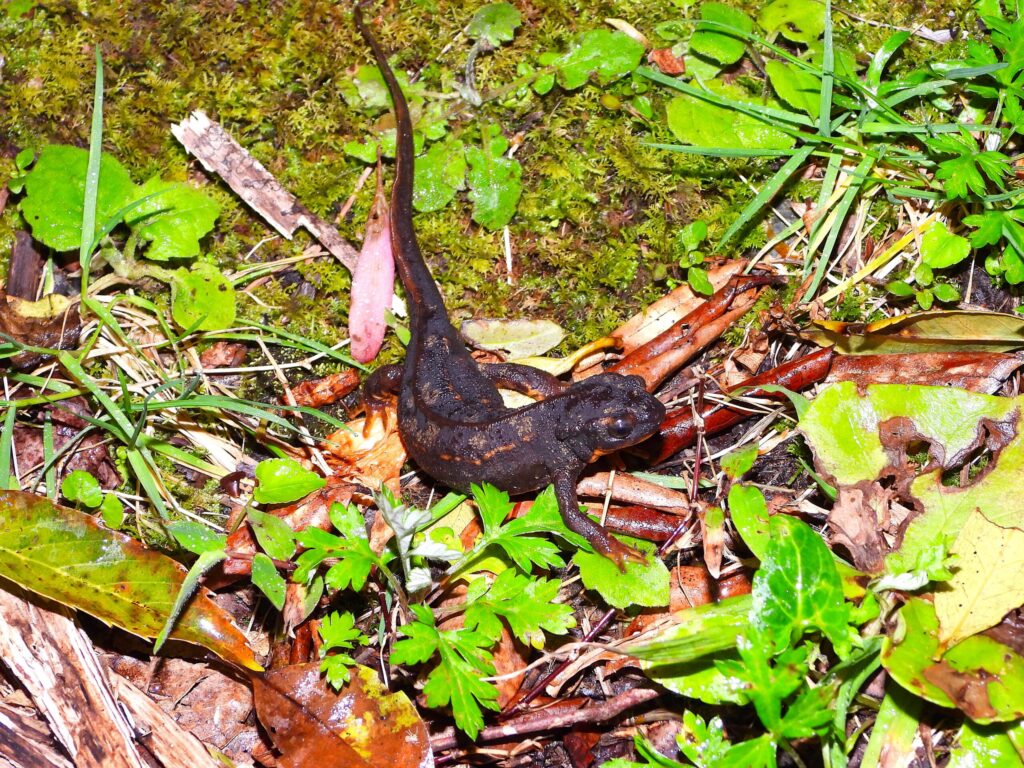
The Amami Sword-tail Newt is the northern subspecies of the Sword-tail Newt and is found only in the Amami Islands.
Its dark body contrasts with a bright orange underside, and it can occur in forest ponds, slow-moving water, and other damp habitats.
▶ Amami Sword-tail Newt – Full Species Guide
Snakes of Amami Island
Amami Ōshima is home to several distinctive snakes, ranging from harmless forest species to the highly venomous Habu.
Snakes are most active during the warmer months, and some species are frequently associated with humid forests, streams, and forest roads.
Habu (Protobothrops flavoviridis)
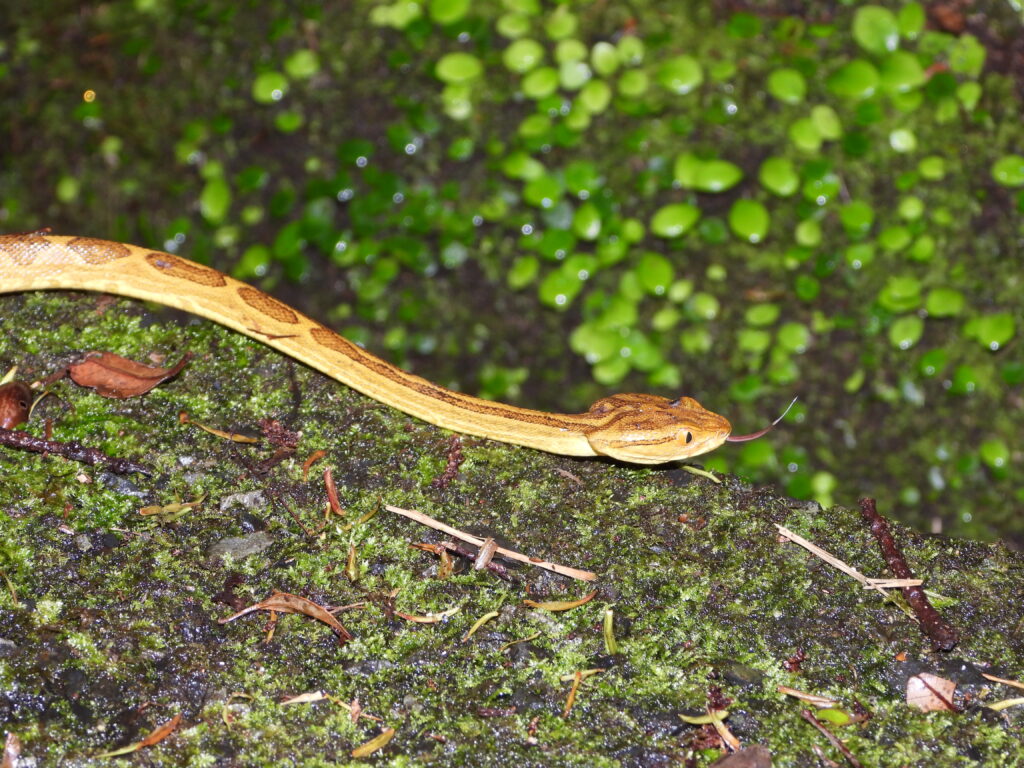
The Habu is the most important snake for visitors to recognize on Amami Ōshima. It is a large, highly venomous pit viper and one of the island’s major native predators.
Habu are mainly nocturnal and can occur in forests, farmland, rocky areas, and sometimes near houses. They prey on rats, birds, lizards, frogs, and other small animals.
If you encounter one, keep your distance and never attempt to touch or move it.
Loochoo Big-toothed Snake (Dinodon semicarinatum)
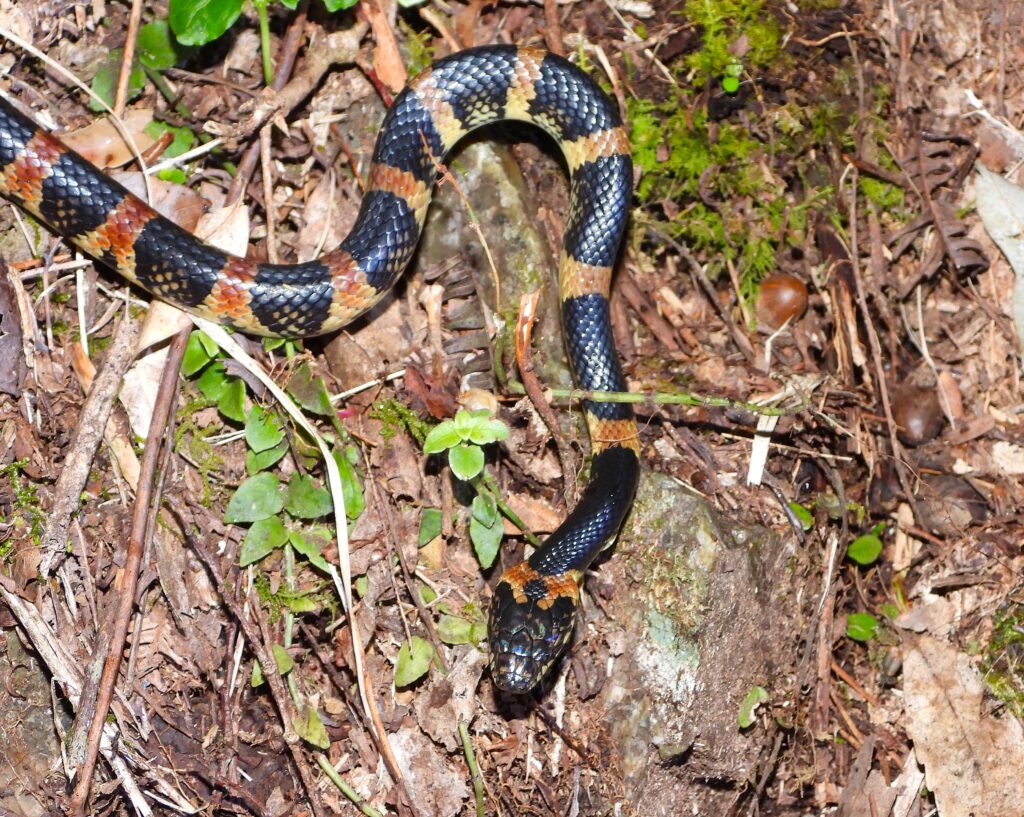
The Loo-Choo Big-tooth Snake, also known as Akamata, is a large non-venomous snake found in the Ryukyu Islands, including Amami Ōshima.
It is mainly nocturnal and may be encountered in forests, grasslands, and other habitats after dark. Despite its bold reddish-brown and dark pattern, it is not venomous.
▶ Loo-Choo Big-tooth Snake – Full Species Guide
Okinawa Keelback (Hebius pryeri)
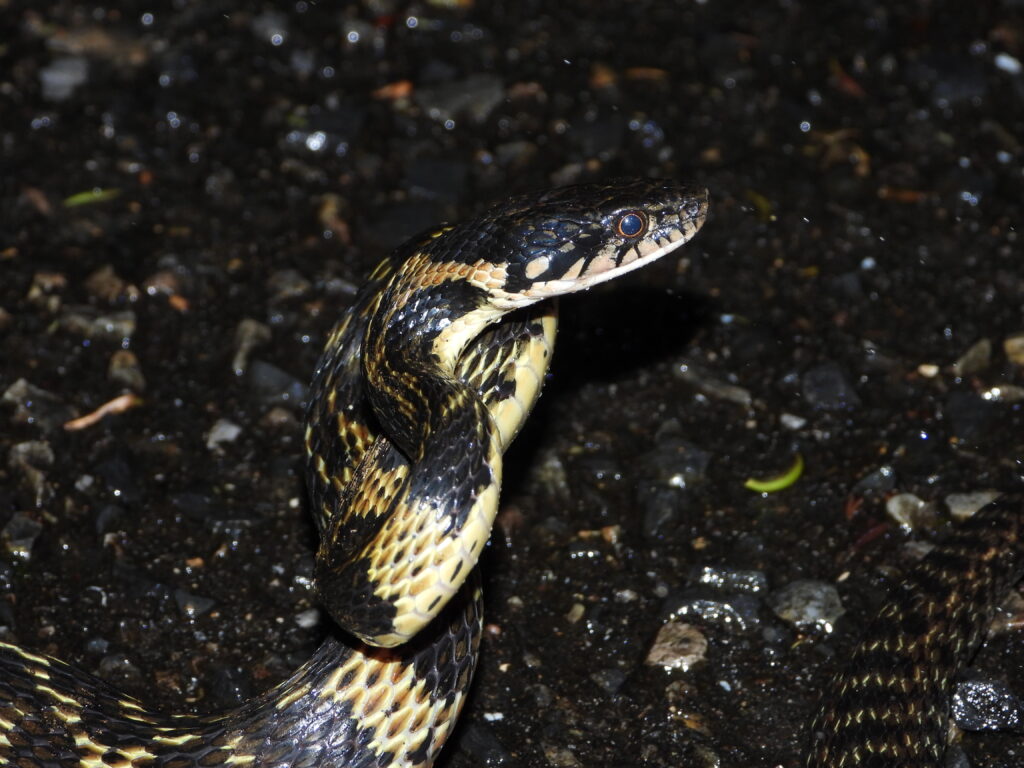
The Okinawa Keelback is a slender snake associated with humid habitats such as forest streams, ponds, and other freshwater environments.
It feeds mainly on frogs and tadpoles and may become active around wet areas after rain. Although it is not considered a major danger to people, it possesses mild rear-fanged venom and should not be handled.
▶ Okinawa Keelback – Full Species Guide
Conservation of Amami’s Wildlife
Amami Ōshima’s wildlife is exceptionally rich, but many native species have faced serious threats from habitat loss, roadkill, invasive species, and other human impacts.
One of the island’s biggest conservation successes has been the eradication of the small Indian mongoose.
Mongooses were introduced to Amami Ōshima in the late 1970s in an attempt to control Habu and rats, but they instead preyed heavily on native wildlife. A large-scale control program followed, and after decades of trapping, monitoring, and detection work, Japan’s Ministry of the Environment officially declared the mongoose eradicated from Amami Ōshima in September 2024.
As mongoose numbers declined, several native species showed signs of recovery, including:
- Amami Rabbit
- Amami Ishikawa’s Frog
- Otton Frog
- Amami Woodcock
- Ryukyu Long-haired Rat
The recovery of these animals is one of the clearest examples of successful island conservation in Japan.
However, conservation challenges remain. Roadkill, invasive cats, habitat disturbance, and pressure from tourism can still affect rare wildlife. Visitors should drive slowly at night, avoid disturbing animals, and follow local wildlife-watching rules. UNESCO also identifies invasive species, roadkill, tourism impacts, and illegal collection as continuing threats to the World Heritage property.
My Experience with Wildlife on Amami Ōshima
Seeing an Amami rabbit in the wild was one of the most memorable wildlife experiences I have had in Japan.
Amami Ōshima feels very different after dark. Away from the towns, the forest becomes quiet, and many of the island’s rare animals become active. Even knowing that Amami rabbits live here, actually seeing one in its natural habitat made me realize how unusual this island is.
What makes Amami special is not just one famous species. The island supports rare mammals, endemic birds, frogs, newts, snakes, and many other animals within a relatively small area.
For me, Amami Ōshima is one of the best places in Japan for anyone interested in native wildlife and species that cannot be seen almost anywhere else.
▶ Wildlife in Japan: Where to See Wild Animals by Region
Please Help Protect Amami’s Wildlife
Amami Ōshima still protects some of Japan’s rarest wildlife and most important subtropical forest habitat.
If you visit, please observe animals from a respectful distance, drive slowly on forest roads, never feed wildlife, and take all trash with you.
Many of Amami’s animals exist nowhere else on Earth. Enjoying them responsibly is one of the simplest ways visitors can help keep this remarkable island wild.