Japanese Hare (Lepus brachyurus) – Wildlife of Japan
Introduction
The Japanese Hare is a wild hare species native to Japan. It lives on the main islands of Honshu, Shikoku, and Kyushu.
This animal inhabits forests, grasslands, farmland edges, and mountain slopes where vegetation provides food and cover. Although it can live near rural areas, it is rarely noticed.
The Japanese Hare is mainly active at night. Because of this, people often discover its presence through tracks in the snow rather than seeing the animal itself.
Appearance
The Japanese Hare is a medium-sized hare with long ears and strong hind legs built for running.
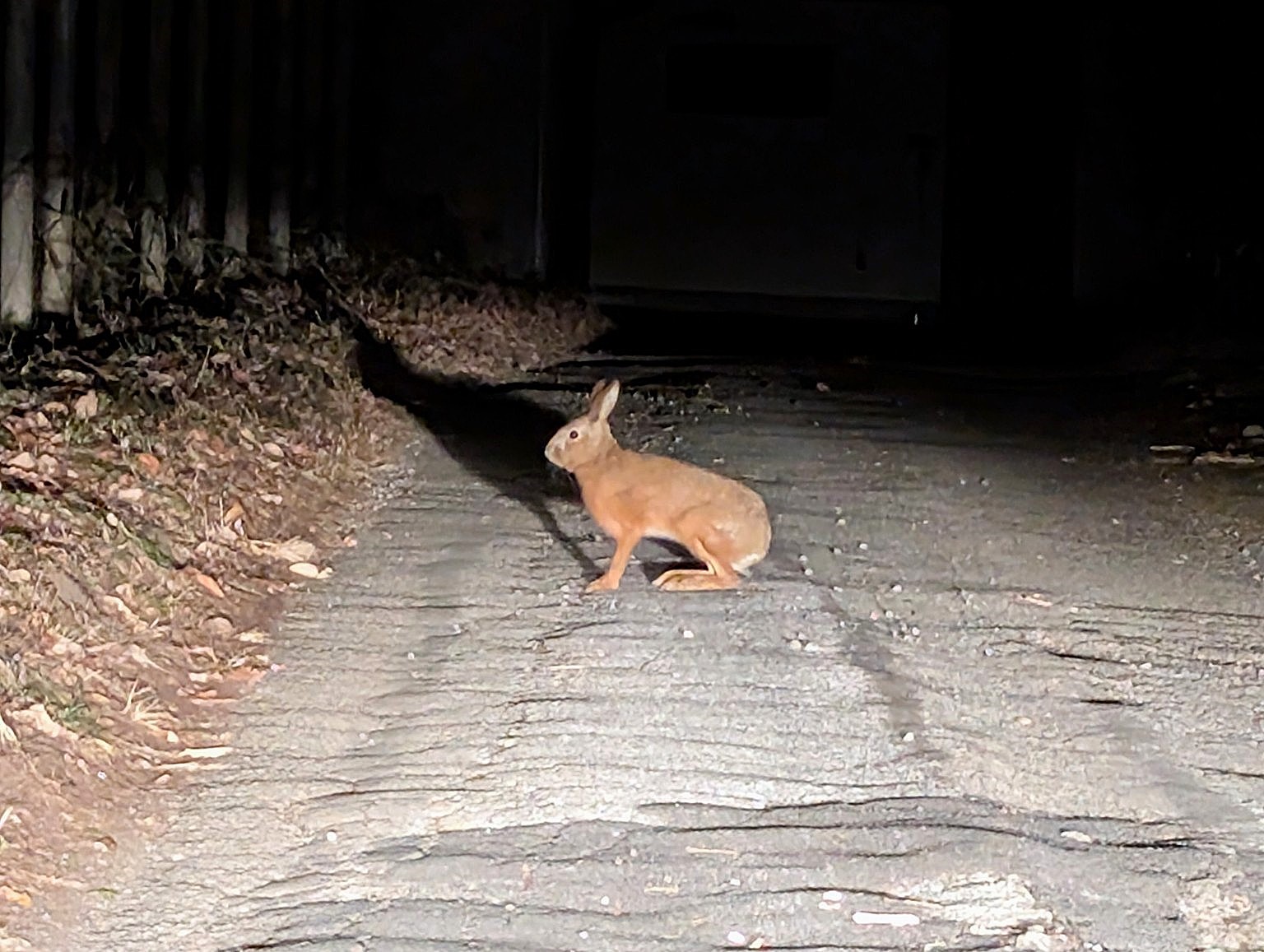
Its body length is usually around 45–55 cm, and adults typically weigh about 2–2.5 kg. The fur is usually brown or grayish-brown, helping it blend into the forest floor and dry grass.
In snowy regions, some populations develop much lighter winter fur. In warmer regions, however, the coat often remains brown throughout the year.
Habitat & Distribution
The Japanese Hare is endemic to Japan and occurs on Honshu, Shikoku, and Kyushu.
It can live in many types of environments, including forests, grasslands, forest edges, farmland, and mountain areas. Areas with dense vegetation are especially important because they provide both food and hiding places.
Although it prefers natural habitats, the species can sometimes be found surprisingly close to rural settlements.
Behavior
The Japanese Hare is mostly nocturnal and becomes active after sunset.
During the day it usually rests in shallow depressions on the ground, hidden among grass or low vegetation. Unlike rabbits, hares rarely dig burrows.
When threatened, the Japanese Hare escapes by running quickly, often changing direction suddenly in zigzag movements.
Diet
The Japanese Hare is herbivorous and feeds on a variety of plants.
Its diet commonly includes grasses, leaves, buds, and young shoots. It may also eat bark and twigs.
During winter, when fresh plants are scarce, bark and woody plants become a more important food source.
Reproduction
Breeding usually occurs from late winter through summer, although timing can vary depending on region.
After a gestation period of about 40–45 days, females give birth to litters of one to four young. Hare babies are born relatively well developed, with fur and open eyes.
The mother usually hides the young in vegetation and returns periodically to nurse them.
Conservation
The Japanese Hare remains widely distributed across Japan.
However, local populations may be affected by habitat change, road accidents, and agricultural conflicts where hares feed on crops or young trees.
Even with these pressures, the species continues to be a common wild mammal in many parts of the country.
Author’s Impression
While exploring forests in Japan, it is often easier to notice the tracks of a Japanese Hare than the animal itself.
In winter, its footprints sometimes appear clearly in fresh snow. These tracks quietly reveal the presence of wildlife moving through the landscape at night.
Even when unseen, the Japanese Hare is part of the hidden life of Japan’s forests and countryside.