Wild Boars in Japan: Dangers, Encounters & Safety Tips
Introduction
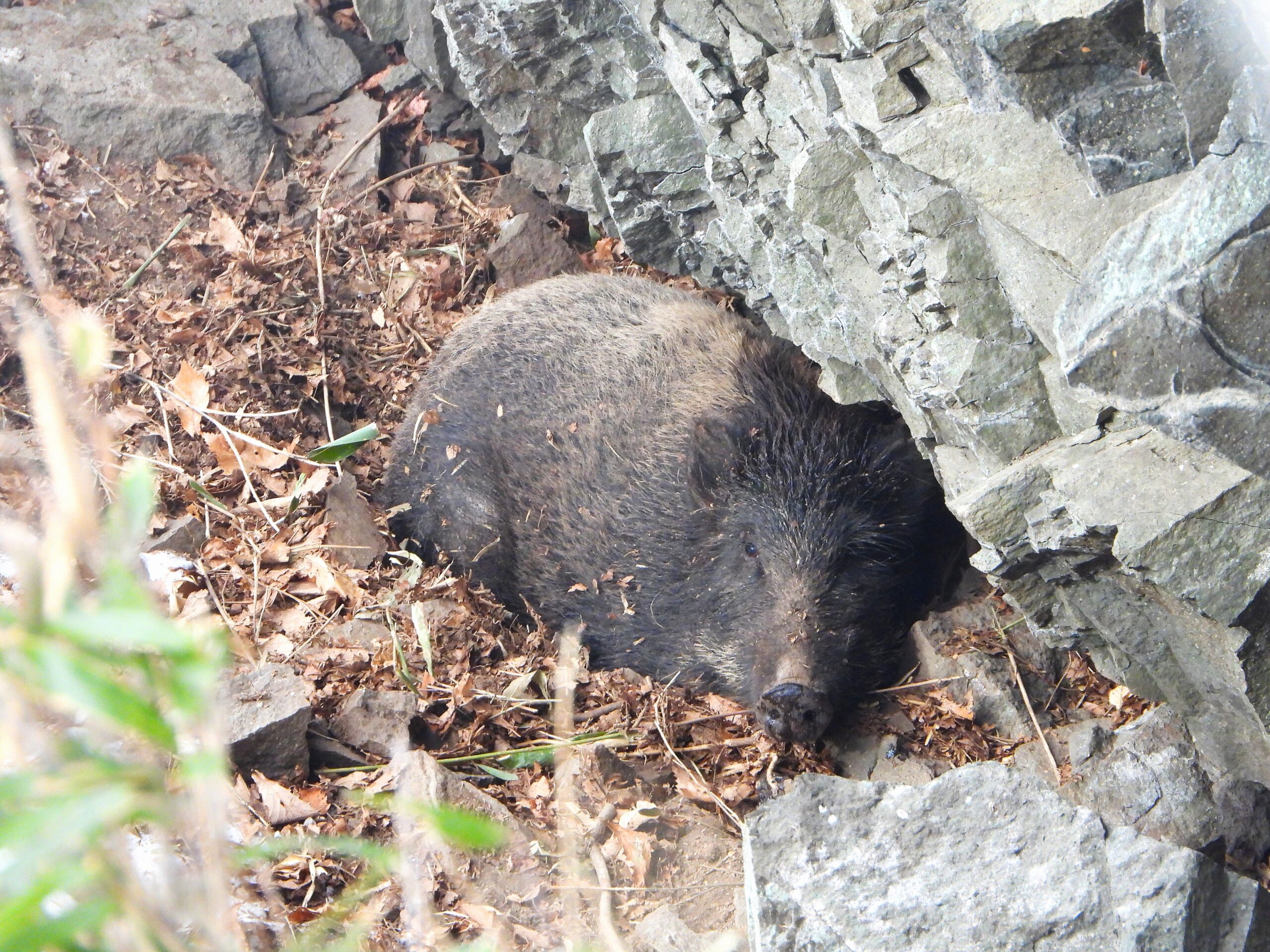
Wild boars are widespread in Japan and can be encountered in forests, farmland, rural areas, and sometimes near towns and cities.
Are wild boars dangerous in Japan? They usually avoid people, but they can cause serious injuries if surprised at close range, cornered, or protecting their young. Their speed, strength, and sharp tusks mean even a short encounter can become dangerous.
This guide explains where wild boars are found in Japan, when encounters are most likely, how to avoid them, and what to do if you come face-to-face with one.
Are Wild Boars Dangerous?
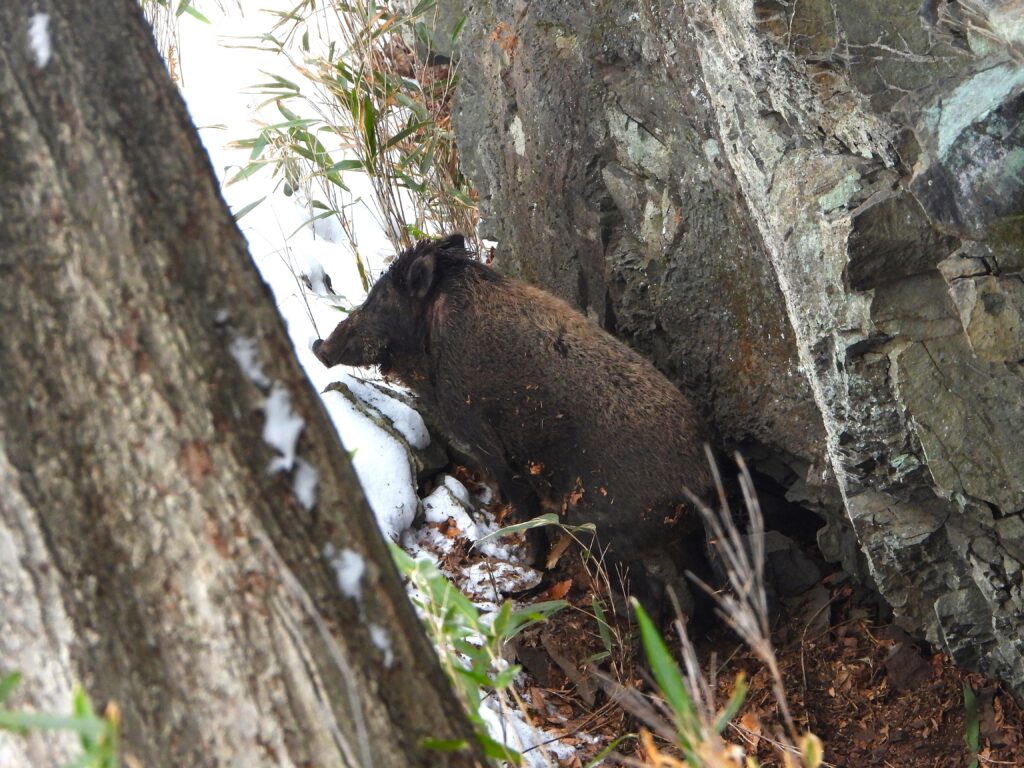
Yes. Wild boars in Japan usually avoid people, but they can become dangerous when surprised at close range, cornered, injured, or protecting their young.
Their strength and sharp tusks can cause serious injuries, especially if a boar charges. Human injuries from wild boars are documented in Japan, including incidents in areas where people and boars come into close contact.
Risk is higher when:
- A boar is startled at close range
- A female is protecting piglets
- The animal feels trapped or has no clear escape route
- Boars have become accustomed to finding food near people
Most encounters do not lead to attacks. The safest approach is to keep your distance, remain calm, and give the animal plenty of space to leave.
Where Are Wild Boar Encounters Common in Japan?
Wild boars are widespread across much of Honshu, Shikoku, Kyushu, and parts of the Ryukyu Islands. They are especially common in forested hills, satoyama landscapes, farmland edges, and rural areas where food and cover are easy to find.
Encounters can also occur near towns and suburban areas, particularly where forests connect directly with residential neighborhoods.
Areas where wild boars are commonly encountered include:
- Kansai
- Chugoku
- Shikoku
- Kyushu
- Many mountainous and rural parts of Honshu
Wild boars are not naturally established in Hokkaido, so travelers there are far more likely to be concerned about brown bears than wild boars.
In southern Japan, the Ryukyu wild boar occurs on parts of the Ryukyu Islands.
When Are Wild Boars Most Active?
Wild boars can be active at different times of day, but they are often most active from evening through early morning, especially in areas with regular human activity.
Encounters may be more likely:
- Around dawn and dusk
- At night
- In autumn, when wild boars are actively searching for food
- In spring and early summer, when females may be protecting young
- Near farmland, forest edges, and residential areas where food is available
Wild boars may also move during the daytime in quieter rural or mountain areas.
If you are hiking, camping, or walking near forest edges early in the morning or after dark, stay alert and avoid surprising an animal at close range.
How to Avoid Encounters
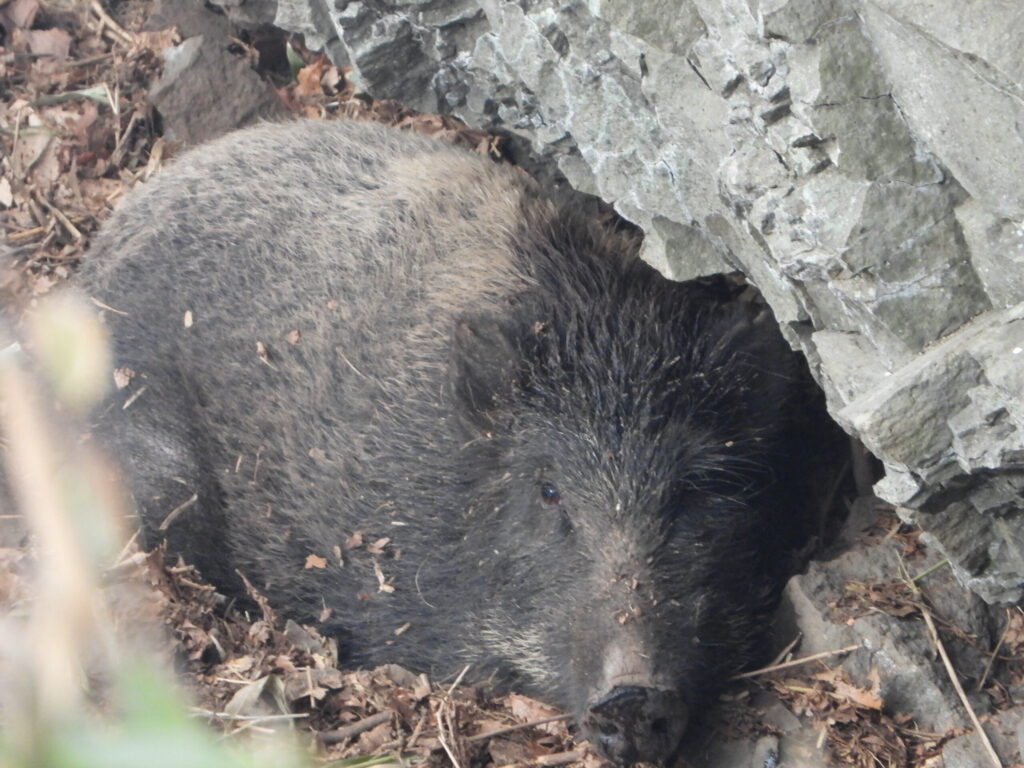
Most wild boar encounters can be avoided by reducing the chance of surprising an animal at close range.
- Stay on open, visible trails whenever possible.
- Walk with others and make your presence known in areas with dense vegetation.
- Keep dogs leashed, especially near forests and farmland.
- Never leave food or trash where wild boars can reach it.
- Watch for signs of recent activity, including fresh digging, hoof tracks, and droppings.
- Follow local wildlife warnings and posted guidance.
If you notice fresh signs of wild boars nearby, stay alert and avoid entering dense vegetation where visibility is poor.
Signs That a Wild Boar Is Warning You
A wild boar may show warning behavior before becoming aggressive. If you notice these signs, do not approach and give the animal more space.
Possible warning signs include:
- Snorting or repeated loud breathing
- Stiff body posture
- Facing you directly instead of moving away
- Pawing or scraping at the ground
- Sudden short movements toward you
- Jaw or tusk movements when highly agitated
Do not wait to see whether the animal will charge. Stay calm, avoid sudden movements, and slowly increase the distance between you and the boar.
What to Do If You See a Wild Boar
If you encounter a wild boar, stay calm and avoid sudden movements.
- Do not run toward or past the animal.
- Slowly back away while keeping plenty of distance.
- Do not block the boar’s escape route.
- Avoid shouting, throwing objects, or trying to scare it away.
- Keep children and pets close to you.
- If possible, place a tree, fence, or other solid object between you and the boar.
Most wild boars will leave if they have a clear way to escape. The main goal is to avoid making the animal feel trapped or threatened.
If a Boar Charges
If a wild boar charges or continues approaching aggressively, focus on getting behind a solid barrier or reaching a safe place.
- Do not try to fight, chase, or scare the boar.
- Move behind a tree, fence, wall, vehicle, or other solid object if possible.
- Give the boar a clear escape route rather than trapping it.
- If you can safely reach a raised or enclosed place, use it to get out of the animal’s path.
- Once you are safe, do not approach the boar again.
Wild boars can cause serious injuries with their tusks, so the priority is to put a solid obstacle between yourself and the animal as quickly and calmly as possible.
Dangerous Behaviors to Avoid
Avoid actions that may make a wild boar feel threatened or cornered.
- Do not approach for photos or videos.
- Do not use flash photography, shout, or make threatening movements.
- Never feed wild boars.
- Keep children and dogs away from the animal.
- Do not throw objects or try to chase the boar away.
- Do not block its escape route.
A wild boar that feels threatened can react very quickly, so the safest approach is to stay calm, keep your distance, and let it move away.
If You Get Injured
If you are injured by a wild boar, move to a safe place before treating the wound.
- For heavy bleeding, press firmly on the wound with clean gauze or cloth.
- Call 119 if the injury is serious, bleeding is difficult to control, or you cannot move safely.
- Deep tusk wounds should be evaluated by a medical professional because they may involve significant tissue damage.
- Ask a medical professional whether your tetanus protection is up to date.
- If the incident occurs in a managed park or tourist area, inform local staff or rangers after you are safe.
Even a wound that looks small may be deeper than it appears, so do not underestimate injuries caused by a wild boar.
Conservation Note
Wild boars play an important role in Japan’s ecosystems. Conflicts often start with human actions: feeding wildlife, leaving trash, or pushing into habitats. Respecting animals and managing waste helps reduce risks for everyone.
Author’s Impression
I have encountered wild boars several times while observing and photographing wildlife in Japan. Most kept their distance or moved away, but seeing one at close range makes it clear how powerful these animals are.
What stands out to me is how quickly an ordinary encounter could become dangerous if a boar feels trapped, threatened, or surprised. I try to stay calm, keep plenty of distance, and make sure the animal has a clear way to leave.
Wild boars are not animals to fear, but they deserve space and respect.
▶ Dangerous Animals in Japan: What Travelers Need to Know
Related Articles
For more about wild boars and wildlife safety in Japan, see these guides:
▶ Japanese Wild Boar: Identification, Habitat & Behavior