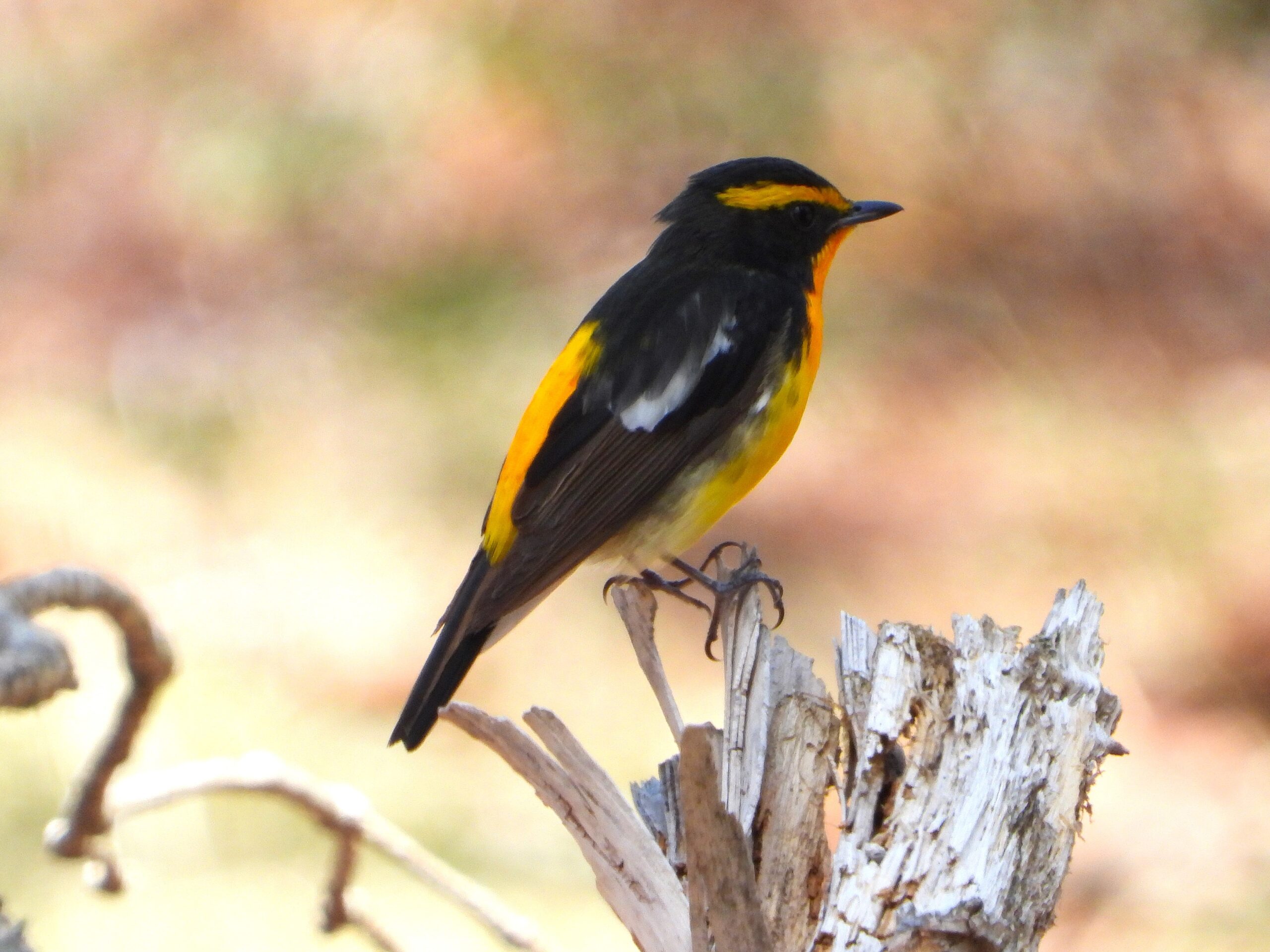
Yellow Birds in Japan: 5 Species You May See
Japan has several wild birds that appear yellow or show noticeable yellow on their bodies.
Some birds are bright yellow overall, while others only have yellow on the belly or wings. The species you see often depends on the environment, such as forests, rivers, parks, or grasslands.
If you start watching birds more closely, you will notice that Japan actually has several different “yellow birds.”
Here are some of the most common yellow birds found in Japan.
Yellow Birds Found in Japan
Narcissus Flycatcher
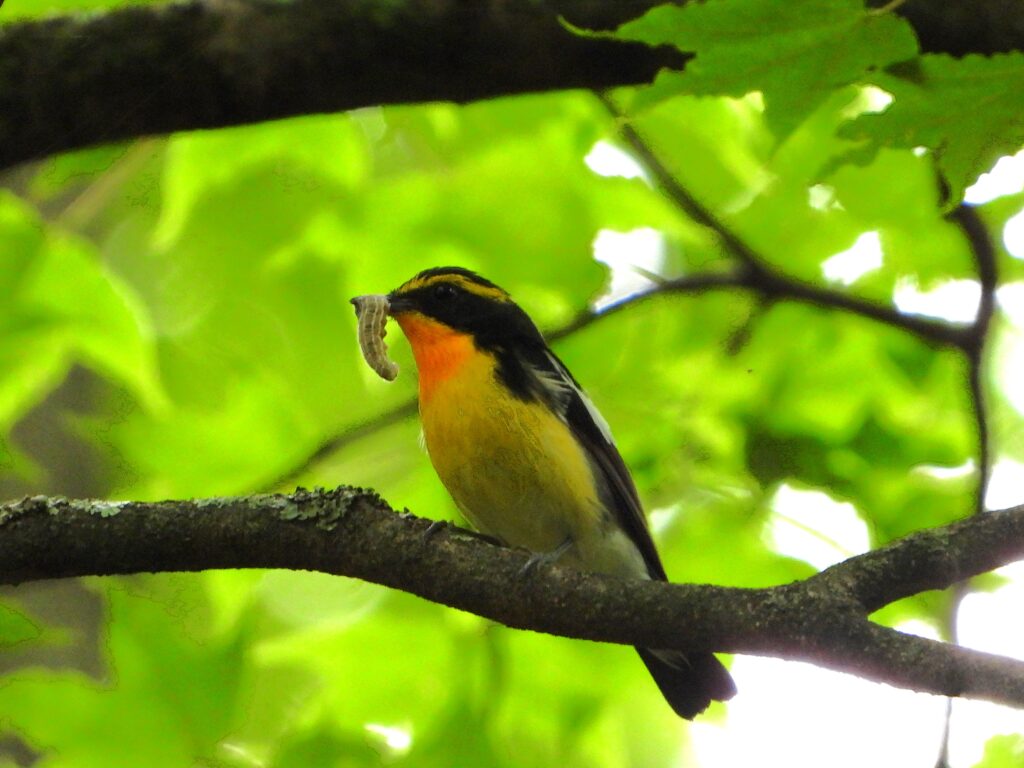
The Narcissus Flycatcher is one of the most beautiful yellow birds found in Japan.
The male has bright yellow underparts that contrast strongly with its black face and upper body. This bold color pattern makes it easy to recognize in the forest.
This species is a summer migrant. It breeds in Japan from spring to summer and lives mainly in forests.
During the breeding season, its clear and beautiful song can often be heard in woodland areas.
▶ Read the species guide: Narcissus Flycatcher
Grey Wagtail
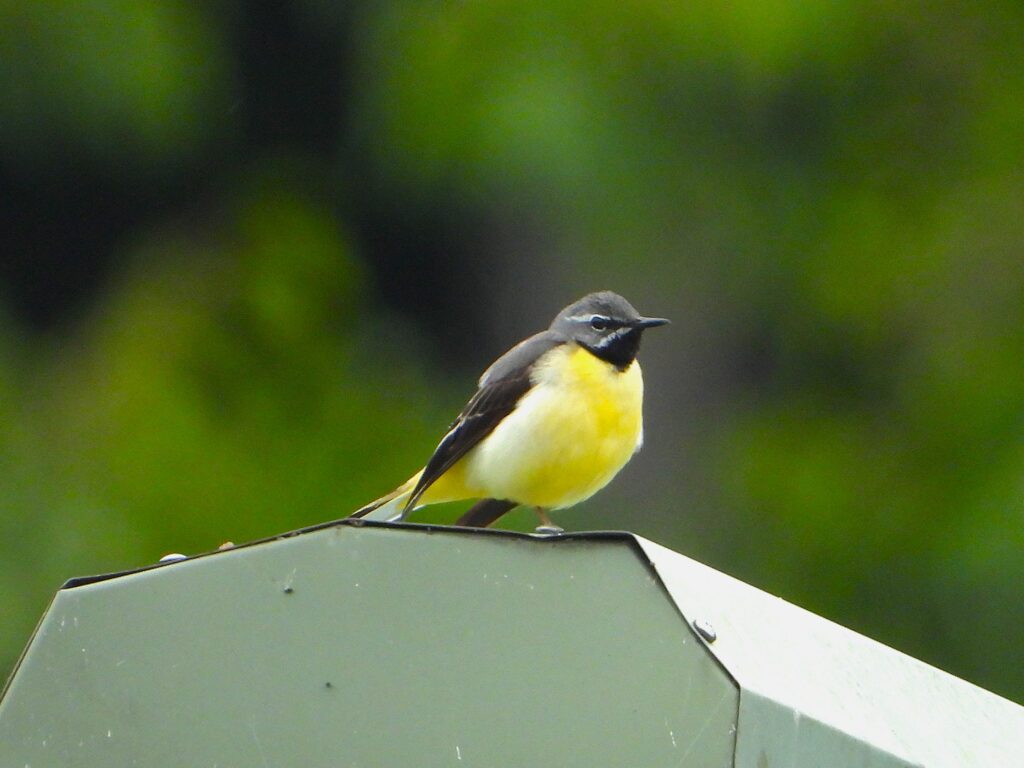
The Grey Wagtail is known for its bright yellow belly.
It has a slender body and a long tail. One easy way to recognize this bird is its habit of constantly bobbing its tail up and down.
Grey Wagtails usually live near rivers, mountain streams, and other waterside habitats.
In many parts of Japan they can be seen throughout the year. In Hokkaido, however, they are mostly seen during the summer.
▶ Read the species guide: Grey Wagtail
Eurasian Siskin
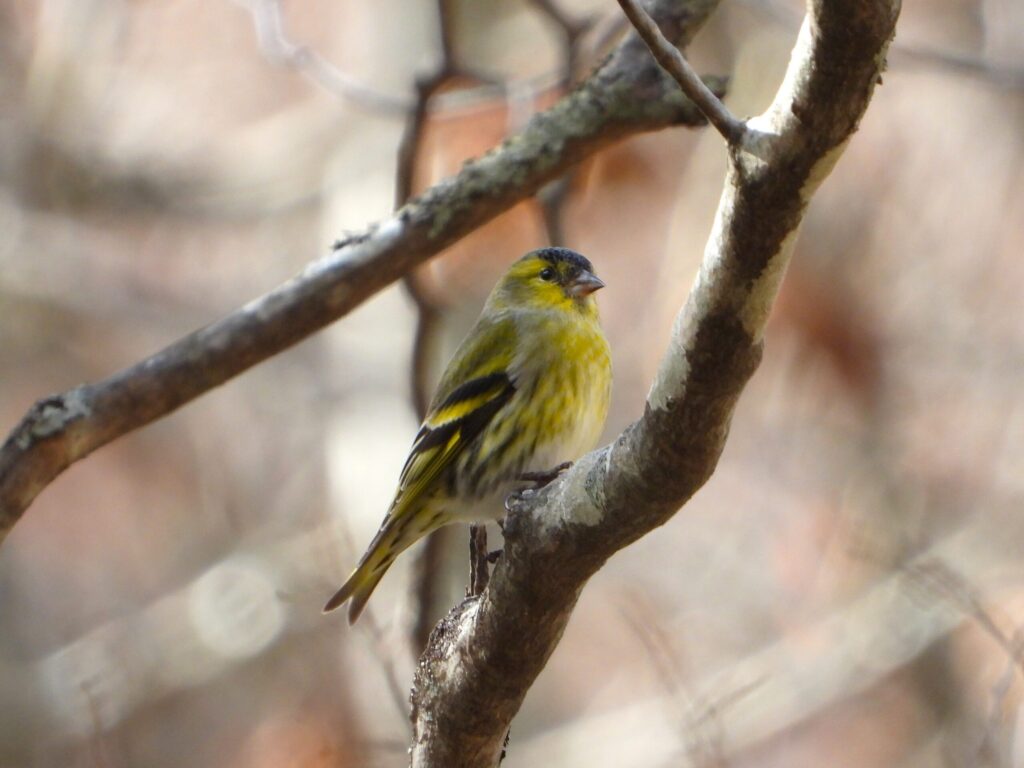
The Eurasian Siskin is a small bird with yellow and black markings.
Males have a black cap and brighter yellow plumage than females. Their yellow patches become noticeable when they gather in trees.
In Japan, this species is most often seen during winter.
Some populations also breed in northern areas such as Hokkaido and parts of northern Honshu.
They usually move in flocks and feed on seeds and small tree cones.
▶ Read the species guide: Eurasian Siskin
Oriental Greenfinch
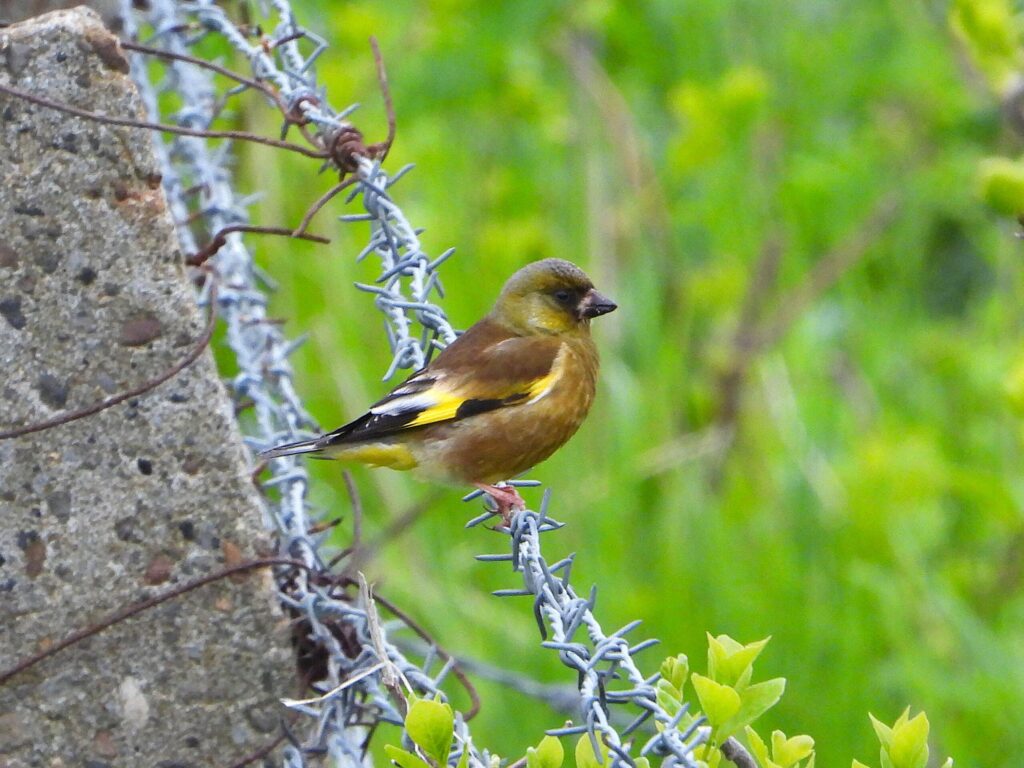
The Oriental Greenfinch is a common bird with yellow markings on its wings.
Its body is mostly brownish, but the yellow patches on the wings stand out when the bird is flying. This flash of color often catches the eye.
The species is widely distributed from low mountains to urban areas.
It can often be seen in parks, farmland, and residential neighborhoods. It mainly feeds on plant seeds.
▶ Read the species guide: Oriental Greenfinch
Black-faced Bunting
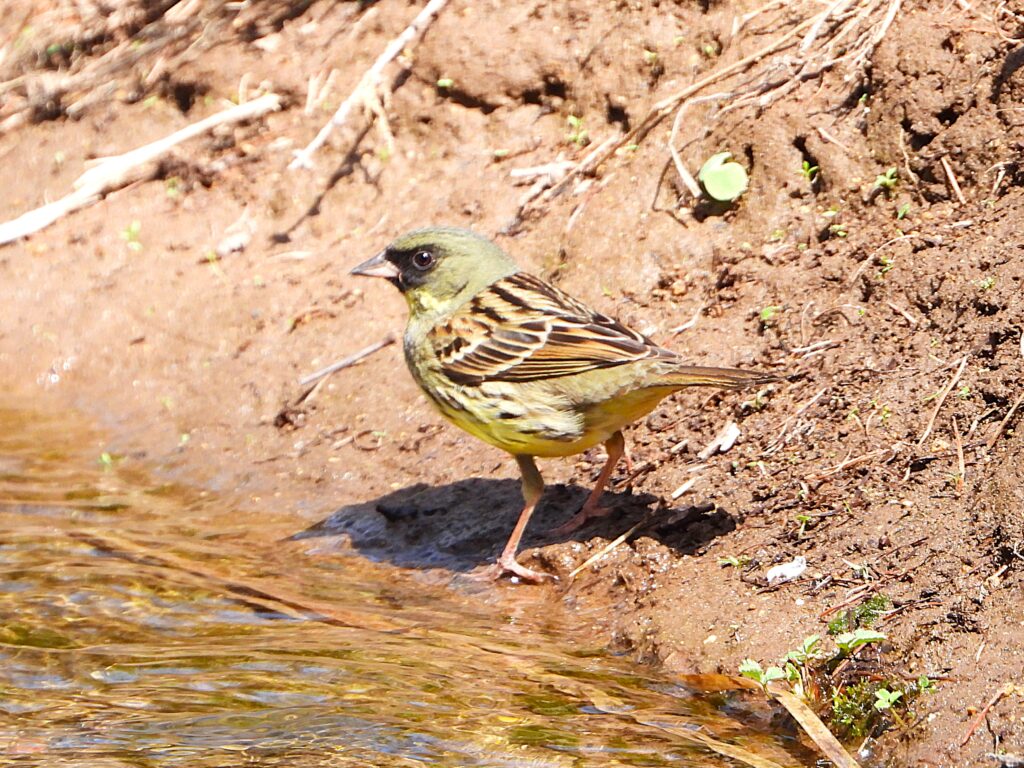
The Black-faced Bunting is a bunting species with yellowish underparts.
It breeds mainly in mountain areas and moves to lower elevations in winter.
During colder months it can often be seen in grasslands, shrubs, and woodland edges.
These birds usually forage on the ground, searching for seeds and insects.
▶ Read the species guide: Black-faced Bunting
How to Identify Yellow Birds in Japan
If you see a yellow bird in Japan, the location and behavior can help you identify it.
A bright yellow bird in a forest during spring or summer may be a Narcissus Flycatcher.
A yellow-bellied bird walking along a river or stream is likely a Grey Wagtail.
Small yellow birds gathering in trees during winter could be Eurasian Siskins.
Birds with yellow wing patches seen in parks or residential areas are often Oriental Greenfinches.
In winter grasslands or woodland edges, a yellowish bird on the ground may be a Black-faced Bunting.
Where Yellow Birds Live in Japan
Different yellow birds prefer different habitats.
Narcissus Flycatchers live mainly in forests.
Grey Wagtails are usually found along rivers and streams.
Oriental Greenfinches often appear in parks, farmland, and residential areas.
During winter, Eurasian Siskins are commonly seen in forests and mountain areas.
Black-faced Buntings are often found in grasslands and woodland edges.
Observing the surrounding environment can help you identify the bird you see.
Best Seasons to See Yellow Birds in Japan
The best season to see yellow birds depends on the species.
Narcissus Flycatchers appear in forests during spring and summer when they come to Japan to breed.
Grey Wagtails and Oriental Greenfinches can often be seen throughout the year in many areas.
Eurasian Siskins and Black-faced Buntings are easier to observe in winter.
During this season many trees lose their leaves, which makes birds easier to spot.
Birds Often Mistaken for Yellow Birds
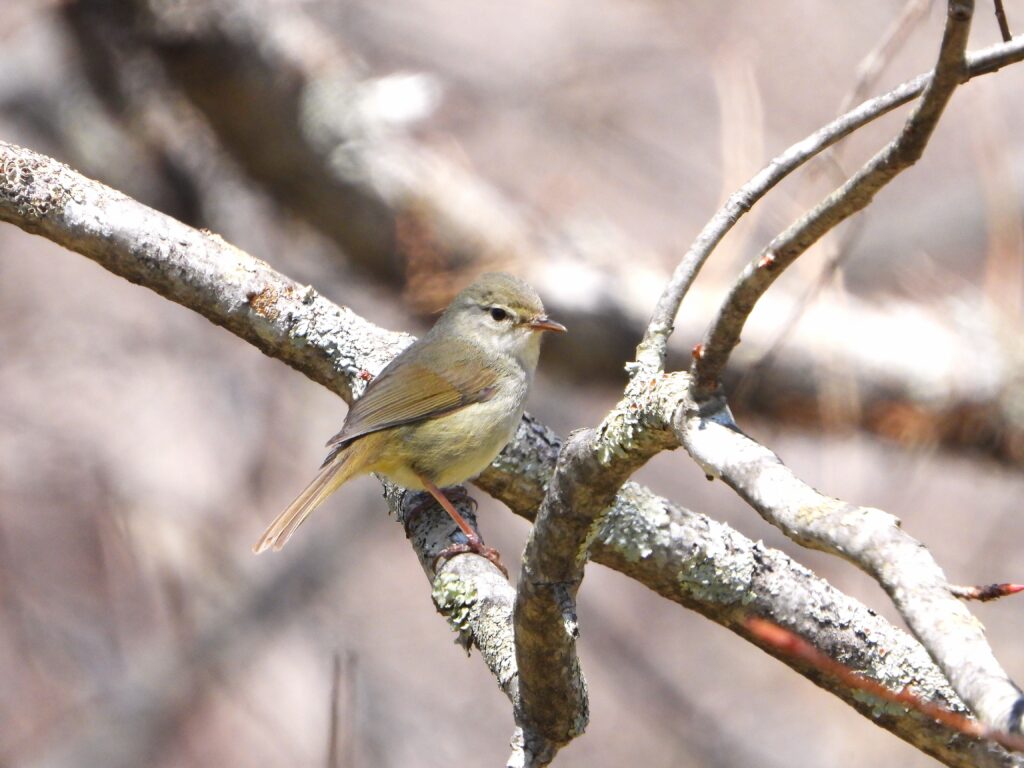
Sometimes birds that appear yellow are actually closer to yellow-green in color.
Japanese White-eye
The Japanese White-eye is a small bird with bright yellow-green plumage.
It is easily recognized by the white ring around its eyes.
This species is very common in Japan and is often seen feeding on nectar from plum and cherry blossoms.
Japanese Bush Warbler
The Japanese Bush Warbler is often associated with the color “uguisu green.”
In reality, its plumage is closer to a dull olive tone.
It is famous for its distinctive spring song, often written as “ho-hokekyo.”
Conclusion
Several birds in Japan show noticeable yellow coloration.
Some of the most recognizable species include the Narcissus Flycatcher, Grey Wagtail, Eurasian Siskin, Oriental Greenfinch, and Black-faced Bunting.
Birds like the Japanese White-eye may also appear yellow at first glance because of their yellow-green plumage.
By paying attention to the habitat, season, and behavior of a bird, it becomes much easier to identify the species you are seeing.