
Wildlife in Sapporo – Urban Nature in Japan’s Northern City
Introduction
Sapporo is one of Japan’s largest cities, yet it remains closely connected to surrounding natural environments. Forested hills, rivers, and large green spaces are located within or directly adjacent to the urban area, making nature observation possible without traveling far from the city.
This article explains how wildlife observation can occur in an urban setting like Sapporo, what types of environments are most suitable, how seasonal conditions influence observation, and how to watch wildlife responsibly. Rather than guaranteeing sightings, it provides realistic expectations based on habitat and animal behavior.
For a broader overview of wildlife you can see around Japan’s major cities, see Wildlife You Can See Around Japanese Cities.
→Wildlife You Can See Around Japanese Cities

Why Wildlife Observation Is Possible in Sapporo
Wildlife presence in cities depends primarily on habitat availability and proximity to natural landscapes.
In Sapporo, several major parks and hills retain forest characteristics rather than being fully landscaped. These areas provide vegetation structure and relatively quiet conditions that are suitable for birds and some mammals.
In addition, forested hills and river systems are located close to residential and commercial districts. This spatial arrangement allows animals that live in nearby natural areas to remain close to the city, even if they are rarely visible.
This combination does not mean wildlife is common everywhere in the city, but it helps explain why occasional observation is possible in certain environments.
Urban Environments Where Observation Is Most Realistic
Instead of focusing on specific “hotspots,” it is more accurate to think in terms of environment types.
Forested parks and wooded hills
Parks that include natural forest or border undeveloped hillsides are among the most reliable environments for wildlife observation. These areas support birds and small mammals and tend to be quieter during early morning hours.
Riverside green spaces
Riverside areas often maintain continuous vegetation and open space. These conditions can support birds and may allow animals to move along the river even within an urban setting.
Water-rich parks and ponds
Parks centered on ponds or wetlands frequently attract birdlife and make animal presence easier to notice through movement, calls, or tracks.
What You Can Realistically Expect to Observe
In an urban environment like Sapporo, setting realistic expectations is important.
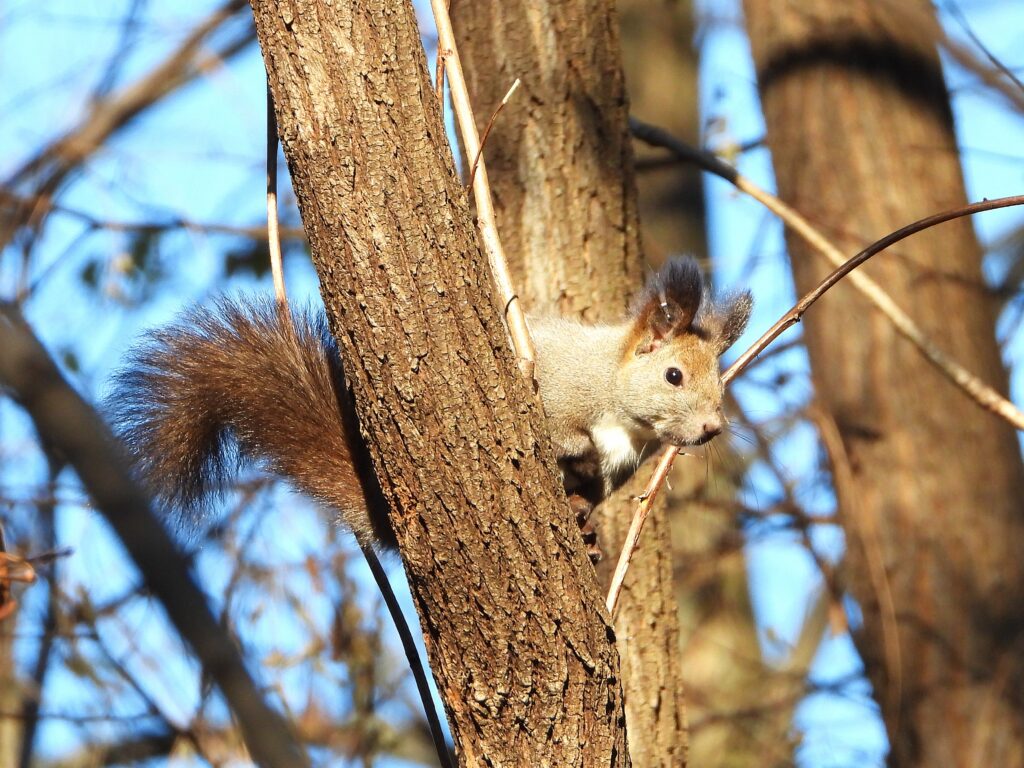
The most commonly observed wildlife includes birds and small mammals, particularly in forested or water-adjacent areas. Nocturnal animals may be present but are rarely seen directly.
In many cases, indirect signs—such as tracks in snow or soil, feeding marks, or calls—are more frequently observed than the animals themselves. These signs still provide meaningful evidence of wildlife presence.
Seasonal Differences in Observation
Season affects how wildlife can be observed, but not necessarily how abundant animals are.
Spring and summer bring increased biological activity, especially among birds. However, dense vegetation can reduce visibility.
Autumn often offers clearer views along forest edges as leaves fall and animal movement becomes easier to notice.
Winter does not guarantee more sightings, but snow can make tracks and movement patterns easier to detect, allowing observers to interpret wildlife activity even when animals remain hidden.
Safety and Responsible Observation
Urban wildlife observation should always prioritize safety and minimal disturbance.
Keep distance and avoid approaching animals.
Do not feed wildlife under any circumstances.
Use zoom lenses instead of moving closer.
Respect restricted or protected areas.
These practices protect both people and animals and help prevent unnecessary conflict.
Author’s Impression
What makes Sapporo distinctive is not frequent wildlife encounters, but the ease of access to real habitat within a large city. Forests, rivers, and green spaces are part of everyday urban geography.
Approaching wildlife observation with patience and realistic expectations allows Sapporo to be appreciated as a city where urban life and natural ecosystems exist unusually close together.
Related Wildlife Guides
・Wildlife You Can See Around Japanese Cities
・Fox Watching in Hokkaido – Best Spots & Safety | Wildlife of Japan
・Wildlife in Hokkaido – See Japan’s Most Incredible Animals in Their Natural Habitat
・Wildlife in Japan: Where to See Wild Animals by Region