Why Do Snow Monkeys Bathe in Hot Springs?
Introduction
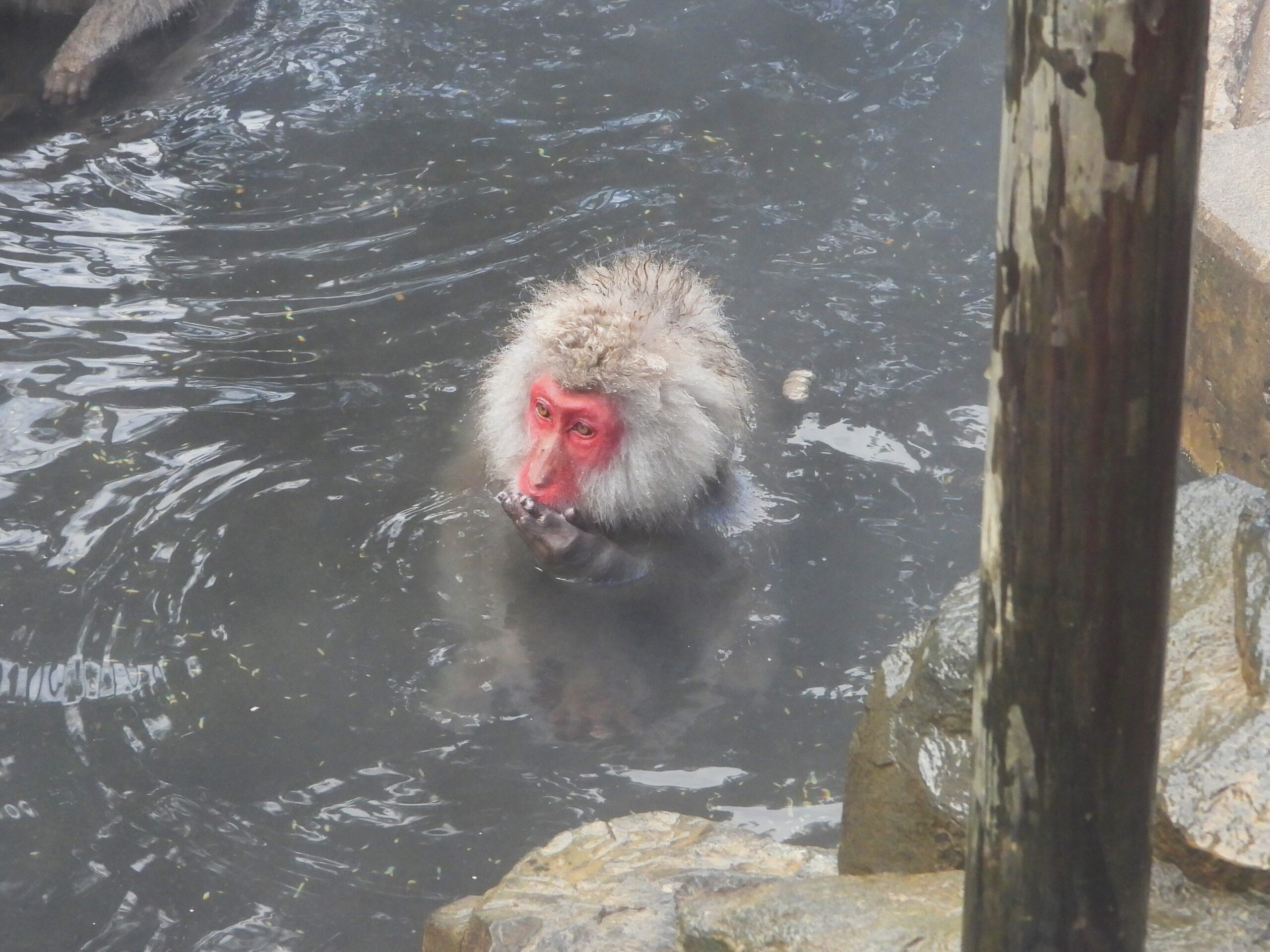
Snow monkeys at Jigokudani bathe in hot springs mainly to keep warm during Japan’s cold winter months.
Research has also found that bathing is associated with lower physiological stress in female Japanese macaques, suggesting that the warm water provides benefits beyond simply feeling comfortable.
However, hot spring bathing is not a behavior shared by Japanese macaques across Japan. It is a learned tradition found in the Jigokudani troop, and even there, not every monkey enters the water. The behavior began in the 1960s and gradually spread through the group.
So why did these particular snow monkeys start bathing, why do they do it mostly in winter, and why do some individuals never enter the hot spring?
This guide looks at what observations and scientific research tell us about one of Japan’s most famous wildlife behaviors.
Is Hot Spring Bathing a Natural Behavior?
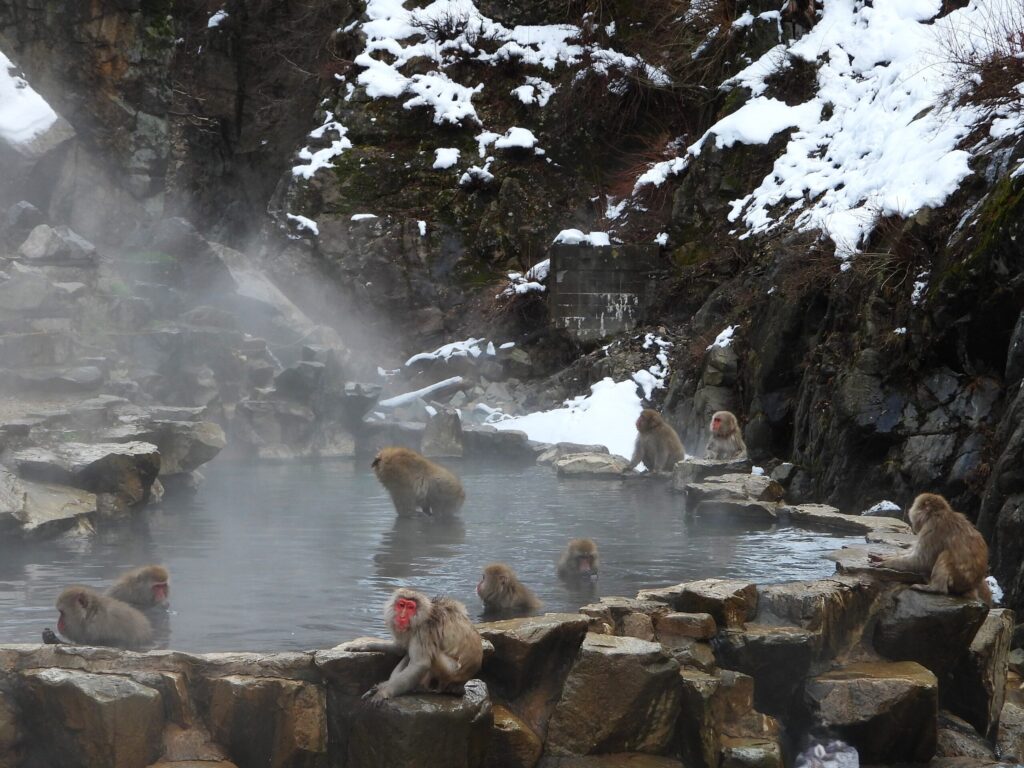
Hot spring bathing is not a typical behavior of Japanese macaques across Japan.
Most wild Japanese macaque populations never enter hot springs. The behavior seen at Jigokudani developed within this particular troop after a young monkey began using a nearby outdoor bath in the 1960s. Other monkeys gradually copied the behavior, and it has since been passed down through generations.
So the behavior is best understood as learned rather than instinctive.
The monkeys are not trained to bathe for visitors, and they are free to enter or leave the water whenever they choose. Even within the Jigokudani troop, some individuals regularly use the hot spring while others rarely or never enter it.
This makes hot spring bathing a remarkable example of behavioral flexibility in wild Japanese macaques rather than a behavior shared by the species as a whole.
How Did Snow Monkeys Start Using Hot Springs?
The famous bathing behavior at Jigokudani began in the 1960s.
Young macaques started entering the outdoor bath at the nearby Korakukan inn during winter. Other monkeys gradually followed, and the behavior spread through the troop.
Jigokudani Yaen-Koen opened in 1964. Because sharing the same bath with wild monkeys created hygiene concerns, a separate outdoor hot spring was later built specifically for the macaques. It was completed three years after the park opened.
The behavior continued across generations and eventually became the winter scene that made Jigokudani famous around the world.
In 1970, a photograph of a Japanese macaque bathing in the snow appeared on the cover of LIFE magazine, helping bring international attention to the snow monkeys.
Why Is Hot Spring Bathing Mostly Seen in Winter?
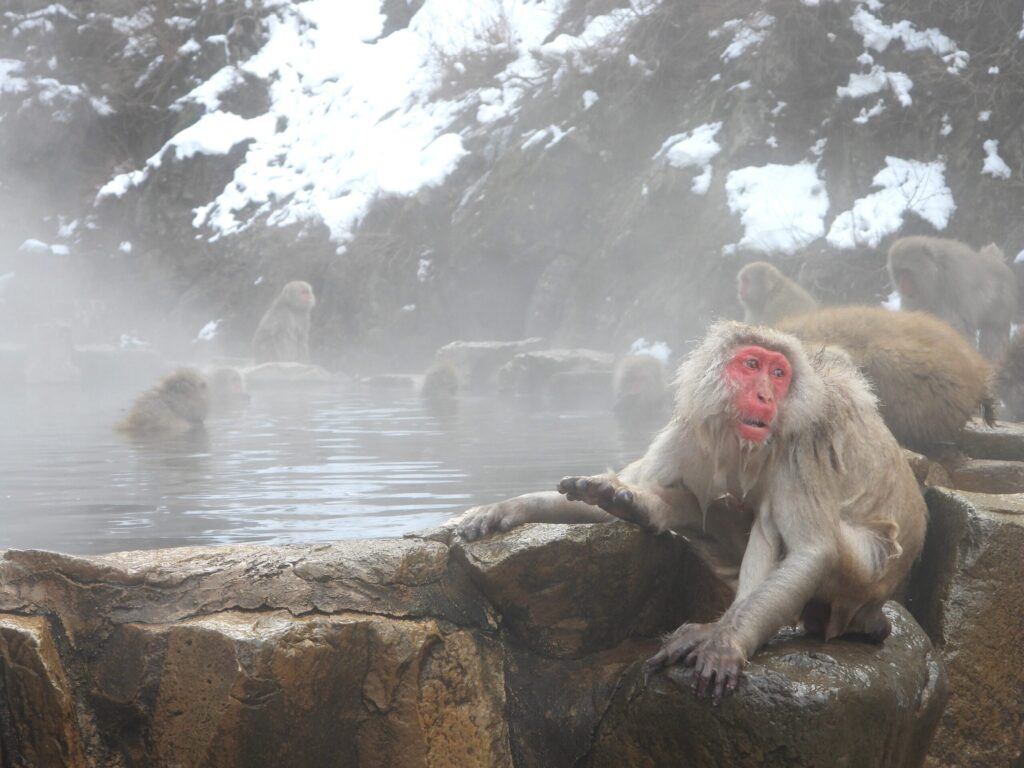
Snow monkeys use the hot spring mainly during winter because the warm water helps them cope with cold conditions.
Researchers studying female Japanese macaques at Jigokudani found that they bathed more often in winter than in spring, especially during colder weeks. The study also suggested that bathing helps reduce heat loss and the physiological stress associated with maintaining body temperature in cold weather.
This explains why the famous bathing behavior is most strongly associated with the coldest months.
The official park also notes that the monkeys mainly use the hot spring to escape the winter cold and do not use it throughout the day or throughout the year.
In warmer seasons, the benefit of entering hot water is much smaller, so bathing becomes far less common.
Stress Reduction: What Research Suggests
Hot spring bathing may do more than help snow monkeys stay warm.
A 2018 study of 12 adult female Japanese macaques at Jigokudani measured fecal glucocorticoid metabolites, which are used as an indicator of physiological stress.
Researchers found that during winter, glucocorticoid levels were lower in weeks when the monkeys bathed than in weeks when they did not. The same pattern was not found in spring.
The study also found that dominant females tended to spend more time in the hot spring. Although higher-ranking females were involved in more aggressive interactions, access to the hot spring appeared to provide a physiological benefit during cold weather.
These results support the idea that hot spring bathing helps Jigokudani’s macaques cope with winter stress, not only by conserving body heat but also by reducing physiological stress.
Why Don’t All Snow Monkeys Bathe?
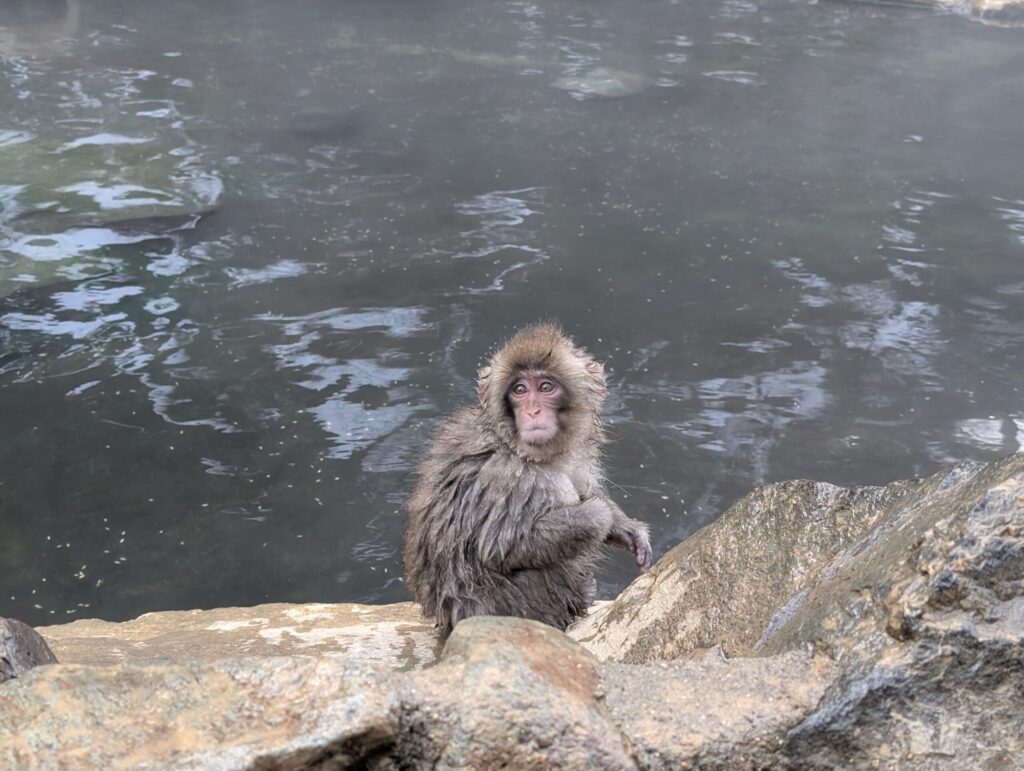
Not every snow monkey at Jigokudani uses the hot spring.
Bathing is a learned behavior rather than something every Japanese macaque instinctively does. Some individuals enter the water regularly, while others rarely or never bathe. The park itself notes that hot spring bathing is only one part of daily life and that some monkeys simply do not use the bath.
Long-term observations have also found differences between individuals. Adult females and juveniles tend to bathe more often than adult males and subadults, and infants whose mothers bathe are more likely to begin bathing themselves.
Social rank may also matter. Research has found that dominant females tend to spend more time in the hot spring, suggesting that access and social relationships within the troop can influence bathing behavior.
So even within Jigokudani, hot spring bathing is not universal. It depends on the individual, social learning, and conditions on the day.
Do Snow Monkeys Get Cold After Bathing?
It may look uncomfortable to see a wet snow monkey sitting outside in freezing winter conditions, but Japanese macaques are well adapted to the cold.
Their thick winter fur provides strong insulation, and Japanese macaques also have physiological adaptations that help them maintain body temperature in snowy mountain environments.
After leaving the hot spring, the outer fur may become wet, but the dense coat helps protect the skin and body from rapid heat loss. The monkeys also groom, rest, huddle together, and move through the surrounding forest as part of their normal behavior.
This does not mean that cold has no effect on them. Winter conditions are still demanding, which is one reason the warm water can provide an advantage during the coldest months.
Where Can You See Snow Monkeys Bathing?
The best-known place to see Japanese macaques bathing in hot springs is Jigokudani Snow Monkey Park in Nagano Prefecture.
The monkeys here are wild Japanese macaques that live in the surrounding mountains and visit the park freely. Hot spring bathing is most commonly seen during the coldest months, generally from December to March.
However, seeing monkeys in the water is never guaranteed. They do not use the hot spring all day, and there may be times when no monkeys are bathing at all.
If seeing this behavior is one of your main goals, winter—especially January and February—is the strongest season to consider.
▶ Jigokudani Snow Monkey Park Guide: Tickets, Access & Winter Tips
▶ Best Time to Visit Jigokudani Snow Monkey Park
Want to see the snow monkeys for yourself? Guided tours to Jigokudani are available from Nagano and other nearby areas, making it easier to visit during the winter season.
My Experience Watching Snow Monkeys in the Hot Spring
I have visited Jigokudani Snow Monkey Park myself and watched Japanese macaques using the hot spring.
Seeing the behavior in person felt very different from simply looking at photographs. Some monkeys were resting in the water, while others stayed outside the bath, grooming, moving around the valley, or interacting with other members of the troop.
What stood out to me was that the hot spring was only one part of their behavior. The monkeys were not entering the water for visitors—they were simply choosing whether or not to use it as part of their normal day.
That made the experience feel much more like wildlife observation than a staged tourist attraction.
For me, seeing the monkeys use the hot spring was memorable, but watching the troop behave naturally around it was even more interesting.
Related Snow Monkey Guides
Want to learn more about snow monkeys in Japan? These guides cover visiting Jigokudani, the best season to go, Japanese macaque biology, and other places to see them.
▶ Jigokudani Snow Monkey Park Guide: Tickets, Access & Winter Tips
▶ Best Time to Visit Jigokudani Snow Monkey Park