Iwakuni White Snake – Why This Rare Snake Is Protected in Japan
Introduction
The Iwakuni White Snake is not simply a rare snake with unusual coloring.
It is a locally protected population found almost exclusively in Iwakuni City, Yamaguchi Prefecture, and has been preserved through a combination of natural conditions and long-standing cultural protection.
Unlike most snakes in Japan, which have often been feared or killed, the white snake of Iwakuni has been carefully protected for generations. This article explains what the Iwakuni White Snake is, where it is found, and why it has been designated as a protected natural monument.

Appearance
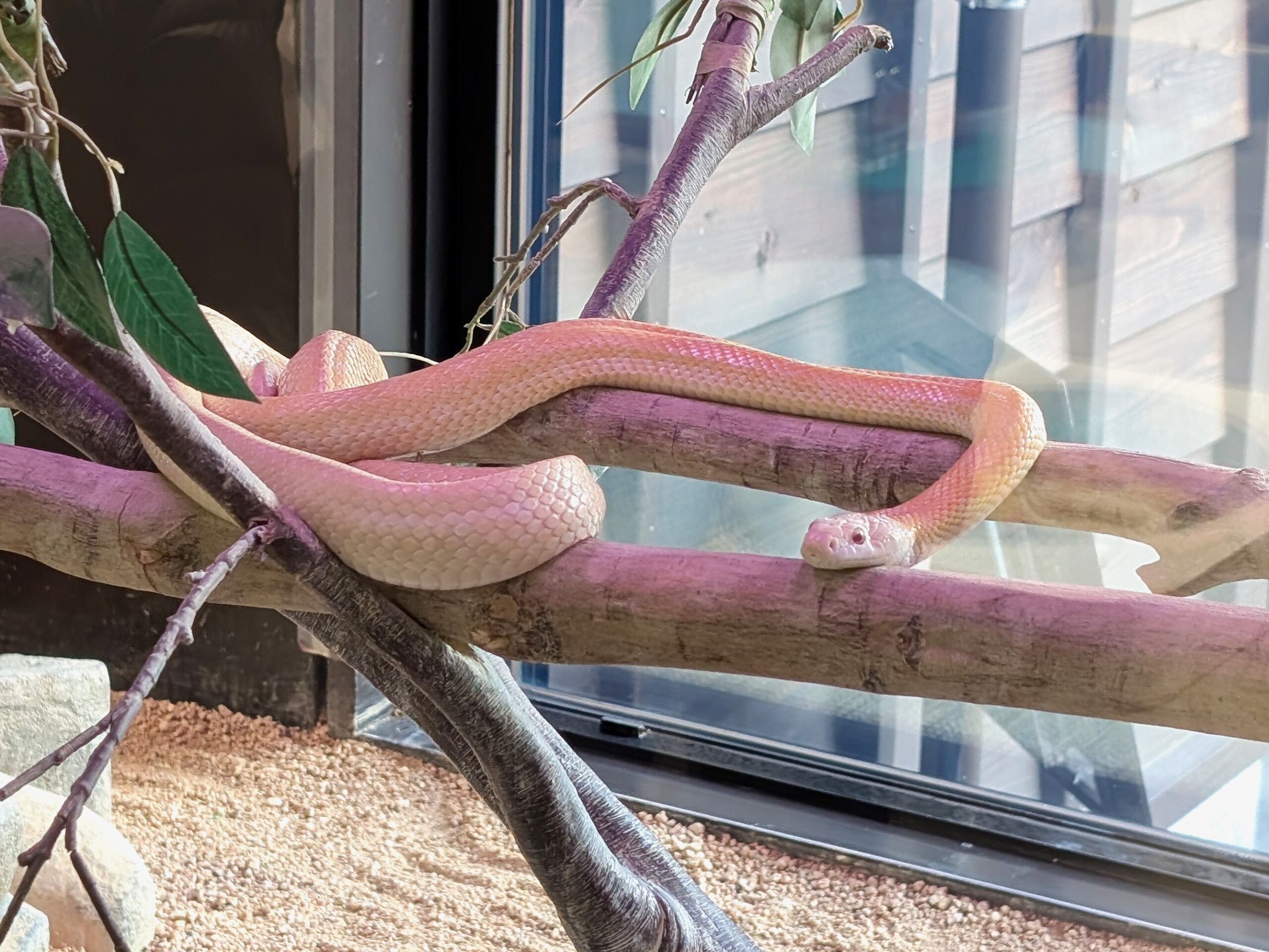
The Iwakuni White Snake has a pale white to creamy body color and reddish or pinkish eyes. It is a white (albino) form of the Japanese rat snake (Elaphe climacophora), and this coloration has been maintained within the local population through long-term protection.
In body size and shape, it is comparable to a typical Japanese rat snake. The body is thick and muscular rather than slender, which often surprises visitors who expect a delicate appearance based on photographs.
This white coloration is not the result of recent breeding for display purposes, but a naturally occurring form that has been preserved in the Iwakuni area.
Habitat & Distribution
The distribution of the Iwakuni White Snake is extremely limited.
It is found only in and around Iwakuni City, making it a geographically restricted population.
Historically, these snakes lived near human settlements, farmland, and river systems, where food sources such as rodents were readily available. Because of this close proximity to people, the population was particularly vulnerable to human attitudes and actions.
Today, sightings of white snakes in the wild are rare. Most individuals are maintained through conservation programs and protected facilities to ensure the survival of the population.

Behavior
The Iwakuni White Snake generally displays the same behavior as the Japanese rat snake. It is non-aggressive and tends to avoid humans rather than confront them.
Like all wild snakes, it should not be approached or handled. While it is not considered dangerous, respecting its space is essential both for human safety and for conservation.
Diet
The diet of the Iwakuni White Snake mainly consists of small mammals, particularly rodents. This made the snake beneficial in agricultural areas, where it helped reduce damage to crops and stored food.
This practical role contributed to the snake being tolerated rather than eliminated, especially in farming communities.
Reproduction
The reproductive cycle of the Iwakuni White Snake follows that of the Japanese rat snake, with eggs laid during the warmer months.
Because the population is small and geographically limited, it is vulnerable to decline. Without ongoing protection and controlled conservation efforts, maintaining this unique population would be difficult.
Conservation

The protection of the Iwakuni White Snake is closely tied to local culture and history.
In many parts of Japan, snakes were feared and often killed. In Iwakuni, however, white snakes came to be regarded as auspicious and worthy of protection. This cultural attitude played a significant role in preventing their extermination.
Today, this tradition is symbolized by sites such as Iwakuni Shirohebi Shrine, which reflects the historical relationship between local people and the white snake.
In 1972, the Iwakuni White Snake was designated as a Natural Monument of Japan. Modern conservation efforts focus on carefully managing the population through protected environments rather than relying solely on natural survival.
Author’s Impression
When I visited Iwakuni in winter, I did not see any white snakes in the wild. However, I observed living individuals at the White Snake Shrine and the Shirohebi Museum.
Seeing them in person made it clear that they are wild animals being carefully protected, not pets or decorative exhibits.

Wondering where you can actually see the Iwakuni White Snake? This guide explains the museum, shrine, and what to realistically expect:
Where to See the Iwakuni White Snake – Museum, Shrine, and Can You Really See It?