Japanese Pheasant (Phasianus versicolor) – Wildlife of Japan
The Japanese pheasant (Phasianus versicolor) is the national bird of Japan and a species found only in the country. With its striking green plumage and long tail, it is closely connected to Japan’s landscapes and culture.
Unlike rare or elusive birds, the Japanese pheasant is relatively common. It lives in riverbanks, farmland, and open countryside, often surprisingly close to human activity.
In this guide, you’ll learn about the Japanese pheasant’s appearance, habitat, behavior, and where you can see it in Japan.
For a broader look at Japan’s birdlife, including common, native, endemic, and seasonal species:
▶ Explore the complete Birds in Japan guide
Appearance
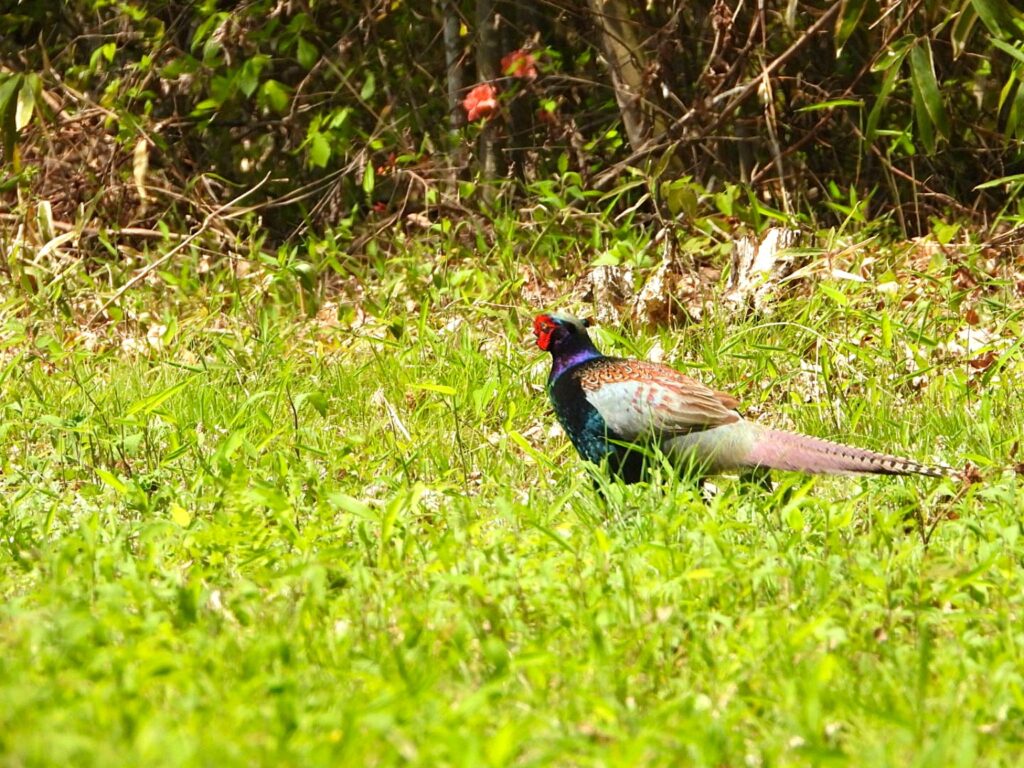
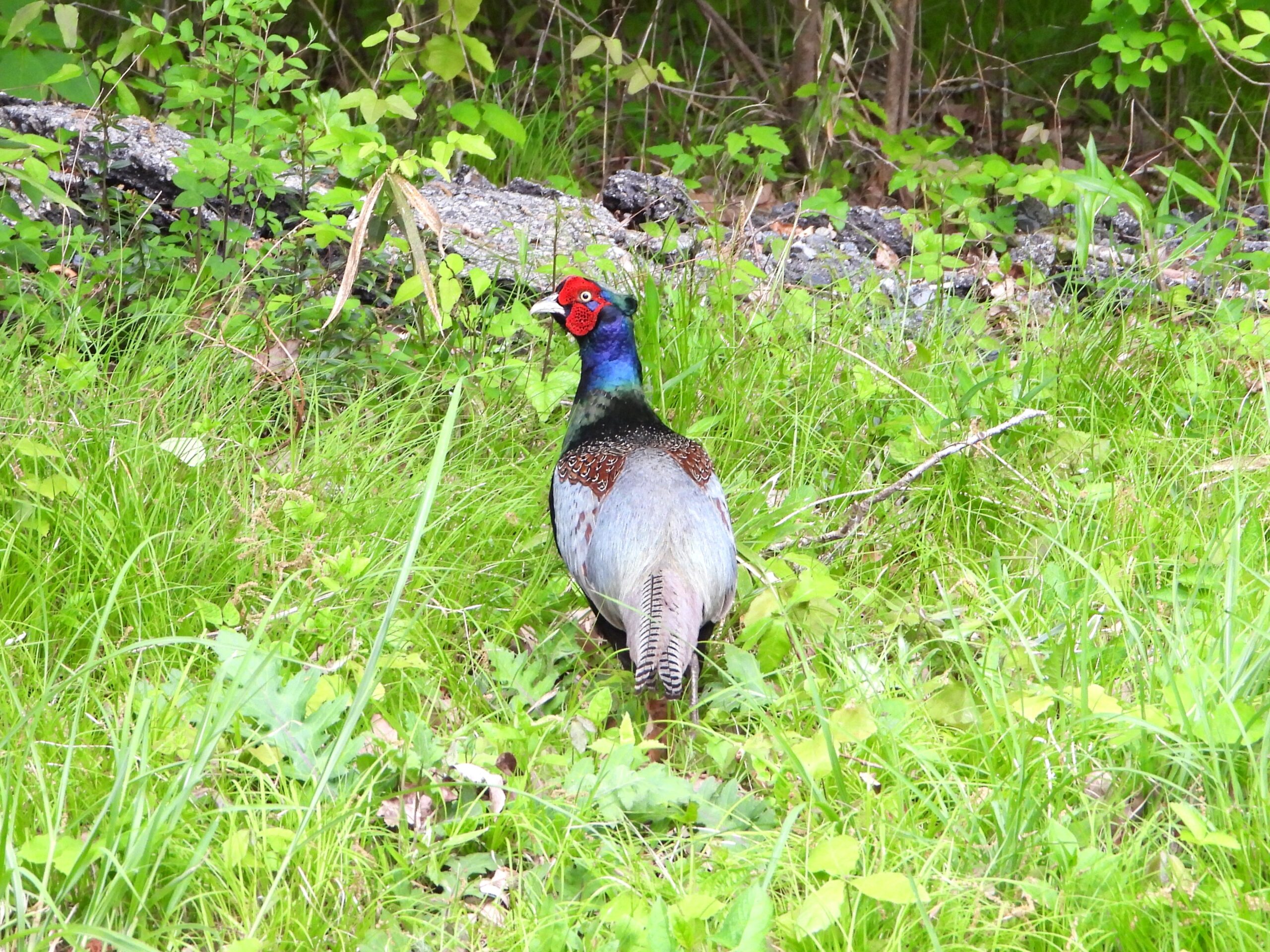
The male Japanese pheasant is easily recognizable by its glossy dark green body, bright red facial skin, and long, elegant tail. In sunlight, its feathers can appear almost iridescent.
Females look very different. They are brown with subtle patterns, allowing them to blend into grass and vegetation. This camouflage helps protect them while nesting on the ground.
In size, the Japanese pheasant is similar to a chicken, but males have a much longer tail.
Habitat & Distribution
The Japanese pheasant is endemic to Japan and is found mainly on the islands of Honshu, Shikoku, and Kyushu.
It prefers open habitats such as grasslands, farmland, riverbanks, and forest edges. Rather than deep forests, it tends to stay in areas where vegetation is mixed with open ground.
Because of this, it is one of the most accessible wild birds to observe in rural Japan.
Where to See in Japan
The best places to see Japanese pheasants are open, lowland environments where they can walk and forage on the ground.
Riverbanks are especially reliable. They are often seen walking along grassy riversides, making them one of the easiest wild birds to encounter in rural Japan.
Farmland and rice fields are also excellent locations. Early morning and late afternoon are the best times, when pheasants may appear along field edges or quiet rural paths.
They can also be found in grasslands, rural parks, and other quiet countryside areas.
The key is to focus on open spaces rather than dense forests, and to move slowly while scanning the ground.
Behavior
Japanese pheasants spend most of their time on the ground. They walk, forage, and hide in vegetation rather than flying.
When startled, they may suddenly burst into flight with loud wingbeats, but the flight is usually short. In most cases, they prefer to run and hide.
During the breeding season, males become more visible and territorial. They often call loudly with a distinctive “keen!” sound.
Diet
The Japanese pheasant is omnivorous. Its diet includes seeds, grains, insects, and small invertebrates.
In farmland areas, it often feeds on fallen seeds and insects on the ground.
Reproduction
Japanese pheasants nest on the ground, usually hidden in tall grass or dense vegetation.
The female lays eggs and incubates them alone. After hatching, the chicks can walk and feed themselves almost immediately, staying close to their mother.
Conservation
The Japanese pheasant is classified as Least Concern and remains common across much of Japan.
However, changes in land use and habitat conditions can affect local populations. Maintaining suitable farmland and open habitats is important for its long-term stability.
The National Bird of Japan
The Japanese pheasant was selected as the national bird of Japan in 1947 by the Ornithological Society of Japan.
It was chosen because it is a species unique to Japan and widely familiar to the public. Unlike rare wildlife, the Japanese pheasant has long lived close to human environments such as farmland and rural areas.
The bird also appears in traditional Japanese folklore, most famously in the story of Momotaro.
Because of its strong connection to both everyday life and cultural heritage, the Japanese pheasant was considered a fitting symbol of Japan.
Author’s Impression
The Japanese pheasant has been a familiar bird to me since childhood. It was something I occasionally saw in everyday life, so I never thought much about it at the time.
However, as I grew older, I began to realize how remarkable it is. In Japan, such a large and beautifully colored bird still lives freely in ordinary environments.
Seeing it now, I feel that it represents something unique about Japan’s nature — the fact that wildlife still exists close to people’s daily lives.