Little Stag Beetle (Dorcus rectus) – Wildlife of Japan
Introduction
The little stag beetle (Dorcus rectus), known in Japan as Kokuwagata, is one of the most common stag beetles you can find in the country.
Unlike the famous giant species, this beetle is smaller and less flashy. However, it is far easier to encounter, often appearing in everyday environments such as woodlands, parks, and even areas close to human habitation.
If you are exploring Japan in summer, this is one of the stag beetles you are most likely to see.
Looking for other beetles found in Japan? This guide covers common species, the best seasons to see them, and where they can be found.
▶ Explore Beetles in Japan
Appearance
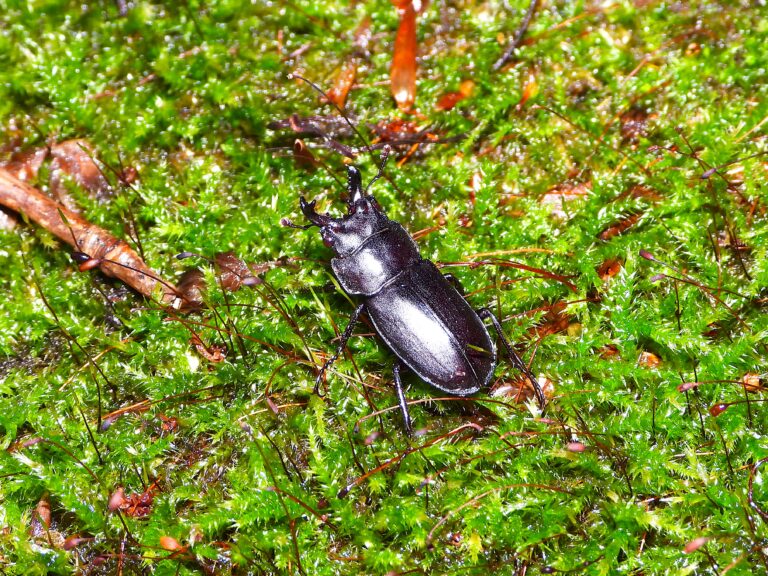
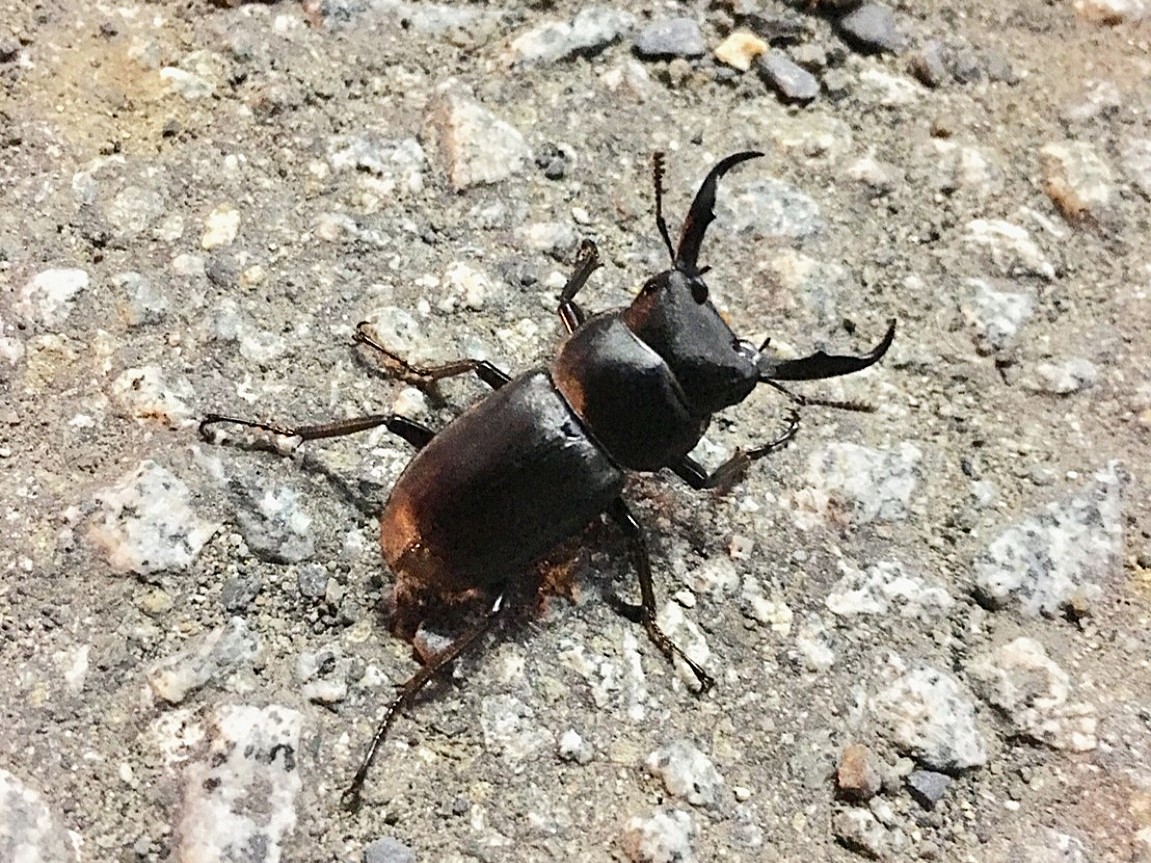
The little stag beetle has a glossy black to dark brown body with a relatively flat shape.
Males typically range from about 17 to 54 mm, while females are smaller, usually around 21 to 33 mm. Males have enlarged mandibles, but compared to species like the giant stag beetle, their jaws are slimmer and less robust.
One interesting feature of this species is the variation among males. The size and shape of the mandibles can differ significantly between individuals, and some males have more pronounced inner teeth than others.
Females, on the other hand, have much smaller mandibles and a simpler, more rounded appearance.
Habitat & Distribution
The little stag beetle is widely distributed across Japan, including Hokkaido, Honshu, Shikoku, and Kyushu.
It mainly inhabits deciduous forests with trees such as oak (Quercus species), but it is not limited to remote mountain areas. It can also be found in parks, secondary forests, and even along tree-lined streets in urban environments.
Larvae develop inside decaying broadleaf wood, making fallen logs and rotting wood essential for their life cycle.
Behavior
Adults are most commonly seen from late spring to early autumn (around May to early October), with peak activity during summer.
They are generally easier to observe at night, when they gather around tree sap. During the day, they often hide in crevices under bark or inside rotting wood, which can make them harder to spot.
Another important trait of this species is that adults are known to overwinter, meaning they can survive through winter and continue activity the following year.
Diet
Adult little stag beetles feed primarily on tree sap, especially from oak trees such as Quercus acutissima (sawtooth oak) and related species.
Larvae live inside decaying wood and feed within it as they grow. This dependence on rotting wood makes forest structure an important factor for their survival.
Reproduction
Females lay eggs in or near decaying broadleaf wood. After hatching, the larvae remain inside the wood, where they feed and develop.
They eventually pupate within the wood and emerge as adults. The exact development time can vary depending on environmental conditions such as temperature.
Conservation
The little stag beetle is still considered a common species in Japan. However, it depends heavily on suitable habitats.
The removal of dead wood, loss of deciduous forests, and changes in woodland management can reduce available breeding sites. Maintaining natural forest environments with sufficient dead wood is important for supporting this species.
Author’s Impression
The little stag beetle may not be the most impressive species at first glance, but it represents the “real” experience of summer insects in Japan.
In my own field observations, this is the stag beetle I encounter most often when checking sap trees at night. Finding multiple individuals on a single tree or spotting a larger male among them is always exciting.
For anyone interested in Japanese wildlife, this is one of the best species to start with.