
Are Nara Deer Dangerous? What Tourists Need to Know
Nara’s deer are generally calm around people, but they are still wild animals and can injure visitors.
Bites, kicks, charges, and injuries from antlers can occur, especially when food is involved or during certain times of the year.
The risk is higher around females with young in spring and adult males during the autumn rut. Problems can also happen when visitors tease deer with crackers, touch them, or get too close.
You do not need to be afraid of visiting Nara Park, but you should know how to behave around the deer.
This guide explains when Nara deer can be dangerous, what kinds of injuries can occur, how to feed deer crackers safely, and what to do if a deer becomes aggressive.
Are Nara Deer Dangerous? The Short Answer
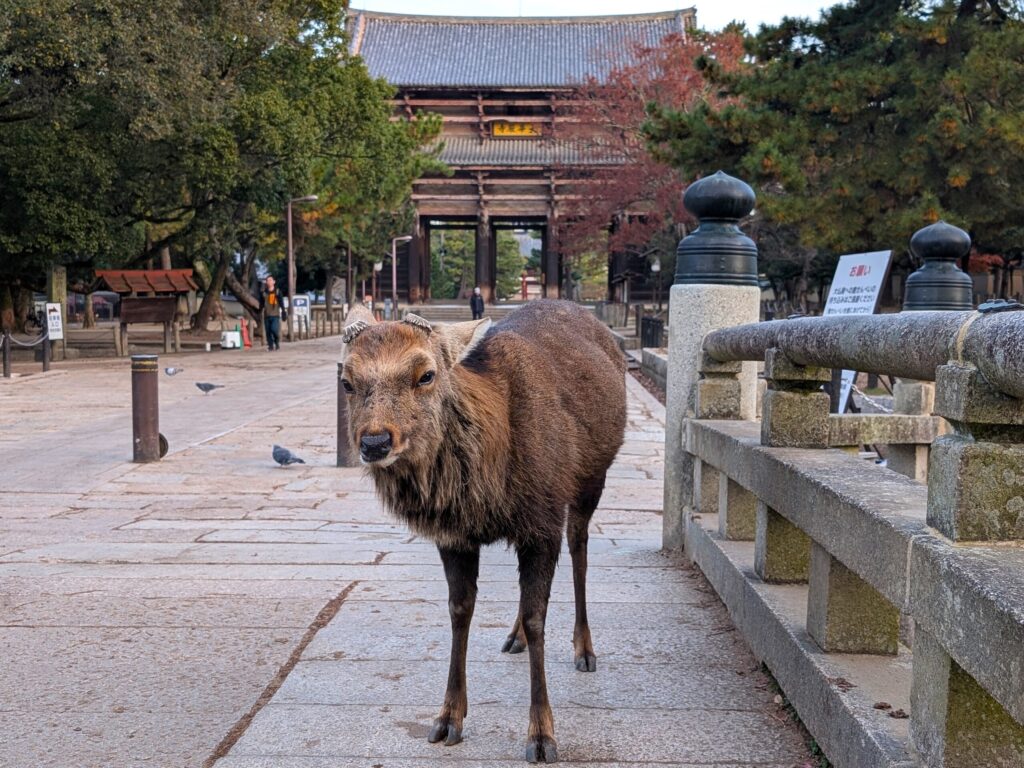
Nara deer are not usually aggressive toward people, but they are still wild animals and can cause injuries.
They may bite, kick, charge, or strike with their antlers, especially if they feel threatened or become excited around food.
Most visitors can enjoy Nara Park safely by keeping a little distance, avoiding unnecessary touching, and following the local feeding rules.
Extra caution is needed during two periods of the year: spring, when females are protecting young fawns, and autumn, when adult males enter the rut and can become more aggressive.
The key is not to treat the deer like pets just because they are comfortable around people.
Why Nara Deer Sometimes Become Aggressive
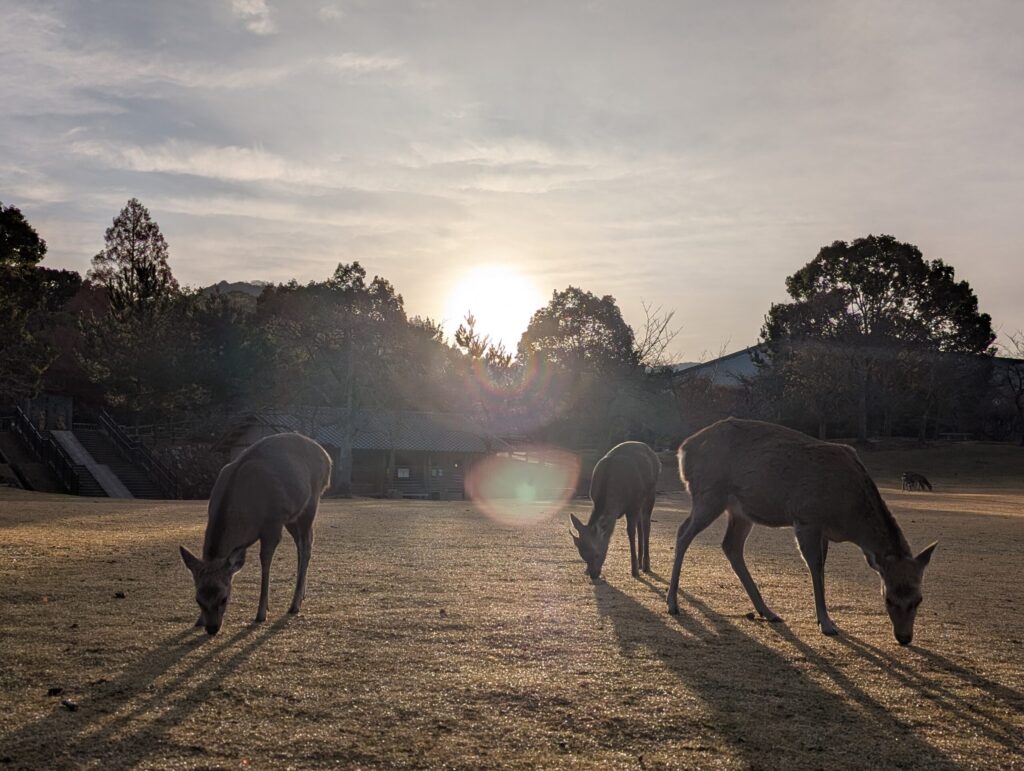
Nara deer usually have little reason to confront people. Problems are more likely to occur in specific situations involving food, young fawns, the autumn breeding season, or people getting too close.
Understanding these situations makes it much easier to avoid trouble.
Deer Crackers and Food
Food is one of the most common situations in which deer become pushy around visitors.
Many deer in Nara Park are accustomed to receiving deer crackers from people. Once a deer sees that you have food, it may approach quickly, and several deer can gather around you at the same time.
Do not tease deer by holding crackers out of reach or repeatedly pulling food away. If you decide to feed a deer, give the cracker promptly.
Once you have no food left, keep your hands empty and visible and move away calmly.
Females with Fawns in Spring and Early Summer
Female deer can become more defensive when they have young fawns nearby.
Never approach, touch, or try to pick up a fawn, even if it appears to be alone. Its mother may be nearby and may return after feeding.
Give both the fawn and surrounding deer plenty of space.
Adult Males During the Autumn Rut
Autumn is the breeding season for sika deer, and adult males can become more active and less tolerant of close approaches.
Keep extra distance from males during this period, particularly if they are interacting with other deer.
Antlers can cause serious injuries, but even males whose antlers have been cut are still powerful wild animals.
Getting Too Close or Touching Deer
Human behavior can also create unnecessary conflict.
Trying to pet a deer, standing directly in its path, surrounding it for photographs, or approaching too closely can make the animal uncomfortable.
Watch the deer’s behavior and give it an easy way to move away.
Being accustomed to people does not mean a deer wants to be touched.
Breeding Season (Autumn)
In autumn, male deer enter the breeding season. During this period, hormone levels increase, territorial behavior becomes stronger, and tolerance toward people can decrease.
Serious injuries are uncommon, but the risk is higher than in other seasons, especially near adult males with antlers. Giving extra space during autumn is strongly advised.
Human Behavior and Misunderstanding
Many incidents happen because visitors misinterpret deer behavior.
Common mistakes include trying to touch or pet deer, standing too close for photos, running suddenly, or treating deer like domesticated animals.
In most cases, deer are reacting to human behavior, not acting unpredictably.
How Can Nara Deer Injure People?
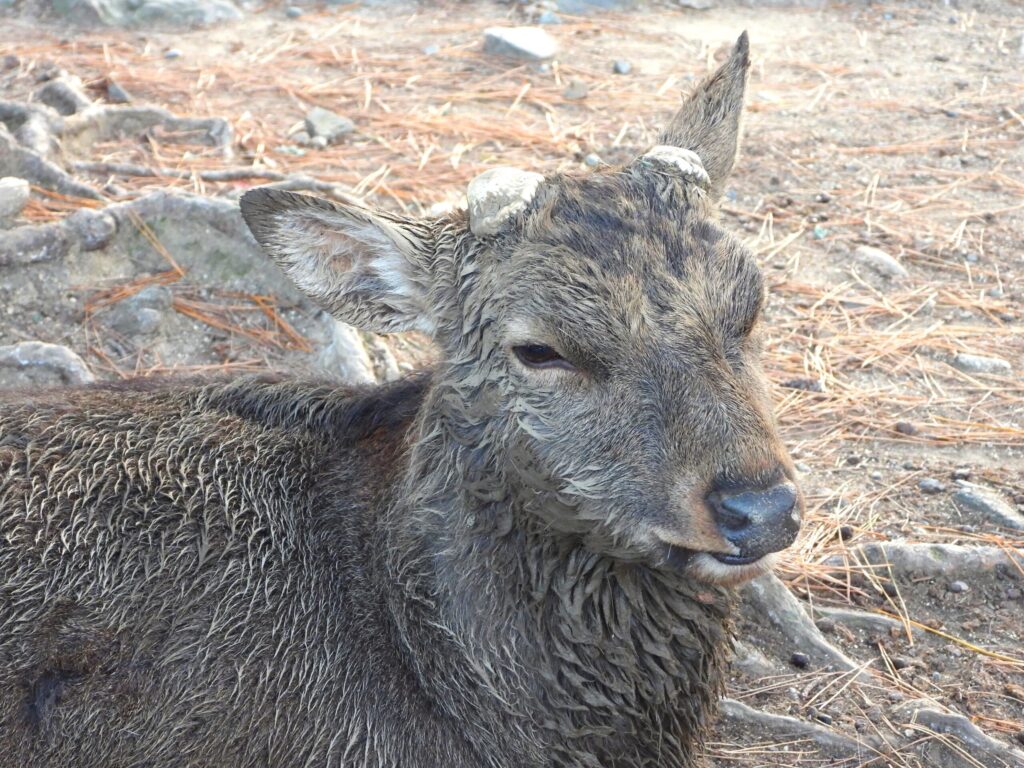
Nara deer can injure people in several ways.
Biting
A deer may bite when reaching for food or when a visitor keeps a deer cracker just out of reach.
Keep your fingers away from the deer’s mouth and give crackers promptly rather than teasing the animal.
Kicking
Deer have strong legs and can kick if they feel threatened, startled, or crowded.
Avoid standing directly behind a deer, and give it enough room to move away.
Charging or Knocking People Over
A deer may suddenly move toward a person, especially when food is involved or when several deer gather together.
Even without using its antlers, an adult deer is strong enough to knock someone off balance.
Injuries from Antlers
Adult males can cause more serious injuries with their antlers, particularly during the autumn breeding season.
Do not approach a male closely just because it appears calm. If a deer turns toward you, lowers its head, or appears agitated, increase your distance and give it a clear path to move away.
Most problems can be avoided by giving the deer space, handling food carefully, and remembering that they are wild animals.
How to Stay Safe Around Nara Deer
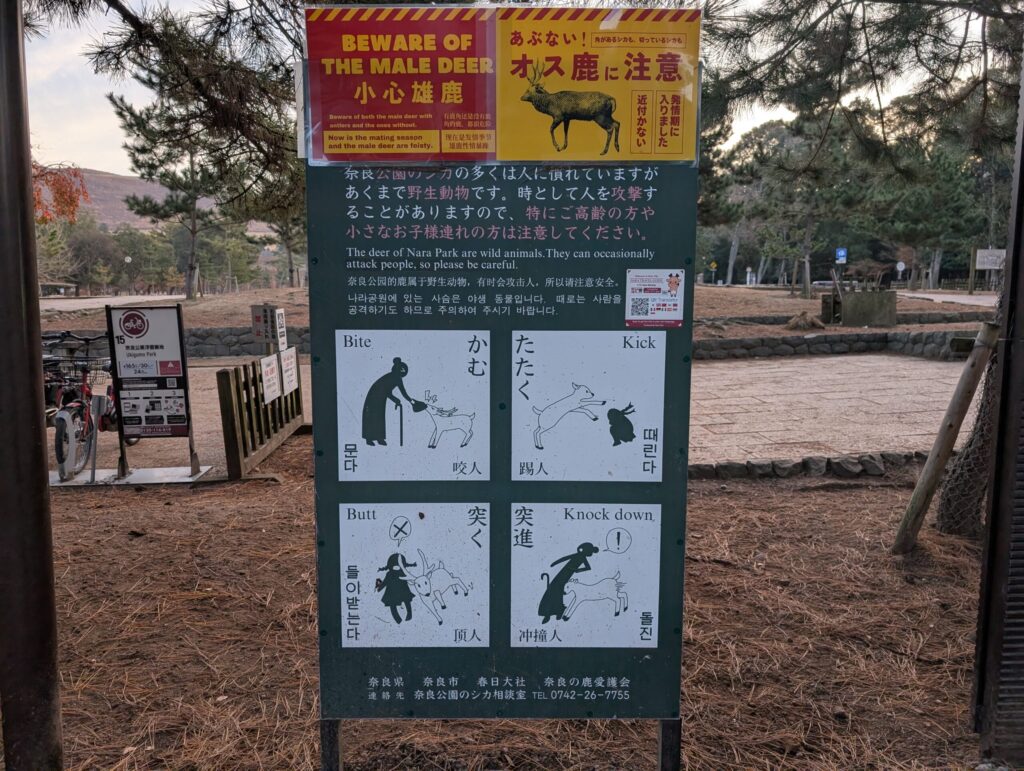
A few simple habits greatly reduce the chance of trouble around Nara’s deer.
Give Deer Crackers Promptly
If you choose to feed the deer, use only the official deer crackers sold around Nara Park.
Once a deer sees that you have food, give the cracker promptly. Do not hold it out of reach, hide it behind your back, or tease the deer while taking photographs.
Several deer may gather around you quickly, so pay attention to the animals beside and behind you as well.
When all your crackers are gone, show your empty hands clearly so the deer can see that you have no more food.
Keep Your Belongings Secure
Deer may investigate bags, maps, brochures, plastic bags, and other items that look or smell interesting.
Keep small belongings inside your bag and hold your bag securely when deer are close.
Do not allow deer to chew paper or plastic.
Do Not Touch or Crowd the Deer
Avoid petting deer or standing so close that they cannot move away comfortably.
Do not surround a deer for photographs, block its path, or approach a resting animal too closely.
If a deer moves away from you, let it go.
Stay Calm
Do not hit, chase, shout at, or intentionally frighten the deer.
If a deer becomes pushy, stay calm, stop encouraging the interaction, and create more distance when it is safe to do so.
Be Especially Careful with Young Children
Do not allow small children to approach deer alone.
Children can be knocked over more easily and may not recognize when a deer is becoming impatient or uncomfortable.
Adults should stay close whenever children interact with the deer.
Never Leave Food or Rubbish Behind
Do not feed deer anything other than deer crackers.
Take all rubbish with you, especially plastic bags and food packaging, which deer may try to eat.
What to Do If a Nara Deer Becomes Aggressive
If a deer becomes agitated or starts behaving aggressively, do not try to touch, push, or confront it.
Stop approaching and create more distance between yourself and the deer. Give the animal a clear route to move away rather than blocking its path.
If you are holding deer crackers, do not tease the deer or continue pulling the food away. Give the cracker promptly and end the interaction.
Be especially cautious around females with fawns. Repeated stamping of a front foot can be a warning that a mother deer is uncomfortable with your presence. Move away and give her and the fawn more space.
During the autumn rut, do not challenge or approach an agitated male. Increase your distance and allow the deer to move freely.
The safest response is usually simple: stay calm, stop the interaction, and give the deer more space.
Is Nara Park Safe for Children?
Yes, families with children can enjoy Nara Park, but young children should always be supervised closely around the deer.
Even a calm deer is large and strong enough to knock over a small child, especially when food is involved.
If your child wants to feed a deer, stay beside them and help them give the cracker promptly. Avoid allowing a child to stand alone while several deer gather around.
Children should also avoid touching fawns, approaching deer from behind, or getting between a mother and her young.
With close adult supervision and a little distance, visiting the deer can be a safe and memorable part of a family trip to Nara.
FAQ – Nara Deer Safety
Do Nara deer bite?
Yes. Nara deer can bite, particularly when food is involved.
Give deer crackers promptly, keep your fingers away from the deer’s mouth, and do not tease a deer by repeatedly pulling food away.
Do Nara deer attack tourists?
They can injure visitors, but problems are more likely in specific situations such as feeding, approaching too closely, the spring fawning season, and the autumn rut.
Treat the deer as wild animals and give them enough space.
When are Nara deer most aggressive?
Extra caution is needed around females with fawns from late spring into early summer and around adult males during the autumn breeding season.
Food can also make deer more pushy at any time of year.
Can you touch the deer in Nara Park?
It is better not to touch them.
Nara’s deer are wild animals even though many are accustomed to people. Observe them without petting, grabbing, or blocking their movement.
Is it safe to feed Nara deer?
You can feed them the official deer crackers sold around Nara Park.
Give the crackers promptly, watch for other deer approaching from around you, and never feed them other human food.
Conclusion
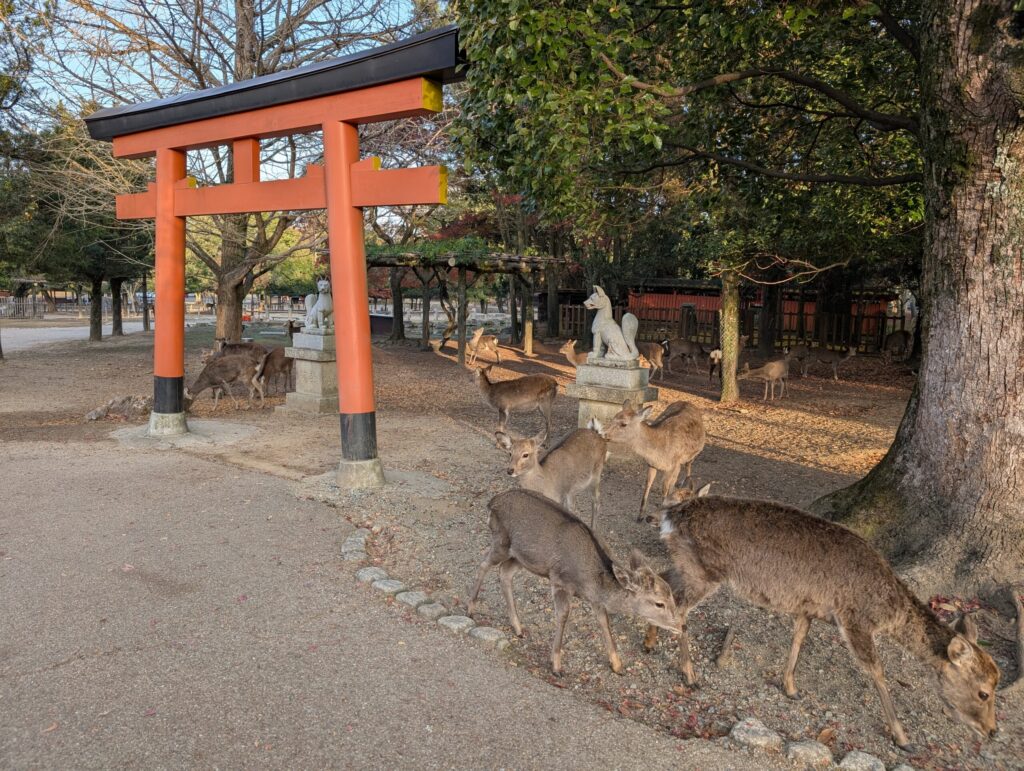
Nara’s deer are not animals that visitors need to fear, but they should always be treated as wildlife.
Most problems can be avoided by giving deer enough space, handling deer crackers properly, supervising children, and being especially careful around females with fawns and adult males during the autumn rut.
The unusual thing about Nara Park is how closely wild deer and people share the same space. Understanding their behavior makes it possible to enjoy that experience without putting yourself or the deer at unnecessary risk.
For information on where to see the deer, the best times to visit, and photography tips: