Aoashi-naga Hanamuguri (Gnorimus subopacus) – Wildlife of Japan
Introduction
The Aoashi-naga Hanamuguri is a little-known flower chafer beetle found in forested regions of Japan. As a minor species with limited ecological studies, this article focuses strictly on information that is well documented and widely accepted in reliable references.
Appearance
Adults measure approximately 17–23 mm in length.
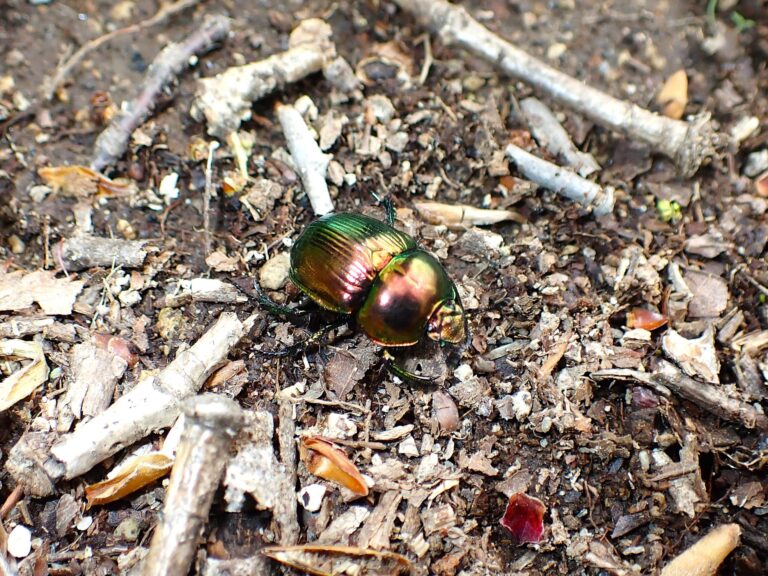
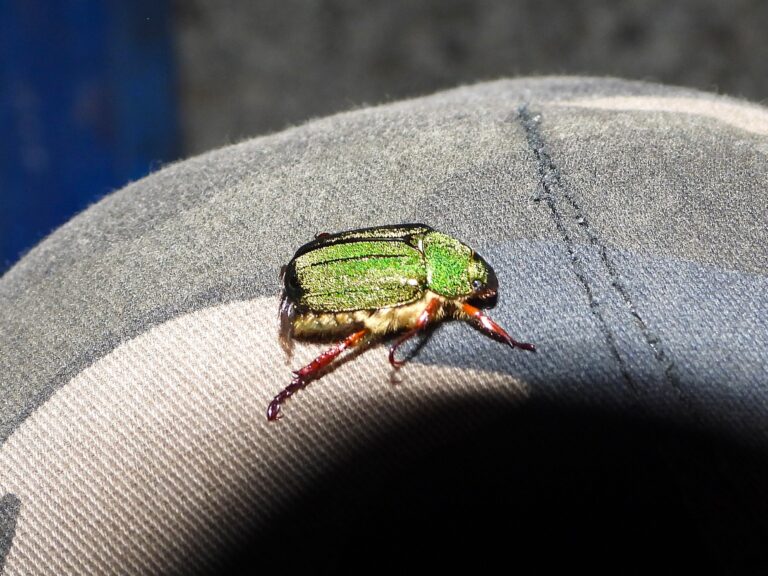
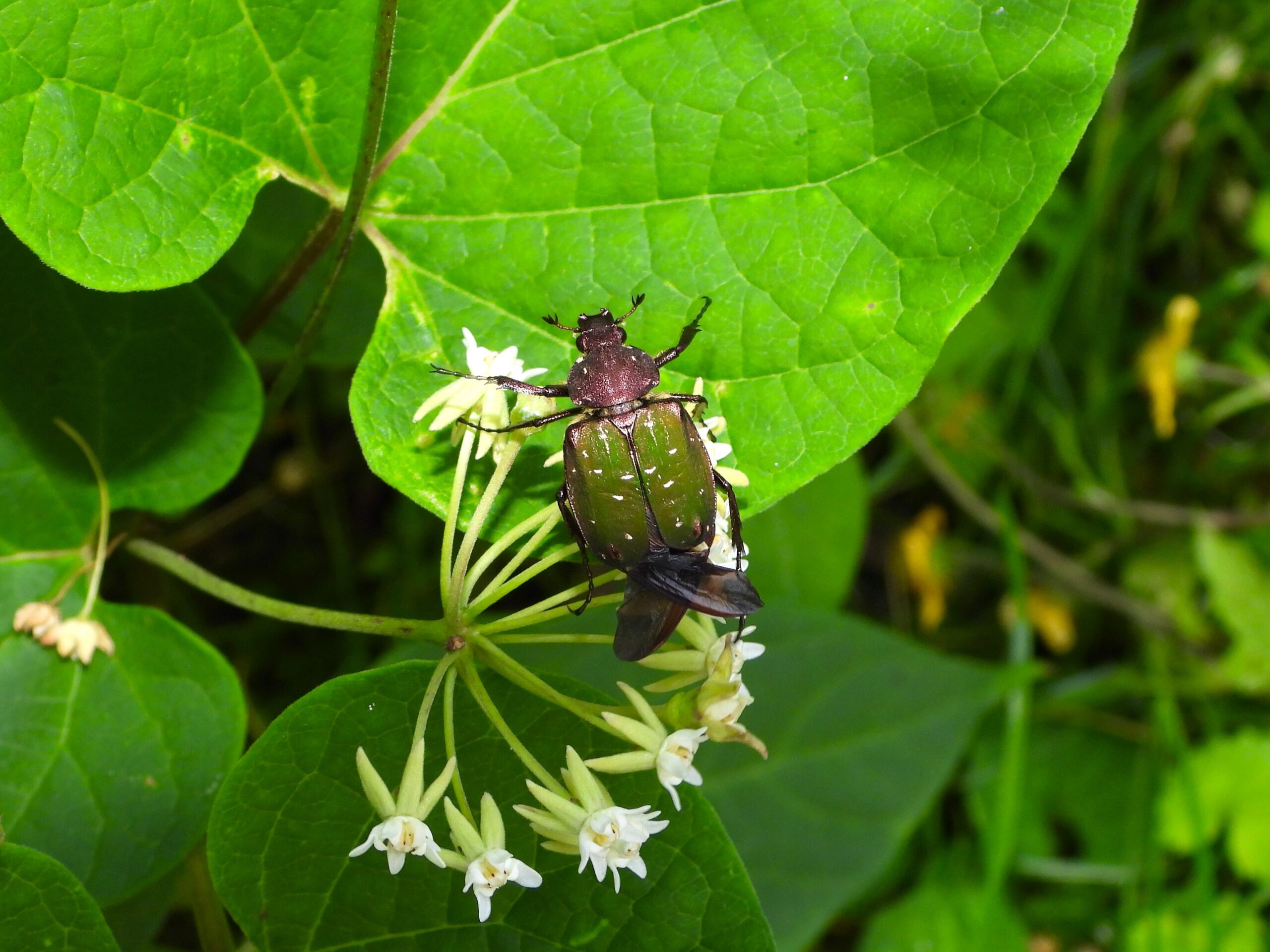
The body color ranges from dull green to coppery-brown and lacks strong metallic gloss. The elytra bear seven to eight small pale spots, which are important identification marks.
Males can be distinguished by the strongly curved middle tibia near its base, a feature less pronounced in females.
Habitat & Distribution
This species inhabits montane deciduous broadleaf forests.
In Japan, it has been recorded from Hokkaido, Honshu, Shikoku, Kyushu, and Tsushima.
Outside Japan, it is also known from the Korean Peninsula, eastern Siberia, and Sakhalin.
Behavior
Adults are typically observed on flowers within forest environments during the warm season. Detailed behavioral patterns beyond flower visitation are not well documented and are therefore not discussed here.
Diet
Adult beetles feed on floral resources such as pollen.
Larvae develop in rotting wood or humus-rich soil associated with decomposing logs and forest litter.
Reproduction
Females lay eggs in substrates suitable for larval development, such as decayed wood.
Larvae grow concealed within these environments before pupating and emerging as adults. Precise developmental timing varies and has not been conclusively documented.
Conservation
The species depends on mature deciduous forests that contain fallen logs and well-developed forest soil.
Loss of natural broadleaf forests and the removal of deadwood may negatively affect local populations, although comprehensive conservation assessments remain limited.
Author’s Impression
The Aoashi-naga Hanamuguri is a beetle that is difficult to encounter, as it is most often found in mountainous areas. I have personally seen it only a few times, which gives me the impression that it is a genuinely rare insect. Each encounter feels special and memorable.
Scientific name note
Scientific name: Gnorimus subopacus (Motschulsky, 1860)
Note: In Japanese literature and museum collections, this beetle has also been listed as Gnorimus subopacus viridiopacus (Lewis, 1887).