Oo-hirata-shidemushi (Eusilpha japonica) – Wildlife of Japan
Introduction
Oo-hirata-shidemushi is a carrion beetle that occurs widely throughout Japan. It belongs to the family Silphidae, a group of beetles that feed on animal remains and other decaying organic matter. As a result, this species plays an important role as a decomposer in natural ecosystems. In Japanese literature, researchers commonly treat this species as Eusilpha japonica, while some scientific studies place it in a different genus.
Appearance
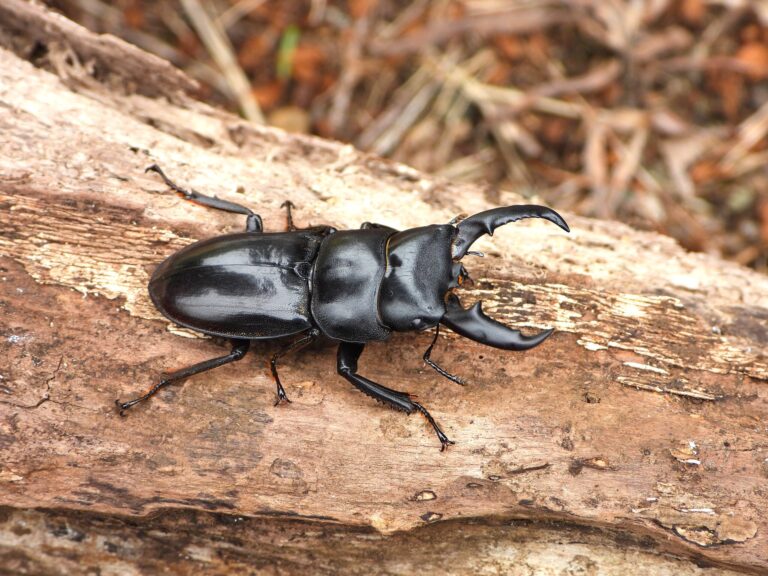
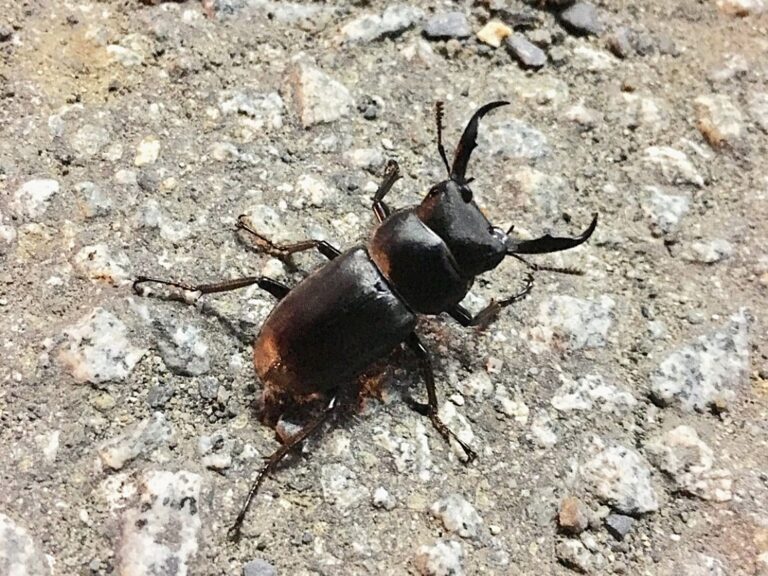
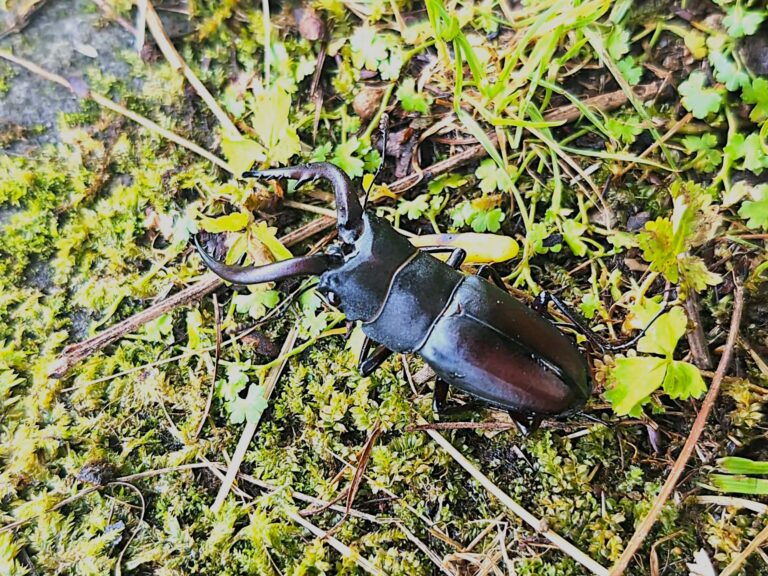
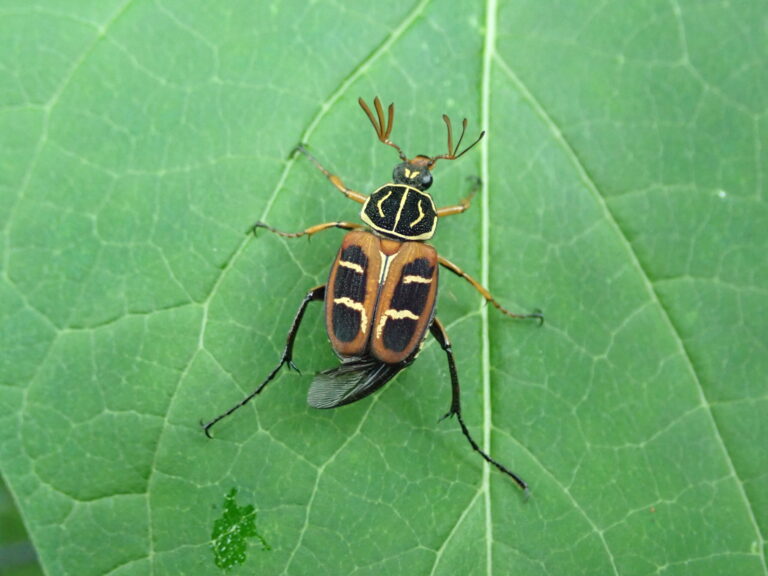
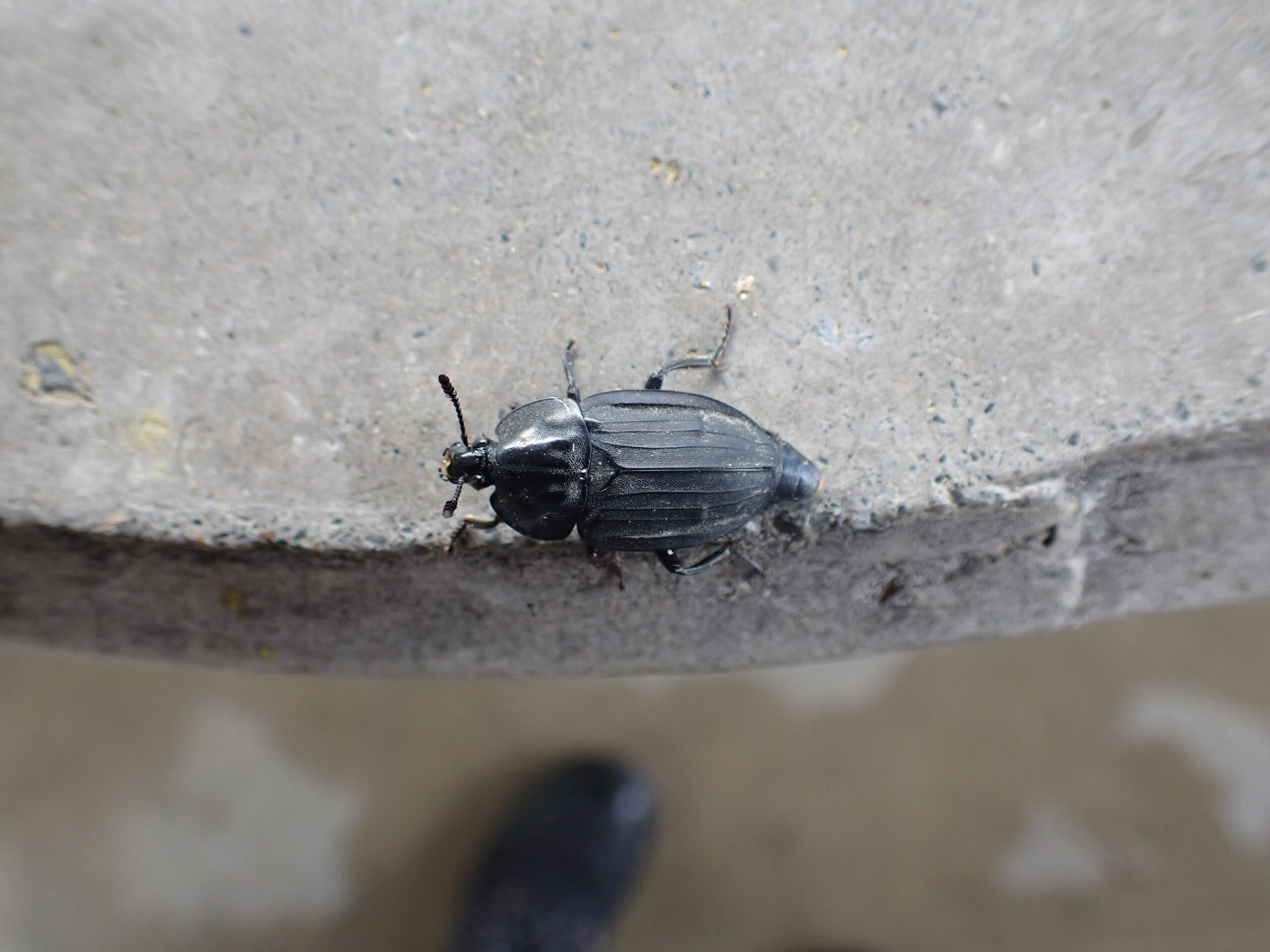
Adults grow to approximately 18–23 mm in length. Notably, the body is strongly flattened, which allows the beetle to move easily beneath leaf litter, debris, or animal carcasses. The coloration appears black to slightly bluish-black. In addition, the elytra show distinct longitudinal ridges that give the beetle a robust appearance.
Habitat & Distribution
This species occurs widely across Japan, from Hokkaido to Kyushu. It typically inhabits forests, satoyama landscapes, and woodland edges. However, because the beetle actively seeks animal remains, observers sometimes find it along forest roads or roadsides as well.
Behavior
Oo-hirata-shidemushi lives mainly on the ground and locates food primarily by smell. Interestingly, individuals vary in their flight ability. Some individuals possess well-developed flight muscles, while others lack them. Therefore, not all individuals are capable of flight.
Diet
The beetle feeds mainly on carrion, such as the remains of small animals. In addition, it also consumes other decomposing organic matter. Through this feeding behavior, the species contributes directly to nutrient recycling in natural environments.
Reproduction
Unlike burying beetles of the genus Nicrophorus, Oo-hirata-shidemushi does not show complex carcass-burying behavior. Females lay eggs in the soil, and the larvae develop by feeding on nearby organic matter, including animal remains. At present, researchers have not fully documented the detailed reproductive behavior of this species.
Conservation
Oo-hirata-shidemushi occurs widely and appears commonly throughout Japan. Consequently, it is not currently regarded as a species of conservation concern.
Author’s Impression
Oo-hirata-shidemushi appears frequently in forests and mountains and can be seen as a “cleaner” of the forest floor. In fact, the Japanese name likely derives from its habit of gathering at animal carcasses. Although the beetle does not attract much attention, it plays an essential role in maintaining healthy ecosystems.