Montane Brown Frog (Rana ornativentris) – Wildlife of Japan
Introduction
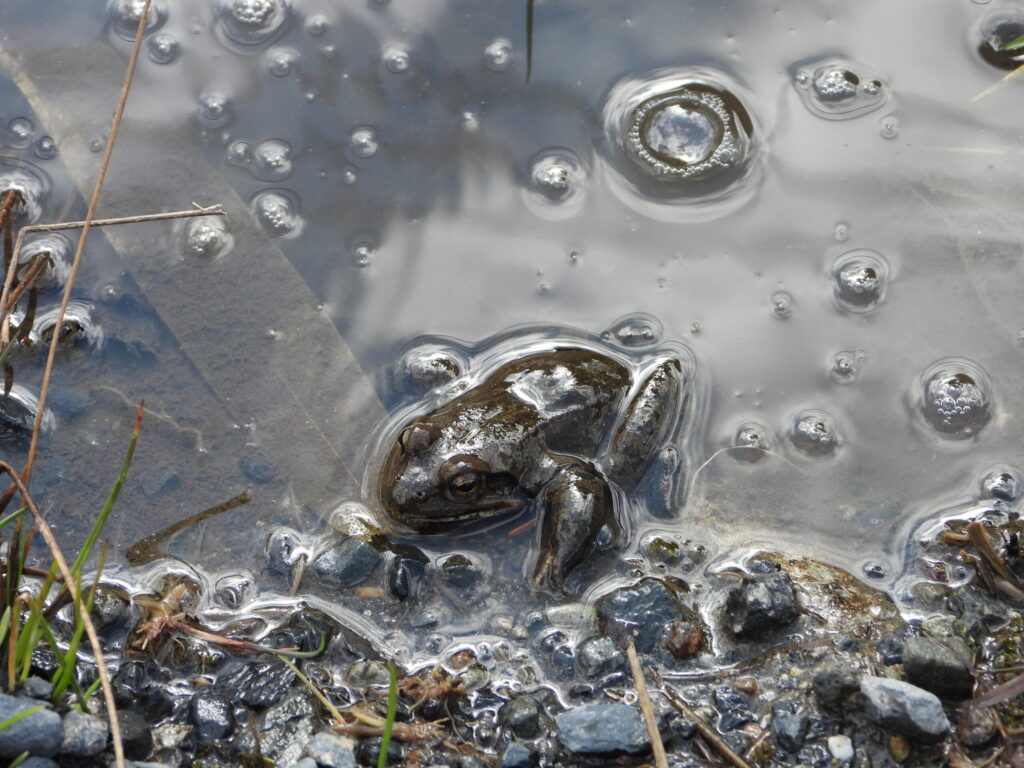
The Montane Brown Frog (Rana ornativentris) is a frog species endemic to Japan. It is found on Honshu, Shikoku, Kyushu, and Sado Island.
Despite its name, this frog is not limited to mountainous areas. It occurs from lowland plains to hills and mountains, and is commonly associated with rice fields, ponds, marshes, and other shallow freshwater habitats.
In Japan, it is one of the most familiar “brown frogs” and is often seen in satoyama landscapes where farmland and woodland meet.
A closely related and similar-looking species, the Japanese Brown Frog (Rana japonica), is also found in Japan. While the two species can look very similar, they tend to differ in distribution and habitat preferences.
Explore more frogs found in Japan:
▶ Frogs in Japan: Species & Field Guide
Appearance
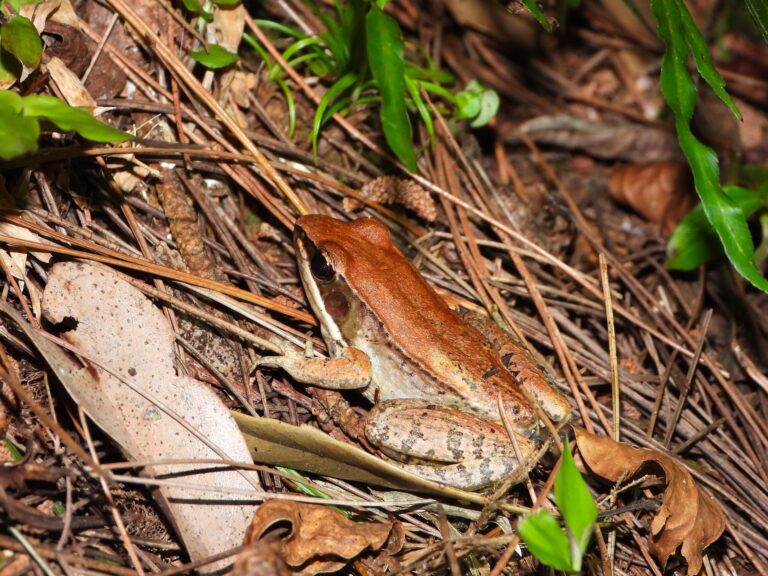
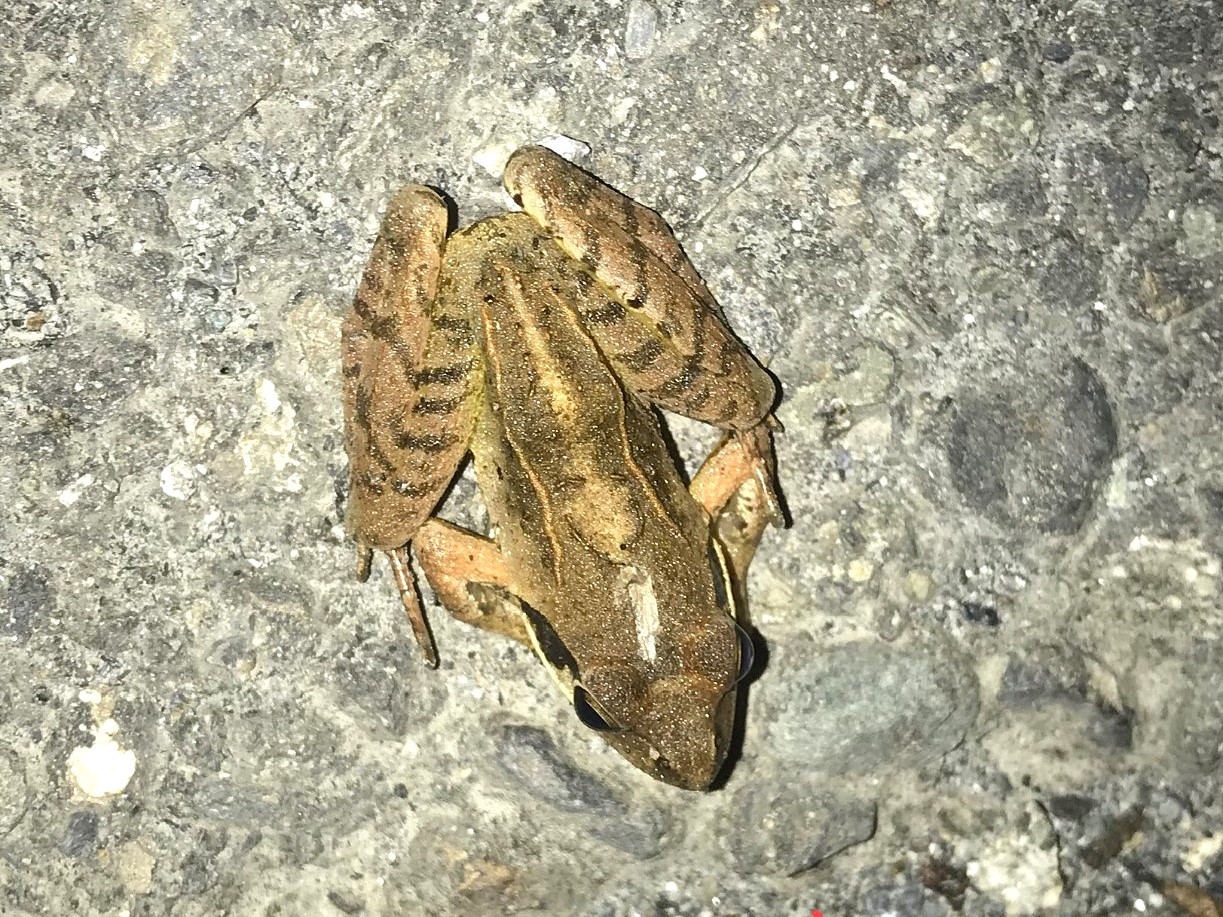
The Montane Brown Frog is a medium-sized, relatively broad-bodied frog.
Adult body length typically ranges from about 4 to 7 cm, with females generally larger than males. Scientific data shows males around 42–60 mm and females around 36–78 mm in snout–vent length.
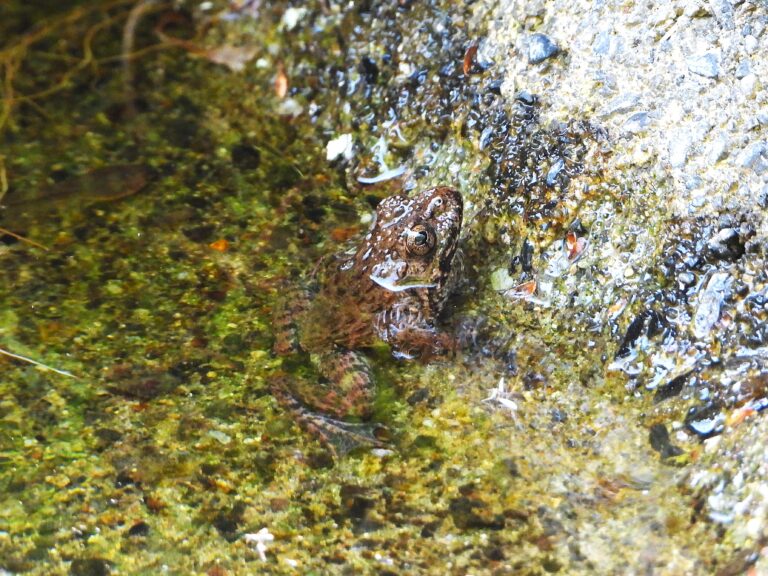
Its coloration is usually reddish-brown to dark brown, which helps it blend in with leaf litter and wet ground. The back is slightly rough in texture.
The fingers and toes have rounded tips, and the webbing on the hind feet is well developed. During the breeding season, males develop vocal sacs, a grayish throat, and dark nuptial pads on their forelimbs.
Habitat & Distribution
This species is endemic to Japan and occurs on Honshu, Shikoku, Kyushu, and Sado Island.
It inhabits a wide range of environments from lowlands to mountainous areas, reaching elevations of up to about 1,900 meters.
Breeding sites are typically shallow still waters such as rice fields, ponds, marshes, and temporary pools. Outside the breeding season, individuals spend much of their time on land, often in areas surrounding these water bodies.
Compared to the similar Japanese Brown Frog (Rana japonica), the Montane Brown Frog tends to occur more widely in hilly and mountainous areas, although both species can overlap depending on the region.
Behavior
For much of the year, the Montane Brown Frog is not very conspicuous and is often difficult to spot.
During the breeding season, however, many individuals gather in shallow water, making them much easier to observe.
The male’s call is short and consists of several quick notes, typically lasting around half a second.
Diet
The Montane Brown Frog is carnivorous and feeds on small invertebrates.
Its diet includes insects, earthworms, slugs, and snails. It mainly hunts prey found on the ground in moist environments rather than in open water.
Reproduction
One of the most notable characteristics of this species is its early breeding season.
Breeding is reported from January to early summer, but in many regions, spawning activity becomes especially noticeable from February to March, even while temperatures are still low.
Females lay large egg masses in shallow water. A single clutch typically contains around 1,000 to 1,900 eggs.
Conservation
The Montane Brown Frog is currently classified as Least Concern on the IUCN Red List.
However, like many amphibians, it depends on suitable wetland habitats for breeding. Changes such as the loss of traditional rice fields, drainage of wetlands, and modification of shallow water environments can affect local populations.
Author’s Impression
I once visited a pond on a cold day in March and found that Montane Brown Frog eggs had already been laid.
It was surprisingly early, and it made me realize just how soon this species begins breeding compared to many other frogs.
Although it may not be a flashy species, it is strongly tied to the seasonal rhythm of Japan. Seeing its eggs in late winter feels like one of the first signs that spring is on the way.