Japanese Flat Stag Beetle (Dorcus titanus) – Wildlife of Japan
Introduction
The Japanese flat stag beetle is one of the most popular beetles in Japan.
If you visit forests at night, this powerful insect is often the one dominating sap trees.
With its wide, flattened body and strong mandibles, it leaves a lasting impression on anyone who sees it in the wild.
Looking for other beetles found in Japan? This guide covers common species, the best seasons to see them, and where they can be found.
▶ Explore Beetles in Japan
Appearance
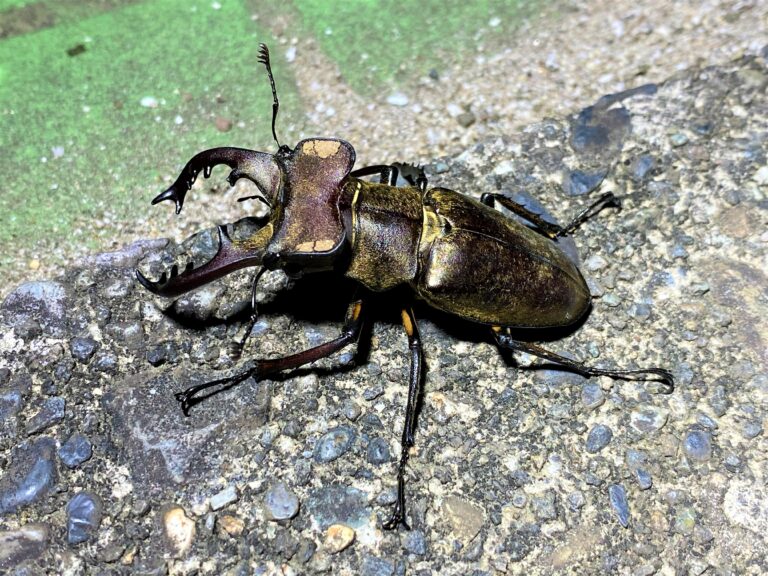
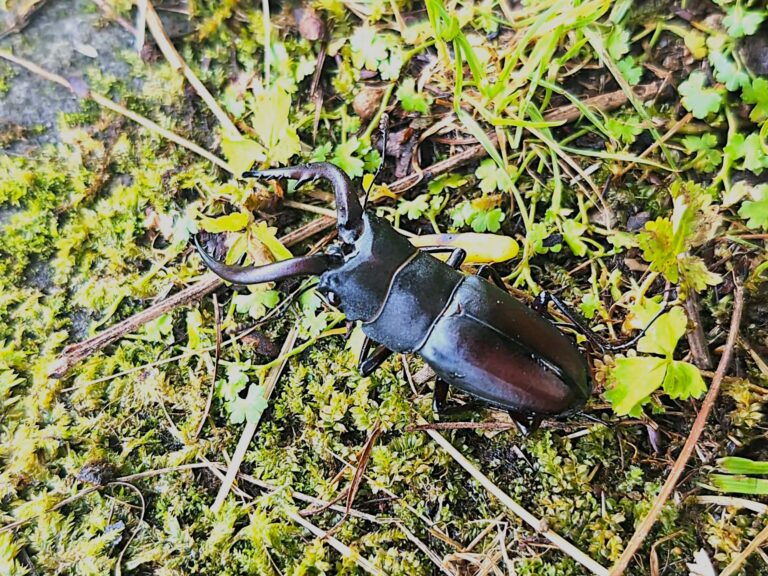
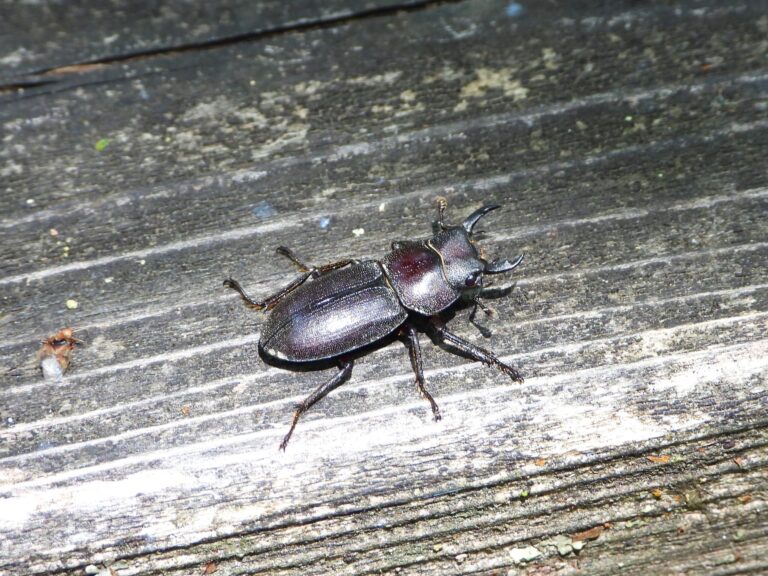
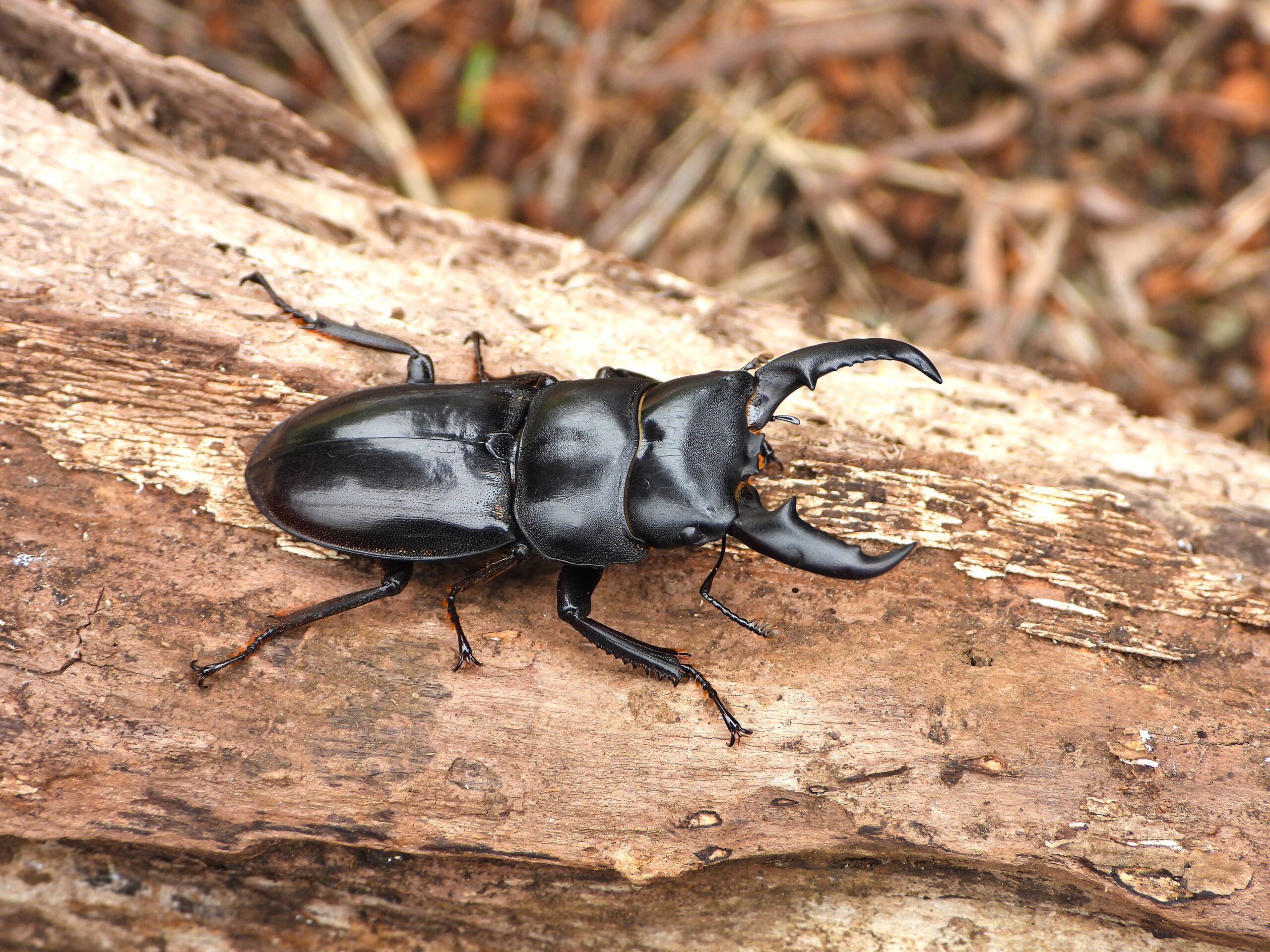
This species has a broad, flattened body and a glossy black color.
It looks heavy and solid compared to many other stag beetles.
Males have thick, powerful mandibles. Large males typically have one strong inner tooth along with several smaller teeth.
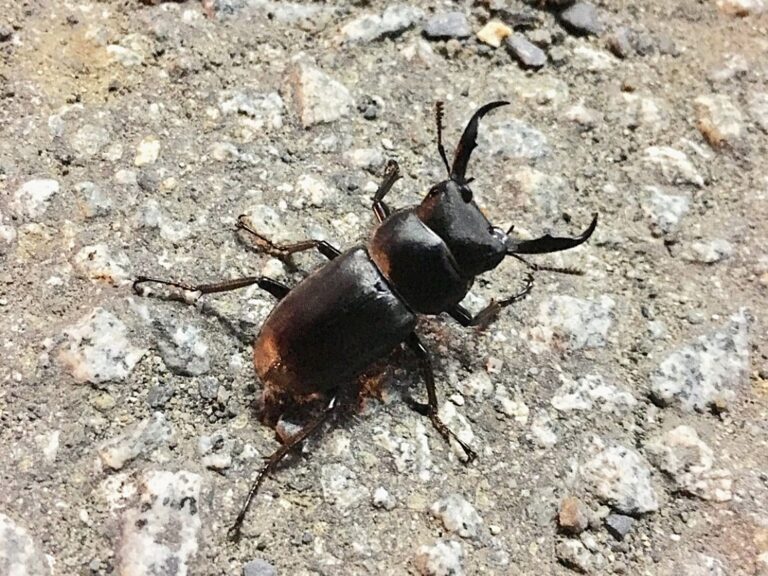
Females are smaller, with short mandibles and a more compact shape.
Size range:
- Males: 30–75 mm
- Females: 25–40 mm
Habitat & Distribution
The Japanese flat stag beetle is widely found across Japan, including Honshu (mainly southern Tohoku), Shikoku, Kyushu, and the Ryukyu Islands.
It lives in:
- Woodlands and deciduous forests
- Satoyama landscapes near human settlements
- Areas with sap-producing trees such as oak and willow
During the day, it hides under bark or in tree crevices.
At night, it becomes active and gathers at tree sap.
Regional Variation
One of the most interesting features of this species is its regional diversity.
In Japan, the species is divided into multiple subspecies.
Island populations in particular often show noticeable differences in size, body shape, and mandible structure.
This variation is a result of long-term isolation and makes the species especially fascinating.
Behavior
The Japanese flat stag beetle is mainly nocturnal.
It stays hidden during the day and becomes active after sunset.
It is known to be relatively aggressive.
Males often fight over sap sites, using their mandibles to grab and push rivals.
Diet
Adults feed mainly on tree sap.
They are often seen on oak trees alongside rhinoceros beetles and other insects.
Larvae live inside decaying wood and feed on rotting material.
Reproduction
Breeding takes place from early summer to mid-summer.
Females lay eggs inside decaying logs or fallen wood.
The larvae develop inside the wood for more than a year before pupating and becoming adults.
Conservation
This species is not currently considered endangered.
However, habitat loss and excessive collecting may affect local populations.
Author’s Impression
Seeing a large male in the wild is an unforgettable experience.
Its heavy body and strong mandibles give it a powerful presence.
At night, under a flashlight, its glossy black body stands out in the forest.
It truly feels like the “king” of the sap tree.