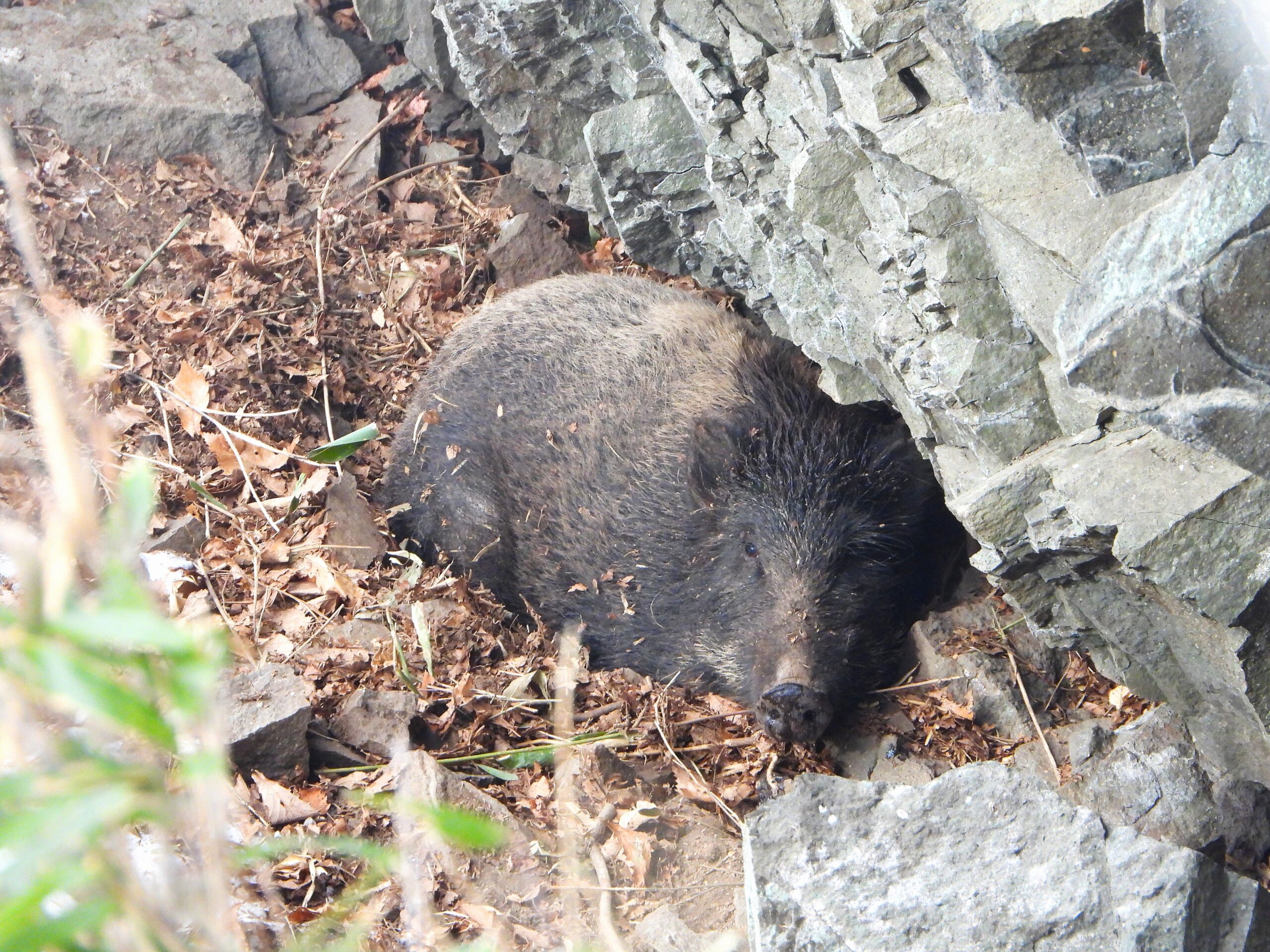
Are Wild Boars Dangerous in Japan? Safety & What to Do
Wild boars can be found not only in the mountains of Japan but also in suburban and rural areas, and sometimes even near towns.
In mountainous regions, their population can be relatively high, and it is possible to encounter them while walking on hiking trails or forest roads.
However, wild boars generally avoid humans.
In most cases, they usually move away when they notice people.
That said, depending on the situation, they can become dangerous.
It is important to understand their behavior and know how to respond if you encounter one.
Are Wild Boars Dangerous Animals?

Wild boars are shy animals and often run away when they see humans.
They rarely attack people on their own.
However, caution is needed in the following situations:
- A mother with piglets
- When the animal has no escape route
- When encountering one suddenly at close range
- Individuals that have become used to humans
In these cases, a wild boar may charge as a defensive action.
Places Where You May Encounter Wild Boars
In Japan, wild boars are most commonly found in the following environments:
- Mountain paths and hiking trails
- Forested areas
- Farmland near rural villages
- Satoyama landscapes and suburban parks
In areas close to mountains, they may sometimes appear near places where people live.
Regions in Japan Where Wild Boars Are Common
Wild boars live in many parts of Japan.
They are especially common in regions with extensive mountains and forests.
They are frequently seen in:
- Chugoku region
- Shikoku
- Kyushu
- Mountainous areas of Kansai
On the other hand, wild boars do not naturally occur in Hokkaido.
When Are Wild Boars Active?
Wild boars are mainly nocturnal animals.
They are most active from evening to night and in the early morning, while they usually rest in forests during the daytime.
However, in quiet mountainous areas, they may sometimes be active during the day.
Encounters are more likely in the early morning or late afternoon on hiking trails and forest roads.
Signs That a Wild Boar Is Warning You
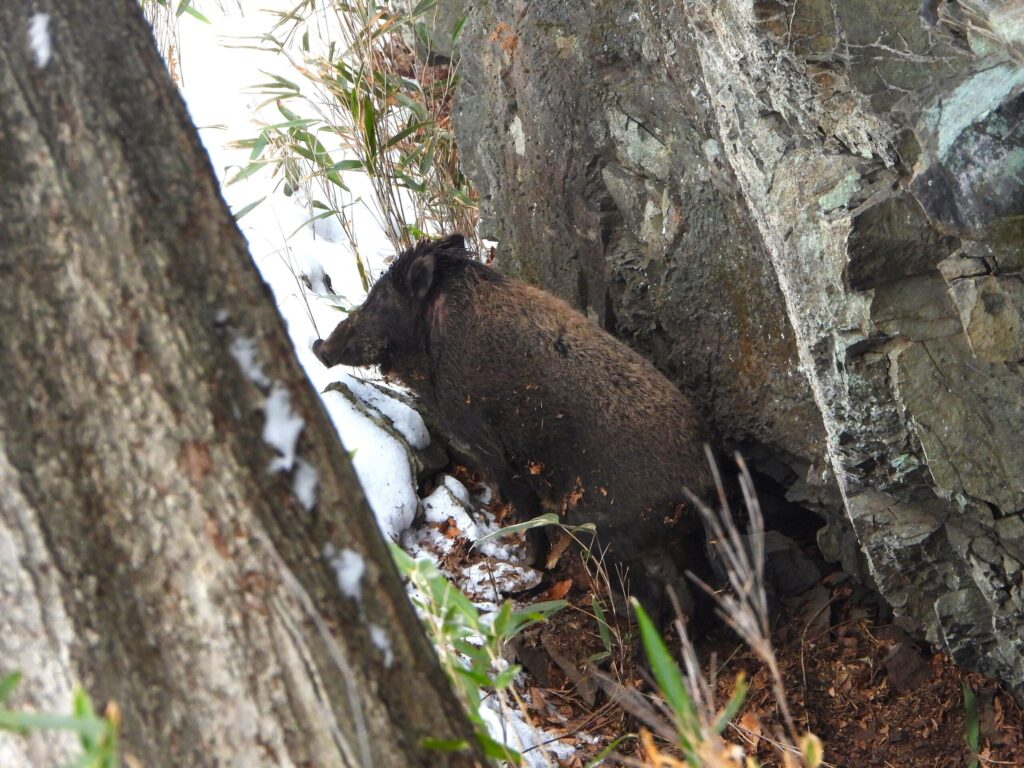
When a wild boar feels threatened or alert, it may show the following behaviors:
- Digging at the ground
- Snorting loudly
- Lowering its body and staring
- Clicking or grinding its tusks
If you observe these behaviors, keep your distance and slowly move away from the area.
What to Do If You Encounter a Wild Boar
If you encounter a wild boar, try to follow these guidelines:
- Stay calm and keep your distance
- Do not run away
- Do not provoke the animal
- Do not show food
In many cases, slowly backing away will cause the wild boar to move away as well.
What If a Wild Boar Charges?
If a wild boar charges, the situation is extremely dangerous.
However, charging is usually a defensive action when the animal feels cornered.
In such cases, do not try to face it head-on.
Instead, move to the side and get out of its path.
Use obstacles such as trees or guardrails to create distance and prioritize protecting yourself.
Things You Should Never Do
The following actions are dangerous when encountering a wild boar:
- Approaching to take photos
- Feeding the animal
- Trying to chase it away
- Getting close to piglets
Mother boars with young can become particularly aggressive.
Wild Boar Incidents in Japan
Every year in Japan, injuries caused by wild boars are reported, especially in rural areas.
Most incidents occur during farming activities or work in mountain forests.
Cases involving tourists are relatively rare, but caution is still necessary when spending time in nature.
Conclusion
Wild boars generally avoid humans.
However, as wild animals, they can become dangerous if approached too closely.
When spending time in nature or mountainous areas, it is important to keep a safe distance and respect wildlife.