
Where to See Tanuki in Japan (Japanese Raccoon Dog)
The tanuki, also known as the Japanese raccoon dog, is one of Japan’s most recognizable wild mammals. It appears frequently in Japanese folklore, anime, and games, but seeing a real tanuki in the wild is much more difficult.
Tanuki are widespread across Japan, including around forests, farmland, river corridors, and even some urban green spaces. However, they are mostly active from evening through the night, so simply visiting a famous nature spot does not guarantee a sighting.
In my experience, I most often see tanuki around farmland near rivers, especially around dusk. This guide explains where to look, what time gives you the best chance, and how to find wild tanuki without disturbing them.
What Is a Tanuki?
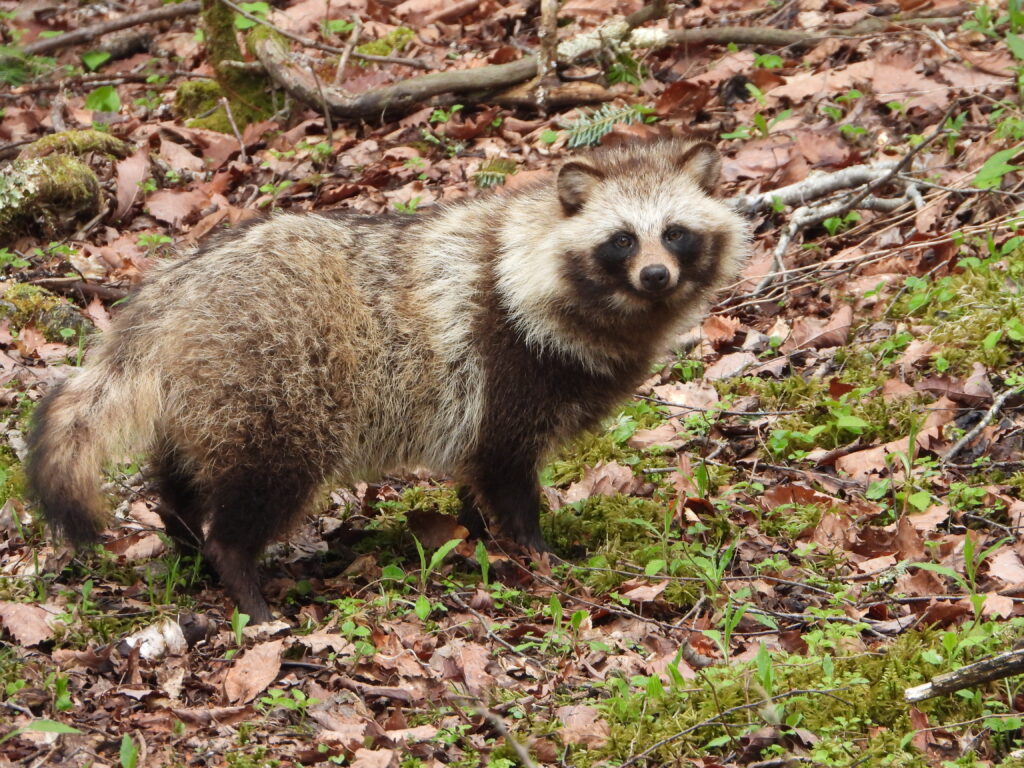
A tanuki is a wild member of the dog family (Canidae), commonly known in English as the Japanese raccoon dog.
Despite the name, tanuki are not raccoons. They have short legs, thick fur, and a dark mask around the eyes, which is why the two animals are sometimes confused.
Tanuki are mostly nocturnal, eat a wide variety of foods, and can live in environments ranging from forests and farmland to green spaces near cities.
In Hokkaido, the local form is commonly called the Ezo tanuki.
▶ Japanese Raccoon Dog – Habitat & Behavior
Where Do Tanuki Live in Japan?
Tanuki are widely distributed across Japan.
They are found on:
- Honshu
- Shikoku
- Kyushu
- Hokkaido, where the local form is known as the Ezo tanuki
Tanuki can live in a wide range of environments, including:
- forests
- satoyama landscapes
- farmland edges
- river corridors
- suburban and urban green spaces
They are especially adaptable animals. In Japan, tanuki can live not only in mountainous areas but also surprisingly close to towns and cities.
However, being widespread does not mean they are easy to see. Their mostly nocturnal behavior and preference for moving through vegetation often make them difficult to spot, even in places where they are present.
Best Places to Look for Tanuki
There is no single famous tanuki-watching spot in Japan where sightings are guaranteed.
For wild tanuki, it is usually more useful to look for the right habitat than to visit a specific tourist attraction. Forest edges, farmland, river corridors, and large green spaces near cities can all provide suitable habitat.
Forest Edges
Tanuki often use the boundary between woodland and open land.
Good places to watch include:
- roads along forest edges
- quiet forest tracks
- grassland beside woodland
- farmland bordering forest
These transition zones give tanuki access to both cover and feeding areas.
Dense forest itself can actually make them difficult to see. Even when an animal is nearby, vegetation may hide it completely.
Riverbanks and Farmland
In my experience, this is one of the most useful habitats to check.
I have seen tanuki most often around farmland near rivers, especially around dusk. River corridors often contain a mixture of grass, bushes, agricultural land, and patches of woodland, giving wildlife places to feed and move between areas.
Rather than looking only at the river itself, watch the edges of fields, grassy banks, and places where vegetation meets open land.
Urban Green Spaces
Tanuki can also live surprisingly close to major cities.
Tokyo is a good example. Research has documented resident tanuki populations in large green spaces in central Tokyo, including the Imperial Palace and Akasaka Imperial Grounds.
Meiji Jingu is another documented example. The shrine itself warns visitors that tanuki and other wild animals may cross its roads, and in June 2026 staff even reported seeing a tanuki inside the shrine grounds.
That does not mean you should expect to see a tanuki during a normal daytime visit. They are still elusive, and sightings in busy urban parks are unpredictable.
Habitat Matters More Than a Famous Spot
If seeing a wild tanuki is your goal, I would focus less on finding a famous “tanuki spot” and more on choosing the right combination of habitat and time.
A quiet forest edge, river-side farmland, or large green space around dusk may give you a better chance than walking through a famous tourist destination in the middle of the day.
Best Time of Day to See Tanuki
The best time to look for wild tanuki is generally from dusk through the night and around dawn.
Tanuki are mainly nocturnal, so sightings become more likely after human activity begins to decrease. Around sunset is particularly practical for travelers because there is still enough light to scan forest edges, farmland, and river corridors.
In my experience, evening has been the most productive time. I have often seen tanuki appearing around farmland near rivers as daylight begins to fade.
Daytime sightings are possible, but I would not rely on them if seeing a wild tanuki is your main goal.
If you want to search without staying out late, start watching suitable habitat shortly before sunset and continue into the early evening.
Tips for Finding Tanuki
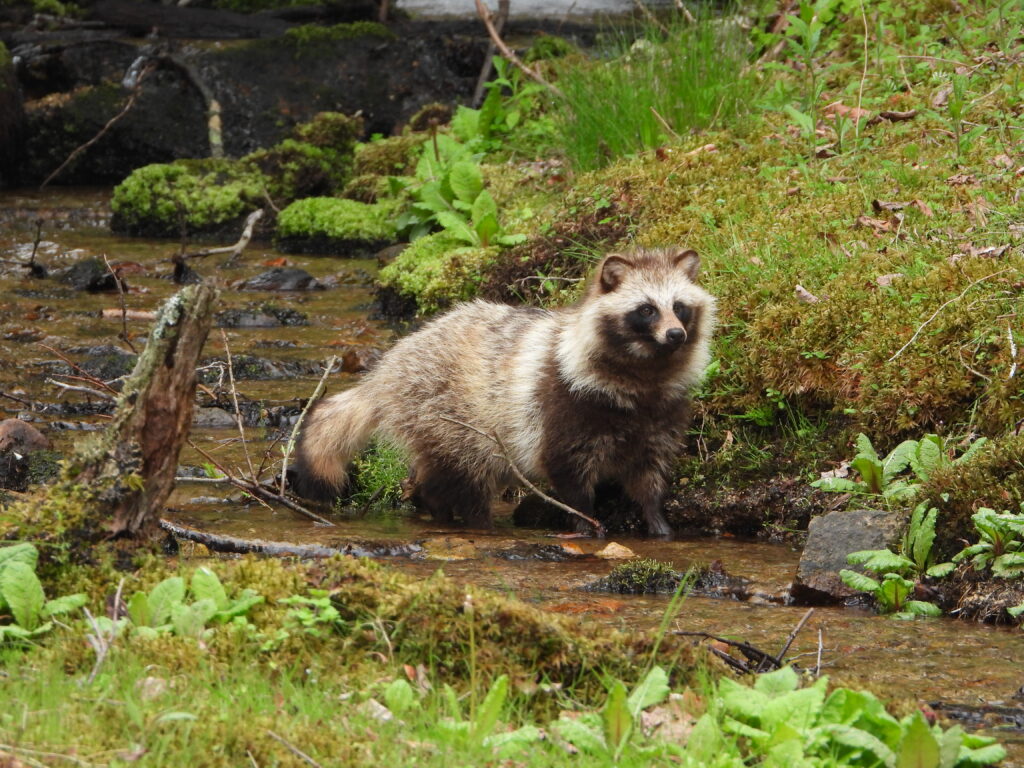
Tanuki can be surprisingly difficult to spot in dense forest. Even when one is nearby, you may only hear movement in the vegetation without ever seeing the animal.
Instead of walking deep into the forest, focus on open areas next to cover, such as:
- forest edges
- quiet rural roads
- farmland beside woodland
- grassy riverbanks
- paths between fields and vegetation
Move slowly and spend time watching the edges rather than constantly walking. A tanuki may remain hidden in vegetation before suddenly stepping into an open area.
Around dusk, pay particular attention to farmland and other open feeding areas. Research in suburban Japan has found that tanuki actively select agricultural land at night, supporting what I have often observed in the field.
Binoculars can also help you scan field edges and riverbanks without getting too close.
My Field Observation
In my experience, I have seen wild tanuki most often around farmland along rivers.
Several of my sightings have been around dusk, when tanuki begin moving through grassy areas and agricultural land near the river. These places may look ordinary compared with famous nature reserves, but they can provide a mixture of cover, open feeding areas, and routes that wildlife use to move through the landscape.
Dense forest is very different. I sometimes hear animals moving through vegetation, but actually seeing them can be difficult. Tanuki are much easier to notice when they leave thick cover and move into a field, riverbank, road edge, or other open area.
From my own observations, I would choose a quiet river-side agricultural landscape around dusk over walking deep into a forest if my goal were specifically to see a wild tanuki.
Seasonal Activity
Tanuki remain active throughout the year, but their behavior and appearance change with the seasons.
In autumn, young tanuki begin dispersing from their family groups and moving through new areas. This can lead to more movement across farmland, roads, and other open landscapes.
Autumn is also an important feeding season. Tanuki eat large amounts of fruit and other energy-rich foods and build up body fat before winter. As a result, individuals seen in late autumn can look noticeably heavier and rounder than they do in spring or summer.
During winter, they remain active, although activity may decrease during severe cold or heavy snow.
Signs of Tanuki
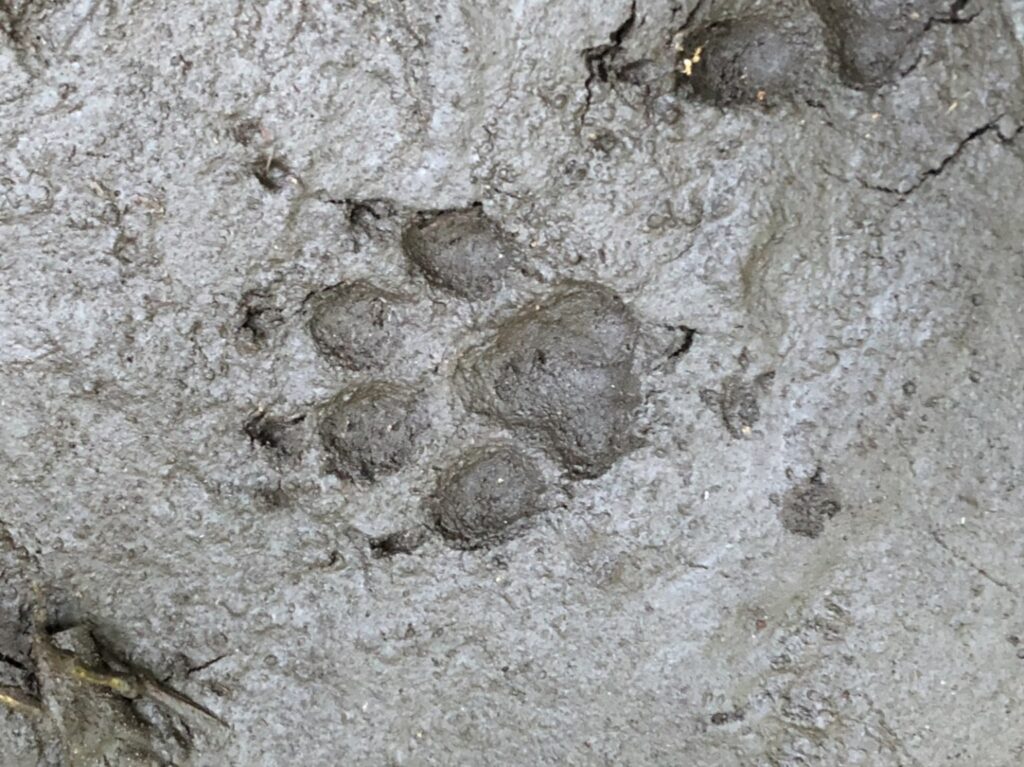
Even if you do not see a tanuki itself, you may still find signs that one is using the area.
Possible clues include:
- footprints in mud or soft ground
- droppings
- narrow paths through grass
- repeated droppings in the same place
Tanuki are well known for using communal latrines, often called “latrine sites,” where droppings accumulate in the same location over time. Finding one can be a useful sign that tanuki regularly move through the area.
Riverbanks, forest edges, farmland, and quiet paths are good places to look for tracks and other signs.
Footprints alone can be difficult to identify with certainty, especially where foxes, dogs, or other mammals are also present, so it is better to use several clues together rather than relying on a single track.
Other Wildlife You May See
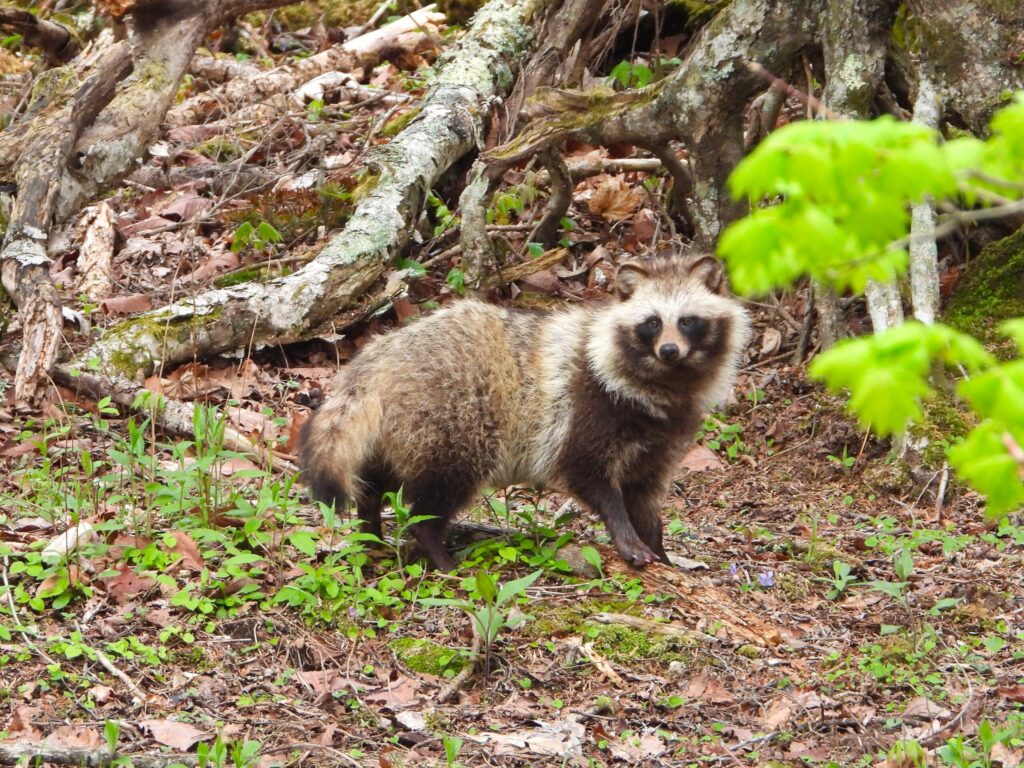
The same habitats used by tanuki can also support other mammals.
Depending on the region, you may encounter:
- Japanese red foxes
- Japanese badgers
- Japanese martens
- weasels
Many of these mammals are also difficult to see during the day, so encounters are often brief and unpredictable.
If you are watching riverbanks, farmland, or forest edges around dusk, keep an eye out for other wildlife as well.
Wildlife Watching Etiquette
If you find a wild tanuki, give it enough space to continue moving naturally.
Do not feed it, call it closer, or follow it for a long distance just to get a better photograph. A tanuki that notices you and changes direction, stops feeding, or moves into cover should be given more space.
When searching around farmland or rural communities, remember that much of the land may be private property. Stay on public roads and paths, and never enter fields, gardens, or residential areas without permission.
Night wildlife watching also requires extra care. Keep noise and lights to a minimum, avoid disturbing nearby residents, and do not shine bright lights directly at an animal for long periods.
The goal is to observe a wild tanuki without changing what it was doing.
FAQ – Seeing Wild Tanuki in Japan
Where can I see wild tanuki in Japan?
Tanuki are widespread across Japan. Rather than looking for one famous viewing spot, focus on forest edges, river-side farmland, rural areas, and large green spaces.
In my experience, quiet farmland near rivers around dusk has been particularly productive.
Can you see tanuki in Tokyo?
Yes. Wild tanuki live in Tokyo, including in large urban green spaces.
However, they are mostly active after dark and are difficult to predict, so seeing one during a normal daytime visit to a park is not guaranteed.
What is the best time to see tanuki?
Dusk through the night is generally the best time.
For travelers, sunset and the early evening are especially practical because tanuki are becoming active while there may still be enough light to see the surrounding habitat.
Are tanuki common in Japan?
Tanuki are widely distributed and can live surprisingly close to people.
However, they are much less visible than their distribution suggests because they are mainly nocturnal and often move through dense vegetation.
Can you see tanuki during the day?
Yes, but daytime sightings are less predictable.
If seeing a wild tanuki is your main goal, I would concentrate on dusk and the early evening rather than relying on a daytime encounter.
Conclusion
Wild tanuki are widespread across Japan, but they are not always easy to see.
If you want to find one, focus on suitable habitat rather than searching for a famous viewing spot. Forest edges, river-side farmland, and large green spaces are all worth checking, especially around dusk.
In my experience, quiet farmland near rivers has given me the most sightings.
Tanuki can also live surprisingly close to cities, but wherever you look, remember that sightings are never guaranteed. Move quietly, keep your distance, and let the animal behave naturally.