Winter Ducks in Japan: Common Species and How to Identify Them
Introduction
Winter is the easiest season to observe ducks in Japan. As temperatures drop, many species gather on ponds, rivers, lakes, and calm coastal waters. Even familiar city parks can host a surprising variety of ducks during this time.
This guide focuses on common winter ducks in Japan, along with a few less common or localized species. Rather than promising guaranteed sightings, it is designed to help beginners and casual birdwatchers understand what they are likely to see and how to identify different ducks in winter.
Winter ducks are an important part of Japan’s seasonal birdlife. For a broader guide covering common, native, endemic, and year-round species:
▶ Explore the complete Birds in Japan guide
Common Dabbling Ducks Seen in Winter
Dabbling ducks feed mainly at the water surface and are often the first ducks people notice when observing winter waterbirds.
Mallard
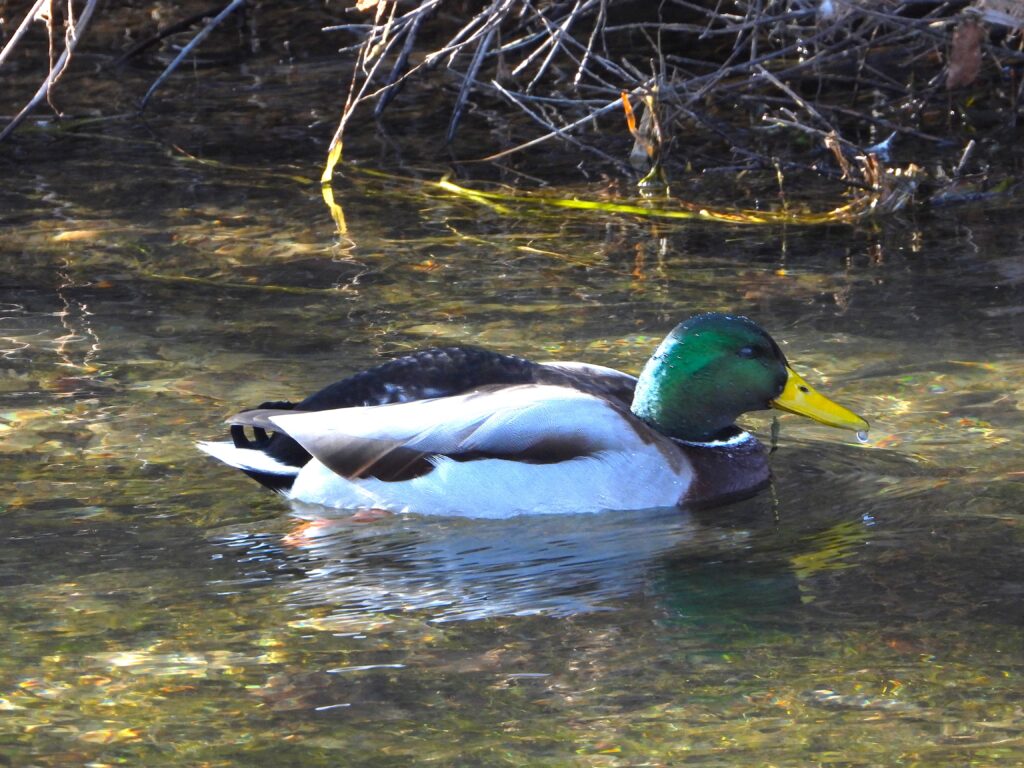
One of the most familiar winter ducks in Japan. Males have a glossy green head, while females are mottled brown. They are frequently seen in parks, rivers, and lakes, often mixed with other duck species.
Read more: Species description
Spot-billed Duck
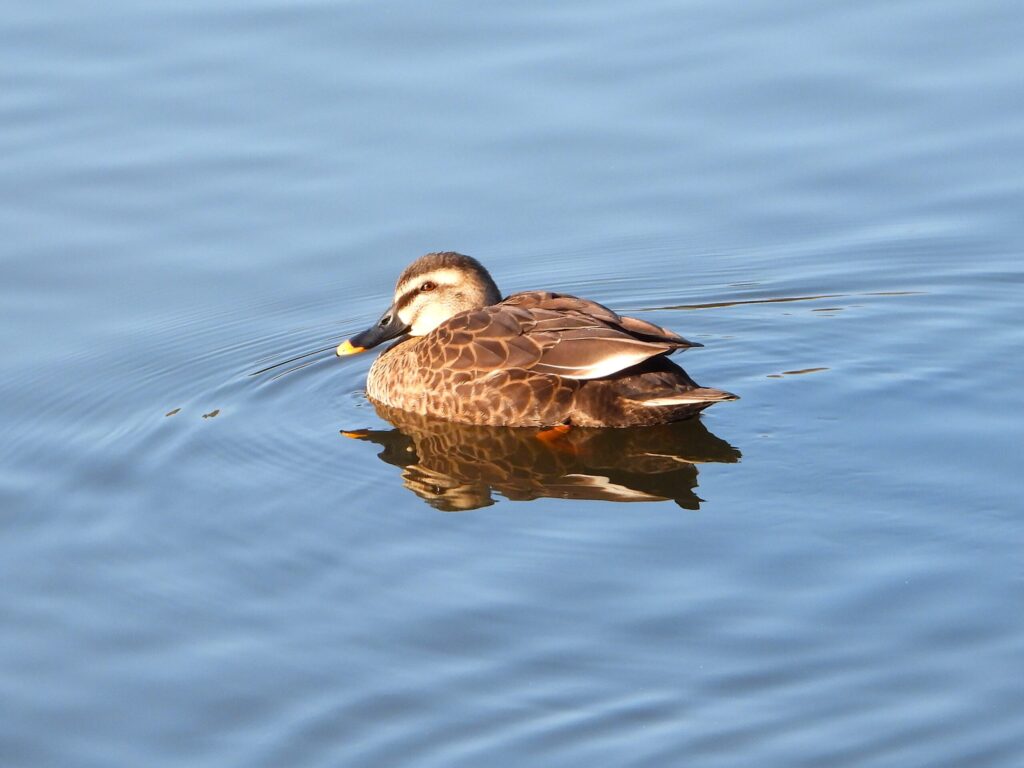
A widespread duck in Japan that can be seen year-round. In winter, individuals often gather in larger numbers. It has a calm appearance and a distinctive yellow-tipped bill.
Read more: Species description
Northern Pintail
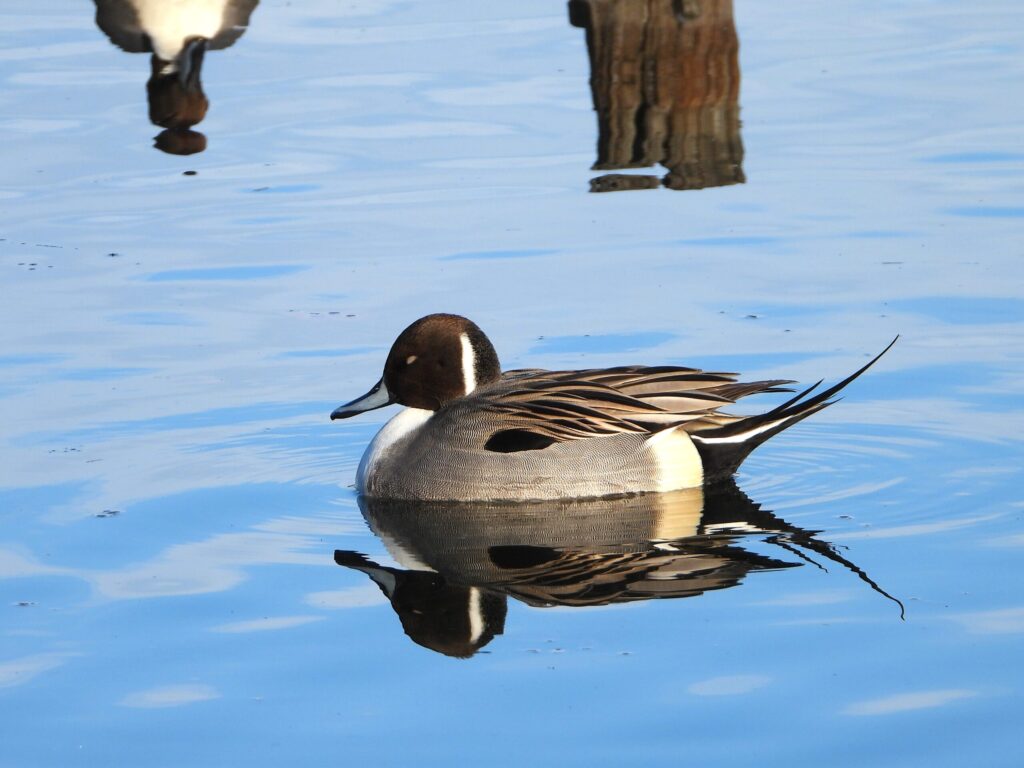
A slim and elegant duck, especially recognizable by the long tail of males. This feature makes it one of the easier winter ducks to identify. It is often found on open water and shallow wetlands.
Read more: Species description
Eurasian Wigeon
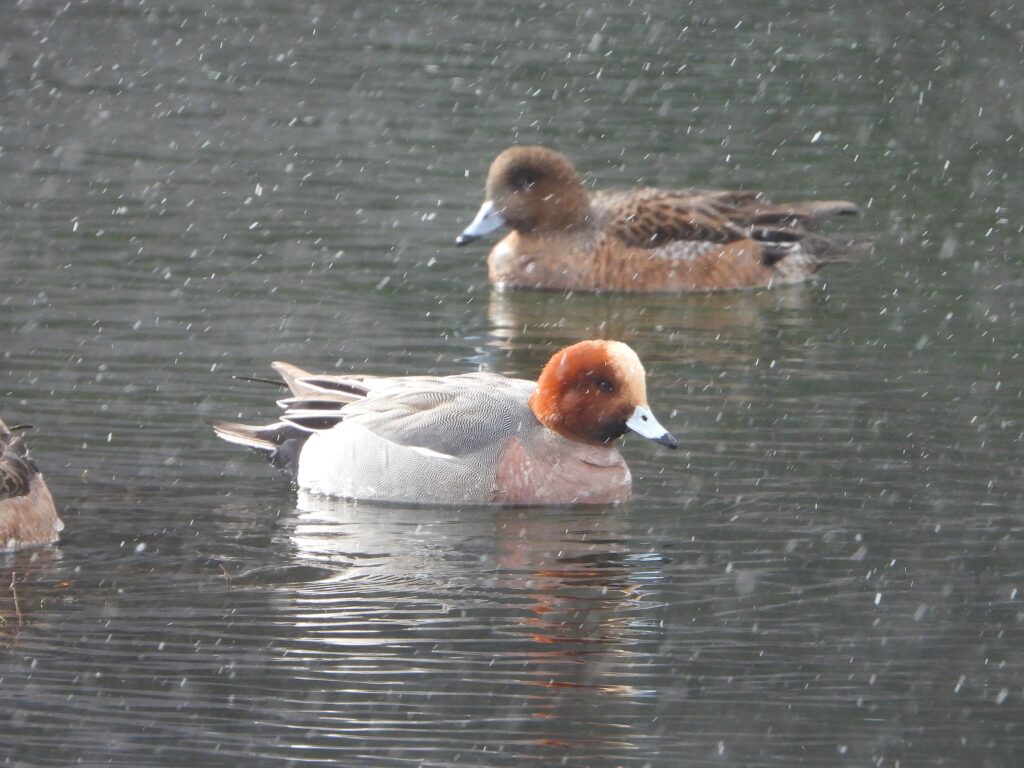
Often observed resting or feeding in groups. Males show a pale forehead that can stand out at a distance. This species is a typical winter visitor in many parts of Japan.
Read more: Species description
Eurasian Teal
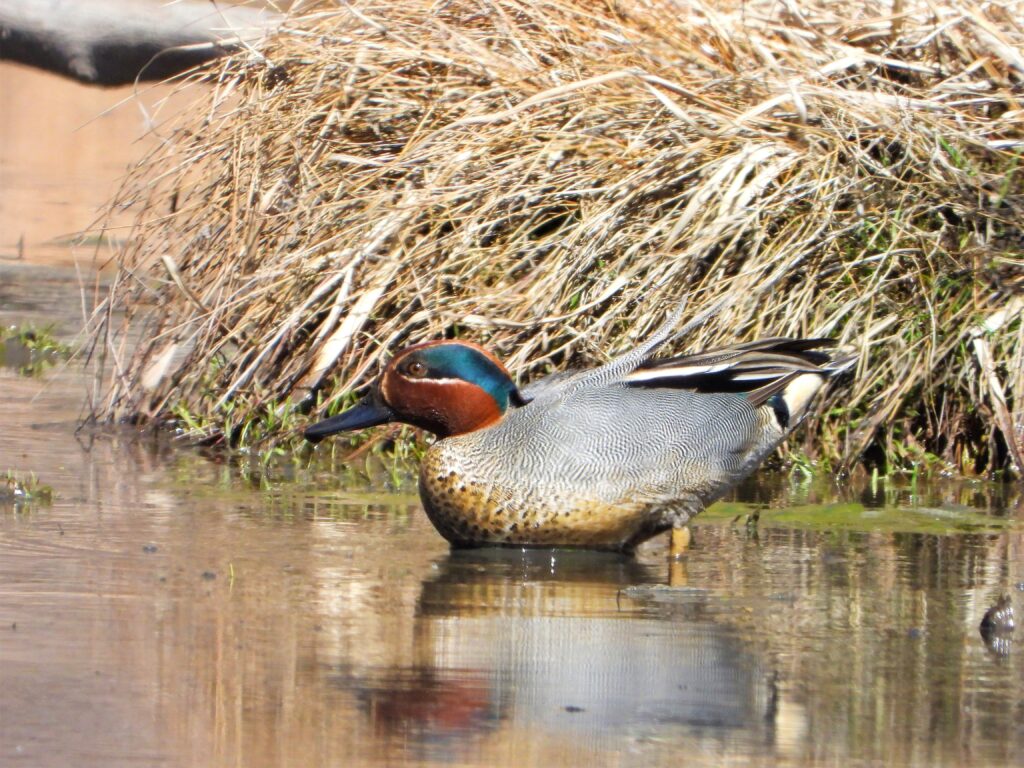
The Eurasian Teal is the smallest duck commonly seen in Japan during winter. It is highly active and often moves in compact flocks. Because of its small size, it can sometimes be overlooked along the water’s edge.
Read more: Species description
Common Diving Ducks in Winter
Diving ducks feed underwater and are typically seen on deeper ponds, lakes, and reservoirs.
Tufted Duck
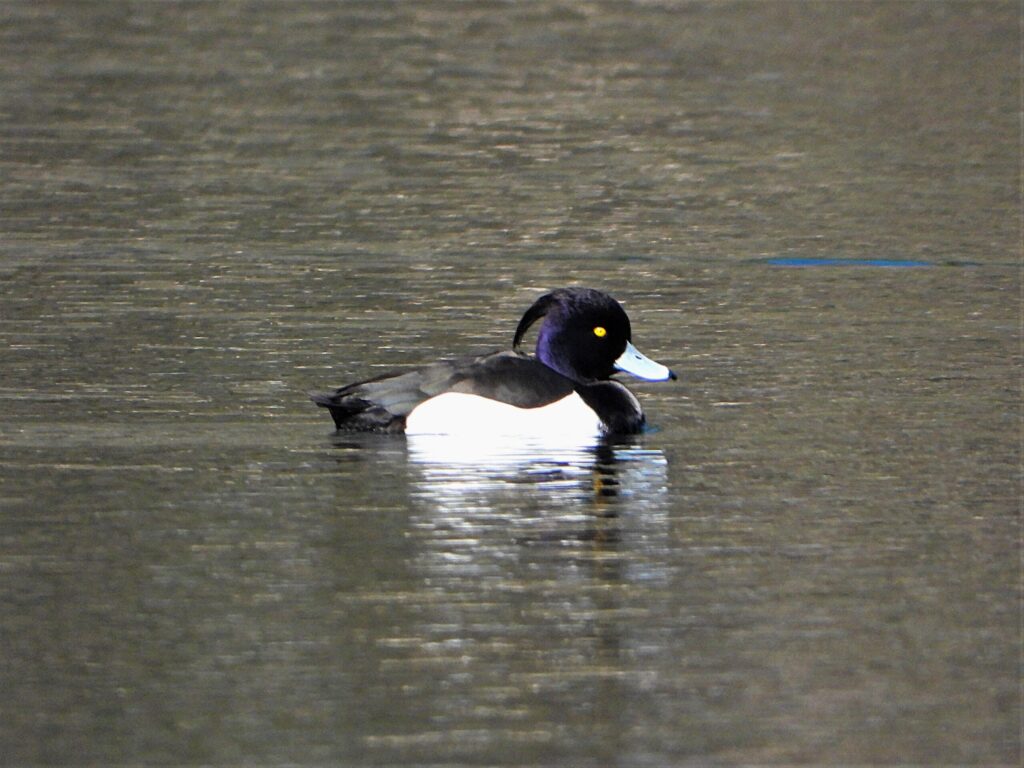
A very common winter visitor to lakes and large ponds. Males are black and white with a small crest, while females are dark brown. Their frequent diving behavior is a useful identification clue.
Read more: Species description
Common Pochard
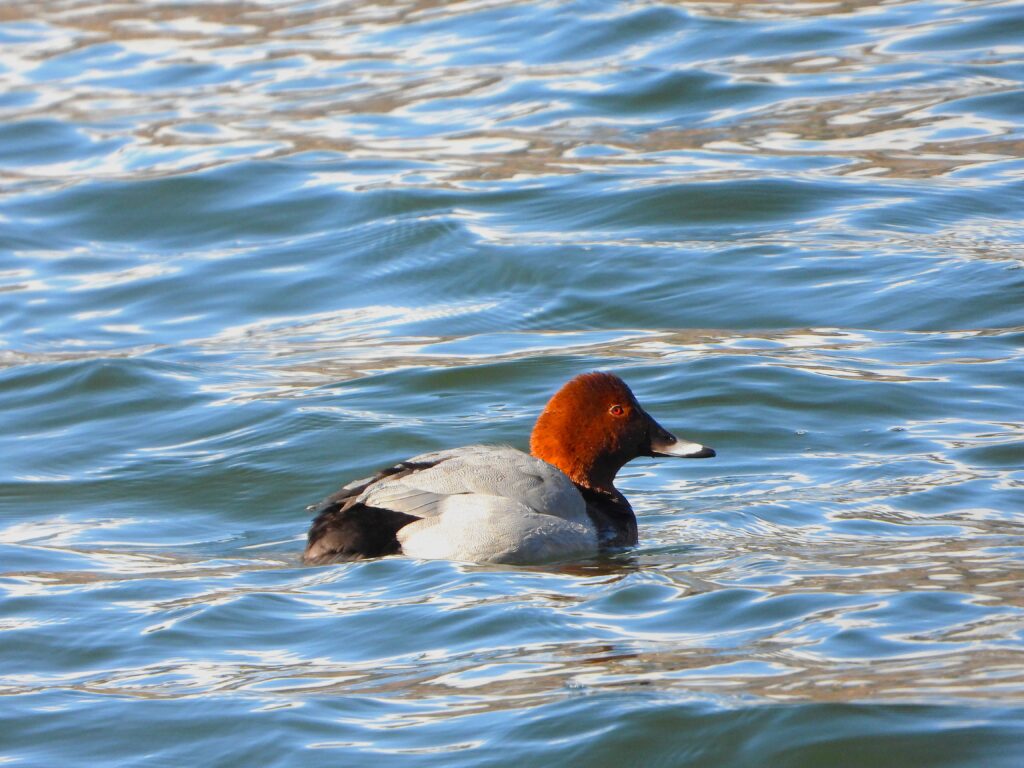
A medium-sized diving duck usually found on larger bodies of water. Males have a reddish-brown head and a pale gray body. Numbers can vary by location and year.
Read more: Species description
Common Goldeneye
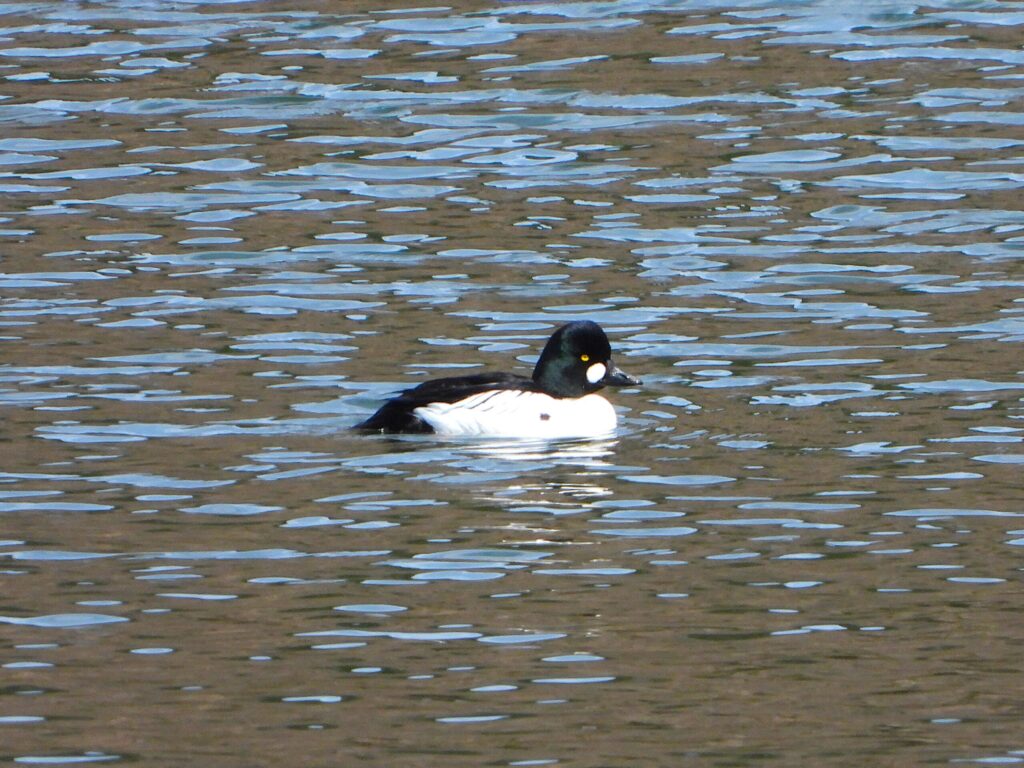
A striking black-and-white duck seen mainly during winter. Males have a noticeable white spot on the face. It is often associated with colder regions and clear lakes.
Read more: Species description
Special and Accompanying Species
Mandarin Duck
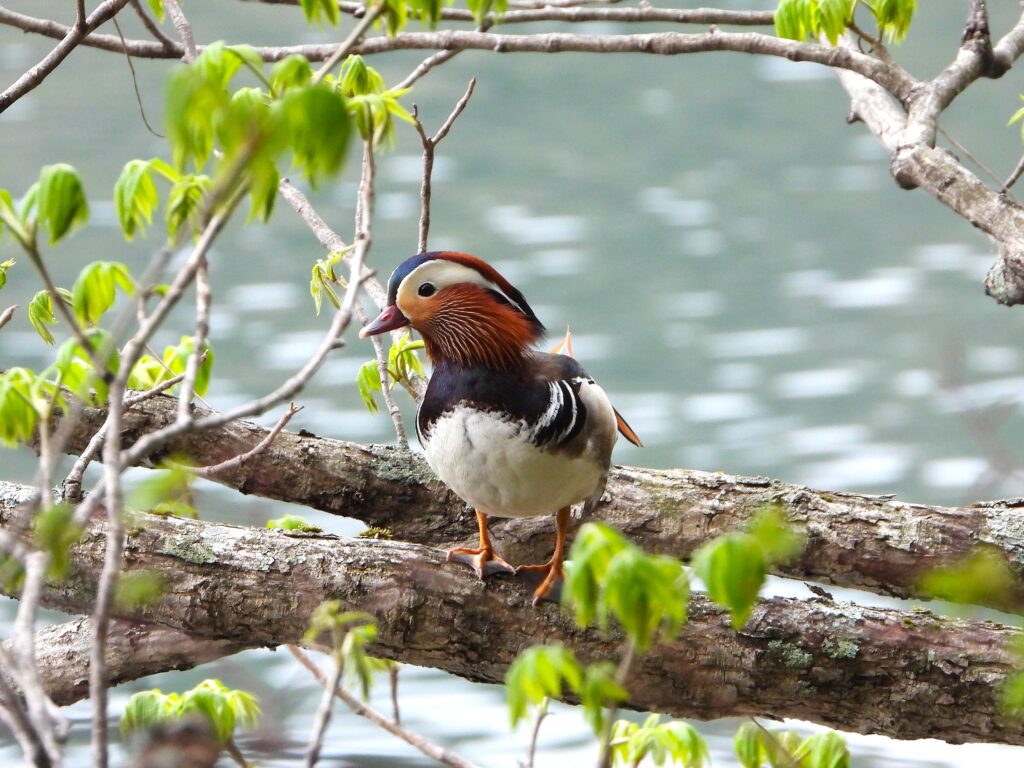
One of Japan’s most visually distinctive ducks. It is usually associated with quiet forested ponds and shaded rivers rather than open urban parks. Sightings are often brief, as they prefer calm and secluded environments.
Read more: Species description
Eurasian Coot
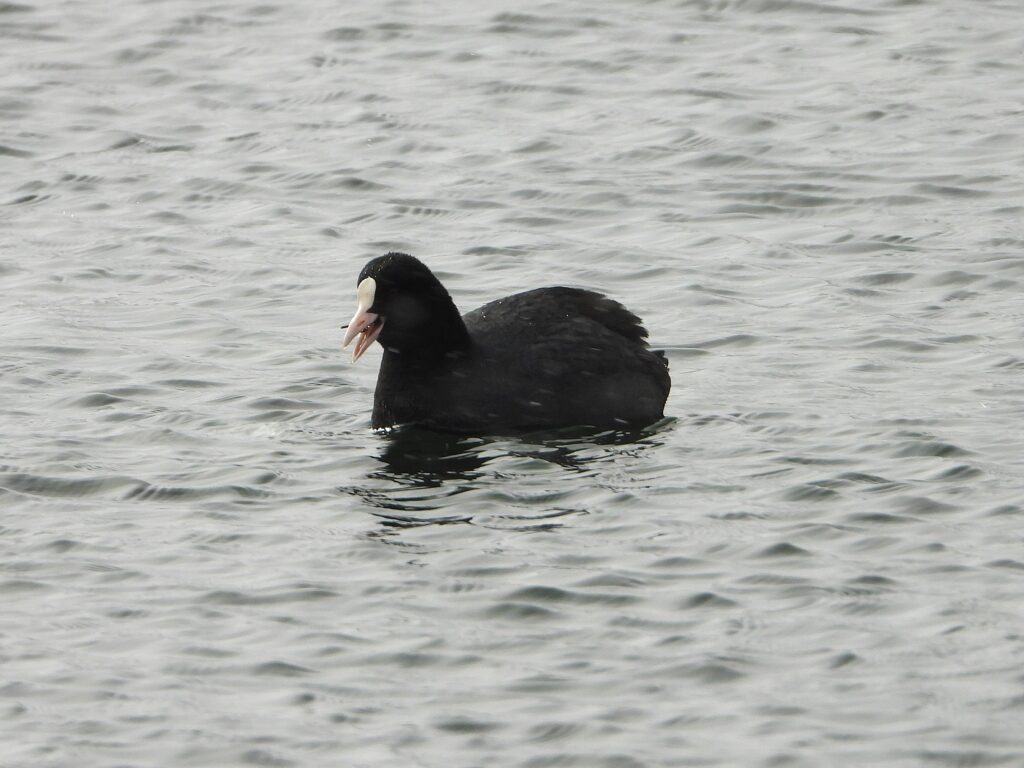
Although not a duck, this species is frequently seen alongside ducks in winter. Its black body and white bill make it easy to distinguish. It is often included in winter waterbird observations due to shared habitats.
Read more: Species description
Less Common Winter Ducks
The following species are winter visitors to Japan but are more localized or irregular. They are not seen every year or in every region, and encounters depend strongly on location and conditions.
Smew
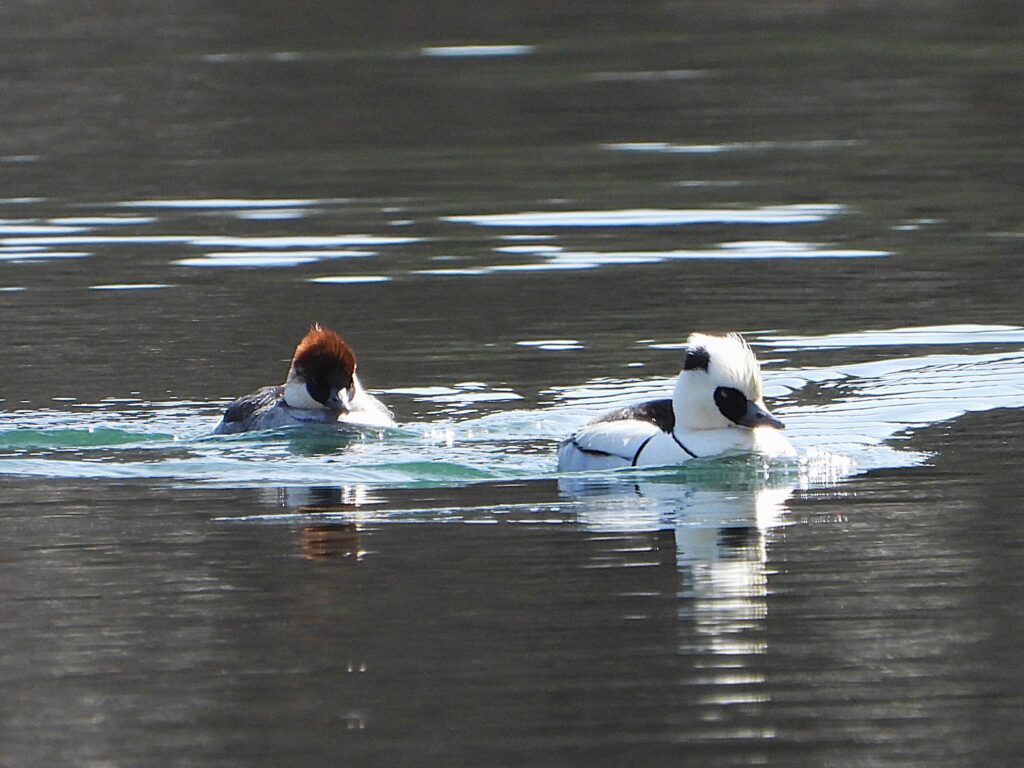
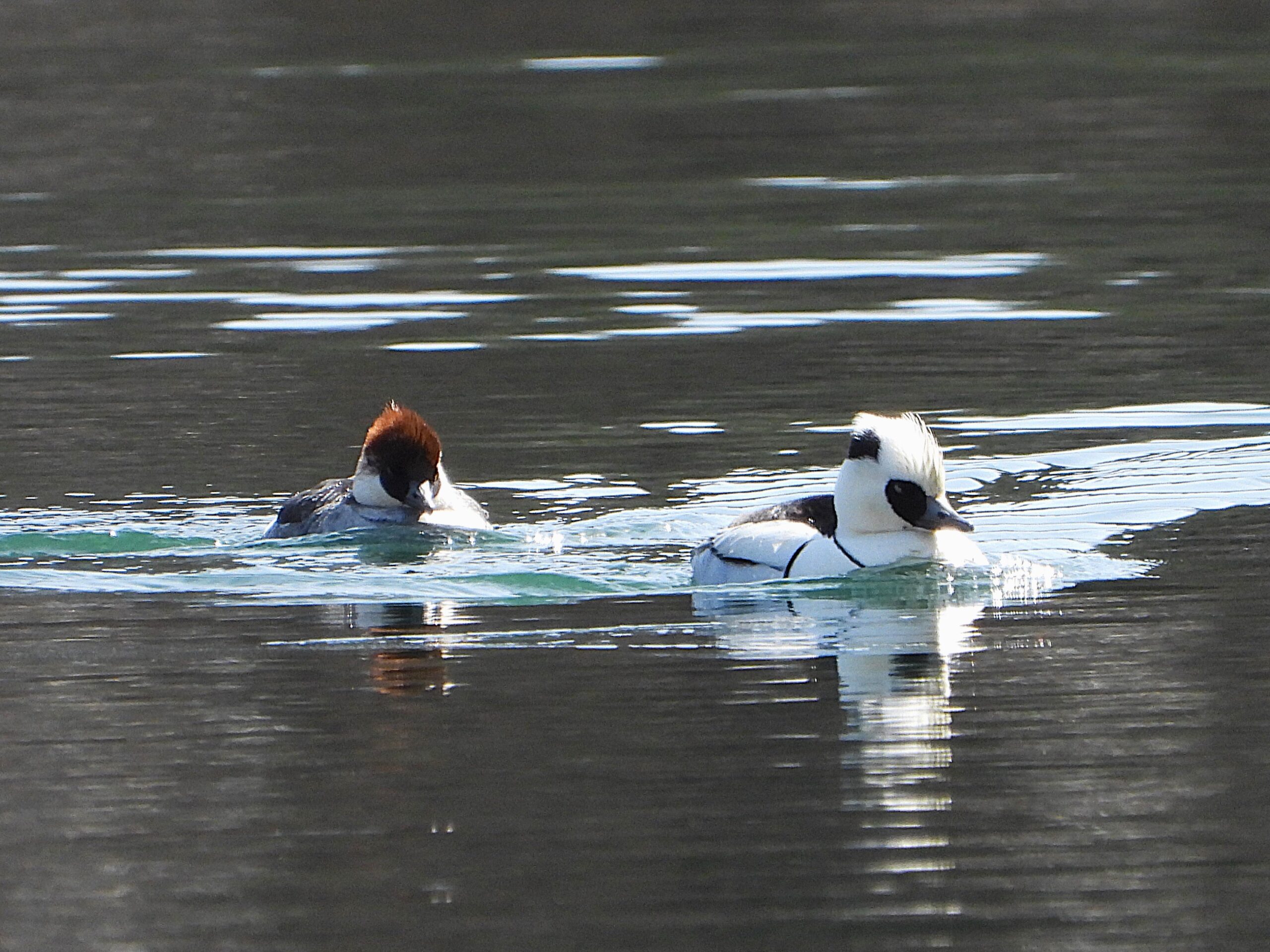
A small merganser that visits Japan during winter. Males are striking black and white, while females have a gray body and a warm brown head. It is usually found on calm lakes and reservoirs and may be absent in some winters.
Read more: Species description
Other Winter Ducks You May Encounter
Depending on location and habitat, the following species may also be observed during winter in Japan. They are listed here without detailed descriptions.
- Northern Shoveler
- Gadwall
- Greater Scaup
Where to See Winter Ducks in Japan
Winter ducks are most commonly observed from December to February. Early mornings and late afternoons tend to be the most active periods.
Good locations include urban park ponds, slow-flowing rivers, lakes and reservoirs, and calm coastal waters.
Author’s Impression
In winter, even ordinary parks and familiar waterways can feel completely different as ducks gather on the water. By watching carefully, subtle differences in shape, posture, and behavior become noticeable, making winter duckwatching both accessible and rewarding.