White Wagtail (Motacilla alba) – Wildlife of Japan
Introduction
The White Wagtail, known in Japan as Hakusekirei, is one of the most familiar wild birds in the country. It is commonly seen walking on open ground while repeatedly moving its long tail up and down. This species is well adapted to a wide range of environments, making it easy to observe in everyday landscapes.
Appearance
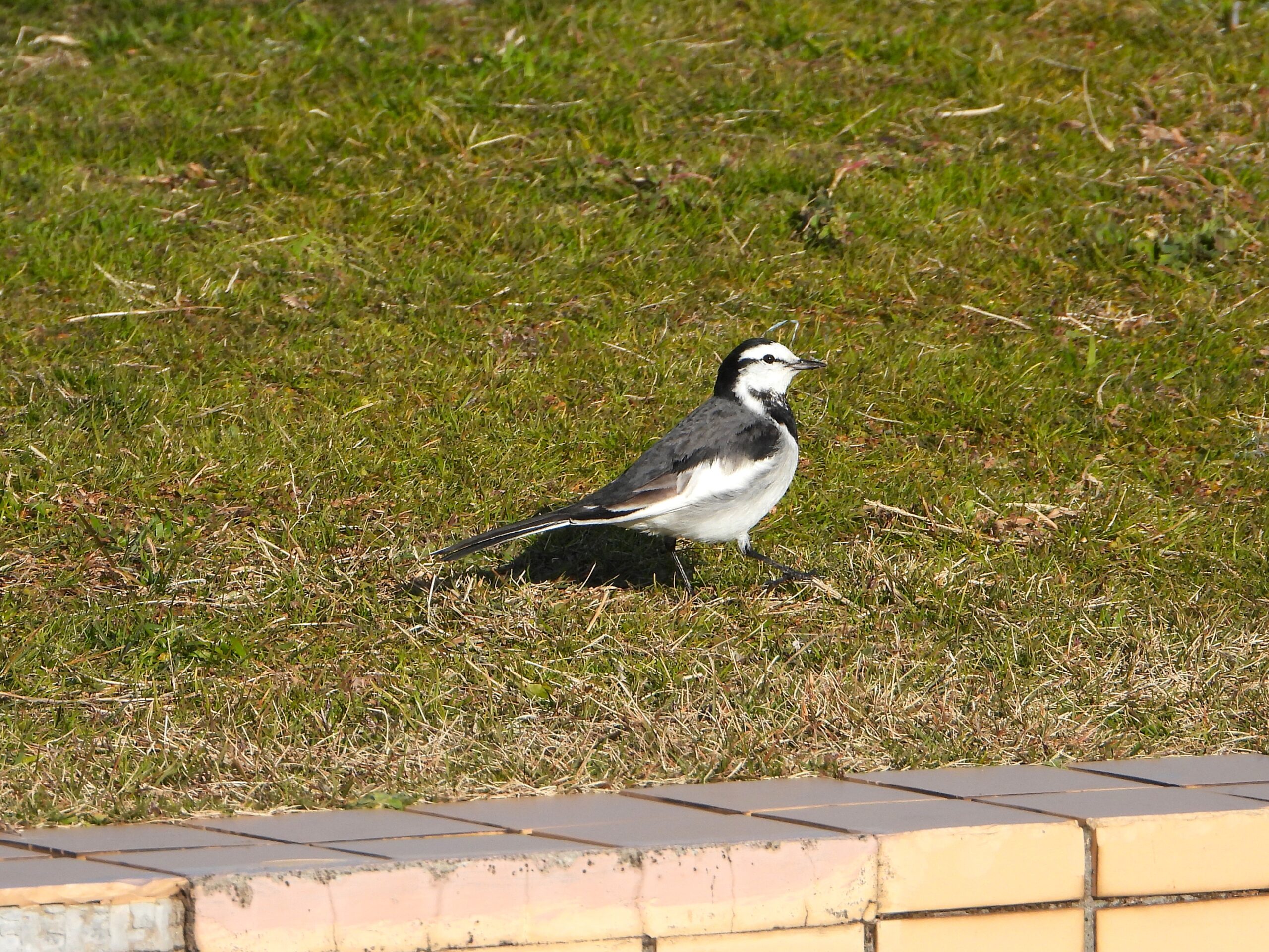
The White Wagtail is a slender bird with a long tail and relatively long legs. Its plumage is mainly black and white, though the exact pattern varies depending on season and individual. The constant tail movement is one of its most distinctive features and helps with identification even at a distance.
Habitat & Distribution
In Japan, the White Wagtail breeds mainly from Kyushu northward. During winter, it is found widely across the country, and its abundance can vary depending on regional conditions such as snowfall.
It prefers open habitats, including riverbanks, farmland, rice fields, coastal areas, and other flat, open ground. It also uses open spaces within towns and cities when suitable feeding areas are available.
Where to See in Japan
Because of its preference for open environments, the White Wagtail can be observed in many accessible places, such as riverbanks, agricultural land, coastal areas, and open urban spaces including vacant lots or wide paved areas.
Careful observation often reveals its characteristic behavior of walking, stopping, and picking up prey from the ground.
Behavior
The White Wagtail mainly forages on the ground, walking rather than hopping. While feeding, it frequently pumps its tail up and down. Outside the breeding season, individuals may gather at communal roosts in sheltered locations, including trees or human-made structures.
Diet
This species feeds primarily on small animals such as insects and other invertebrates. Most prey is taken from the ground or from shallow water edges in open habitats.
Reproduction
Breeding takes place in spring and summer, with timing varying by region. Nests are placed in sheltered locations, such as crevices or protected spaces in natural banks or human-made structures. Clutch size ranges from about 3 to 8 eggs.
Conservation
The White Wagtail is classified as Least Concern globally and is considered a very common species in Japan. Its population is regarded as stable, and it is not currently a conservation priority.
Author’s Impression
The White Wagtail is one of the most familiar birds in Japan. It is often seen walking across parking lots in residential areas, moving its tail up and down as it searches the ground. In parks and other open spaces, it becomes even easier to spot, making it a good species for relaxed observation.