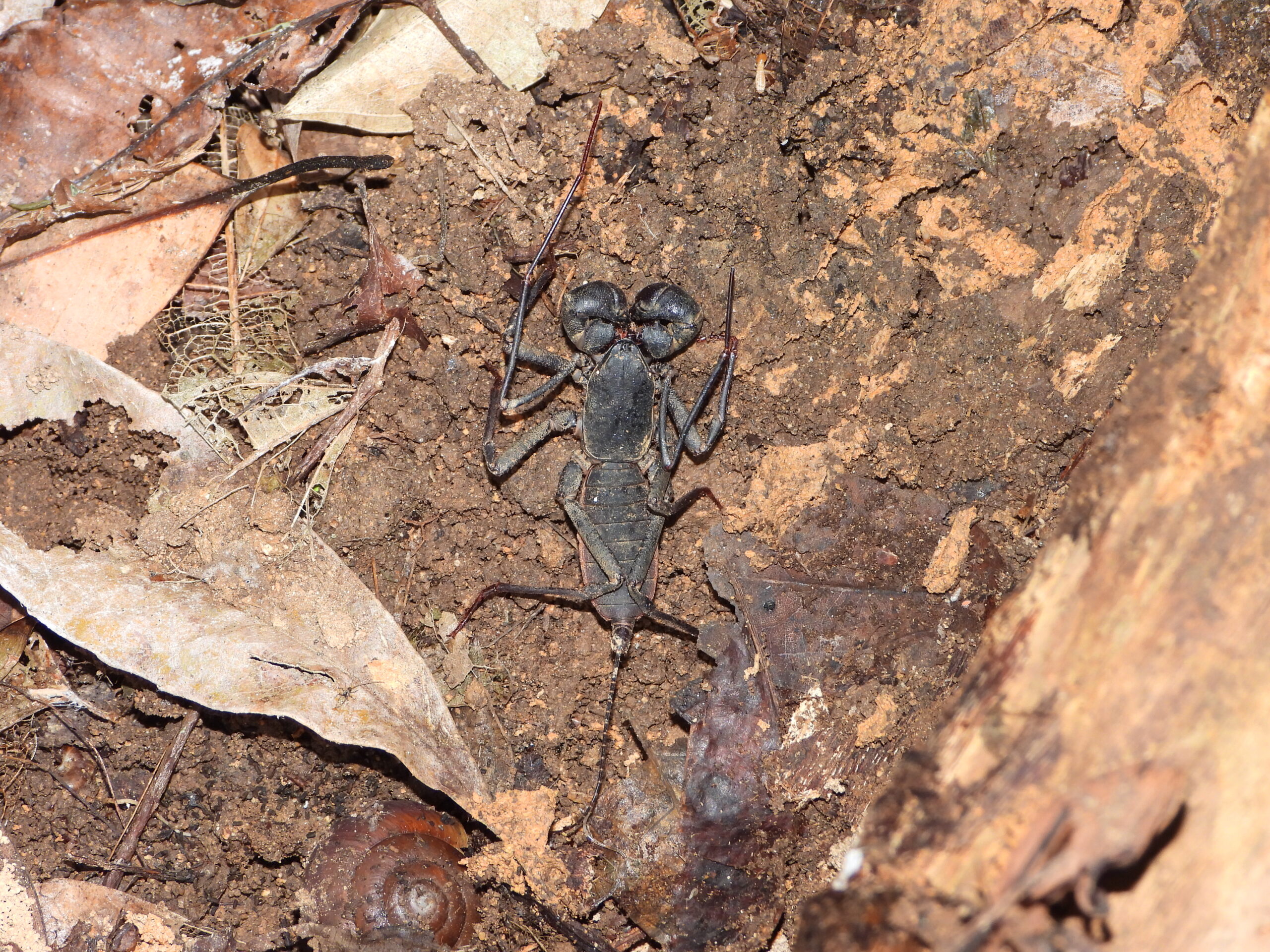
Taiwan Whip Scorpion (Typopeltis crucifer) – Wildlife of Japan
Introduction
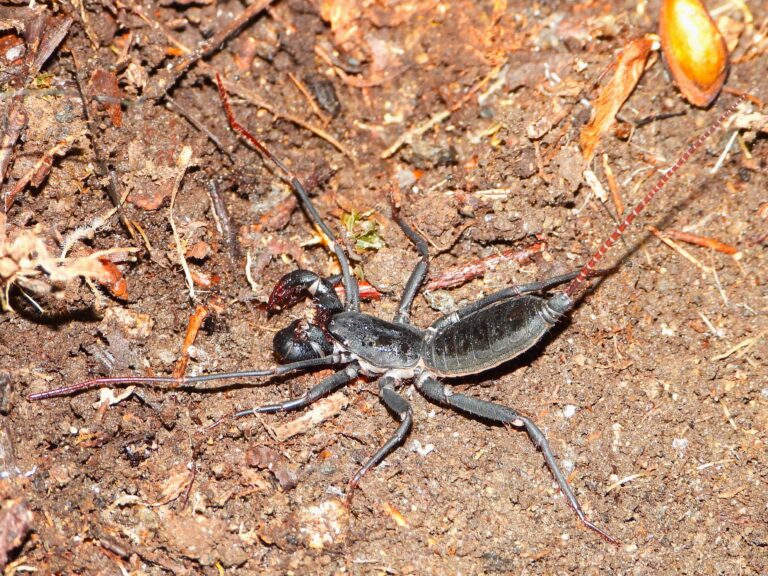
The Taiwan Whip Scorpion is a unique arachnid found in the southernmost parts of Japan and in Taiwan. Despite its scorpion-like appearance, it is not a true scorpion and has no venom. It belongs to a group commonly known as whip scorpions or vinegaroons, named after their special defensive spray that smells like vinegar. In Japan, this species is rarely seen because it is active only at night in humid forests.
Appearance
This species has a flat, heavily armored body, usually around 4 cm long excluding the thin whip-like tail. The overall coloration is dark brown to black. Its large pincer-like pedipalps are used to catch prey. The first pair of legs is long and slender, functioning like antennae to sense the surroundings—another characteristic of vinegaroons.
Habitat & Distribution
The Taiwan Whip Scorpion lives in warm, humid forests. In Japan, it is restricted to the Ryukyu Islands including Okinawa and the Miyako/Yaeyama Islands such as Ishigaki, Iriomote, and Yonaguni. It also naturally occurs in Taiwan. During the day it hides under stones, fallen logs, and leaf litter.
Behavior
This species is nocturnal and moves slowly at night while exploring the forest floor with its long sensory legs. When threatened, it raises its pedipalps and may spray an acidic defensive liquid from glands near the tail. This liquid contains acetic acid, giving whip scorpions the name vinegaroons. The species is not aggressive and usually tries to avoid confrontation.
Diet
A carnivorous predator, it feeds on small insects and other invertebrates living in the leaf litter. It detects movement by touch rather than sight and quickly seizes prey with its pedipalps.
Reproduction
Specific reproductive behavior of this species is not well documented. However, like other whip scorpions, females are believed to guard their eggs in a protected space, and newly hatched young likely stay with the mother for a short period before dispersing.
Conservation
Although not currently listed as threatened, its habitat is limited to subtropical islands. Forest loss and disturbance may affect local populations. It plays an important ecological role as a mid-level predator and should be protected along with its forest habitat.
Author’s Impression
This whip scorpion has a cool yet mysterious appearance. You have a better chance to find it at night, but sometimes you can discover one even during the day by gently checking under stones or fallen logs.