Solitary Snipe (Gallinago solitaria) – Wildlife of Japan
Introduction
The Solitary Snipe is a quiet and elusive winter visitor to Japan.
Unlike many other snipes that gather in open wetlands, this species prefers secluded environments such as mountain streams and shaded valleys.
Because of its secretive nature and excellent camouflage, it is rarely seen unless you specifically search for it.
Even experienced birdwatchers may overlook it without knowing where to look.
Appearance
The Solitary Snipe is relatively large for a snipe, measuring about 30–33 cm in length.
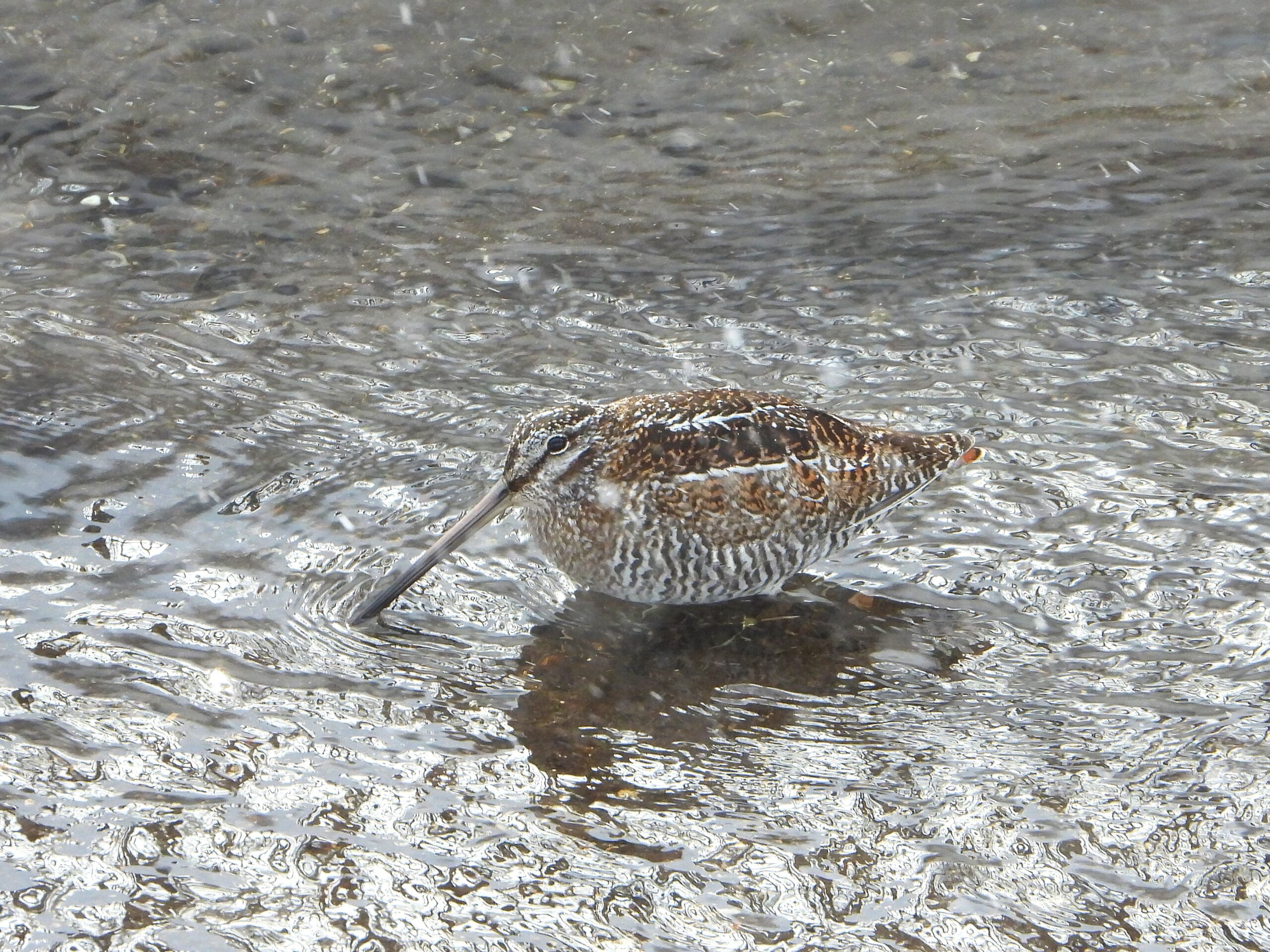
It has a stout body, a long straight bill, and a cryptic plumage of brown, gray, and buff tones.
Its upperparts often show subtle grayish streaks, giving it a slightly cooler and more muted appearance compared to other snipes.
When standing still among rocks, leaf litter, or stream edges, it blends in extremely well.
It can resemble other snipes such as the Common Snipe, but its larger size and typical habitat are key identification clues.
Habitat & Distribution
The Solitary Snipe is mainly a winter visitor to Japan.
It breeds in mountainous regions of northern Asia and migrates south during the colder months.
It is primarily associated with mountain streams, shaded valleys, and forested ravines.
In some cases, it may also occur in rural waterways or rice fields, but these are less typical habitats.
Among these, mountain streams and narrow valleys are the most reliable places to look, especially in winter.
Where to See in Japan
The Solitary Snipe can be found across Japan during the winter months, but it is never common and often difficult to locate.
The best places to look include:
- Quiet mountain streams in forested areas
- Narrow valleys and ravines with flowing water
- Shaded woodland edges near small streams
- Rural irrigation channels and less-disturbed rice fields
In regions such as Nikko or other mountainous areas of Honshu, it may be found along small streams where the water is shallow and the surroundings are calm.
Unlike many other waders, it does not usually gather in open wetlands.
Instead, it prefers hidden, undisturbed environments, often staying close to rocks, leaf litter, or the edges of flowing water.
The best time to search is during winter, especially in the early morning or late afternoon when the bird is more active.
Because it relies heavily on camouflage, scanning slowly along stream edges is essential. Many sightings happen only when the bird suddenly flushes from near your feet.
Behavior
This species is highly cautious and easily disturbed.
It often stays motionless near water, relying on camouflage to avoid detection.
If approached too closely, it will suddenly flush and fly away, often before you even notice it.
Because of this, many sightings are brief and unexpected.
A distinctive behavior is its rhythmic bobbing motion, where it repeatedly moves its body up and down while standing near water.
Diet
The Solitary Snipe feeds by probing soft ground and shallow water with its long bill.
Its diet includes earthworms, insects, aquatic invertebrates, and small mollusks.
It often forages in shallow flowing water, muddy edges, or leaf-covered ground.
Reproduction
The Solitary Snipe does not breed in Japan.
Its breeding range lies in mountainous regions of northern Eurasia.
For birdwatchers in Japan, it is best understood as a winter species.
Conservation
The Solitary Snipe is not considered globally threatened, but it is never a common bird in Japan.
In many regions, it is regarded as a scarce winter visitor.
Because it depends on clean streams, wetlands, and undisturbed forested valleys, habitat changes can impact local populations.
Author’s Impression
The Solitary Snipe completely changes the typical image of a “snipe.”
Instead of wide open wetlands, you find yourself walking along quiet mountain streams, carefully scanning rocks and shallow water.
It is a bird you don’t simply stumble upon—you have to look for it.
And when you finally spot one, the sense of discovery is unforgettable.
If you want to find this species in Japan, forget large wetlands and start exploring small mountain streams in winter.