Northern Pintail (Anas acuta) – Wildlife of Japan
Introduction
The Northern Pintail is one of Japan’s most elegant winter ducks, known for its slim body, long neck, and graceful appearance on open water. During the colder months, it can be found on lakes, rivers, estuaries, and park ponds, sometimes forming noticeable flocks. Its refined shape makes it a rewarding species for winter birdwatching in Japan.
Appearance
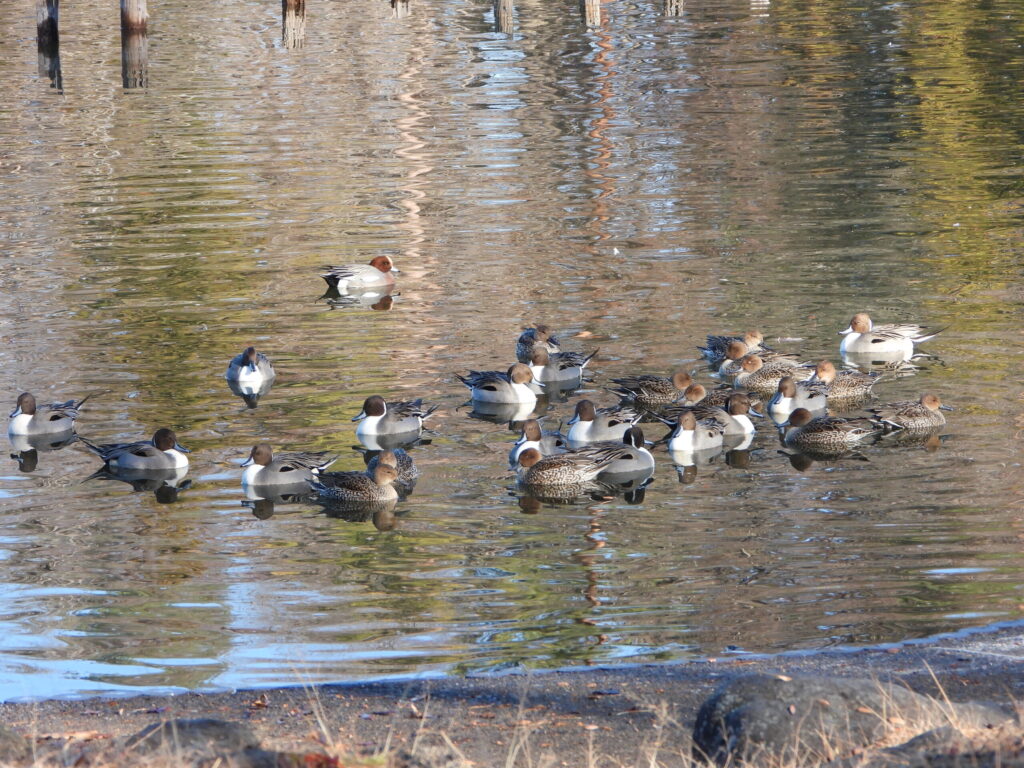
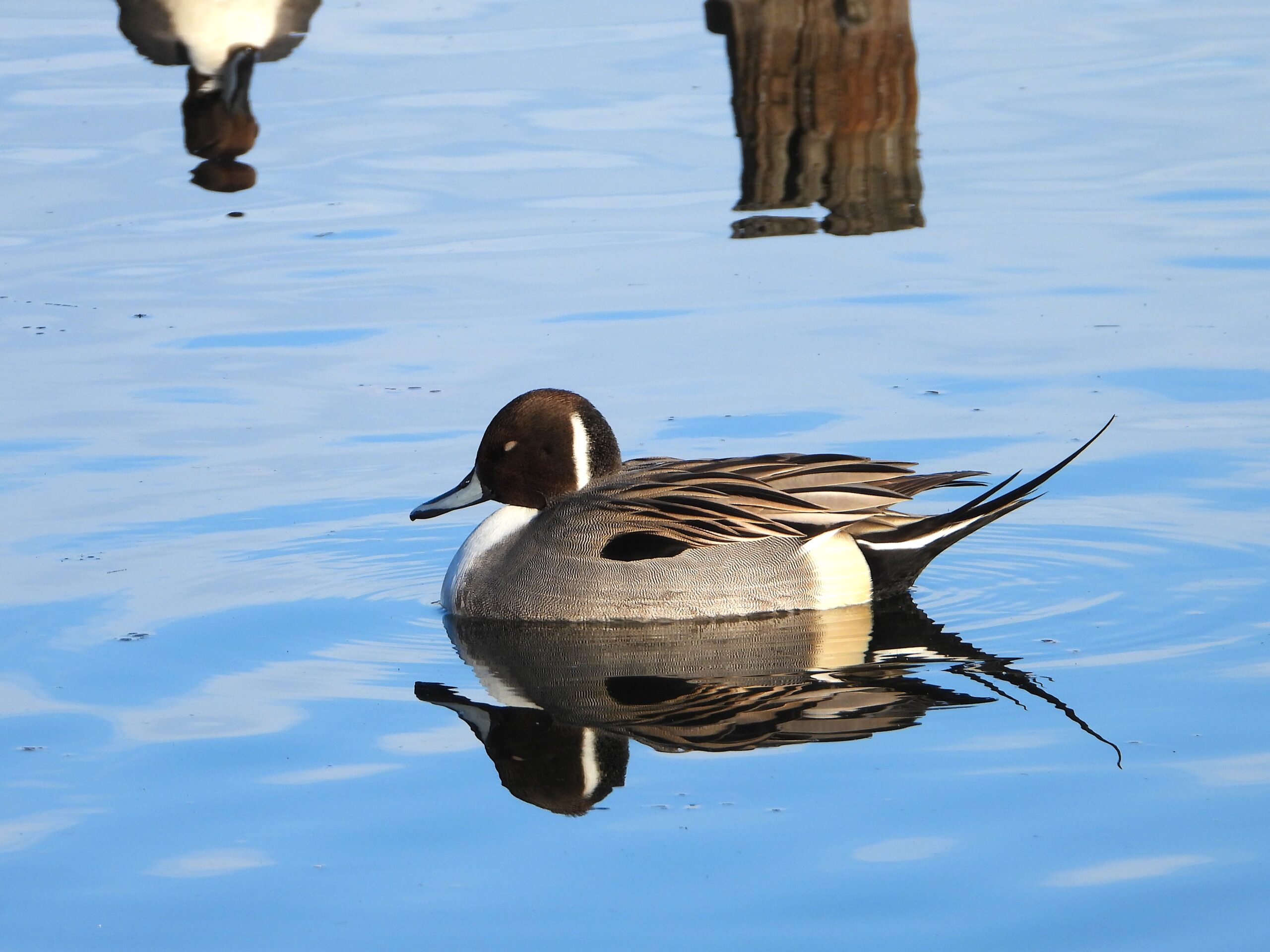
Adult males are distinctive, with a rich brown head, a clean white stripe running up the neck, and long central tail feathers that create the characteristic “pintail” shape. Females and non-breeding males are mottled brown overall, but still show a slim profile, long neck, and a relatively pointed tail compared with many other dabbling ducks. Even without bright colors, their stretched silhouette often stands out in mixed flocks.
Habitat & Distribution
Northern Pintails breed across northern Eurasia and North America and migrate south during winter. They prefer open, shallow wetlands such as lakeshores, marshes, wet grasslands, and sheltered coastal waters.
In Japan, the species is primarily a winter visitor. It uses a wide range of freshwater and coastal habitats, including lakes, rivers, inlets, and urban ponds where wintering ducks gather.
Where to See in Japan
Northern Pintails are most likely from late autumn through early spring. Look for calm, open water with shallow feeding areas, such as:
- Large lakes and reservoirs
- Slow-flowing rivers and wide river mouths
- Sheltered bays, lagoons, and estuaries
- Wetlands near farmland, especially in winter
Numbers vary by location and year, so sightings depend on timing, weather, and local conditions rather than being guaranteed.
Behavior
Outside the breeding season, Northern Pintails are social and often form flocks, sometimes mixing with other duck species. They mainly feed by dabbling at the surface or tipping up in shallow water. On wintering grounds, they may shift resting and feeding sites depending on disturbance and environmental conditions.
Diet
This species is omnivorous. Its diet includes seeds and other parts of aquatic plants, grains found in wet farmland, and small aquatic animals such as insects, snails, and other invertebrates. Feeding usually takes place in shallow water or along wet edges.
Reproduction
Northern Pintails generally do not breed in Japan. Breeding occurs in northern regions, where they nest on the ground in open habitats near wetlands. Nesting typically begins relatively early in the season compared with many other duck species.
Conservation
Globally, the Northern Pintail is classified as Least Concern, although some assessments indicate a decreasing population trend. Like many migratory waterbirds, it depends on the availability and quality of wetlands across its breeding, migration, and wintering range.
Author’s Impression
In winter, Northern Pintails are often seen on ponds in public parks. Their long, slender tail is very distinctive, and at times groups gather closely together, creating a calm and endearing scene on the winter pond.