Blue Bird of Happiness in Japan – 6 Beautiful Blue Birds
For centuries, the blue bird of happiness has symbolized peace and hope around the world. Many people search for the blue bird of happiness in Japan, wondering what species truly carry that name.
In reality, Japan is home to several stunning blue wild birds — from forest flycatchers to brilliant kingfishers — that bring flashes of sapphire to mountains, rivers, and coastal cliffs. Here are six beautiful blue birds you can actually see across Japan, along with where and when to find them. Each one reminds us that happiness may be closer than we think, hidden in nature’s quiet beauty.
Blue-and-white Flycatcher (Cyanoptila cyanomelana)
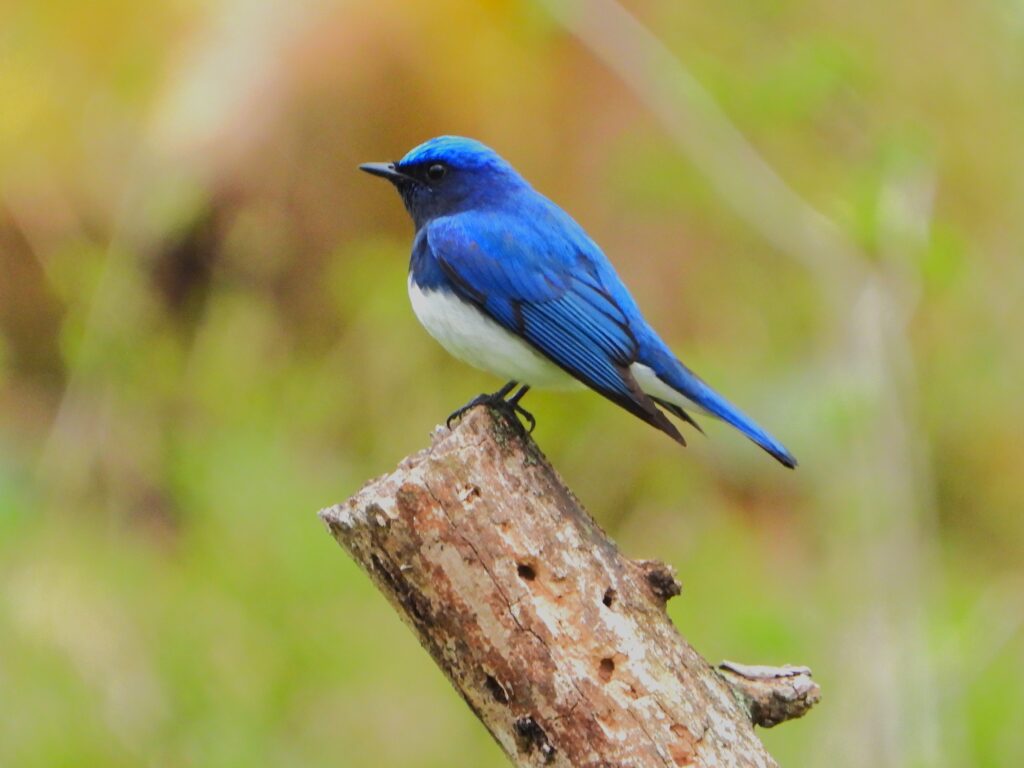
Each spring, a clear whistle rings through Japan’s mountain forests — the song of the Blue-and-white Flycatcher.
The male’s cobalt-blue back and pure white belly create one of the most striking contrasts in nature.
This species migrates from tropical Asia to Japan to breed, announcing the arrival of spring with its melodious call.
When sunlight filters through new leaves and its song fills the air, it feels as if spring itself has found a voice.
Read the full species profile →
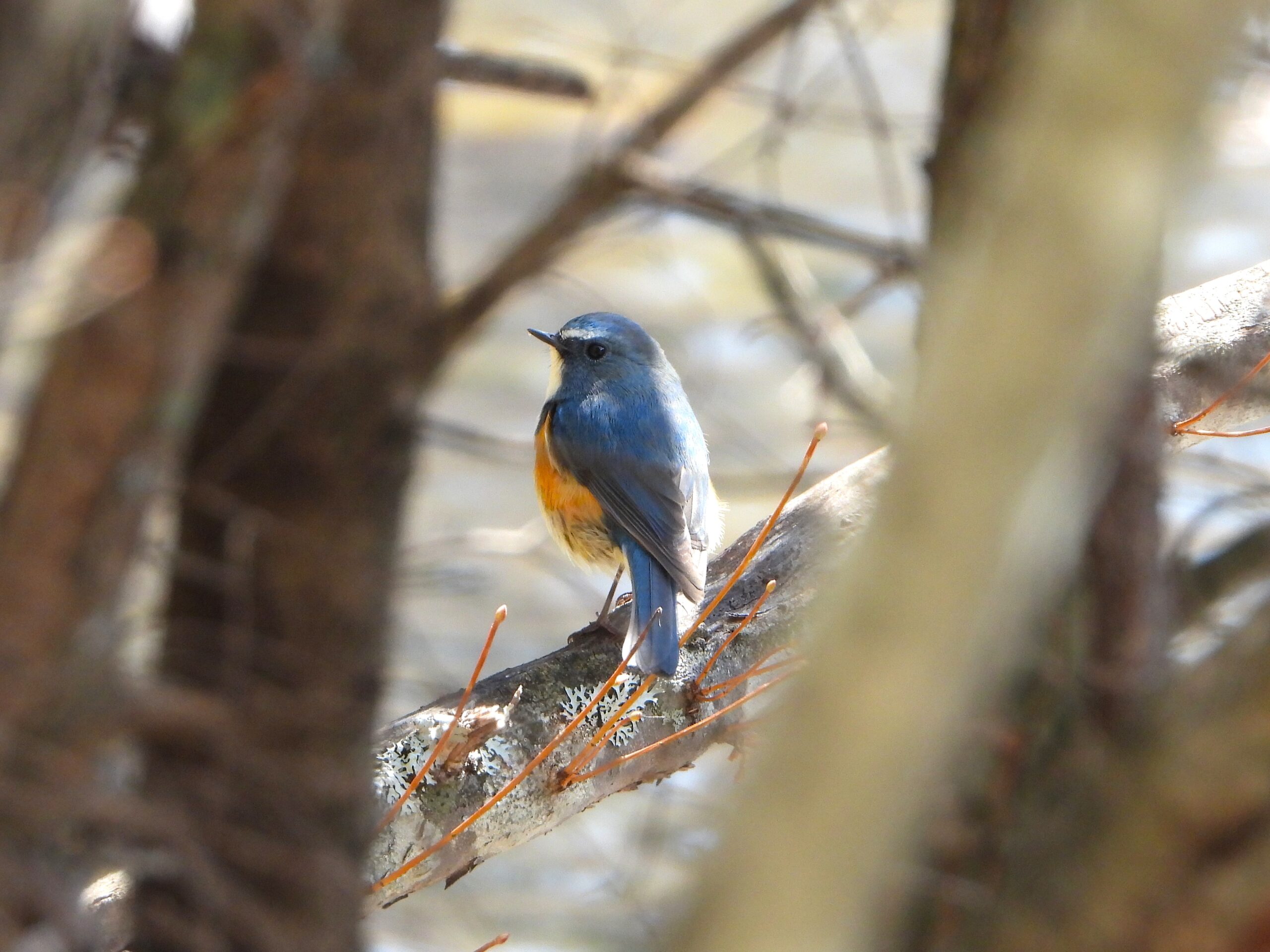
Red-flanked Bluetail (Tarsiger cyanurus)
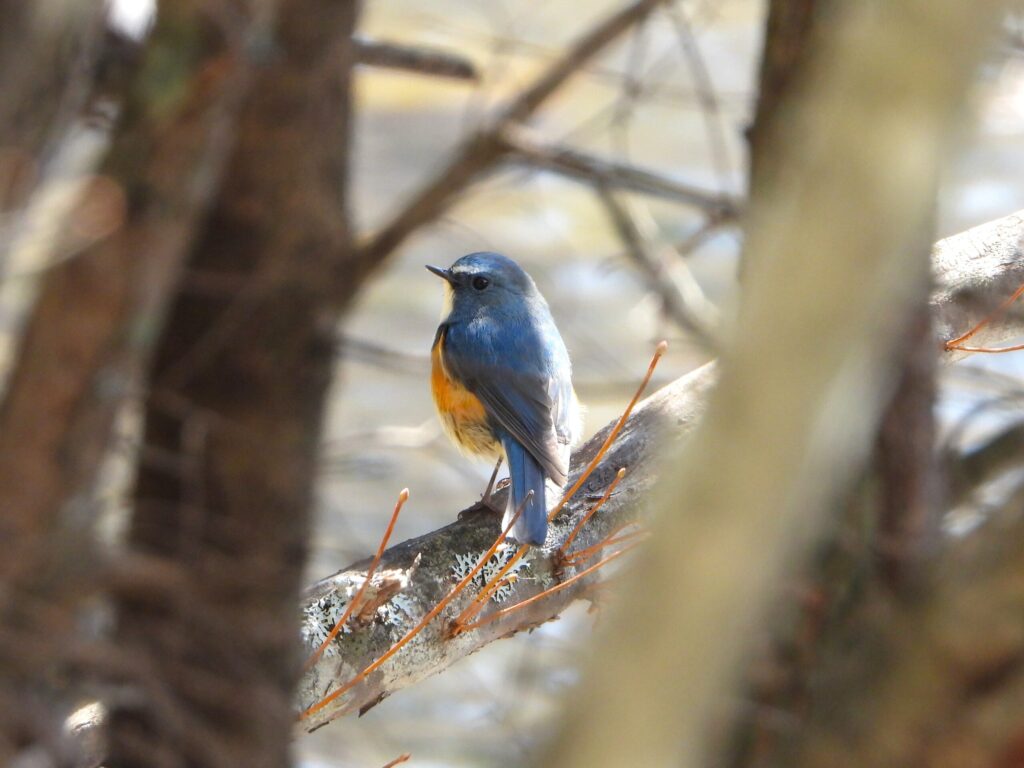
When winter hushes Japan’s forests, a spark of blue appears among the snow.
The male Red-flanked Bluetail glows with deep sapphire and orange flanks, while the female wears gentle olive tones with a hint of blue on her tail.
They perch low in the undergrowth, flicking their tails as they search for insects on the forest floor.
To find one on a cold morning is like finding a piece of the sky resting on a branch.
Read the full species profile →
Common Kingfisher (Alcedo atthis)
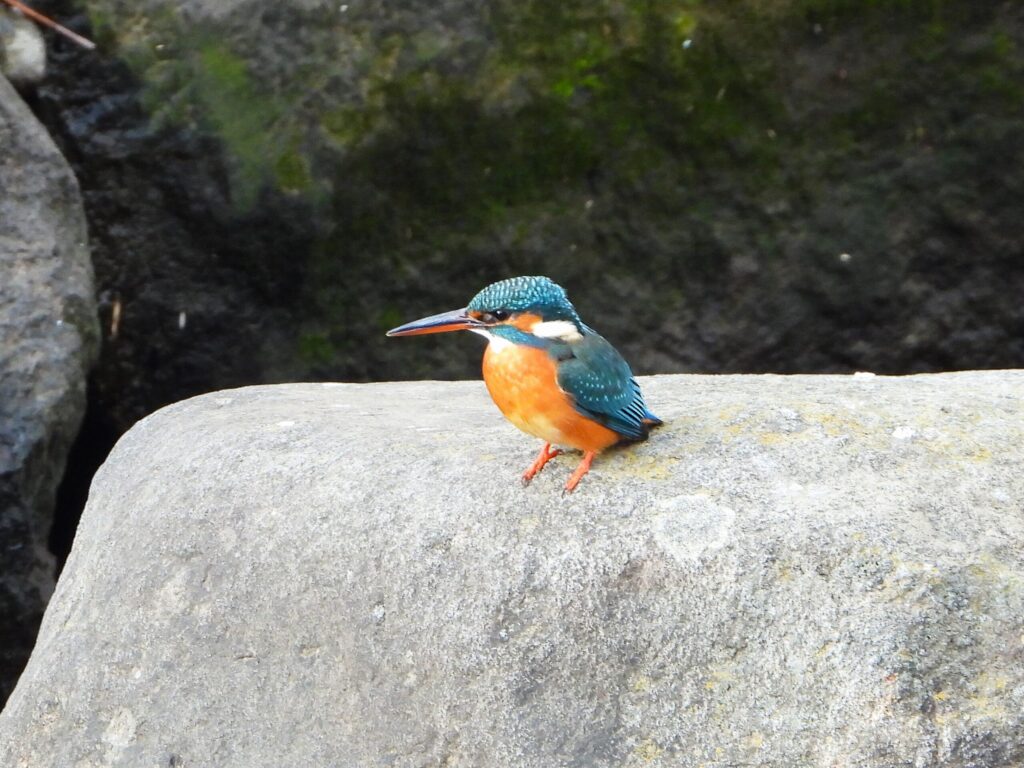
The Common Kingfisher is one of the most brilliant blue birds you can see in Japan. Although it is not a “true bluebird” in the scientific sense, many people searching for a blue bird in Japan are actually thinking of this species.
With its electric blue back and vivid orange underparts, the kingfisher flashes like a jewel along rivers, ponds, and even city parks. It can be seen year-round in much of Japan, especially near clear freshwater streams.
Read the full species profile →
Blue Rock Thrush (Monticola solitarius)
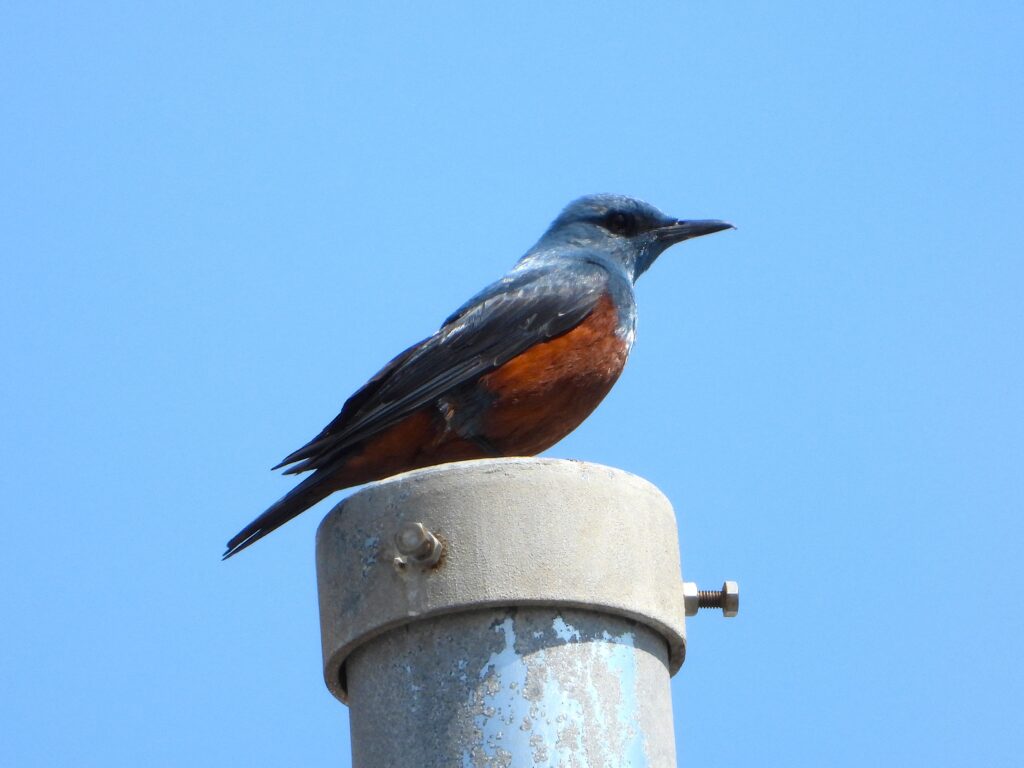
Where land meets sea, the Blue Rock Thrush stands guard.
It lives among rocky shores, sea walls, and even city rooftops, singing a low, flute-like song that echoes over the waves.
The male’s deep indigo feathers shimmer under sunlight — a perfect blend of earth and ocean.
Solitary but strong, it is a quiet symbol of endurance along Japan’s coastlines.
Read the full species profile →
Siberian Blue Robin (Larvivora cyane)
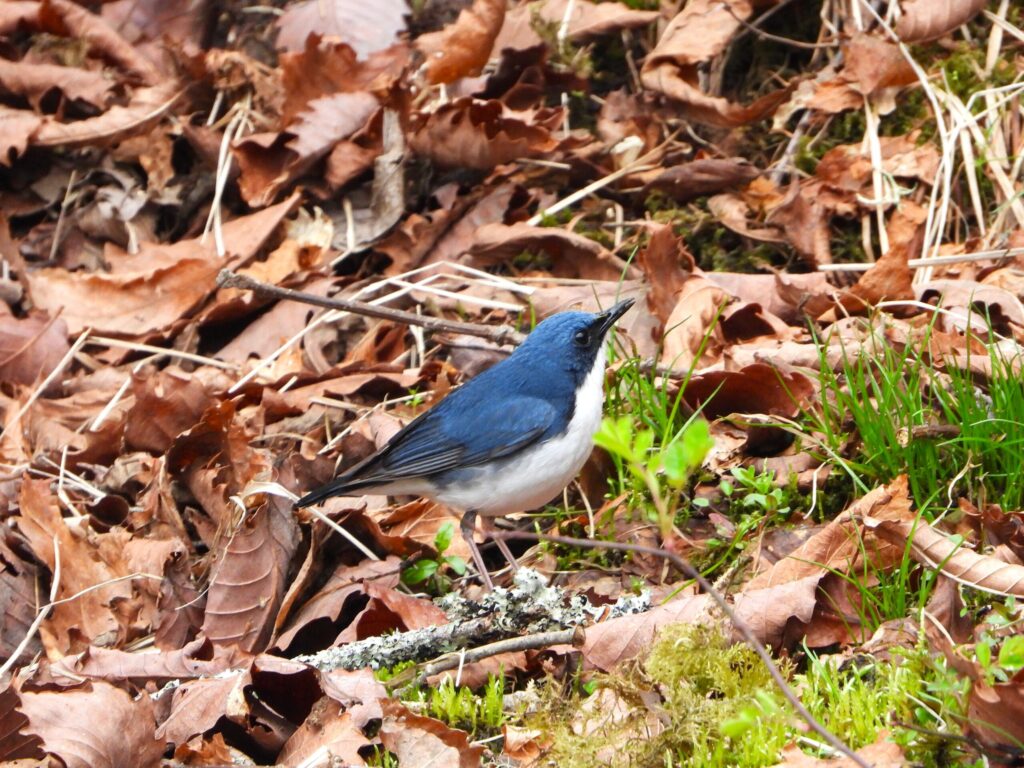
Hidden beneath the shadows of tall trees, the Siberian Blue Robin moves like a whisper.
Males display a soft azure back and a snow-white belly, glowing in the faint forest light.
They walk quietly across the leaf litter, singing gentle, short notes before disappearing again into the green.
Spotting one is rare — a small miracle for those patient enough to wait and listen.
Read the full species profile →
Oriental Dollarbird (Eurystomus orientalis)
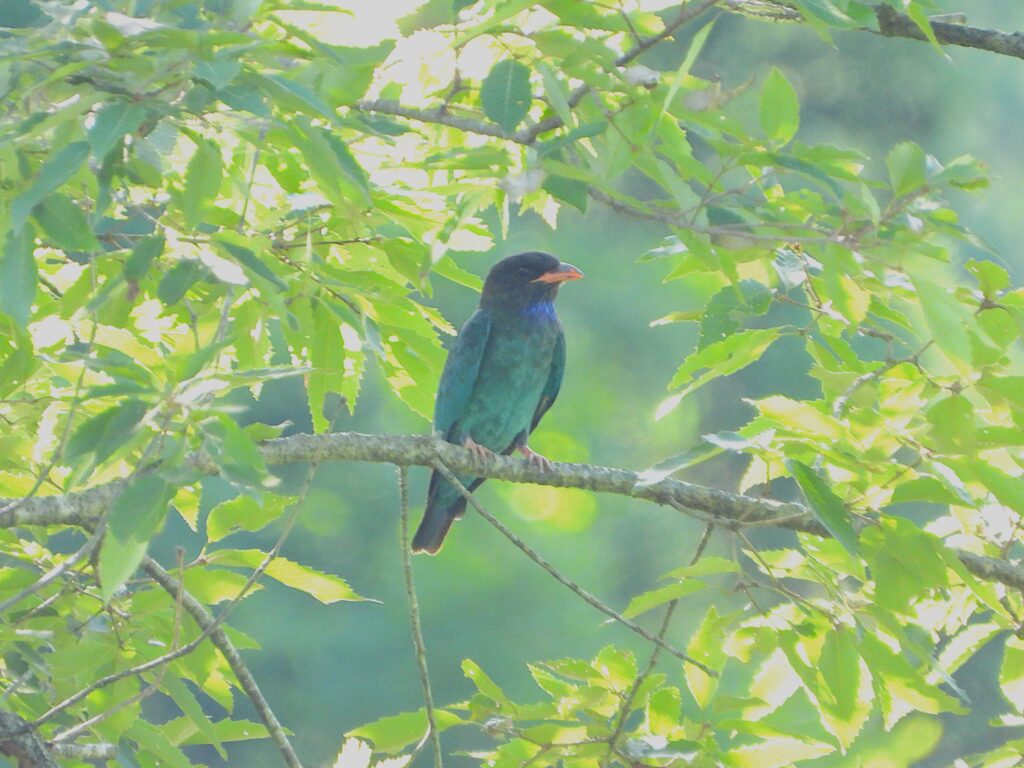
Look up in early summer, and you may see a flash of turquoise cutting through the blue.
That’s the Oriental Dollarbird — strong wings, shimmering feathers, and bright blue circles that flash like coins in the sun.
Known in Japan as Buppōsō, it calls with a rattling cry once mistaken for a Buddhist chant.
It hunts insects in midair, twisting and diving in elegant arcs.
Few birds express such pure freedom and joy.
Read the full species profile →
Why Blue Birds Bring Happiness
The idea of the “blue bird of happiness” comes from European folklore, where bluebirds symbolize joy, hope, and good fortune. In Japan, the phrase is widely understood, yet it does not refer to a single official species. In fact, the blue bird of happiness in Japan is not one specific bird, but an image inspired by several beautiful blue species.
Instead, birds such as the Bluetail, Flycatcher, Thrush, Robin, Dollarbird, and Kingfisher are often associated with this idea.
Blue is the color of calm, honesty, and renewal. In Japan, it also symbolizes purity and a fresh start — ideals that these birds reflect perfectly. Each species holds a lesson: the Bluetail teaches quiet strength, the Flycatcher hope, the Thrush endurance, the Robin gentleness, and the Dollarbird freedom. Together, they remind us that happiness is not something to chase — it’s already here, in the flutter of wings and the silence between songs.
Where to See Them in Japan
Blue-and-white Flycatcher — A summer breeder in Honshu, Shikoku, and Kyushu, especially in lush mountain forests before migrating south for winter.
Red-flanked Bluetail — Breeds in Hokkaido and northern Honshu in summer, then moves to lowland forests and parks across Honshu, Shikoku, and Kyushu during winter.
Common Kingfisher — Seen year-round across much of Japan, especially along clear rivers, ponds, and even urban parks.
Blue Rock Thrush — Found year-round from Honshu to Okinawa, often along rocky coasts, cliffs, and seaside towns.
Siberian Blue Robin — A summer visitor to Hokkaido and northern Honshu, favoring shaded forest floors and mossy valleys.
Oriental Dollarbird — Appears from Honshu to Okinawa during summer, flying over open countryside and forest edges.
Author’s Reflection
I once met a Ruribitaki — the Red-flanked Bluetail — on a silent mountain trail in winter. It perched quietly on a mossy branch, its blue feathers glowing against the snow. For a moment, the world seemed perfectly still. That small bird carried more warmth than the winter sun.
Even in the natural world, spotting something blue always brings a quiet sense of joy. The first blue bird I ever saw was a Common Kingfisher. I remember being surprised to find it along a small river in a residential neighborhood. I had never imagined such a vivid flash of blue could exist so close to everyday life.
It was then I understood that the “blue bird of happiness” is not just a story — it’s a moment we experience in nature. Sometimes it waits deep in the mountains. Sometimes it appears beside an ordinary river. And anyone who loves the wild can discover their own.
If you want to explore more bird colors in Japan, see the complete guide below.
▶ Bird Colors in Japan: Blue, Red, Yellow, White and Black Birds