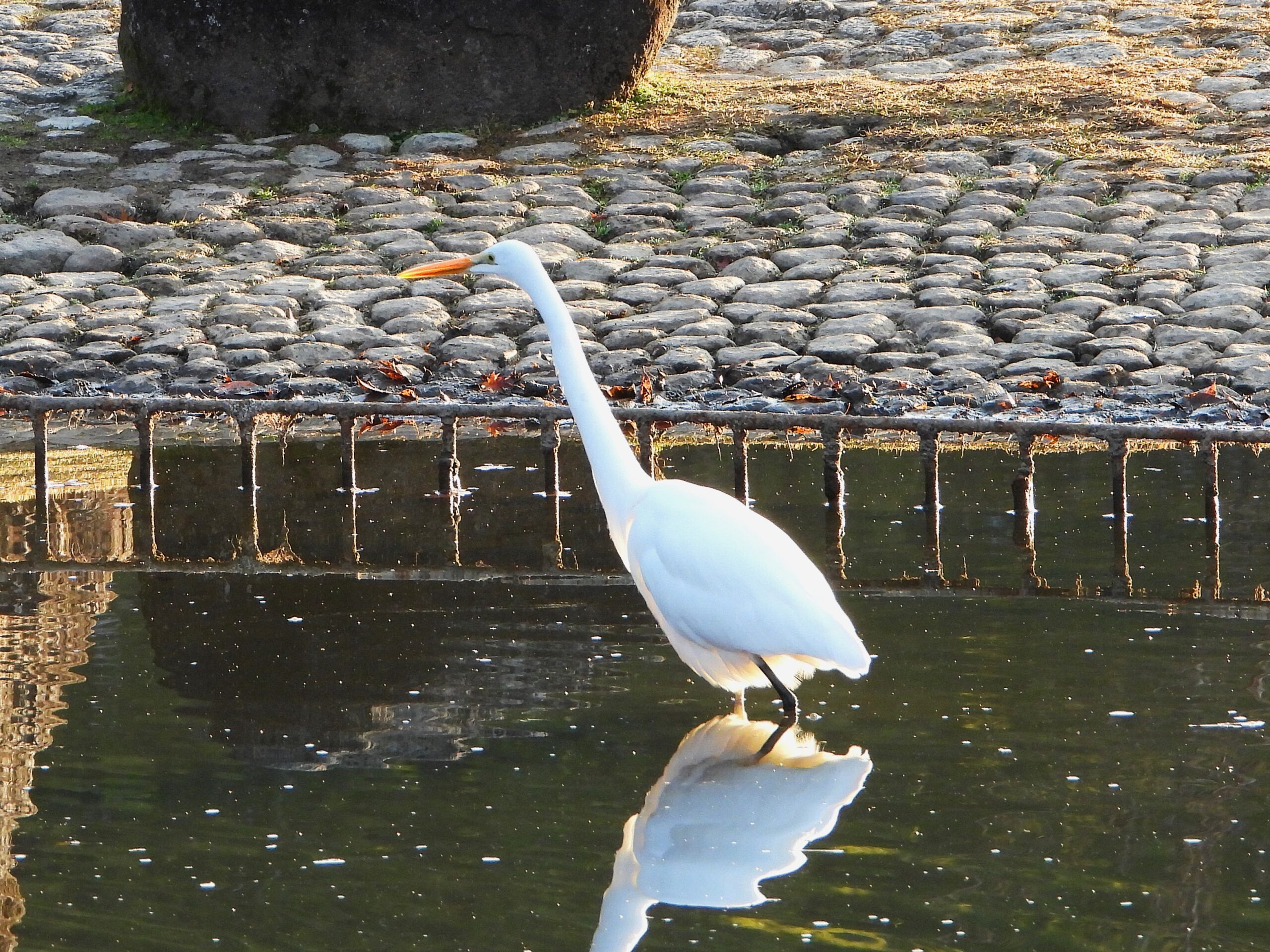
Great Egret (Ardea alba) – Wildlife of Japan
Introduction
The Great Egret is one of Japan’s most recognizable wetland birds. This tall, all-white egret is commonly seen in rivers, lakes, marshes, tidal flats, and especially rice-field landscapes, where its bright plumage stands out clearly against water and mud.
In Japan, the name “Great Egret” refers to the species Ardea alba. Records include two subspecies with different seasonal patterns: Ardea alba modesta, which commonly breeds in Japan, and Ardea alba alba, which is typically recorded only as a scarce winter visitor.
Appearance
The Great Egret is a large white bird with a long neck, long black legs, and a strong, dagger-like bill. One useful field mark in Japan is seasonal bill color. During the breeding season, the bill often becomes darker, sometimes appearing black, while outside the breeding season it is usually yellowish.
In breeding condition, adults may also develop long ornamental plumes on the back. These features, combined with its large size and upright posture, give the Great Egret a particularly elegant appearance.
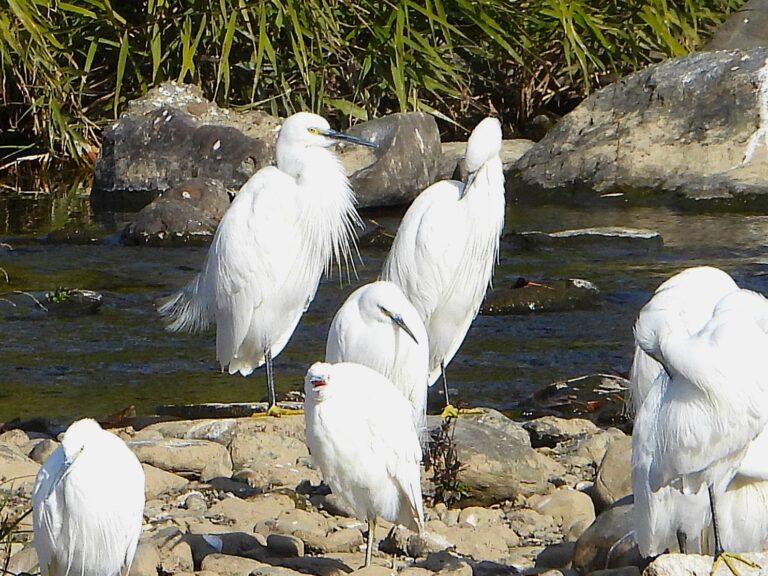
When identifying white egrets in Japan, caution is needed. Other species such as Intermediate Egret and Little Egret can look similar at a distance, so size, structure, and multiple features should be considered together rather than relying on a single trait.
Habitat & Distribution
In Japan, Great Egrets use a wide range of wet habitats, including ponds, marshes, lakeshores, riverbanks, rice fields, irrigation channels, and tidal flats. They are strongly associated with shallow, food-rich environments, many of which are shaped by traditional agriculture.
From a seasonal perspective, Ardea alba modesta breeds in Japan, and many individuals move southward during winter. Ardea alba alba occurs in Japan only in small numbers, mainly in the non-breeding season.
Behavior
Great Egrets typically hunt by standing still or moving very slowly through shallow water, carefully watching for prey. Once a target is detected, they strike rapidly with the bill.
In flight, they fold the neck back into an S-shape, a characteristic shared by herons and egrets. Outside the breeding season, they are often solitary, but several individuals may gather loosely in areas with good feeding conditions.
Diet
The diet of the Great Egret consists mainly of aquatic and semi-aquatic animals taken in shallow water. Fish and frogs are especially important prey, though other small wetland animals may also be taken depending on availability.
In rice-field systems, feeding activity often reflects water levels and seasonal changes in prey abundance, making agricultural landscapes important for this species.
Reproduction
Great Egrets breed in colonies rather than as isolated pairs. In Japan, they often nest in mixed-species colonies together with other herons and egrets.
Nests are usually built in trees located near productive wetlands, allowing adults to move efficiently between nesting sites and feeding areas.
Conservation
The Great Egret is classified as Least Concern on the IUCN Red List. However, stable populations still depend on the availability of suitable wetlands and undisturbed breeding colonies. Conservation of wetland habitats and traditional rice-field landscapes remains important for the long-term persistence of the species.
Author’s Impression
I feel that the Great Egret is an indispensable part of Japan’s rice-field landscape. Seeing one standing quietly in a paddy or irrigation channel immediately makes the scenery feel more “Japanese,” reminding me how closely traditional farmland and wildlife are connected.