Kuruma-suzume (Ampelophaga rubiginosa) – Wildlife of Japan
Introduction
Kuruma-suzume is a hawk moth species belonging to the family Sphingidae, and it occurs widely across Japan. In summer, people most often encounter this nocturnal moth when adults fly to artificial lights after sunset.
Appearance
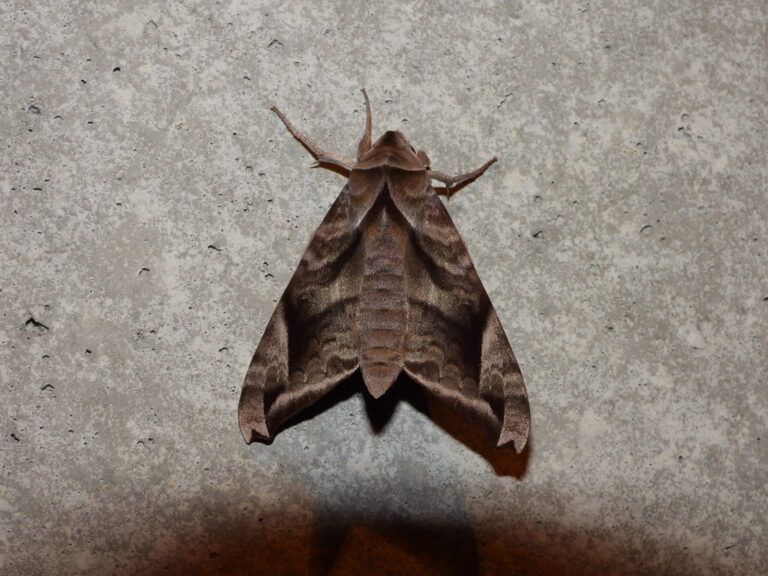
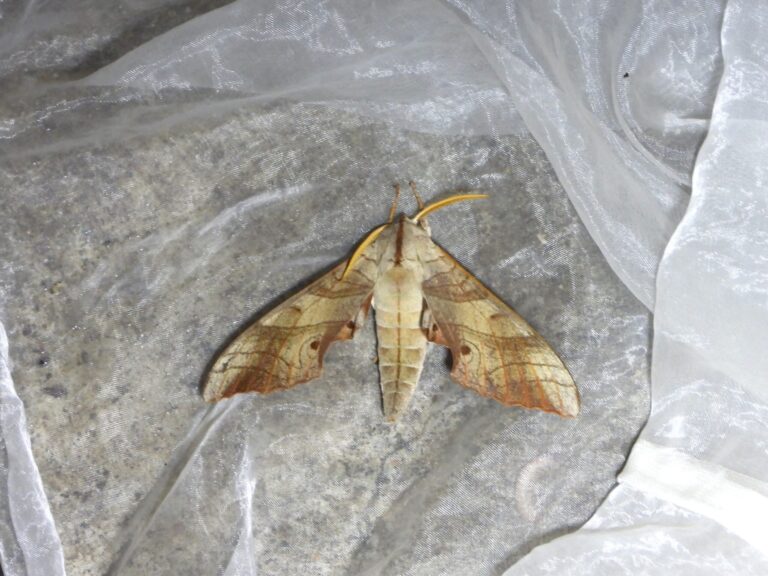
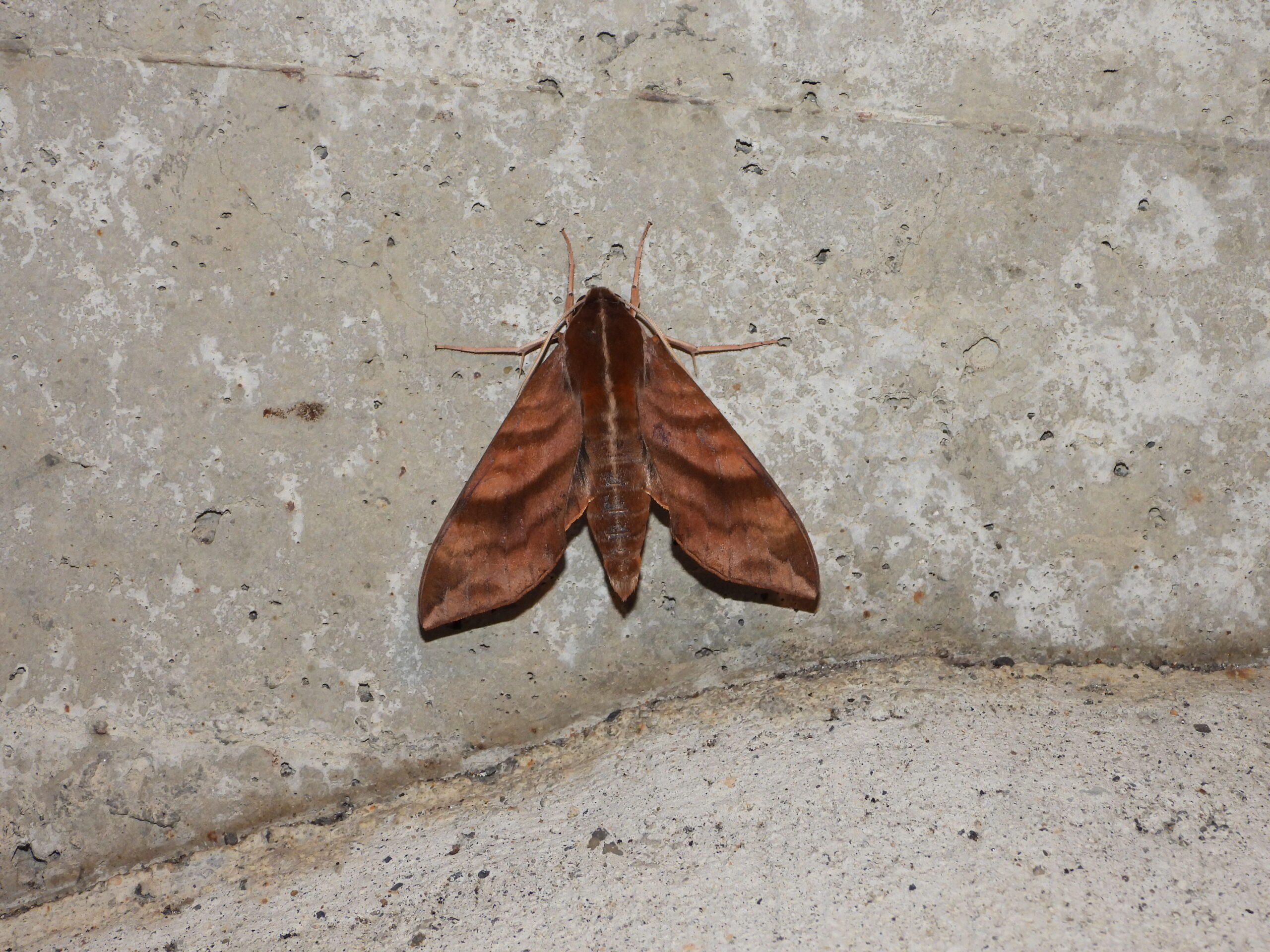
Adults have long, narrow forewings and a thick, muscular body that clearly reflects typical hawk moth proportions. Overall, the coloration ranges from brown to reddish-brown, while darker shading helps the moth blend in with tree bark.
The wingspan usually measures about 75–100 mm.
Habitat & Distribution
In Japan, Kuruma-suzume occurs across Hokkaido, Honshu, Shikoku, and Kyushu. In particular, it inhabits forests, forest edges, parks, shrine and temple grounds, and other areas where its larval host plants grow.
Behavior
Adults are nocturnal and rest quietly during the day. At night, they actively fly and frequently come to lights, which makes light traps and illuminated buildings the most reliable places to observe this species.
Diet
During the larval stage, Kuruma-suzume feeds on plants in the grape family (Vitaceae). Specifically, confirmed host plants in Japan include Parthenocissus vines (Tsuta), Nobudou, and Ebizuru (wild grape vines).
Reproduction
Adults appear mainly from May to August, with numbers peaking in early to mid-summer. Typically, Kuruma-suzume has one generation per year and overwinters as a pupa. Mature larvae leave their host plants and pupate in the soil.
Conservation
Kuruma-suzume has a wide distribution in Japan. As a result, it is not considered a rare or threatened species.
Author’s Impression
Kuruma-suzume shows the solid, powerful build typical of hawk moths. At first glance, its subdued coloration may seem plain, but closer observation reveals a calm strength that suits summer nights in Japan perfectly.