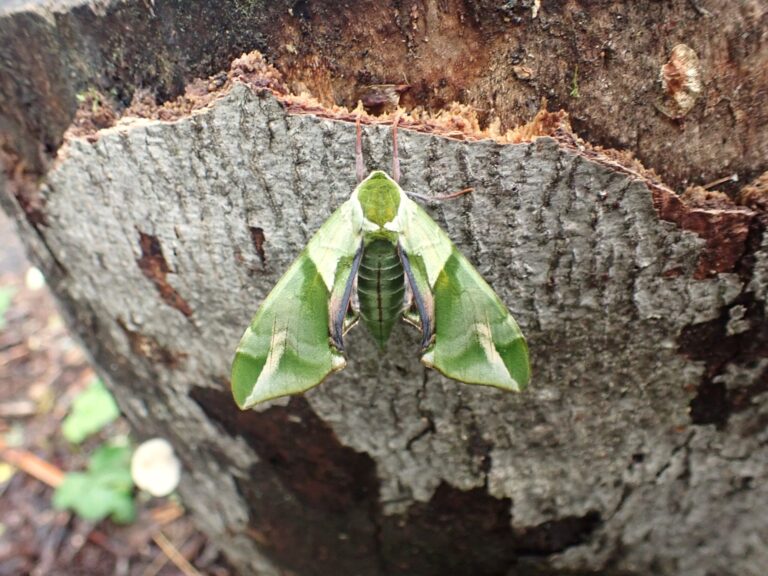
Ko-suzume (Theretra japonica) – Wildlife of Japan
Introduction
Kosuzume (Theretra japonica) is a hawkmoth species in the family Sphingidae. Researchers have recorded this species in Japan and other parts of East Asia, and observers occasionally encounter it in both natural habitats and human-modified environments.
Appearance
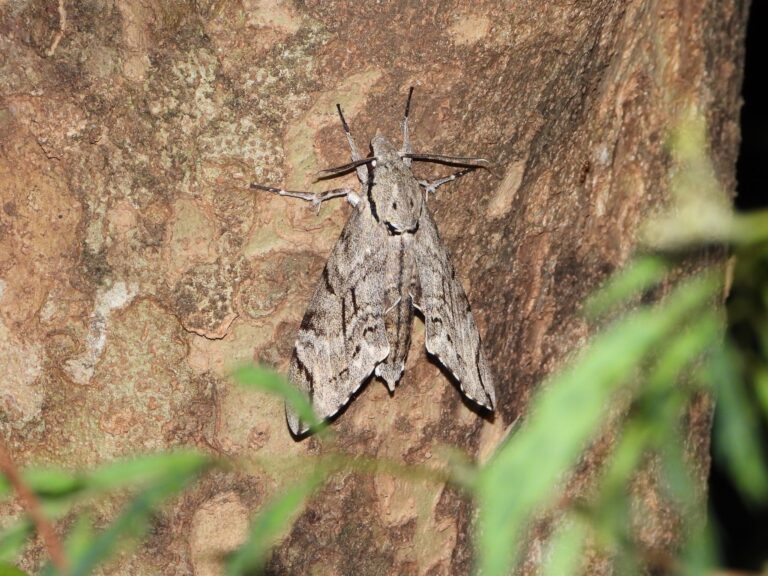
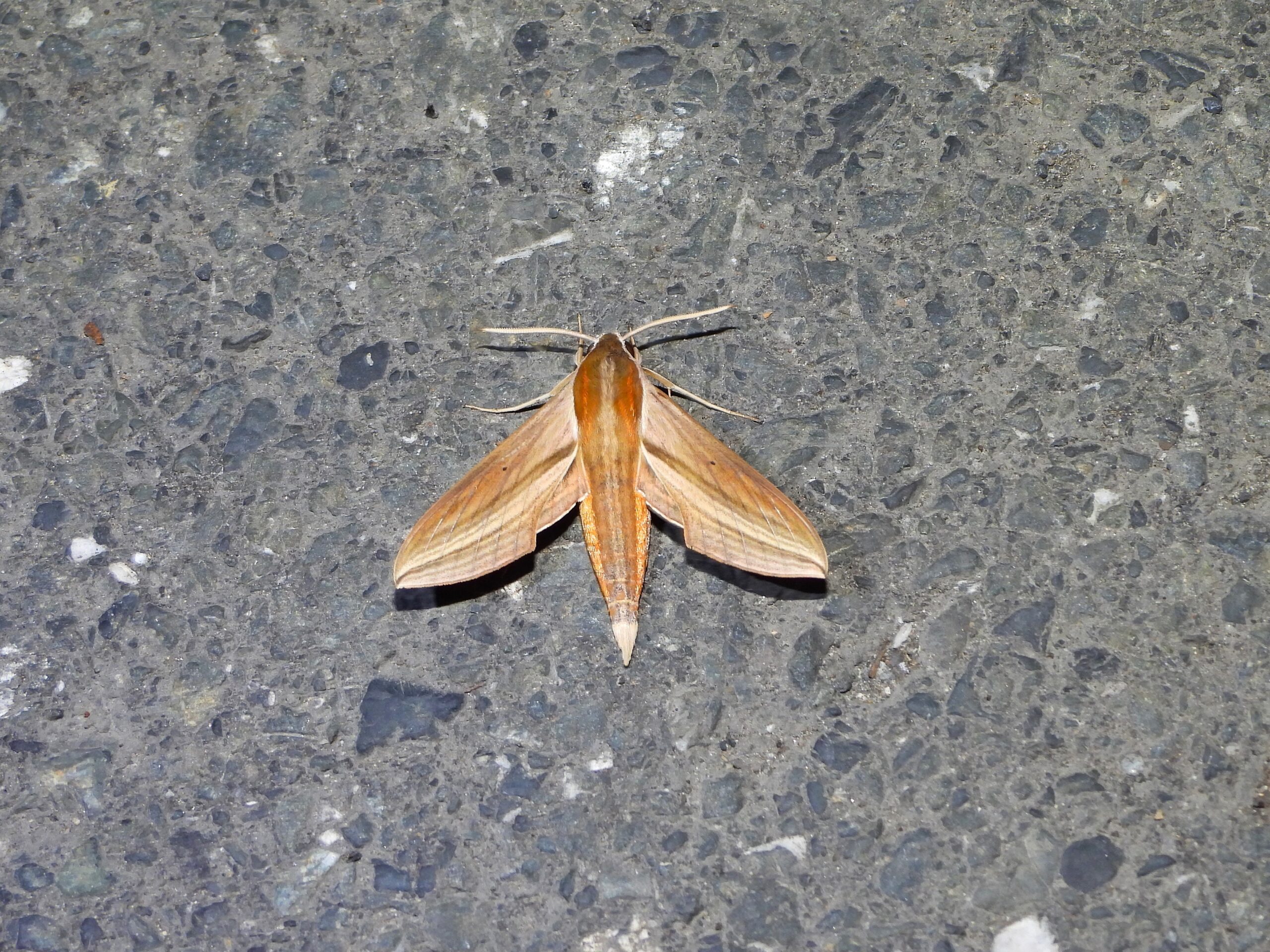
Adults show the streamlined body shape typical of hawkmoths, with narrow forewings and a slender abdomen.
The wingspan measures approximately 55–80 mm. The forewings usually appear brown to gray-brown and display fine linear markings, which vary slightly among individuals.
Habitat & Distribution
Researchers have recorded this species in Japan, as well as China, the Korean Peninsula, and the Russian Far East.
In Japan, observers have found it in a range of environments, including forest edges, riverbanks, and green spaces near urban areas.
Behavior
Adults are primarily nocturnal.
They fly at night and often approach artificial lights, which explains why people sometimes notice them around streetlights, illuminated buildings, or vending machines during warm seasons.
Diet
Adult Kosuzume feed on flower nectar using a long proboscis.
They carry out most feeding activity from dusk through the night.
Reproduction
The larvae feed on a variety of host plants. In Japan, records list the following larval host plants:
- Cayratia japonica
- Ampelopsis species
- Parthenocissus tricuspidata
- Vitis species
- Hydrangea paniculata
Adults typically appear from May to September, although climate and region influence the exact timing.
Conservation
Kosuzume occurs widely across its known range, and current records do not indicate major conservation threats.
This article avoids assigning a specific conservation category to prevent over-interpretation.
Author’s Impression
Kosuzume often remains unnoticed until it suddenly appears at a light on a warm night. Observers can increase their chances of finding this species by checking illuminated areas near vegetation.