Eurasian Siskin (Spinus spinus) – Wildlife of Japan
Introduction
The Eurasian Siskin is a small finch best known in Japan as a winter visitor. From late autumn to early spring, flocks move actively through trees while giving frequent, sharp calls. Winter numbers vary greatly from year to year, mainly depending on food availability rather than long-term population change.
Appearance
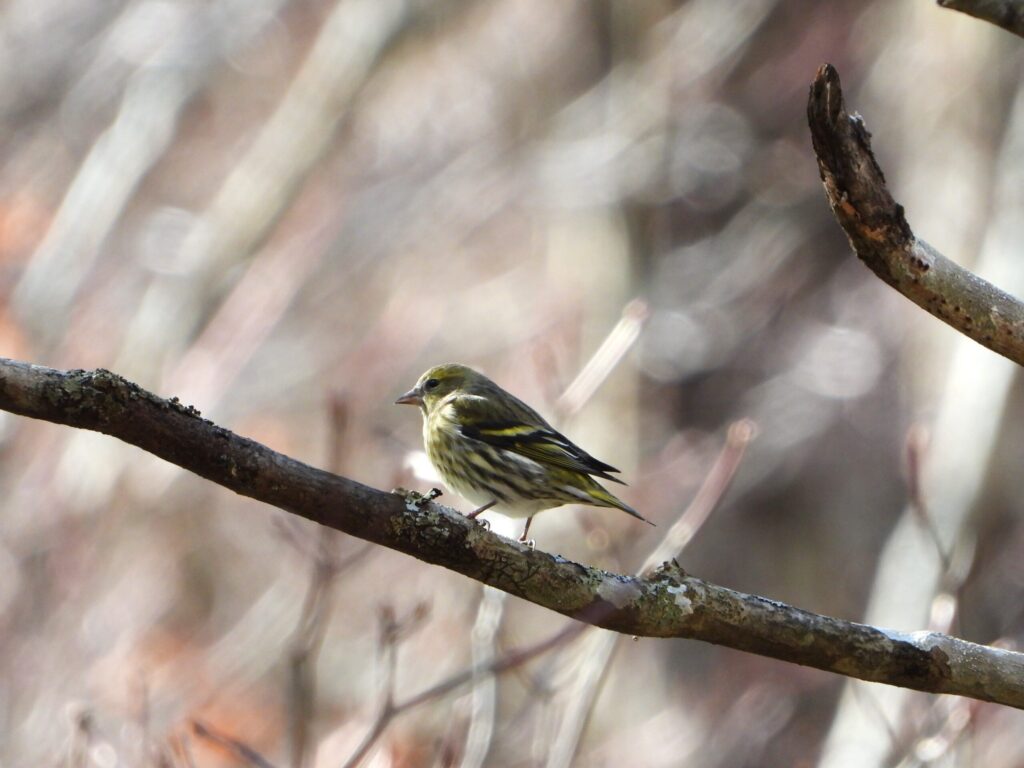
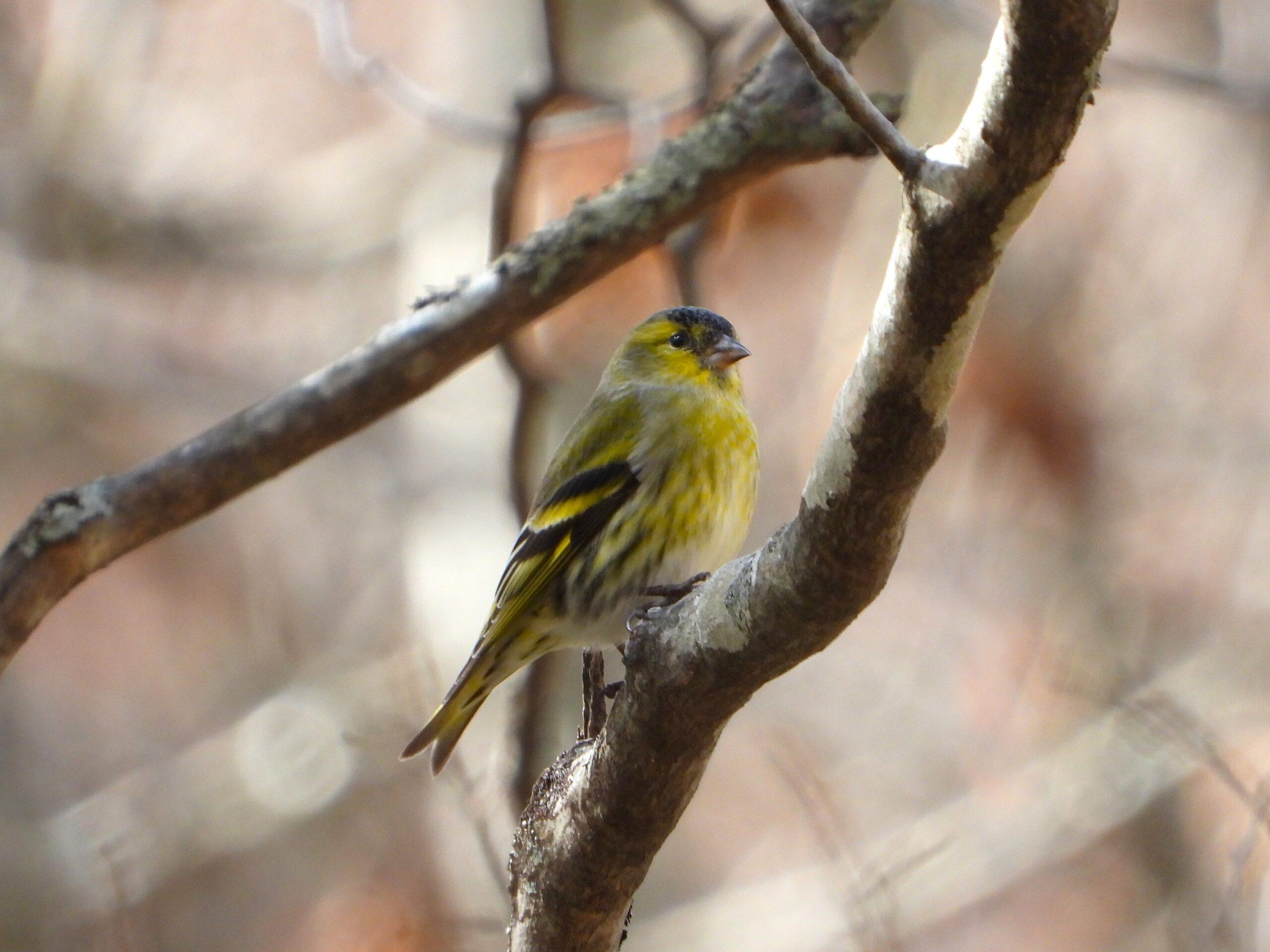
Eurasian Siskins are very small finches with a slender, pointed bill adapted for feeding on fine seeds. Males are generally brighter, with stronger yellow-green tones, while females appear duller and more heavily streaked. Plumage varies with sex, age, and wear, so identification often relies on overall shape, behavior, and calls rather than color alone.
Habitat & Distribution
Throughout its range, the Eurasian Siskin is closely associated with coniferous and mixed forests. In Japan, it is most commonly observed during winter in lowlands and foothills, including parks, forest edges, and riverine woodlands. Some individuals breed in northern and mountainous regions of Japan where suitable conifer forests are present.
Where to See in Japan
In Japan, the Eurasian Siskin is most often encountered during the winter season. Rather than being tied to specific well-known locations, its presence depends strongly on habitat conditions and food availability.
They are most likely to be found in areas with seed-producing trees, especially:
- Forest edges and open woodland with alders or birches
- Coniferous or mixed forests where cones are abundant
- Riverbanks and wetlands with nearby trees
- Parks and green spaces with mature trees during winter
Eurasian Siskins usually forage high in trees and move quickly between branches. They are often detected by their calls before they are seen. Flock size and local presence can vary greatly from year to year, and even suitable habitats may be quiet in some winters.
Because of their nomadic behavior, there is no single location where Eurasian Siskins can be reliably observed every year. Sightings are most consistent from late autumn through early spring, especially in winters with good seed crops.
Behavior
Outside the breeding season, Eurasian Siskins are strongly gregarious. They usually form flocks and move restlessly while feeding, sometimes joining mixed flocks with other finches. Their winter distribution is irregular, and the presence or absence of flocks can change noticeably between years.
Diet
The Eurasian Siskin feeds mainly on seeds. In winter, it commonly takes small seeds from trees such as alders and birches, as well as various conifers. During the breeding season, insects become more important, especially when adults are feeding chicks.
Reproduction
During the breeding season, Eurasian Siskins nest in trees, often in conifers. The nest is a small cup made of plant material and lined with softer fibers. Clutches usually contain around four to five eggs. Incubation lasts about two weeks, and chicks typically fledge roughly two weeks after hatching, although timing varies with environmental conditions.
Conservation
The Eurasian Siskin is classified as Least Concern on the IUCN Red List. While global populations are considered stable, local winter numbers can fluctuate widely due to changes in seed production rather than long-term population decline.
Author’s Impression
The Eurasian Siskin brings movement and sound to otherwise quiet winter forests. A woodland that seems still can suddenly feel alive when a flock arrives, filling the trees with constant motion and calls. Their restless behavior adds energy and rhythm to winter birdwatching.