Beni-suzume (Deilephila elpenor) – Wildlife of Japan
Introduction
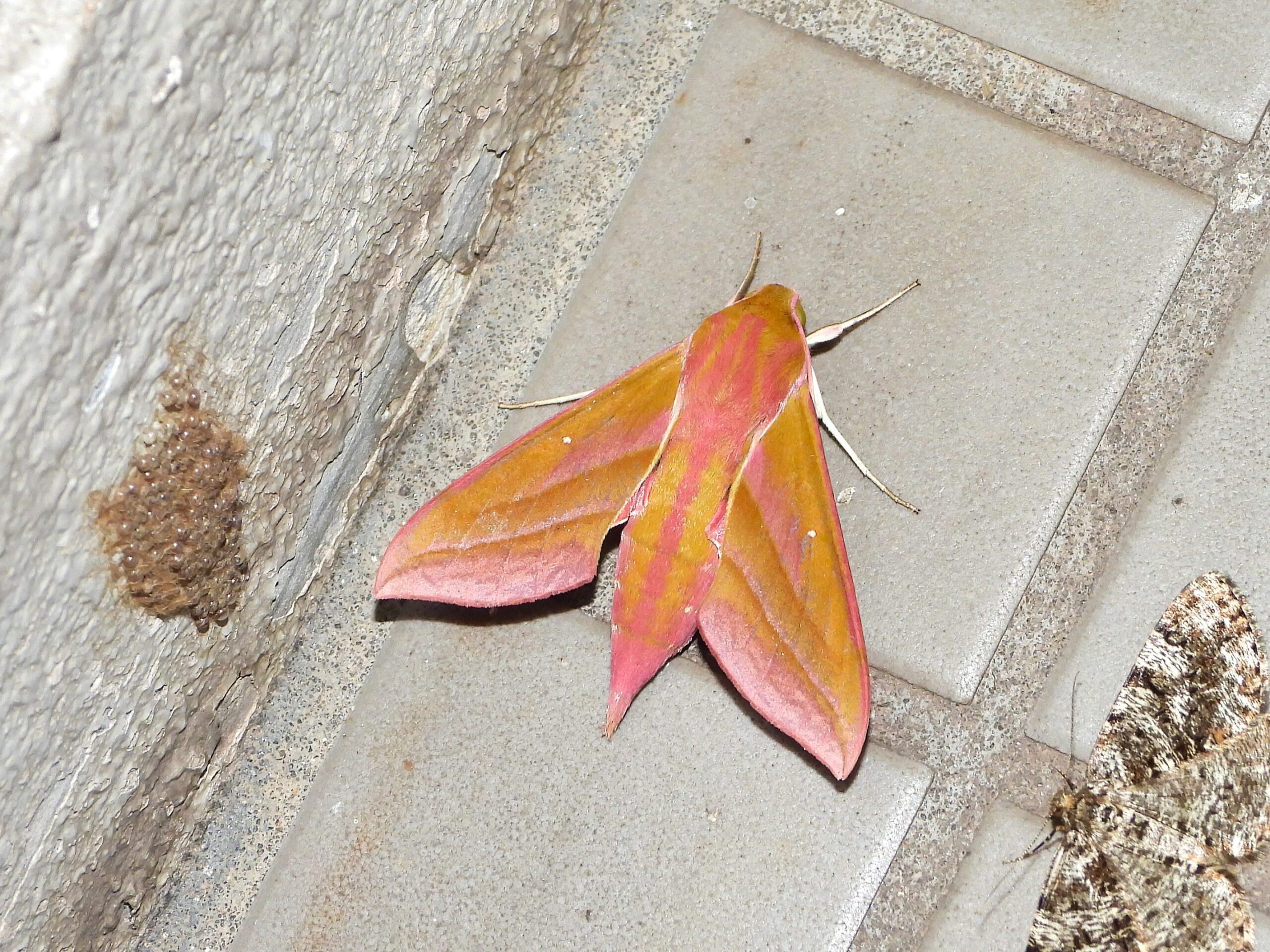
Benisuzume (Deilephila elpenor) is a large moth in the hawk-moth family (Sphingidae) and occurs in Japan.
It stands out for its vivid wing coloration, and many observers recognize it easily among the hawk-moths found in the country.
Appearance
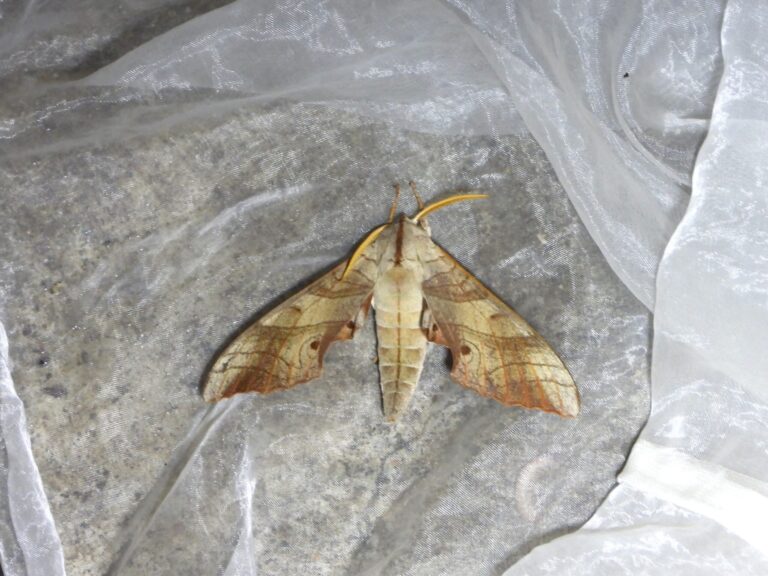
Adults display contrasting pink and olive-green patterns on both the forewings and hindwings. In addition, a pink line often runs along the abdomen.
When the moth rests, the colors may look subdued. However, under direct light or flash photography, the contrast becomes much clearer.
The larva has large eyespots near the head. When a predator disturbs it, the caterpillar retracts its head and expands the front of its body. As a result, it takes on a shape that resembles a small snake, a defensive posture documented for this species.
Habitat & Distribution
In Japan, confirmed records come from Hokkaido, Honshu, Shikoku, and Kyushu.
The species occurs mainly in lowland to foothill environments where suitable larval host plants grow.
Adults appear along woodland edges, grasslands, gardens, and parks. Meanwhile, observers usually find larvae in areas with abundant herbaceous vegetation.
Behavior
Adults are nocturnal and begin flying actively from dusk. Therefore, many people notice them when they visit artificial lights at night.
Like other hawk-moths, Benisuzume flies strongly and directly.
Diet
Larvae feed on several recorded host plant genera, including Impatiens, Epilobium (or Chamaenerion), and Galium.
Because host plant use varies by location and habitat, it is more accurate to describe the diet as flexible rather than limited to a single plant.
Adults feed on liquid resources, such as flower nectar.
Reproduction
Females lay eggs on or near larval host plants.
After the larvae complete their growth, they pupate in soil or leaf litter. The species overwinters in the pupal stage, and adults emerge during the warmer seasons.
Conservation
In Japan, references do not usually treat Benisuzume as a species of conservation concern.
Moreover, its wide distribution and repeated records suggest that it does not face a high risk of extinction at present.
Author’s Impression
Benisuzume stands out not only among hawk-moths but among moths in general. When you see one in person, the coloration often feels surprisingly vivid. For that reason, it remains one of my personal favorite moths.