Asian Jumping Mantis (Statilia maculata) – Wildlife of Japan
Introduction
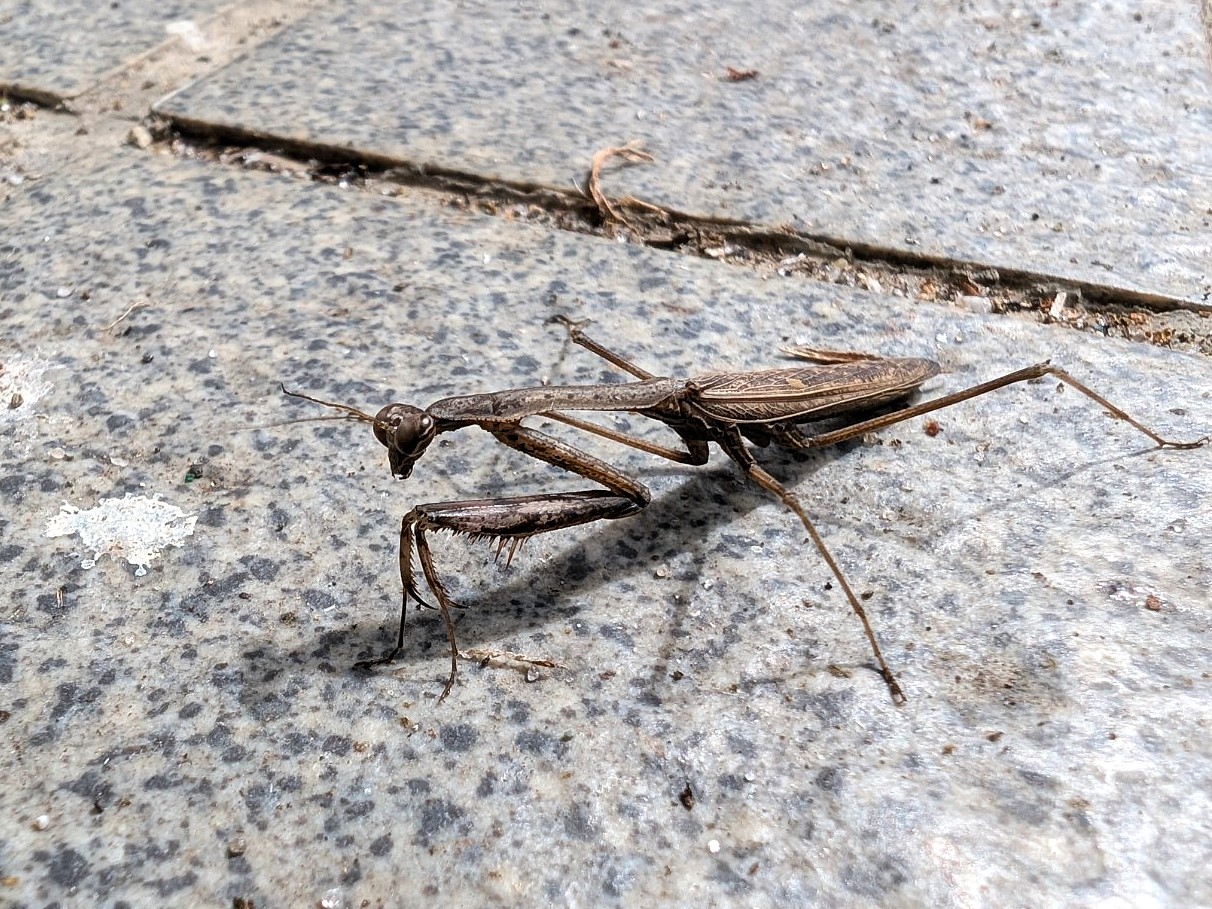
The Asian jumping mantis (Statilia maculata) is a small to medium-sized mantis commonly found in Japan, though it is far less conspicuous than the large green mantises many people imagine. Its subdued brown coloration allows it to blend seamlessly into dry grass, leaf litter, and autumn vegetation, making encounters easy to miss unless you are actively looking for it.
Rather than occupying eye-level foliage, this species is often associated with ground-level or low vegetation habitats, where its camouflage is most effective.
Appearance
Adults are relatively slender mantises. Females typically measure around 45–58 mm in body length, while males are slightly smaller, usually around 40–50 mm.
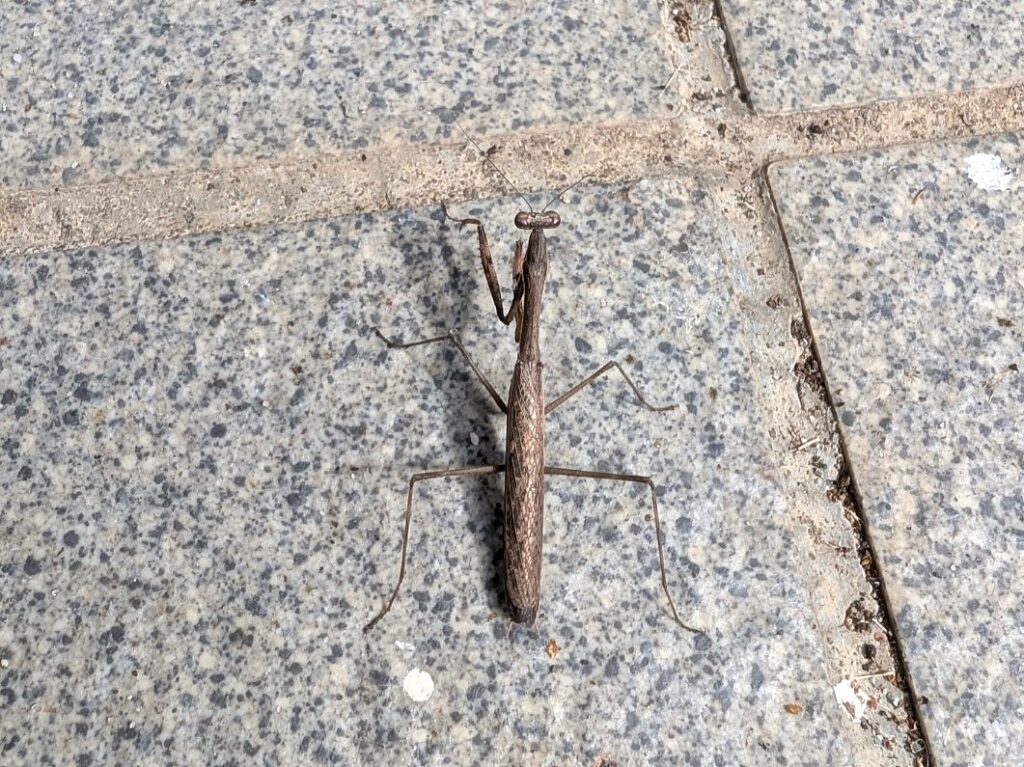
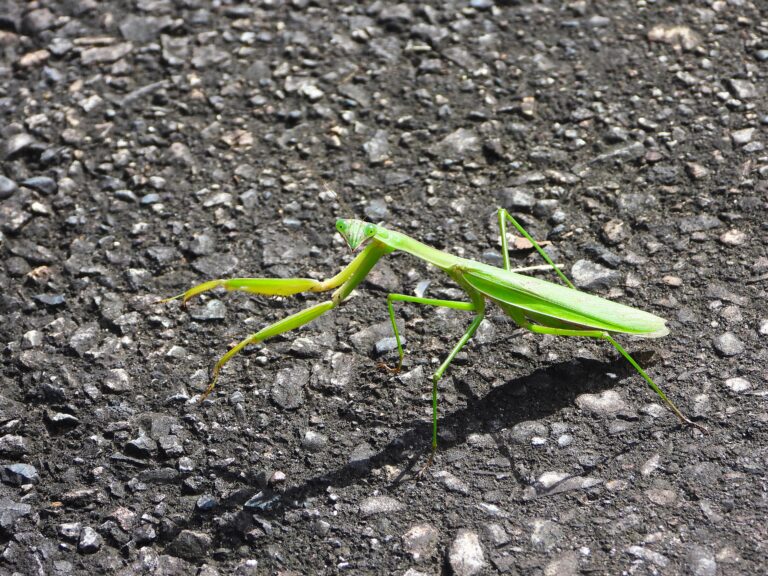
Most individuals are brown to dark brown, matching dried vegetation and dead leaves. Green individuals have been reported but appear to be uncommon.
A helpful identification feature is the dark coloration on the inner side of the raptorial forelegs, which may become visible when the mantis is feeding or adopting a defensive posture.
Habitat & Distribution
In Japan, the Asian jumping mantis is recorded from Honshu, Shikoku, and Kyushu. It is also distributed more broadly in East Asia.
Typical habitats include grasslands, forest edges, farmland margins, and other semi-open environments. These areas provide both suitable prey and abundant dry vegetation for concealment.
The species is generally associated with lowland to foothill zones rather than dense forests.
Behavior
This mantis relies heavily on camouflage and ambush hunting. It often remains motionless for long periods, waiting for prey to approach within striking distance.
Seasonal changes strongly influence its appearance and microhabitat use. During autumn, its brown coloration closely matches dead leaves and dried plants, making it especially difficult to detect.
When disturbed, it is more likely to escape quickly or drop to the ground rather than engage in prolonged threat displays.
Diet
The Asian jumping mantis is a carnivorous ambush predator. It feeds on small insects and other arthropods that it can physically overpower, such as flies, moths, small grasshoppers, and true bugs.
Prey selection varies depending on availability, season, and the size of the individual mantis, making its diet opportunistic rather than specialized.
Reproduction
Like other mantises, this species reproduces by laying an egg case (ootheca). Egg-laying typically occurs in autumn.
The ootheca is described as elongated and is often attached close to the ground, such as on rocks, tree trunks, or other stable surfaces. Eggs overwinter inside the protective structure and hatch the following season.
Conservation
The Asian jumping mantis is generally regarded as a regular and widespread species in suitable habitats in Japan. It is not typically treated as rare or threatened in general insect references.
As with many grassland-associated insects, the long-term availability of open and semi-open habitats is likely important for maintaining stable populations.
Author’s Impression
Finding this mantis in grass can be extremely difficult due to its strong camouflage. In my experience, I am more likely to notice it when it appears on roads or paved walkways. Against the uniform surface of asphalt or concrete, its presence becomes much easier to recognize, and only then do I realize that it had been nearby all along.