Apple Hawkmoth (Langia zenzeroides nawai) – Wildlife of Japan
Introduction
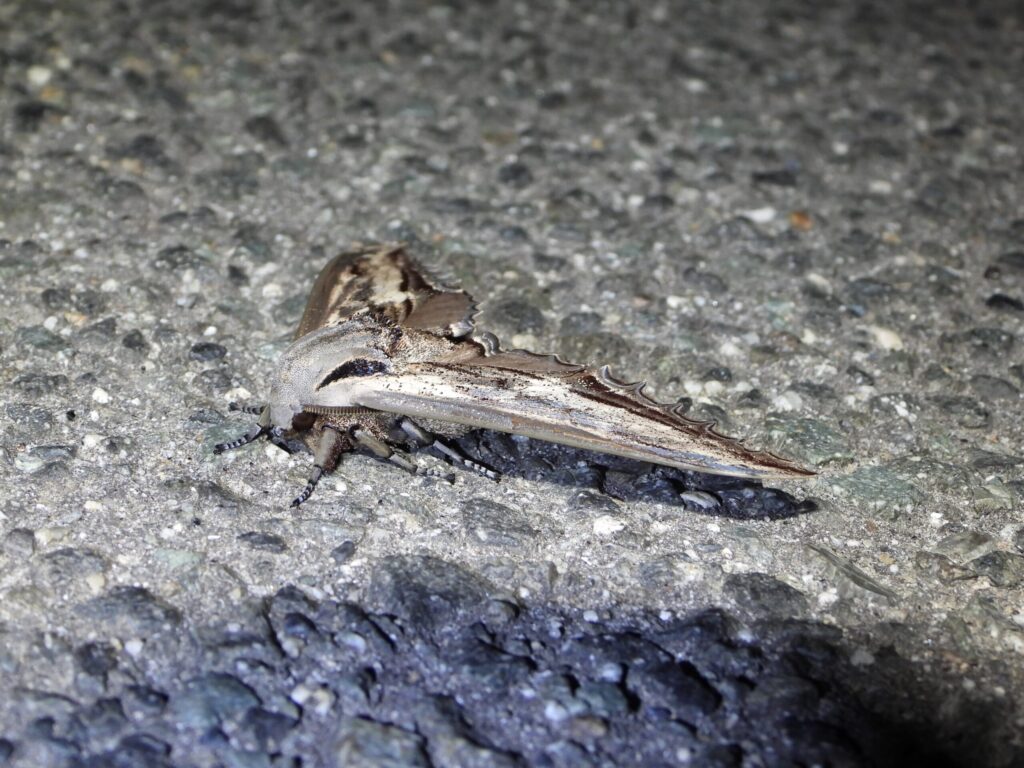
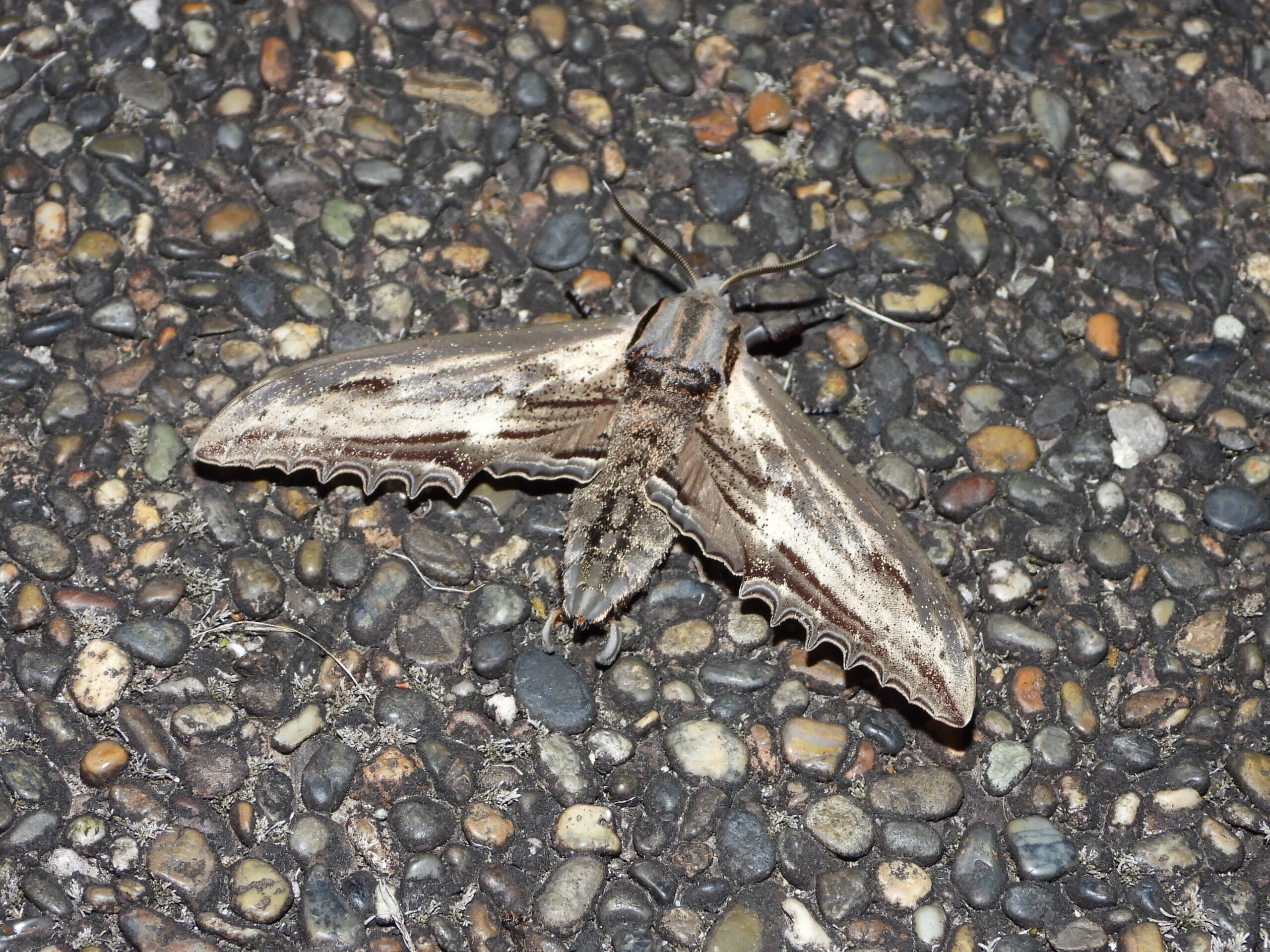
The Apple Hawkmoth is a large hawkmoth that appears in Japan in early spring. Researchers treat it as the Japanese subspecies Langia zenzeroides nawai. Its bark-like, frosted wing pattern provides excellent camouflage. As a result, sightings remain relatively rare, and encounters with this species are uncommon.
Appearance
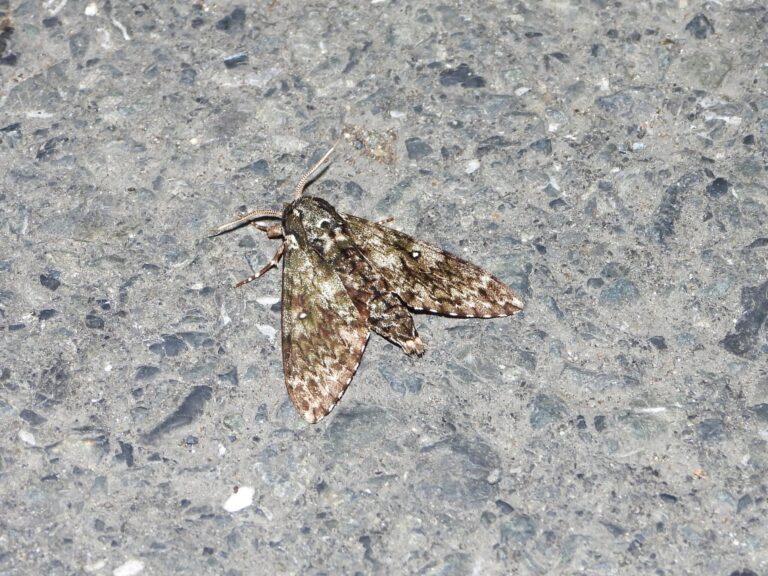
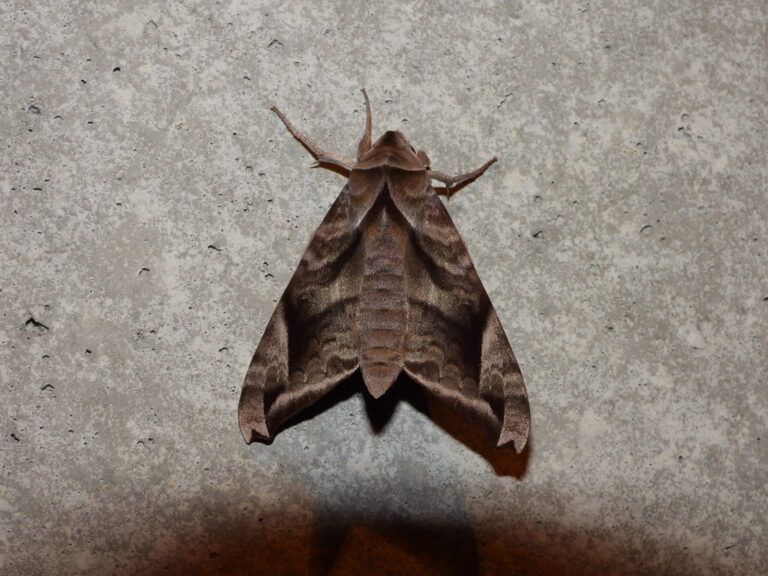
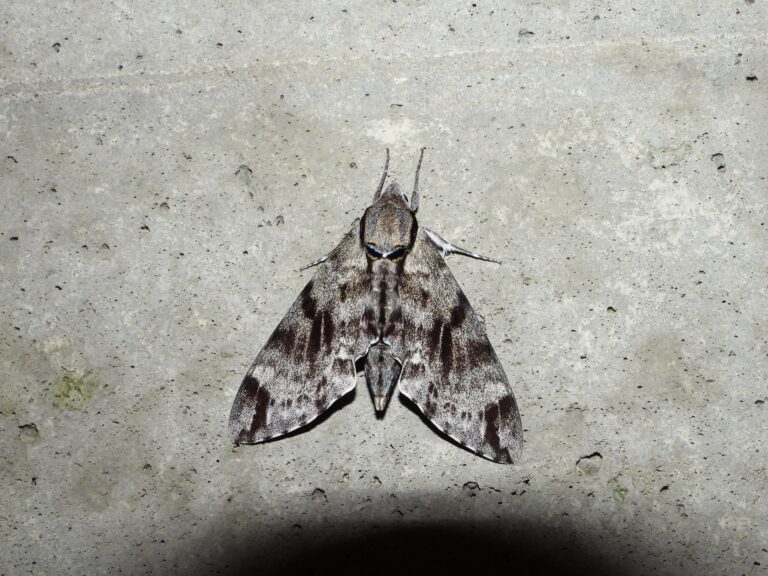
This moth ranks among the largest species in Japan. The forewings extend long and narrow, ending in pointed tips. In addition, complex gray-brown markings cover the wings and closely resemble tree bark or lichen. Because of this muted coloration, the moth blends extremely well into its surroundings while at rest.
Habitat & Distribution
In Japan, records confirm this species from Honshu, Shikoku, Kyushu, and Tsushima.
Furthermore, some records describe Iida City in Nagano Prefecture as the northern limit of its distribution, which suggests that the overall range may be relatively restricted. However, researchers still lack detailed distribution data, and additional field records will be necessary to clarify its full range.
Behavior
Adults emerge mainly in spring, especially from March to April. Like other hawkmoths, this species is nocturnal. However, researchers have not yet documented its detailed activity patterns in depth.
Diet
The larvae feed on trees in the rose family (Rosaceae). In Japan, records include Japanese apricot, peach, and cherry trees as host plants.
In contrast, adults possess a short, reduced proboscis. Because of this, they do not actively feed on nectar or do so only minimally compared to other hawkmoths.
Reproduction
This species likely produces one generation per year. Larvae usually appear from May to June. Afterward, they pupate near the ground and overwinter in the pupal stage. As a result, adults emerge again the following spring.
Conservation
At present, researchers have not fully evaluated the conservation status of the Apple Hawkmoth at a national level. Nevertheless, records remain limited in some regions, and observers consider the species uncommon. Therefore, further surveys and field data will play an important role in understanding its population status.
Author’s Impression
When I first encountered this species, its thick, heavy body stood out more than its overall size. While the wings are certainly large, the abdomen appears exceptionally thick and gives the moth a solid, weighty impression.
Among Japanese moths, I have rarely seen another species with such a robust build. For this reason, even though encounters are uncommon, this moth is well worth searching for.