Eastern Buzzard (Buteo japonicus) – Wildlife of Japan
Introduction
The Eastern Buzzard, known as Nosuri in Japan, is one of the most commonly observed birds of prey across the country. In English, it is often called the Eastern Buzzard or Japanese Buzzard.
Its taxonomic treatment varies among sources. In many recent international checklists, it is treated as a distinct species (Buteo japonicus), while some older or regional references classify it as a subspecies of the Common Buzzard (Buteo buteo). In this article, the name Buteo japonicus is used following widely adopted modern classifications.
Appearance
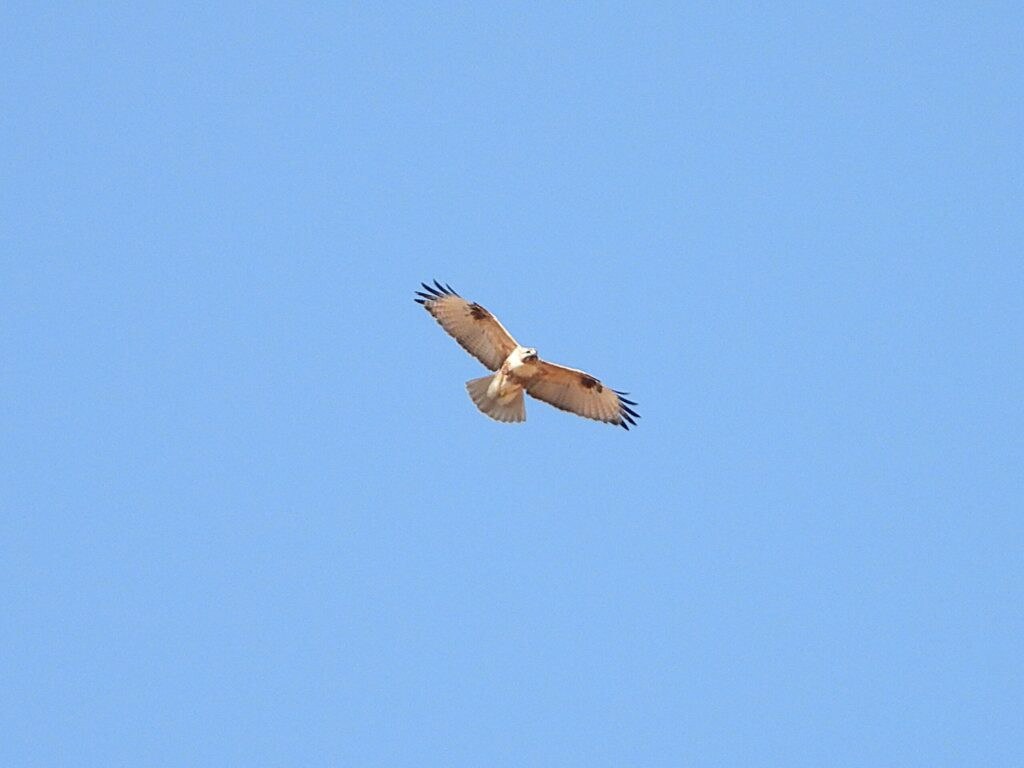
The Eastern Buzzard is a medium-sized raptor with broad wings and a relatively short tail. Its overall shape is typical of buzzards, making it well suited for soaring flight.
Plumage varies greatly between individuals. Some birds appear darker below, while others are noticeably paler, and no single pattern applies to all individuals. When soaring, the wings are often held in a shallow V-shape, and the bird circles calmly on rising air currents.
Habitat & Distribution
In Japan, Eastern Buzzards are most often associated with semi-open landscapes such as woodland edges, satoyama environments, farmland, grasslands, and riverbanks. These areas provide both open hunting grounds and nearby perches or trees.
Rather than dense forest interiors, the species tends to favor environments where it can survey the surrounding area from above. On a global scale, the Eastern Buzzard is considered widespread and stable, and it is currently listed as Least Concern on the IUCN Red List.
Where to See in Japan
Observing Eastern Buzzards usually begins by looking up. They are frequently seen circling high above open areas such as fields, river corridors, and foothills.
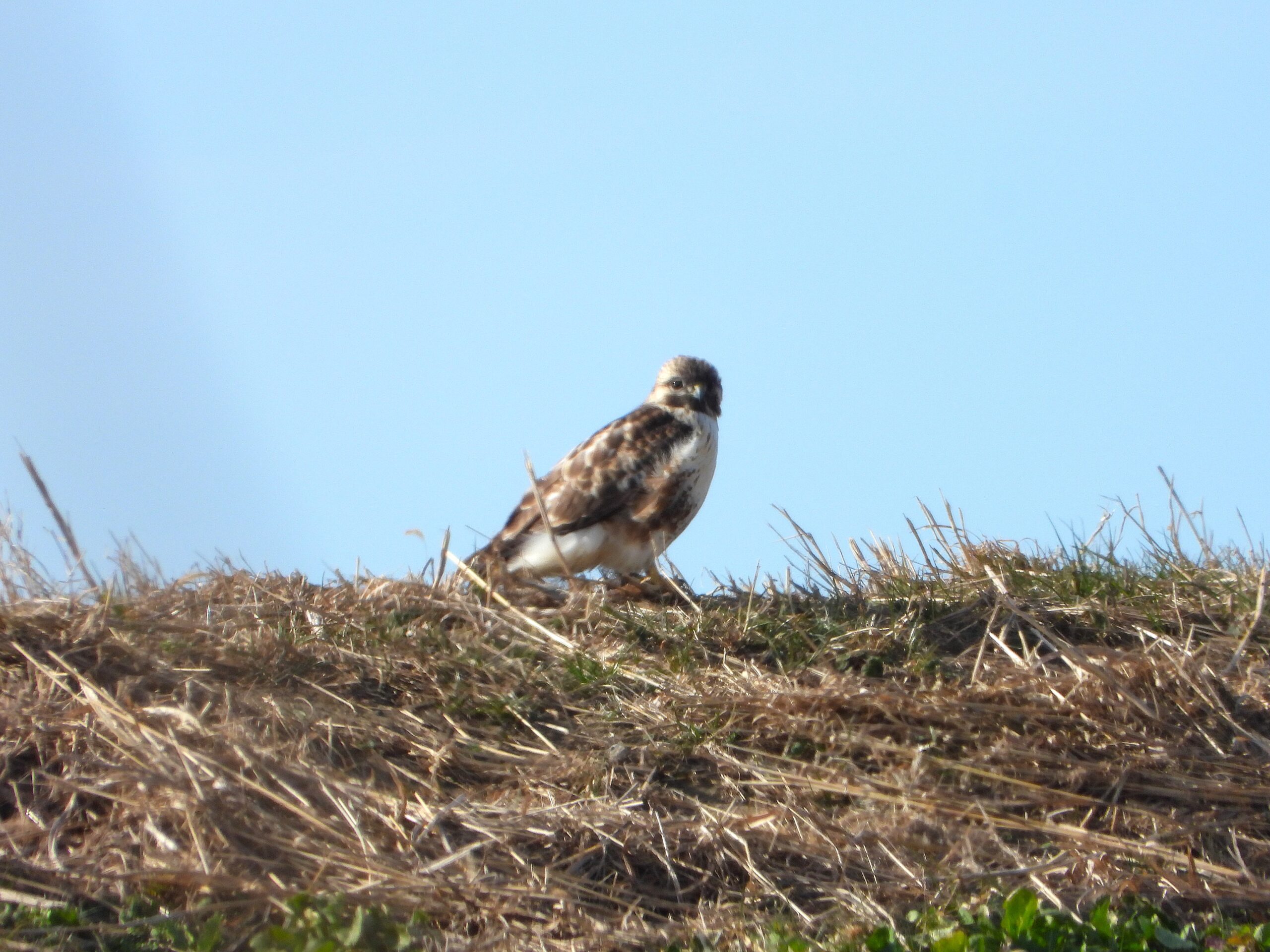
Another common sight is a bird perched quietly on utility poles, fence posts, or tall trees along forest edges, scanning the ground for prey. In areas such as the Mount Takao region near Tokyo, the Eastern Buzzard is included among regularly recorded raptor species. However, presence and visibility vary by season and location, and sightings are never guaranteed.
Behavior
Eastern Buzzards hunt using a combination of soaring and perch-hunting. They may circle overhead for extended periods before descending toward prey, or remain stationary at a vantage point while watching the ground below.
During the breeding season, pairs defend a nesting area, and increased alertness can be observed near nest sites. Nests may be reused in subsequent years rather than being rebuilt from scratch every season.
Diet
Diet varies depending on habitat and seasonal availability. In Japan, small mammals such as rodents are considered the primary prey. Other animals, including snakes, frogs, birds, and large insects, may also be taken when conditions allow.
This flexible feeding strategy contributes to the species’ wide distribution and adaptability.
Reproduction
In Japan, breeding generally takes place from spring to early summer. Egg-laying is most commonly reported between April and May, although timing can vary by region and year.
Clutches typically consist of two to three eggs. Nests are built in trees using sticks and branches, and reproductive success may differ depending on local environmental conditions.
Conservation
At the global level, the Eastern Buzzard is not considered threatened and remains categorized as Least Concern. Nevertheless, local populations may be affected by habitat changes and human activity.
When observing or photographing Eastern Buzzards, especially during the breeding season, it is important to avoid approaching nest sites and to minimize disturbance.
Author’s Impression
Eastern Buzzards are often seen as powerful and “cool-looking” birds simply because they are raptors. However, when you encounter one during field observation, I encourage you to take a closer look at its face.
Up close, the Eastern Buzzard has a surprisingly gentle and endearing expression. Its soft gaze and calm demeanor give it a charm that contrasts with its image as a fierce bird of prey. Personally, I think of the Eastern Buzzard not only as a majestic raptor, but also as one of Japan’s unexpectedly cute birds.
The contrast between its soaring flight and its quiet, expressive face is one of the most enjoyable aspects of observing this species.