Ezo-suzume (Phyllosphingia dissimilis) – Wildlife of Japan
Introduction
Ezo Suzume is a large hawkmoth species native to Japan. There is no single English common name that is consistently used in Japan-focused references, so this article uses the Japanese name “Ezo Suzume” together with its scientific name.
It is known for its heavy-bodied shape and dark, shadow-like wing patterns, and is often noticed when attracted to lights at night.
Appearance
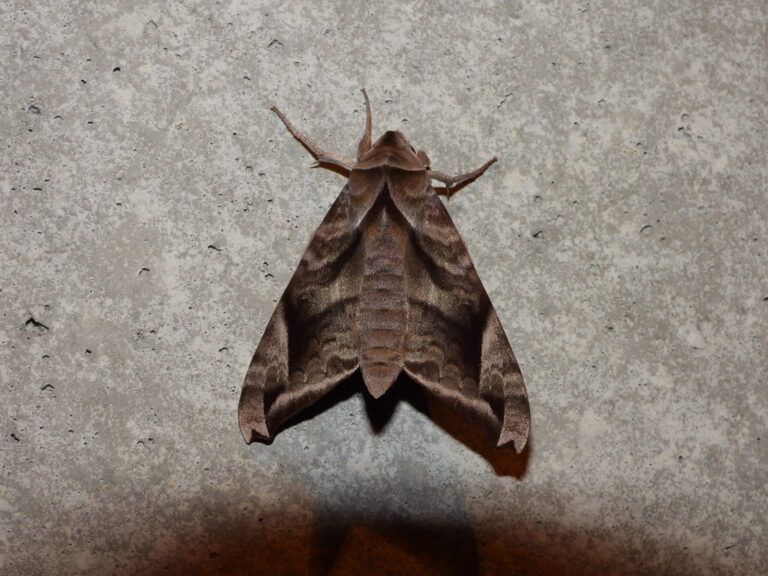
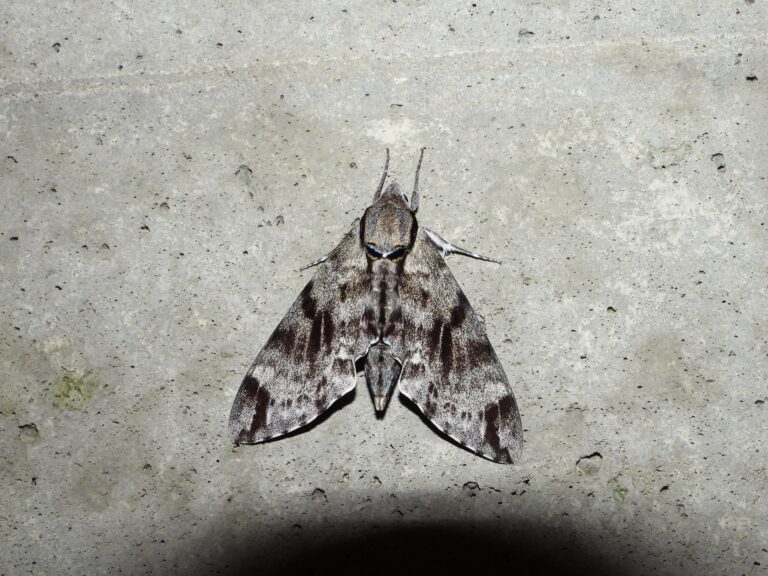
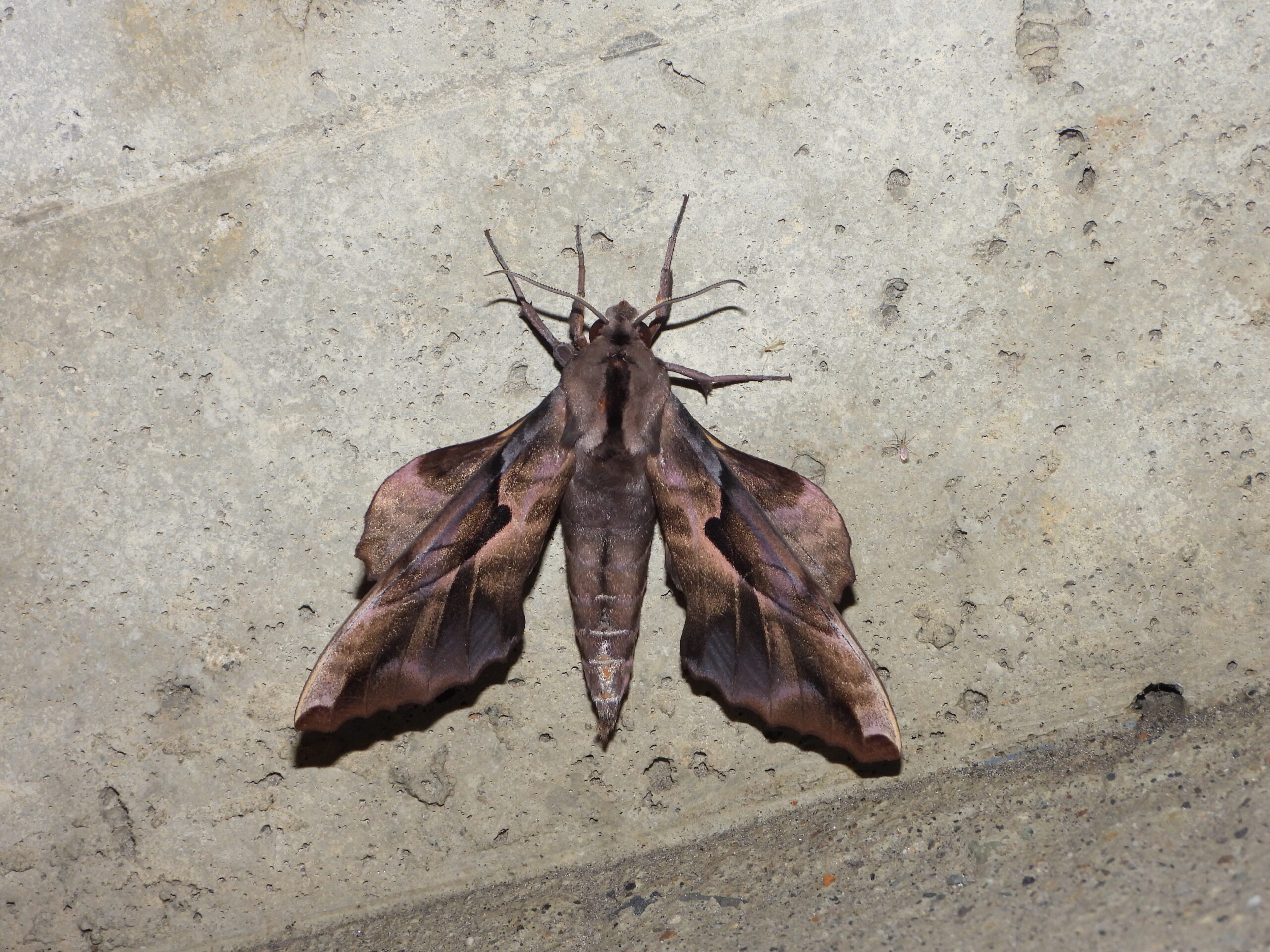
Adults have broad forewings marked with complex brown to dark-brown patterns that resemble layered shadows. When resting, the wings are held roof-like over the body, creating a thick and powerful silhouette typical of hawkmoths.
In Japan, the wingspan is commonly reported to be about 90–110 mm, placing it among the larger moths encountered around lights.
Habitat & Distribution
Ezo Suzume is widely distributed in Japan, with records from Hokkaido through Honshu, Shikoku, and Kyushu. It inhabits forest edges, mixed woodlands, and satoyama landscapes where its larval host plants grow.
Behavior
The species is nocturnal, and adults are frequently attracted to artificial lights, which is why many observations come from light traps or illuminated buildings.
Studies have shown that the larvae and pupae can produce defensive sounds when disturbed, by forcing air through their spiracles. This behavior is thought to help deter predators.
Diet
The larvae feed on trees in the walnut family, especially Japanese walnut (Juglans ailanthifolia). This host plant association is consistently documented in Japanese moth references.
Information about adult feeding behavior is less consistently described in accessible sources, so this article focuses on the well-documented larval diet.
Reproduction
Adults are mainly recorded from May to July in Japan. After mating, females lay eggs on or near host plants. The larvae pass through several growth stages before pupating, and the species overwinters in the pupal stage.
Conservation
Ezo Suzume is a naturally occurring hawkmoth with a wide distribution in Japan. While not considered rare nationwide, its local abundance depends on habitat quality and the availability of host plants.
Author’s Impression
Ezo Suzume looks like a living shadow clinging to bark. What makes it especially appealing is its resting posture, which feels subtly different from many other hawkmoths. The way it holds its wings gives it a heavier, more sculptural presence, and seeing it quietly settled at a light on an early summer night is always memorable.