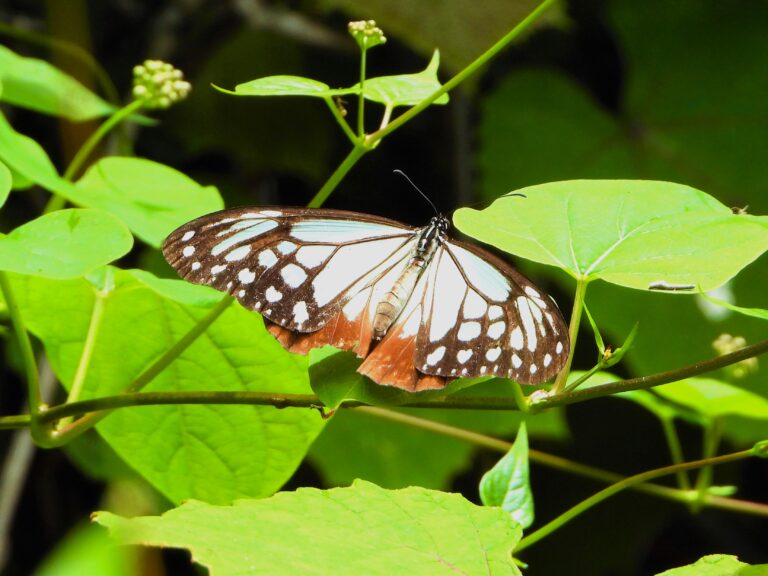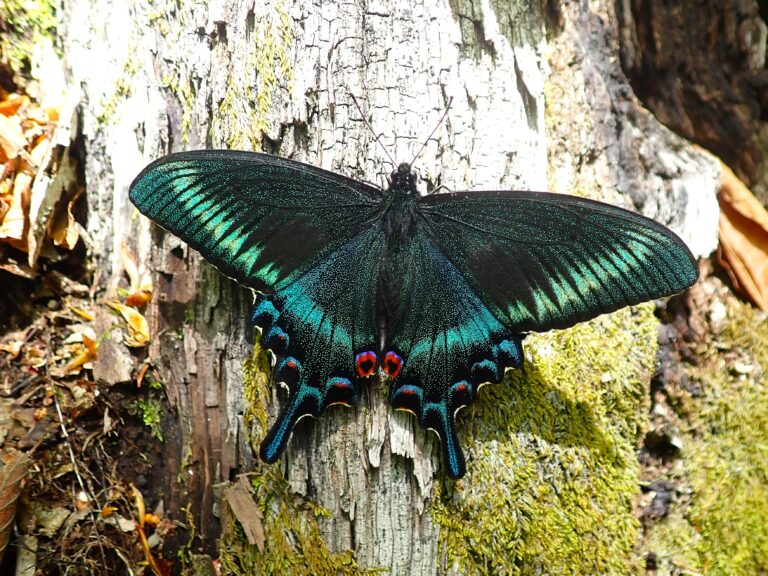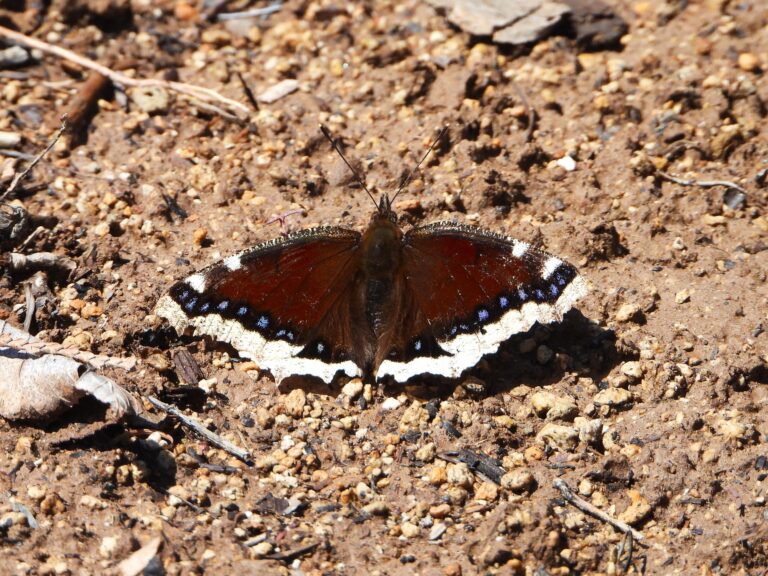
Unmon-suzume (Callambulyx tatarinovii gabyae) – Wildlife of Japan
Introduction
Unmon-suzume is a hawk moth recorded in Japan and parts of East Asia.
There is no widely established English common name for this species, so the Japanese name is used here in romanized form.
This moth is not widely known, but it belongs to the family Sphingidae and shares the group’s typical nocturnal lifestyle and solid body shape.
Appearance
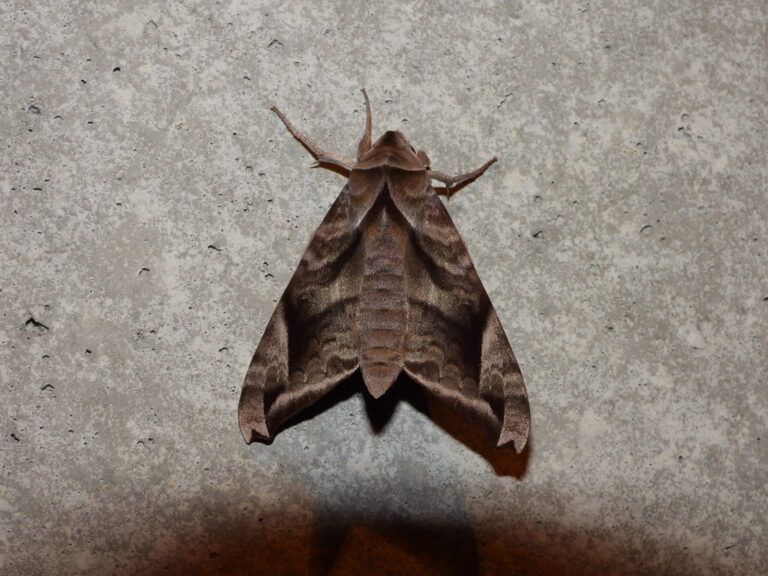
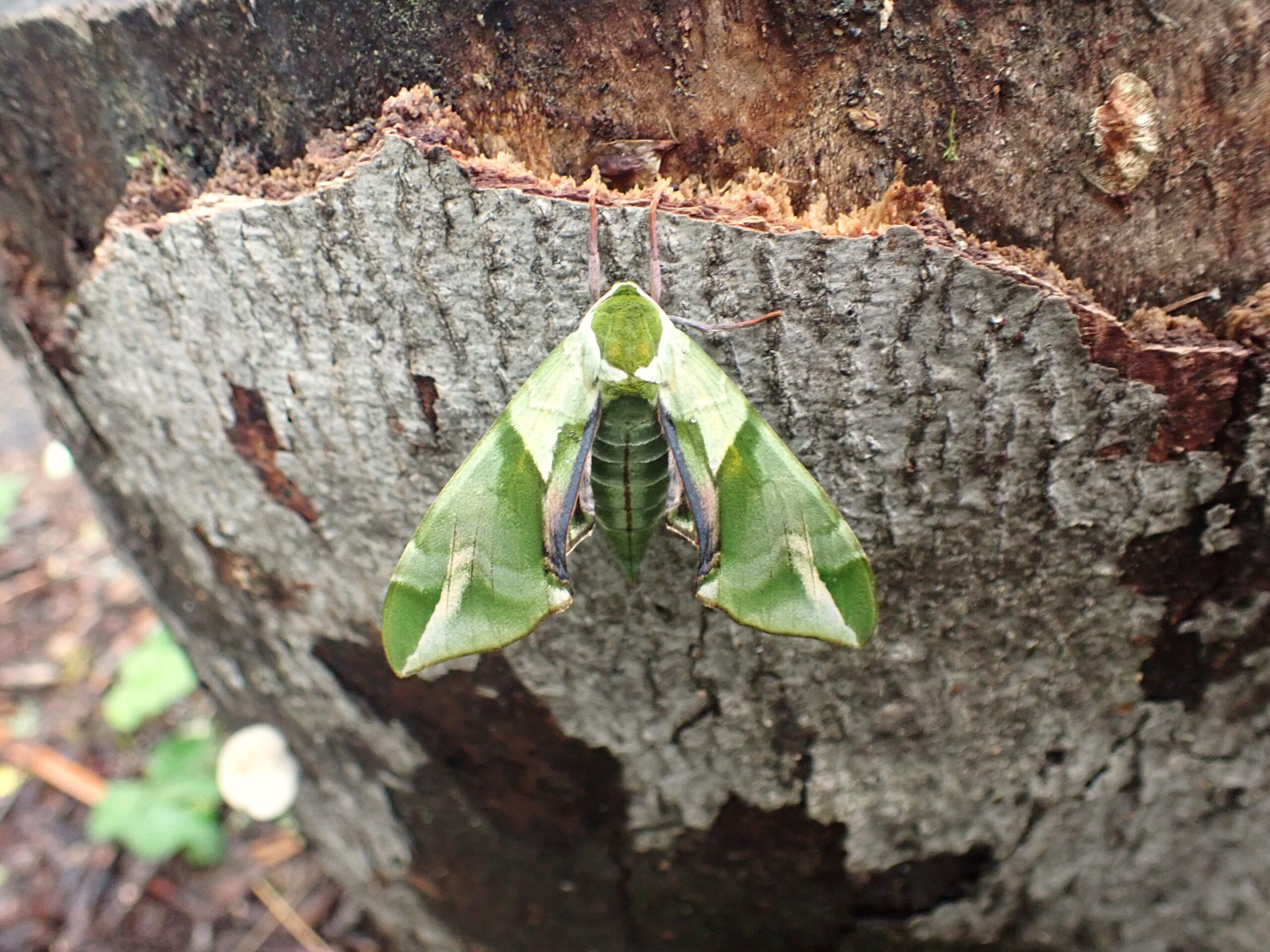
Adults have green forewings with soft, cloud-like markings.
The hindwings are darker and show reddish tones, though these are usually hidden when the moth is at rest.
The body is thick and muscular, consistent with other hawk moths.
Overall size is medium to large among Japanese sphingid species.
Habitat & Distribution
In Japan, Unmon-suzume has been recorded from Hokkaido, Honshu, Shikoku, and Kyushu.
It is associated with environments where deciduous broadleaf trees grow, including woodland edges, parks, and areas with planted trees.
The species does not appear to require undisturbed forest and may occur near human-modified landscapes.
Behavior
Unmon-suzume is nocturnal.
Adults are active at night and are sometimes attracted to artificial lights, where they may rest on walls or nearby vegetation.
During the daytime, they remain inactive and rely on camouflage.
Diet
Larvae feed on trees in the elm family (Ulmaceae).
In Japan, documented host plants include Japanese zelkova (Zelkova serrata) and related elm species.
Adult feeding behavior has not been extensively documented in Japan, but like other hawk moths, adults are presumed to feed on flower nectar.
Reproduction
Adults are mainly observed from late spring to summer.
After mating, eggs are laid on host plants, and larvae develop before pupating in the soil.
The species overwinters in the pupal stage.
Conservation
Unmon-suzume is not listed as a threatened species in Japan.
However, like many moths, local populations may be affected by pesticide use, loss of host plants, and excessive nighttime lighting.
Author’s Impression
Among Japan’s hawk moths, the unique green pattern of Unmon-suzume is visually striking.
While the overall coloration is relatively subdued, the contrast and freshness of the green give this species a clear sense of visual impact.